
For millions of Americans, Social Security represents a cornerstone of their financial security in retirement, during disability, or for their surviving family members. Understanding how your benefits are calculated and what you can expect to receive is not just a matter of curiosity; it’s a critical component of effective financial planning. This comprehensive guide will demystify the process, illuminate the key factors at play, and provide actionable steps to help you accurately estimate your future Social Security benefits.
Social Security isn’t a “one-size-fits-all” program. The amount you ultimately receive is a highly personalized figure, influenced by a combination of your individual work history, age, and claiming decisions. Far from being an opaque government mystery, the Social Security Administration (SSA) provides numerous tools and resources designed to empower you with this crucial information. Whether you’re decades from retirement, nearing your eligibility, or simply curious about your future financial landscape, grasping these fundamentals is your first step towards informed decision-making.
Understanding Social Security Benefits: The Foundation
Before diving into calculations, it’s essential to understand the basic framework of the Social Security program. This foundational knowledge will make the subsequent discussions about benefit determination much clearer and more impactful.
What is Social Security?
Social Security is a social insurance program administered by the U.S. government, primarily funded through payroll taxes (FICA taxes). It provides a safety net for workers and their families in the event of retirement, disability, or death. While often thought of solely as a retirement benefit, it encompasses several distinct programs: Retirement, Disability, and Survivor benefits. Each is designed to provide income stability when earned income ceases or is significantly reduced. The underlying principle is that contributions made throughout your working life entitle you to benefits later on, based on those contributions.
Who is Eligible for Benefits?
Eligibility for Social Security benefits is determined by “work credits.” You earn work credits by working and paying Social Security taxes. In 2024, you earn one credit for every $1,730 in wages or self-employment income, up to a maximum of four credits per year. Most people need 40 work credits, earned over at least 10 years, to be eligible for retirement benefits. For disability or survivor benefits, the number of required credits can vary based on age and the type of benefit. Once you meet these basic eligibility requirements, the focus shifts to how much you’ll receive.
The Different Types of Benefits
While the focus of this article is primarily on retirement benefits, it’s worth noting that your work record also establishes eligibility for other vital protections.
-
Retirement Benefits: The most common type, paid to eligible workers who have reached a certain age.
-
Disability Benefits: Provided to workers who are unable to engage in substantial gainful activity due to a severe medical impairment expected to last at least 12 months or result in death.
-
Survivor Benefits: Paid to eligible family members (spouse, children, dependent parents) of a deceased worker who earned enough Social Security credits.
Understanding that your contributions provide this multi-faceted protection underscores the importance of accurately tracking and understanding your Social Security earnings.
Key Factors That Determine Your Benefit Amount
Your Social Security benefit amount isn’t arbitrary; it’s the result of a precise calculation based on several critical inputs. By understanding these factors, you gain insight into how your past and future financial decisions impact your eventual payout.
Your Earnings History (AVERAGE INDEXED MONTHLY EARNINGS – AIME)
This is arguably the most significant factor. The SSA calculates your benefit based on your average indexed monthly earnings (AIME) during your 35 highest-earning years. “Indexed” means your past earnings are adjusted to account for changes in the average wage level in the economy over time. For example, $10,000 earned in 1980 will be indexed to a much higher value in today’s dollars, reflecting the general increase in wages. If you have fewer than 35 years of earnings, zero-earning years will be included in the average, which can significantly lower your AIME and, consequently, your benefit. This highlights the importance of consistent employment and higher earnings over a full career.
Your Birth Year and Full Retirement Age (FRA)
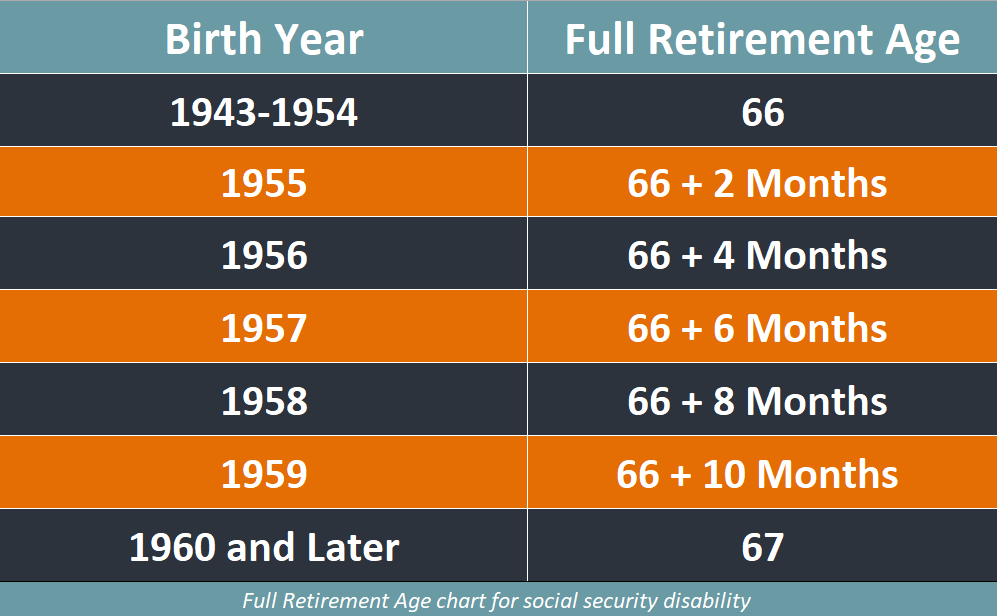
Your Full Retirement Age (FRA) is the age at which you are entitled to receive 100% of your primary insurance amount (PIA). This age isn’t fixed for everyone; it depends on your birth year. For those born in 1943-1954, FRA is 66. It gradually increases for those born between 1955 and 1959, reaching 67 for anyone born in 1960 or later. Claiming benefits before your FRA results in a permanent reduction, while delaying beyond your FRA can increase your benefits. Knowing your specific FRA is crucial for making informed claiming decisions.
When You Decide to Claim (Early, FRA, Delayed)
This is perhaps the most flexible and impactful decision you’ll make regarding your Social Security benefits.
-
Early Claiming (Age 62-FRA): You can start receiving benefits as early as age 62, but your monthly benefit will be permanently reduced. The reduction can be substantial; for someone with an FRA of 67, claiming at 62 means a 30% reduction in their monthly benefit.
-
Claiming at FRA: If you wait until your Full Retirement Age, you receive 100% of your Primary Insurance Amount (PIA), which is the benefit calculated from your AIME.
-
Delayed Claiming (Beyond FRA up to Age 70): For each year you delay claiming benefits past your FRA, up to age 70, your monthly benefit increases by a certain percentage, known as “delayed retirement credits.” This credit is 8% per year for those born in 1943 or later. Delaying until age 70 can result in a monthly benefit that is significantly higher than your FRA benefit (e.g., 132% of your FRA benefit if your FRA is 67). This strategy is often considered by those with sufficient retirement savings, good health, or who continue to work.
Cost-of-Living Adjustments (COLAs)
Once you start receiving benefits, your payments are subject to annual Cost-of-Living Adjustments (COLAs). These adjustments are designed to help Social Security benefits keep pace with inflation and maintain beneficiaries’ purchasing power. COLAs are typically announced in October and take effect in December for benefits paid in January of the following year. While COLAs are not a factor in determining your initial benefit amount, they are crucial for understanding the long-term value and growth of your benefits.
Methods to Estimate Your Future Social Security Benefits

Fortunately, you don’t have to guess or rely on complex formulas to determine your potential Social Security benefits. The Social Security Administration provides robust and accessible tools to help you get a clear picture.
Checking Your Social Security Statement Online (My Social Security account)
The single most important resource for estimating your benefits is your personalized Social Security Statement. This statement provides a detailed record of your earnings history as reported to the SSA, an estimate of your future retirement benefits at different claiming ages (62, FRA, and 70), and estimates for disability and survivor benefits.
To access your statement, you need to create a free “My Social Security” account on the SSA website (www.ssa.gov). Once logged in, you can view your earnings record, verify that your reported income is accurate, and see personalized benefit estimates. It’s highly recommended to review this statement annually, especially to check for any errors in your earnings record, as these could impact your future benefits.
Using the Social Security Administration’s Online Calculators
Beyond your personalized statement, the SSA website offers various online calculators that allow for more dynamic “what-if” scenarios:
-
Retirement Estimator: This tool lets you plug in different scenarios, such as projected future earnings, different retirement dates, and various claiming ages, to see how these choices impact your estimated benefit. It’s incredibly useful for exploring different financial planning strategies.
-
Life Expectancy Calculator: While not directly calculating benefits, understanding your approximate life expectancy can inform your claiming strategy, particularly when considering the trade-offs between early and delayed claiming.
-
Benefit Calculators for Spouses, Survivors, and Divorced Spouses: These tools help individuals understand potential benefits based on another person’s work record.
These calculators are invaluable for understanding the impact of your decisions and seeing how different life choices could adjust your Social Security income.
Consulting a Financial Advisor
For complex situations, or if you simply prefer professional guidance, a qualified financial advisor can be an excellent resource. Financial advisors specializing in retirement planning can integrate your Social Security estimates into your broader financial picture, considering other assets, liabilities, and goals. They can help you:
-
Develop an optimal claiming strategy based on your health, other income sources, marital status, and desired legacy.
-
Understand the tax implications of Social Security benefits.
-
Strategize how to coordinate Social Security with other retirement accounts (401(k)s, IRAs).
-
Address specific scenarios, such as spousal benefits, survivor benefits, or working while receiving benefits.
While the SSA provides the data, a financial advisor can help you interpret it within the context of your complete financial plan.
Maximizing Your Social Security Payouts
Understanding how your benefits are calculated is only half the battle; the other half is strategizing how to potentially increase those benefits to support a more comfortable retirement.
Working Longer and Earning More
Since your benefit is based on your 35 highest-earning years, continuing to work longer, especially if you are in your peak earning years, can significantly boost your AIME. For many, earlier career earnings were lower. Replacing those lower-earning years with higher current earnings in the 35-year average calculation will increase your overall AIME. Even working an extra year or two can make a difference if it pushes out a low-earning year from your past.
Delaying Your Claim Beyond FRA
As discussed, delaying benefits past your Full Retirement Age (FRA) up to age 70 results in a substantial increase in your monthly payout due to delayed retirement credits. For someone with an FRA of 67, claiming at 70 provides a 32% increase over their FRA benefit. This strategy can be particularly powerful for individuals with good health, other retirement savings to draw upon in the interim, or those who simply enjoy working longer. This increase is permanent and also applies to survivor benefits your spouse might receive.
Understanding Spousal and Survivor Benefits
Social Security isn’t just about individual benefits. If you are married, divorced, or widowed, you might be eligible for benefits based on your current or former spouse’s work record.
-
Spousal Benefits: A spouse can claim up to 50% of their partner’s FRA benefit. This can be particularly beneficial if one spouse has a significantly lower earnings record or never worked enough to qualify for their own benefits.
-
Survivor Benefits: A widow(er) can receive up to 100% of their deceased spouse’s benefit amount, especially if the deceased spouse delayed claiming benefits. Divorced spouses may also be eligible for survivor benefits under certain conditions.
Coordinating claiming strategies between spouses can maximize the total household benefit over a lifetime, especially when considering the longevity risk for the surviving spouse.
Considering Taxation of Benefits
While not directly impacting the amount of your Social Security benefit, understanding the taxation rules is crucial for your net income. Depending on your “provisional income” (which includes your adjusted gross income, tax-exempt interest, and half of your Social Security benefits), a portion of your Social Security benefits may be subject to federal income tax. Up to 85% of your benefits can be taxable. Some states also tax Social Security benefits. Factoring this into your retirement budget ensures you have a realistic picture of your spendable income.
Integrating Social Security into Your Retirement Plan
Social Security, while a vital income stream, should ideally be just one component of a broader, well-constructed retirement plan. Viewing it in isolation can lead to an incomplete and potentially misleading financial outlook.
Social Security as One Piece of the Puzzle
It’s a common misconception that Social Security alone will cover all retirement expenses. For most individuals, Social Security replaces only about 40% of their pre-retirement income, and less for higher earners. This means that personal savings (401(k)s, IRAs, brokerage accounts), pensions, and other investments are essential to bridge the gap and maintain your desired lifestyle in retirement. By accurately estimating your Social Security benefits, you can then determine how much you need to save and invest from other sources to meet your overall retirement income goals.
The Importance of a Holistic Retirement Strategy
A holistic retirement strategy considers all aspects of your financial life: your income sources (Social Security, pensions, investments), your expenses (housing, healthcare, travel), your tax situation, and your long-term goals. Your Social Security claiming decision should not be made in a vacuum; it should align with your overall plan. For instance, if you have substantial other assets, delaying Social Security until age 70 might make sense, as it provides a higher guaranteed income stream later in life, acting as longevity insurance. If your savings are modest, claiming earlier might be necessary to cover immediate living expenses.

Regularly Reviewing Your Estimates
Life circumstances change, as do economic conditions and Social Security regulations (though major changes are rare). It’s wise to review your Social Security Statement and benefit estimates annually. This ensures your earnings record is accurate and allows you to adjust your retirement plan as needed. As you approach retirement, these regular check-ups become even more critical, allowing you to fine-tune your claiming strategy and coordinate with your other financial assets.
Knowing how much Social Security you will get is more than just a number; it’s a foundational element of your financial well-being. By understanding the factors that shape your benefits, utilizing the tools provided by the SSA, and integrating this information into a comprehensive financial plan, you can make confident, informed decisions that optimize your retirement income and secure your future. The power to estimate and, in many cases, influence your Social Security benefits is firmly in your hands.
aViewFromTheCave is a participant in the Amazon Services LLC Associates Program, an affiliate advertising program designed to provide a means for sites to earn advertising fees by advertising and linking to Amazon.com. Amazon, the Amazon logo, AmazonSupply, and the AmazonSupply logo are trademarks of Amazon.com, Inc. or its affiliates. As an Amazon Associate we earn affiliate commissions from qualifying purchases.