
In a world increasingly driven by data and numbers, the ability to understand and manipulate percentages is not merely a mathematical skill; it is a fundamental pillar of financial literacy. From managing personal budgets to evaluating investment opportunities, deciphering loan agreements to understanding tax implications, percentages are the ubiquitous language of money. They provide context, highlight relationships, and enable informed decision-making across virtually every financial landscape. This article delves into the essential methods and applications of “taking out a percentage,” transforming what might seem like a daunting mathematical task into an accessible tool for greater financial control and insight.

Whether you’re calculating a discount on a purchase, determining the interest on a loan, assessing the growth of your investments, or simply trying to allocate a portion of your income to savings, mastering percentages is non-negotiable. It empowers you to see beyond the raw figures, understanding the relative impact and significance of financial events. Without this foundational understanding, individuals and businesses alike risk making sub-optimal choices, failing to capitalize on opportunities, or succumbing to avoidable financial pitfalls. This guide will equip you with the knowledge to confidently extract, interpret, and leverage percentages in your financial life.
The Foundational Mechanics of Percentage Calculation
Before diving into complex financial scenarios, it’s crucial to establish a solid understanding of the basic mechanics of percentage calculation. At its heart, a percentage represents a fraction of 100, a way to express a part of a whole. “Taking out a percentage” can mean several things: finding a percentage of a given number, calculating a percentage change, or even working backward to find an original value.
Calculating a Percentage of a Whole: The Basics
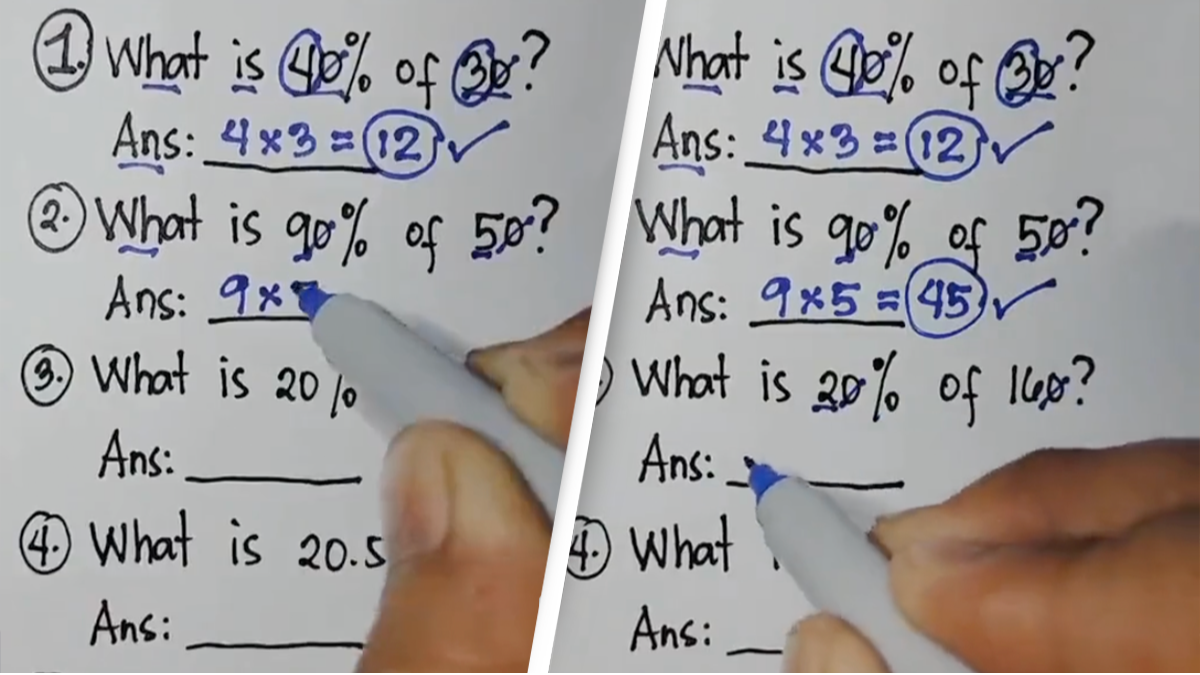
This is perhaps the most common application: finding what a certain percentage of a specific number is. This method is fundamental for understanding discounts, sales tax, commissions, tips, and even a portion of your salary dedicated to savings.
The formula is straightforward:
Percentage as a Decimal × Total Amount = Part of the Total
To convert a percentage to a decimal, simply divide it by 100 (e.g., 20% becomes 0.20).
Example: You want to save 15% of your $4,000 monthly income.
15% = 0.15
0.15 × $4,000 = $600
You would save $600.
Example: A shirt costs $50, and there’s a 20% discount.
20% = 0.20
0.20 × $50 = $10 (the discount amount)
$50 – $10 = $40 (the discounted price)
Understanding Percentage Change: Growth and Decline
Financial health is dynamic, constantly subject to growth, decline, and fluctuation. Percentage change allows us to quantify these movements relative to an initial value, providing a clear picture of performance over time. This is invaluable for tracking investment returns, inflation rates, salary increases, or even the depreciation of an asset.
The formula for percentage change is:
((New Value – Old Value) / Old Value) × 100% = Percentage Change
If the result is positive, it’s an increase; if negative, it’s a decrease.
Example: Your investment portfolio grew from $10,000 to $12,000.
(( $12,000 – $10,000) / $10,000 ) × 100%
($2,000 / $10,000) × 100% = 0.20 × 100% = 20% increase.
Example: A stock price fell from $100 to $80.
(( $80 – $100) / $100 ) × 100%
(-$20 / $100) × 100% = -0.20 × 100% = 20% decrease.
Working Backwards: Finding the Original Amount
Sometimes, you know the percentage and the resulting part, but you need to find the original total. This often comes into play when trying to determine a price before a discount was applied, or an income before taxes were deducted.
The formula is:
Part of the Total / Percentage as a Decimal = Total Amount
Example: You paid $80 for an item after a 20% discount. What was the original price?
If you paid $80 after a 20% discount, you paid 100% – 20% = 80% of the original price.
80% = 0.80
$80 / 0.80 = $100
The original price was $100.
Decoding Financial Scenarios Through Percentages
Once you grasp the fundamental calculations, their application across various financial domains becomes intuitive. Percentages are the lens through which we analyze and strategize about our money.
Personal Finance: Budgeting, Savings, and Debt
In personal finance, percentages are the architects of financial stability.
-
Budgeting: Many adopt the 50/30/20 rule (50% needs, 30% wants, 20% savings/debt repayment). These are all percentage allocations of your after-tax income.
-
Savings: Setting a target to save “X% of every paycheck” is a concrete, achievable goal.
-
Debt: Understanding the interest rate (a percentage) on loans, credit cards, or mortgages is crucial. A small percentage difference can translate into thousands of dollars over the life of a loan. Calculating what percentage of your income goes towards debt repayment (e.g., debt-to-income ratio) helps assess financial burden.
Investing: Returns, Risks, and Compounding
For investors, percentages are indispensable.
-
Return on Investment (ROI): Expressed as a percentage, ROI measures the profitability of an investment relative to its cost.
-
Compounding: The magic of compound interest relies on percentages. Your initial investment earns interest, and then that interest also starts earning interest, accelerating growth over time. Understanding annual percentage yield (APY) helps compare different savings or investment vehicles.
-
Asset Allocation: Diversifying a portfolio often means allocating specific percentages of your total investment across different asset classes (e.g., 60% stocks, 30% bonds, 10% cash).
-
Risk Metrics: Volatility, often measured by standard deviation, is expressed as a percentage to gauge an investment’s riskiness.

Business Finance: Profitability, Discounts, and Taxation
Businesses live and breathe percentages, which are critical for operational analysis, pricing strategies, and legal compliance.
-
Profit Margins: Gross profit margin, operating profit margin, and net profit margin are all percentages that reveal a company’s efficiency and profitability.
-
Pricing and Discounts: Retailers constantly calculate discounts as percentages to attract customers and markups to ensure profitability.
-
Sales Tax: Businesses collect and remit sales tax, a percentage applied to goods and services.
-
Cost of Goods Sold (COGS): Understanding COGS as a percentage of revenue helps manage expenses.
-
Payroll & Benefits: Employee salaries, benefits, and payroll taxes are all calculated based on percentages of wages.
Practical Tools for Effortless Percentage Management
While manual calculation is essential for understanding the underlying principles, modern financial management often benefits from leveraging technological tools that streamline and automate percentage calculations.
Harnessing the Power of Spreadsheets
Spreadsheet software like Microsoft Excel or Google Sheets is an invaluable asset for anyone managing finances. They allow for complex calculations, scenario planning, and data visualization.
-
Basic Calculations:
-
To calculate 20% of cell A1:
=A1*0.20or=A1*20% -
To calculate percentage change between A1 (old) and A2 (new):
=(A2-A1)/A1(then format as percentage)
-
-
Budgeting: Create columns for income and expenses, using percentages to allocate funds (e.g.,
=B2*0.15for 15% savings from income in B2). -
Investment Tracking: Monitor portfolio growth, calculate annual returns, and project future values with percentage-based formulas.
-
Loan Amortization: Use formulas to calculate monthly interest and principal payments, which are intrinsically tied to the annual interest rate percentage.
Leveraging Financial Calculators and Apps
Beyond general spreadsheets, dedicated financial calculators and apps offer specialized functionalities for percentage-heavy scenarios.
-
Online Calculators: Websites often provide free tools for mortgage payments, retirement savings, loan interest, compound interest, and tax estimates.
-
Smartphone Apps: Many personal finance apps offer integrated calculators for budgeting, tip calculation, loan comparison, and investment analysis, simplifying the “taking out percentage” process.
-
Dedicated Financial Calculators: Tools like the HP 12c or specialized graphing calculators are designed for advanced financial modeling, particularly useful for business professionals and financial analysts.
Interpreting Financial Reports with Percentage Insights
Understanding how percentages are presented in financial reports is crucial for making informed decisions.
-
Income Statements: Companies present revenues, costs, and profits as percentages of total revenue to show efficiency (e.g., “cost of goods sold was 40% of sales”).
-
Balance Sheets: While not as percentage-heavy as income statements, ratios like the “debt-to-asset ratio” (total liabilities / total assets) are expressed as percentages and provide insight into financial leverage.
-
Market Research: Percentages are used to illustrate market share, growth rates, consumer sentiment, and demographic breakdowns, all vital for strategic planning.
Navigating Common Percentage Pitfalls and Misconceptions
Despite their apparent simplicity, percentages can be tricky. Misinterpretations often lead to flawed conclusions and poor financial decisions. Being aware of common pitfalls is as important as knowing how to calculate them.
Percentage Points vs. Percentage Change: A Crucial Distinction
One of the most frequent sources of confusion is conflating “percentage points” with “percentage change.”
-
Percentage Points: This refers to the arithmetic difference between two percentages.
-
Percentage Change: This is a relative change, calculated using one of the formulas discussed earlier.
Example: The interest rate on your savings account increases from 1% to 2%.
-
This is an increase of 1 percentage point (2% – 1% = 1%).
-
However, it’s a 100% increase in the interest rate itself ( ((2-1)/1)*100% = 100%).
Mixing these up can drastically alter your perception of financial improvement or decline.
The Illusion of Averages and Base Values
Percentages are always relative to a base value. A percentage increase or decrease can look significant, but its true impact depends entirely on the size of the base.
Example: A 50% increase in a $10 investment ($5 gain) is vastly different from a 50% increase in a $100,000 investment ($50,000 gain), even though the percentage is the same.
Always question the base: What is this percentage of? Ignoring the base can lead to skewed perspectives and misjudging the real magnitude of a financial change.
Understanding the Impact of Compounding Over Time
While we discussed compounding as a positive force for investment growth, misunderstanding it can also lead to underestimating debt. Small percentage interest rates on credit cards, when compounded monthly, can lead to substantial debt accumulation if only minimum payments are made. Conversely, underestimating the power of small, consistent savings percentages compounded over decades is a common mistake that hinders retirement planning. Recognizing the exponential nature of compounding, both good and bad, is vital.
Cultivating a Percentage-Driven Financial Mindset
Beyond mere calculation, adopting a percentage-driven mindset transforms how you approach every financial decision. It shifts your focus from absolute numbers to relative impacts, fostering a more strategic and informed perspective.
Beyond Calculation: Strategic Financial Decision-Making
A percentage mindset means constantly asking: “What percentage does this represent?” and “How does this percentage compare to my goals or benchmarks?”
-
Expense Analysis: Instead of just seeing you spent $500 on dining out, frame it as “12.5% of my monthly income went to dining out.” This contextualizes the expense and facilitates better allocation.
-
Investment Comparison: When comparing two investments, don’t just look at absolute returns; analyze their annualized percentage returns (CAGR) to understand true growth efficiency.
-
Goal Setting: Set percentage-based financial goals: “I want to save 20% of my income,” or “I aim for an 8% annual return on my investments.” These are measurable and actionable.
Continuous Learning and Adaptation
The financial landscape is ever-evolving, with new products, regulations, and economic trends constantly emerging. A percentage-driven mindset encourages continuous learning about new financial instruments, tax law changes, and market dynamics, all of which are often explained and understood through percentages. Adapting your financial strategies based on these percentage-based insights is key to sustained financial success and resilience.
Conclusion
The ability to “take out percentage” is far more than an academic exercise; it is an indispensable life skill that underpins sound financial management. From the simplest daily transactions to the most complex investment decisions, percentages provide the clarity, context, and comparative power necessary to navigate the intricate world of money with confidence. By mastering the foundational mechanics, understanding their pervasive application across financial scenarios, leveraging practical tools, and guarding against common pitfalls, you equip yourself with a potent analytical framework. Cultivating a percentage-driven financial mindset empowers you to make insightful, strategic choices, fostering greater financial literacy, independence, and long-term prosperity. Embrace percentages, and unlock a deeper understanding of your financial world.
aViewFromTheCave is a participant in the Amazon Services LLC Associates Program, an affiliate advertising program designed to provide a means for sites to earn advertising fees by advertising and linking to Amazon.com. Amazon, the Amazon logo, AmazonSupply, and the AmazonSupply logo are trademarks of Amazon.com, Inc. or its affiliates. As an Amazon Associate we earn affiliate commissions from qualifying purchases.