
In the intricate world of finance, few concepts are as ubiquitous and fundamental as the percentage. From the interest rates on your savings account to the returns on your investments, the discount on a purchase, or the growth of an entire economy, percentages are the silent, yet powerful, language that dictates our financial realities. For many, these small symbols (%) can feel intimidating, shrouded in complex calculations and jargon. However, mastering “how to percent” is not about becoming a mathematical genius; it’s about gaining clarity, confidence, and control over your financial destiny. This guide will demystify percentages across personal finance, investing, and business, empowering you to speak the language of money fluently and make more informed decisions every single day.
The Foundational Power of Percentages in Personal Finance
At its core, personal finance is about managing your income and expenses, savings, and debts. Percentages provide the framework for understanding the relative impact of these elements, allowing you to prioritize, plan, and track your financial health with precision.
Decoding Basic Financial Percentages
Every transaction, every financial product, and every piece of financial advice often comes with a percentage attached. Understanding what these mean is your first step towards financial literacy.
-
Interest Rates: These are perhaps the most common percentages you’ll encounter. For savings accounts, they represent the return you earn on your deposits, typically expressed as an Annual Percentage Yield (APY). For loans, mortgages, and credit cards, the Annual Percentage Rate (APR) signifies the cost of borrowing. A 5% APR on a credit card means you’ll pay 5% of your outstanding balance in interest over a year. Knowing how to quickly calculate the real dollar amount of interest, whether earned or paid, is crucial for comparing offers and making smart choices.
-
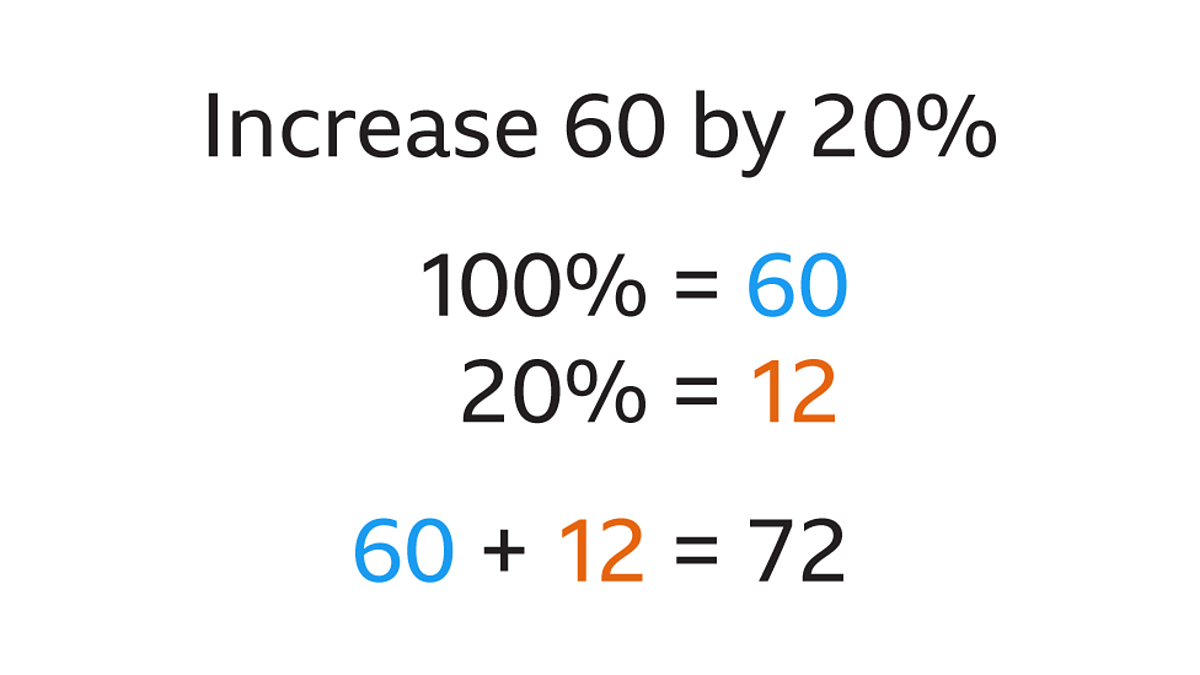
Discounts and Sales Tax: When you see “20% off,” you’re looking at a percentage discount. Calculating this means multiplying the original price by the discount percentage (e.g., $100 * 0.20 = $20 off). Conversely, sales tax adds a percentage to your purchase. If sales tax is 8%, a $100 item will cost you $108 ($100 * 0.08 = $8 in tax). These seem simple, but collectively, they significantly impact your purchasing power.
-
Tips and Gratuities: In many service industries, tipping is customary, typically ranging from 15% to 20% of the bill. Quickly calculating this percentage ensures you can budget accurately and show appropriate appreciation for good service.
Budgeting with Percentages: Allocating Your Income
Budgeting isn’t just about tracking every dollar; it’s about allocating your income strategically. Percentages offer an intuitive way to categorize spending and ensure you’re living within your means while still progressing towards your goals.
-
The 50/30/20 Rule: A popular budgeting guideline suggests allocating 50% of your after-tax income to needs (housing, groceries, utilities), 30% to wants (entertainment, dining out, hobbies), and 20% to savings and debt repayment. This percentage-based framework offers a flexible yet disciplined approach to managing your cash flow without getting bogged down in minute details.
-
Tracking Expenses as Percentages of Income: Instead of just seeing that you spent $500 on dining out, consider what percentage of your income that represents. If your take-home pay is $3,000, $500 on dining is nearly 17%. Is that aligned with your financial priorities? Breaking down your spending into percentages allows for quick assessment and adjustment, highlighting areas where you might be overspending relative to your overall income.
-
Setting Spending Limits: You might decide that no more than 10% of your income should go towards entertainment, or 5% towards subscriptions. These percentage-based limits create clear boundaries, making it easier to stick to your budget and avoid impulse purchases that derail your financial plan.
Setting Financial Goals: Savings and Debt Reduction
Achieving financial goals – whether it’s saving for a down payment, retirement, or paying off debt – becomes clearer and more measurable when framed with percentages.
-
Calculating Progress Towards Savings Goals: If you need to save $10,000 and you’ve already accumulated $2,500, you’ve reached 25% of your goal. Regularly tracking this progress in percentages provides motivation and helps you adjust your savings rate if you’re falling behind.
-
Understanding Debt-to-Income Ratios: Lenders frequently use debt-to-income (DTI) ratios to assess your ability to manage monthly payments and repay new loans. This ratio is calculated by dividing your total monthly debt payments by your gross monthly income, expressed as a percentage. A lower DTI (e.g., below 36%) indicates better financial health and a higher likelihood of loan approval. Knowing and managing your DTI is crucial for major financial steps like buying a home.
-
Accelerating Debt Repayment with Percentage-Based Strategies: The “debt snowball” and “debt avalanche” methods both rely on percentages to prioritize debt. While one focuses on the smallest balance, the other targets the highest interest rate. By understanding which debt consumes the largest percentage of your monthly repayment capacity or accrues the highest percentage of interest, you can strategize to eliminate debt more efficiently, freeing up capital for other financial goals.
Leveraging Percentages for Investment Growth and Risk Management
Beyond day-to-day finances, percentages are the backbone of the investment world. They communicate performance, risk, and portfolio composition, allowing investors to make strategic decisions.
Understanding Investment Returns and Performance
Evaluating how well your investments are doing, or comparing different investment opportunities, is almost entirely done through percentages.
-
Return on Investment (ROI): This fundamental metric measures the profitability of an investment relative to its cost. Calculated as (Current Value – Initial Cost) / Initial Cost * 100, ROI tells you the percentage gain or loss. A 15% ROI means your investment grew by 15% of its original value.
-
Compound Annual Growth Rate (CAGR): For investments held over multiple years, CAGR provides a smoothed, annualized rate of return. This is especially useful for understanding the average percentage growth per year, even if actual year-to-year returns fluctuate widely. It illustrates the power of compounding, where your earnings also start earning returns.
-
Dividend Yields: For income-generating investments like stocks or mutual funds, the dividend yield is the annual dividend per share divided by the share price, expressed as a percentage. This tells you the percentage return you’re getting purely from dividends relative to the investment’s cost.
-
Capital Gains/Losses: When you sell an asset for more or less than you paid for it, the difference is a capital gain or loss. This is often expressed as a percentage of your original investment, impacting your taxable income.
Diversification and Asset Allocation: Spreading Your Bets
A cornerstone of sound investing is diversification – not putting all your eggs in one basket. Percentages are the tools used to define and maintain a diversified portfolio.
-
The Importance of Percentage Allocation: Your asset allocation strategy dictates what percentage of your portfolio is dedicated to different asset classes, such as stocks, bonds, real estate, or cash. A common rule of thumb might suggest your age as the percentage of bonds you should hold (e.g., 40% bonds for a 40-year-old). This percentage-based approach helps manage risk and align your portfolio with your investment horizon and risk tolerance.
-
Rebalancing Your Portfolio: Over time, different asset classes will perform differently, causing your initial percentage allocations to shift. Rebalancing means adjusting your holdings back to your target percentages (e.g., selling some stocks if they’ve grown to 70% of your portfolio and buying more bonds to bring them back to 60/40). This disciplined, percentage-driven strategy helps maintain your desired risk level and take profits from overperforming assets.
Risk Assessment and Volatility
Investment risk is often quantified and communicated using percentages, helping investors understand the potential for price fluctuations.
-
Market Fluctuations: News reports often state that a stock index “fell by 2%” or “rose by 1.5%.” These percentages describe market volatility – the speed and magnitude of price changes. Understanding these fluctuations in percentage terms helps put daily market movements into perspective rather than reacting emotionally to raw point changes.
-
Understanding Risk Tolerance: Financial advisors often assess an individual’s risk tolerance, typically categorizing it as low, moderate, or high. This often translates into recommendations for percentage allocations towards more volatile assets (like stocks) versus more stable ones (like bonds). Knowing your personal risk tolerance in percentage terms is vital for constructing a portfolio that allows you to sleep soundly at night.
Percentages in Business Finance and Online Income
Whether you’re running a multi-million-dollar corporation or managing a nascent online side hustle, percentages are crucial metrics for evaluating performance, identifying growth opportunities, and making strategic business decisions.
Profit Margins and Revenue Growth
The health of any business is often summarized by its profit margins and growth rates, both inherently percentage-based metrics.
-
Gross Profit Margin: This tells you what percentage of revenue is left after deducting the cost of goods sold. If a product sells for $100 and costs $40 to make, the gross profit is $60, resulting in a 60% gross profit margin. This is a key indicator of a business’s efficiency in producing its goods or services.
-
Net Profit Margin: The ultimate bottom-line percentage, net profit margin, shows what percentage of revenue is left after all expenses (including operating costs, interest, and taxes) have been deducted. A 15% net profit margin means that for every dollar of revenue, 15 cents turn into profit. This is the clearest indicator of a company’s overall profitability.
-
Revenue Growth: Businesses often aim for a certain percentage growth in revenue year-over-year or quarter-over-quarter. A 10% revenue growth signifies that the business generated 10% more income than in the previous period, indicating expansion and market acceptance.
Conversion Rates and Marketing ROI for Online Income
For anyone involved in online business, e-commerce, or digital marketing, percentages are the bedrock of analytics and optimization.
-
Conversion Rates: This is the percentage of website visitors or leads who complete a desired action, such as making a purchase, signing up for a newsletter, or filling out a form. A 2% conversion rate on an e-commerce site means that for every 100 visitors, 2 make a purchase. Optimizing this percentage is often a primary goal for online businesses.
-
Affiliate Marketing Commissions: Many online income streams, especially affiliate marketing, are based on percentages. You might earn a 5% commission on every sale you refer, meaning if you drive a $1,000 sale, you earn $50. Understanding these percentages is vital for calculating potential earnings.
-
Ad Spend Efficiency (ROAS): Return on Ad Spend (ROAS) is a metric that calculates the revenue generated for every dollar spent on advertising, often expressed as a percentage or ratio. If you spend $100 on ads and generate $300 in sales, your ROAS is 300% (or 3:1), indicating a highly efficient ad campaign.
Scaling Your Side Hustle: Identifying Growth Metrics
Even small side hustles benefit immensely from a percentage-based approach to tracking growth and identifying bottlenecks.
-
Client Acquisition Rate: What percentage of your leads convert into paying clients? Tracking this helps you refine your sales pitch or marketing efforts.
-
Project Completion Rates: For service-based side hustles, what percentage of accepted projects are completed on time and within budget? This speaks to efficiency and client satisfaction.
-
Income Expansion: Instead of just looking at the raw dollar amount, how much did your side hustle income grow in percentage terms month-over-month or year-over-year? This provides a clearer picture of scaling and sustainability.
Advanced Applications and Avoiding Percentage Pitfalls
While percentages are powerful, they can also be misleading if not understood correctly. A deeper dive reveals nuances and potential traps.
The Impact of Inflation and Deflation
Percentages are critical for understanding how the purchasing power of your money changes over time due to macroeconomic forces.
-
Inflation: This is the rate at which the general level of prices for goods and services is rising, and subsequently, the purchasing power of currency is falling. If inflation is 3%, your money can buy 3% less than it could a year ago. Understanding this percentage helps you adjust your investment strategies to ensure your money is growing faster than inflation.
-
Deflation: The opposite of inflation, deflation is a decrease in the general price level of goods and services. While it might sound good, persistent deflation (e.g., -2% inflation rate) can signal economic trouble, as consumers delay purchases anticipating even lower prices, stifling economic activity.
The Dangers of Misinterpreting Percentages
Numbers can lie, or at least mislead, if you don’t understand the context and the base from which a percentage is derived.
-
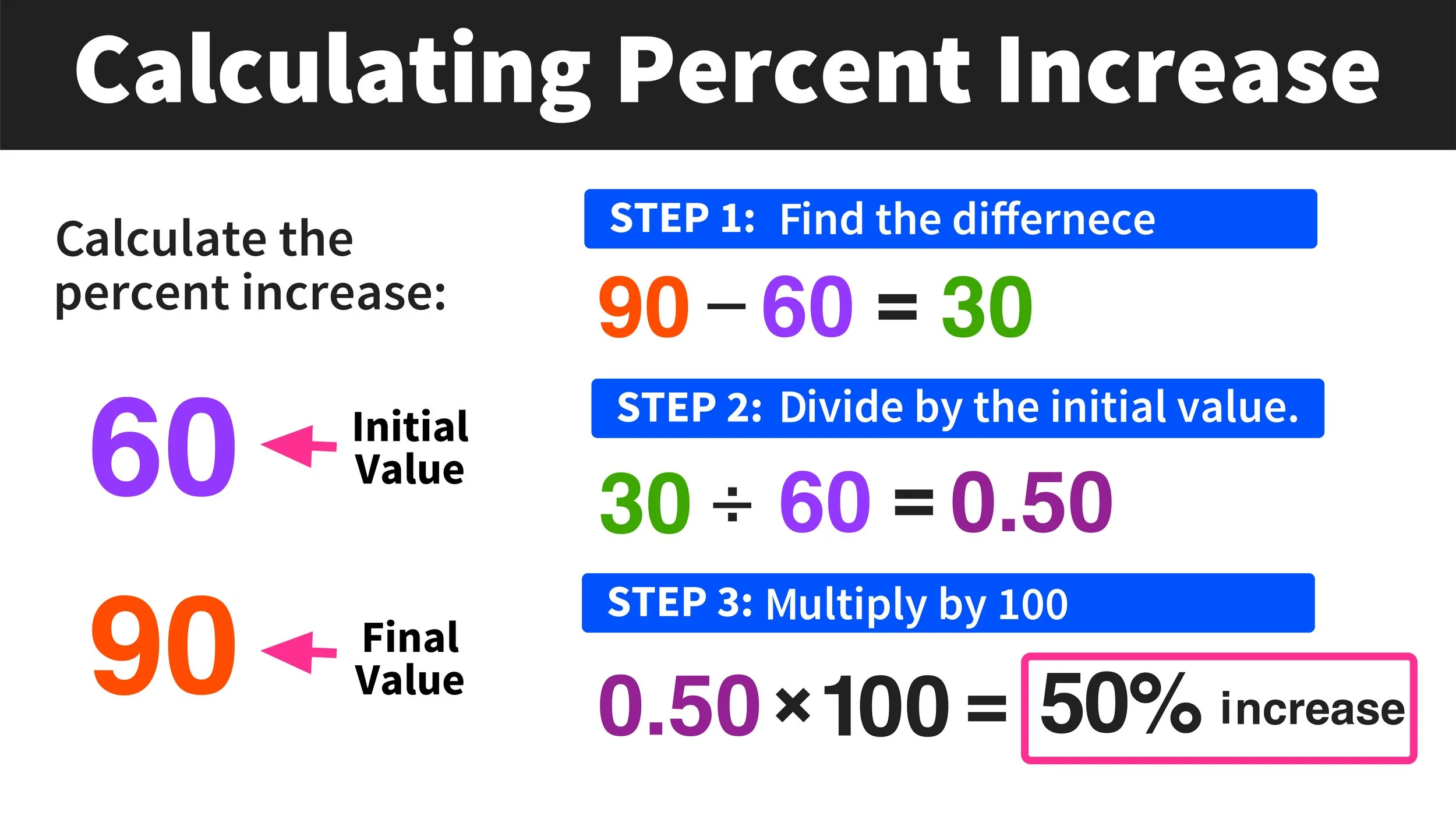
Percentage Points vs. Percentage Change: This is a common and critical distinction. If an interest rate increases from 5% to 6%, it’s a 1 percentage point increase. However, it’s a (1/5) * 100 = 20% percentage change in the interest rate itself. Misunderstanding this can lead to drastic misinterpretations of financial news or product claims.
-
Base Rate Fallacies: When comparing percentages, always consider the base number. A “50% increase in sales” sounds fantastic, but if sales went from 2 to 3, the absolute impact is minimal. Conversely, a “1% increase in sales” on a base of $1 billion is a significant gain of $10 million.
-
Common Financial Scams Using Misleading Percentages: Be wary of investment schemes promising “guaranteed 20% returns per month.” Such high, consistent percentages are almost always red flags in legitimate finance, which usually involves a trade-off between risk and reward.
Financial Tools and Calculators: Simplifying Complex Percentages
You don’t need to be a human calculator to master percentages. Numerous tools can help you apply these concepts effectively.
-
Online Calculators: Mortgage calculators, ROI calculators, compound interest calculators, and budgeting tools all automate percentage-based calculations, allowing you to quickly model different financial scenarios.
-
Spreadsheets (Excel/Google Sheets): These are incredibly powerful for managing personal finances or business metrics. You can set up formulas to automatically calculate percentages for your budget, track investment performance, or analyze business margins.
-
Financial Apps: Many personal finance apps allow you to track spending, categorize income, and monitor investment growth, often displaying key metrics as easy-to-understand percentages.

Conclusion
The journey to financial mastery is fundamentally a journey of understanding numbers, and chief among them are percentages. From the mundane calculations of daily discounts to the sophisticated strategies of investment portfolio management, percentages provide clarity, context, and control. They allow you to benchmark performance, set realistic goals, and make informed decisions that align with your financial aspirations. By embracing “how to percent” – not as a complex mathematical chore, but as an essential financial literacy skill – you empower yourself to navigate the economic landscape with confidence, paving the way for greater financial security and prosperity. Start paying attention to the percentages around you; they are literally the language your money speaks.
aViewFromTheCave is a participant in the Amazon Services LLC Associates Program, an affiliate advertising program designed to provide a means for sites to earn advertising fees by advertising and linking to Amazon.com. Amazon, the Amazon logo, AmazonSupply, and the AmazonSupply logo are trademarks of Amazon.com, Inc. or its affiliates. As an Amazon Associate we earn affiliate commissions from qualifying purchases.