
Understanding how to calculate and interpret the annual interest rate (AIR), often referred to as the Annual Percentage Rate (APR) in many lending contexts, is a fundamental skill in personal finance. Whether you’re considering a loan, opening a savings account, or evaluating an investment, the annual interest rate is the crucial metric that dictates the cost of borrowing or the return on your capital over a year. It’s the standard yardstick that allows for an apples-to-apples comparison of diverse financial products. Without a clear grasp of how this rate is determined and what it truly represents, individuals risk making uninformed decisions that can have significant long-term financial implications, from accumulating excessive debt to missing out on optimal savings growth. This article aims to demystify the process, equipping you with the knowledge and tools to confidently figure out the annual interest rate in various financial scenarios.

Understanding the Basics of Interest Rates
Before diving into calculations, it’s essential to establish a foundational understanding of what interest is and the different forms it can take. This clarity will serve as the bedrock for more complex calculations.
What is Interest?
At its core, interest is the cost of borrowing money or the reward for lending it. When you borrow money from a bank, you pay interest as a fee for using their capital. Conversely, when you deposit money into a savings account or invest it, the financial institution pays you interest for the privilege of using your funds. This cost or reward is typically expressed as a percentage of the principal amount, which is the original sum borrowed or invested. The magnitude of this percentage, combined with the frequency and method of its application, dictates the overall financial outcome.
Distinguishing Between Nominal and Effective Interest Rates
It’s common to encounter various terms related to interest rates, and understanding the nuances between them is critical. The “nominal interest rate” is the stated interest rate on a loan or investment, without taking into account the effect of compounding. For example, a loan might be advertised with a “10% annual interest rate, compounded monthly.” Here, 10% is the nominal rate.
However, the “effective annual rate” (EAR) or “annual percentage rate” (APR) provides a more accurate picture of the actual cost of borrowing or the actual return on an investment over a year, because it factors in the effect of compounding. If interest is compounded more frequently than once a year (e.g., monthly, daily), the effective rate will always be higher than the nominal rate due to the power of compounding. The EAR/APR is the rate that truly allows for direct comparison between different financial products, regardless of their compounding frequency.
Why Annualization Matters
The concept of annualization is fundamental to comparing financial instruments fairly. Many loans and investments quote interest rates on a monthly, quarterly, or even daily basis. If you’re comparing a loan with a monthly interest rate to a savings account with a quarterly rate, you cannot simply compare the raw percentages. Annualization converts these varying periodic rates into a standardized annual rate, allowing you to compare the true cost or return over a full year. This standardization prevents misleading comparisons and ensures you have a clear understanding of the overall financial commitment or gain.
Key Components in Calculating Annual Interest
To accurately figure out the annual interest rate, whether simple or effective, you need to understand the individual elements that contribute to its calculation. Each component plays a vital role in determining the final figure.
Principal Amount
The principal amount is the initial sum of money that is borrowed or invested. It is the base upon which interest is calculated. For a loan, it’s the amount you receive from the lender. For an investment, it’s the original capital you put in. Understanding the principal is the starting point for any interest calculation, as all rates are applied relative to this initial sum.
Interest Rate (Per Period)
Often, financial products will specify an interest rate for a period shorter than a year, such as a monthly rate or a quarterly rate. This “per period” rate is the percentage applied to the principal (or the principal plus accrued interest, in the case of compounding) for that specific period. For instance, a credit card might state a 1.5% monthly interest rate, which then contributes to its overall annual percentage rate. It’s crucial not to confuse this periodic rate with the annual rate, as directly multiplying it by the number of periods might not always yield the true annual cost if compounding is involved.
Compounding Frequency
Compounding frequency refers to how often the accrued interest is added back to the principal amount. The more frequently interest is compounded, the faster the principal grows (for investments) or the debt accumulates (for loans). Common compounding frequencies include annually, semi-annually, quarterly, monthly, daily, or even continuously. This is perhaps the most significant factor that differentiates the nominal rate from the effective annual rate. A loan with a 5% nominal rate compounded daily will incur more interest over a year than the same loan compounded annually, because the interest starts earning interest sooner.
Loan/Investment Term
The term refers to the total duration over which the loan is to be repaid or the investment is held. While not directly part of the annual interest rate calculation, the term is critical for understanding the total interest paid or earned over the life of the financial product. For example, a longer loan term, even with the same annual interest rate, will result in more total interest paid due to the extended period over which interest accrues.
Practical Methods for Calculating Annual Interest Rate (AIR/APR)
With the foundational concepts in place, let’s explore the practical methods for calculating annual interest rates, ranging from simple scenarios to those involving compounding.
Simple Annual Interest Rate Calculation
Simple interest is the easiest to calculate because it is only applied to the original principal amount. It does not compound. While less common for long-term loans or investments, it’s often used for short-term loans or specific types of bonds.
The formula for simple interest is:
$I = P times R times T$
Where:
-
$I$ = Total Interest Paid/Earned
-
$P$ = Principal Amount
-
$R$ = Annual Interest Rate (as a decimal)
-
$T$ = Time (in years)
To find the simple annual interest rate ($R$), if you know the interest paid, principal, and time, you can rearrange the formula:
$R = I / (P times T)$
Example: If you borrow $1,000 for 1 year and pay $100 in interest, the simple annual interest rate is $100 / ($1,000 times 1) = 0.10$ or 10%. If you pay $50 in interest over 6 months ($0.5$ years), the rate is $50 / ($1,000 times 0.5) = 0.10$ or 10%.

Effective Annual Rate (EAR) for Compounded Interest
Most real-world financial products involve compound interest, where interest earned (or charged) is added to the principal, and subsequent interest calculations are based on this new, larger principal. This is why the Effective Annual Rate (EAR) or Annual Percentage Rate (APR) is so crucial. It accounts for the effects of compounding.
The formula for the Effective Annual Rate (EAR) is:
$EAR = (1 + r/n)^n – 1$
Where:
-
$EAR$ = Effective Annual Rate (as a decimal)
-
$r$ = Nominal Annual Interest Rate (as a decimal)
-
$n$ = Number of times interest is compounded per year
Example with monthly compounding:
Suppose a loan has a nominal annual interest rate ($r$) of 12% (0.12) and is compounded monthly ($n=12$).
$EAR = (1 + 0.12/12)^{12} – 1$
$EAR = (1 + 0.01)^{12} – 1$
$EAR = (1.01)^{12} – 1$
$EAR approx 1.126825 – 1$
$EAR approx 0.126825$ or 12.68%
This means a 12% nominal rate compounded monthly is effectively a 12.68% annual rate. You’re paying an extra 0.68% due to the compounding effect.
Example with daily compounding:
Using the same 12% nominal rate, but compounded daily ($n=365$).
$EAR = (1 + 0.12/365)^{365} – 1$
$EAR approx (1 + 0.000328767)^{365} – 1$
$EAR approx (1.000328767)^{365} – 1$
$EAR approx 1.1274746 – 1$
$EAR approx 0.1274746$ or 12.75%
As you can see, the more frequent the compounding, the higher the effective annual rate.
Using Online Calculators and Financial Tools
While understanding the formulas is empowering, for quick and accurate calculations, especially for complex scenarios or for comparing multiple products, online EAR/APR calculators and financial tools are invaluable. Most banking websites, personal finance platforms, and even search engines offer these tools. Simply input the nominal rate, compounding frequency, and sometimes the principal and term, and the calculator will output the effective annual rate. Always ensure the calculator you use is reputable and clearly states which formula it’s applying.
Common Scenarios and Their Implications
The application of annual interest rates varies significantly across different financial products, each with its own implications for borrowers and savers.
Loans (Mortgages, Auto Loans, Personal Loans)
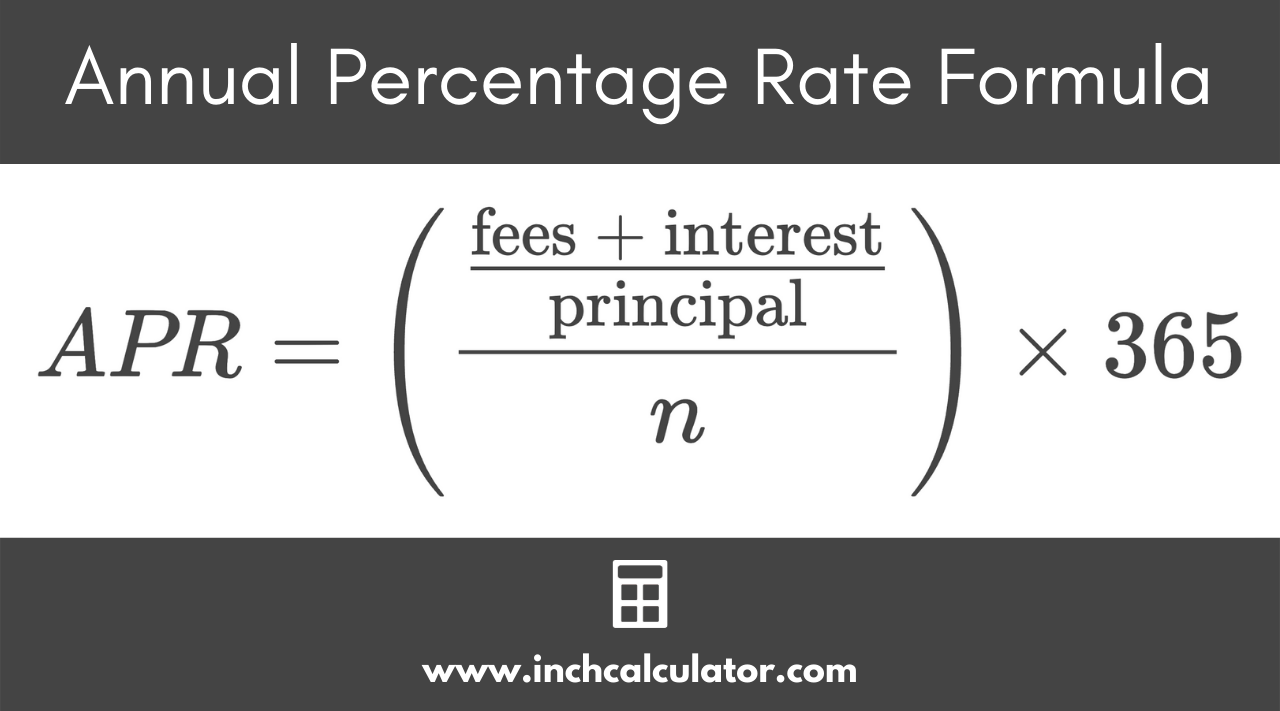
When taking out a loan, the lender will quote an Annual Percentage Rate (APR). This APR is designed to represent the true annual cost of borrowing, including not only the interest rate but also certain fees (like origination fees) associated with the loan. This makes the APR a more comprehensive measure than just the nominal interest rate. A lower APR means a lower total cost of borrowing over the life of the loan. For mortgages, even a seemingly small difference in APR can translate to tens of thousands of dollars over 15-30 years. Always compare APRs when shopping for loans.
Credit Cards
Credit cards typically have some of the highest APRs, and they often compound daily or monthly. The interest rate advertised is usually the nominal annual rate, but the effective rate can be slightly higher due to frequent compounding. If you carry a balance on your credit card, understanding its APR is paramount, as high rates can quickly escalate debt. Making only minimum payments on high-APR cards is a recipe for long-term financial struggle, as a significant portion of your payment goes towards interest, leaving the principal largely untouched.
Savings Accounts and Investments
On the flip side, annual interest rates work in your favor for savings accounts, certificates of deposit (CDs), and many investments. Banks advertise an Annual Percentage Yield (APY) for savings products, which is essentially the EAR from the saver’s perspective. The APY tells you the true annual rate of return you’ll receive, accounting for compounding. A higher APY means your money will grow faster. For investments, the annual rate of return is a key metric for evaluating performance and projecting future growth. Understanding how compounding boosts these returns over time is central to wealth building.
Why Mastering Annual Interest Rate Calculation is Crucial
The ability to figure out and understand annual interest rates isn’t just an academic exercise; it’s a critical life skill that underpins sound financial management.
Informed Financial Decision-Making
Every major financial decision, from buying a house or car to opening a new credit card or saving for retirement, involves interest rates. By understanding how they are calculated and what they truly represent, you can make informed choices that align with your financial goals. You can accurately assess the long-term cost of debt or the potential growth of your investments.
Comparing Financial Products Effectively
The market is flooded with various financial products, each with different structures and advertised rates. Without the ability to convert these into a comparable annual interest rate (APR/EAR/APY), you risk choosing a suboptimal product. Mastering these calculations allows you to cut through marketing jargon and identify the best deals, whether you’re seeking the lowest borrowing cost or the highest return on your savings.
Avoiding Hidden Costs and Fees
Many financial products come with fees that, while not explicitly part of the nominal interest rate, contribute to the overall cost. The APR for loans, by definition, incorporates some of these fees, providing a more transparent view of the “true” cost. Being able to dissect these numbers helps you avoid unpleasant surprises and ensures you’re aware of the full financial commitment.
Empowering Your Financial Future
Ultimately, understanding annual interest rates empowers you to take control of your financial future. It allows you to strategically manage debt, accelerate savings growth, and make smarter investment choices. This knowledge fosters financial literacy, which is the cornerstone of building long-term wealth and achieving financial independence.
In conclusion, the annual interest rate is more than just a number; it’s a powerful tool for navigating the complexities of personal finance. By understanding its components, knowing how to calculate it, and appreciating its implications across various financial products, you equip yourself with the insights needed to make confident, intelligent decisions that will positively shape your financial journey.
aViewFromTheCave is a participant in the Amazon Services LLC Associates Program, an affiliate advertising program designed to provide a means for sites to earn advertising fees by advertising and linking to Amazon.com. Amazon, the Amazon logo, AmazonSupply, and the AmazonSupply logo are trademarks of Amazon.com, Inc. or its affiliates. As an Amazon Associate we earn affiliate commissions from qualifying purchases.