
Understanding how to calculate percentages is not merely a mathematical exercise; it’s a foundational skill for navigating the complexities of personal finance, making savvy investment decisions, and effectively managing business operations. From deciphering interest rates on a loan to evaluating the return on an investment, percentages provide a universal language for comparison and analysis. In the realm of money, mastering this concept can empower you to make more informed choices, identify opportunities, and mitigate risks.
The Fundamental Math of Percentages: Your Financial Building Block
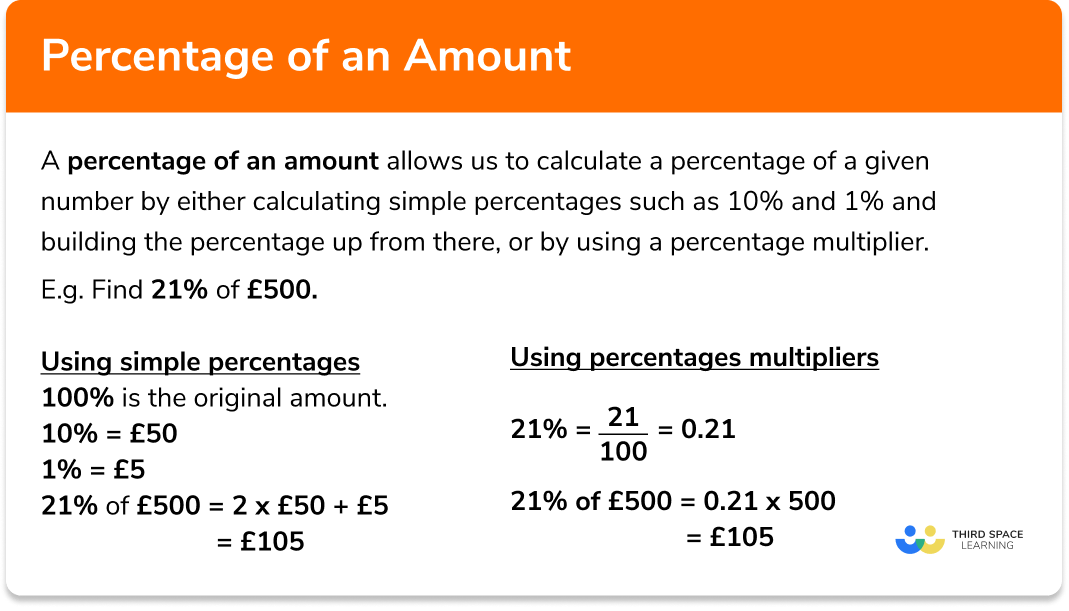
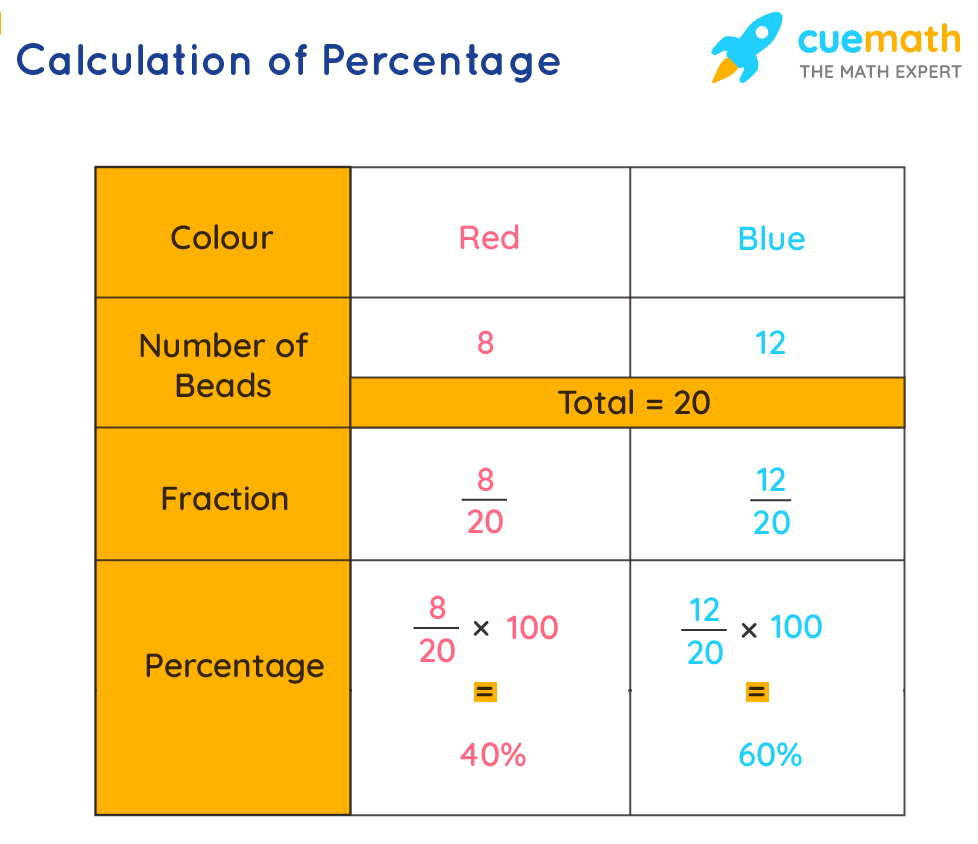
At its core, a percentage represents a part of a whole, expressed as a fraction of 100. The term “percent” literally means “per hundred.” This simple concept becomes incredibly powerful when applied to financial scenarios.
Deconstructing the Basic Formula
The most common way to calculate a percentage involves three key components: the part, the whole, and the percentage itself.
Percentage = (Part / Whole) × 100
Let’s break down each element:
-
The Part: This is the specific amount or quantity you are interested in. For example, if you want to know what percentage of your income goes to housing, the rent payment would be the “part.”
-
The Whole: This represents the total amount or quantity from which the part is taken. In the housing example, your total monthly income would be the “whole.”
-
100: This multiplier converts the decimal or fractional result into a percentage format, making it easier to understand and compare.
Example 1: Finding the Percentage of a Total
Suppose you earned $5,000 last month, and your rent payment was $1,500. To find what percentage of your income went to rent:
Percentage = ($1,500 / $5,000) × 100
Percentage = 0.30 × 100
Percentage = 30%
This tells you that 30% of your income is allocated to housing.
Example 2: Finding a Part from a Given Percentage
Often, you know the whole and the percentage, and you need to find the part. For instance, if you want to save 15% of your $5,000 income, how much should you save?
Amount to Save = (Percentage / 100) × Whole
Amount to Save = (15 / 100) × $5,000
Amount to Save = 0.15 × $5,000
Amount to Save = $750
So, you need to save $750.
Example 3: Finding the Whole from a Part and a Percentage
Imagine you received a $300 bonus, which your employer told you represents 5% of your total sales for the quarter. What were your total sales?
Whole = Part / (Percentage / 100)
Whole = $300 / (5 / 100)
Whole = $300 / 0.05
Whole = $6,000
Your total sales for the quarter were $6,000.
These foundational calculations underpin nearly every financial percentage you encounter.
Personal Finance Demystified: Leveraging Percentages for Smart Money Moves
Percentages are indispensable tools for managing your personal finances effectively. They help you visualize your financial health, track progress toward goals, and make prudent spending decisions.
Budgeting and Expense Tracking
A common and highly effective budgeting strategy is the 50/30/20 rule, which dictates that 50% of your after-tax income should go to needs, 30% to wants, and 20% to savings and debt repayment. To implement this, you first need to calculate these percentages from your net income.
-
Needs (e.g., Housing, Utilities, Groceries): If your net income is $4,000, 50% for needs means 0.50 * $4,000 = $2,000.
-
Wants (e.g., Entertainment, Dining Out, Hobbies): 30% for wants means 0.30 * $4,000 = $1,200.
-
Savings/Debt Repayment: 20% means 0.20 * $4,000 = $800.
By breaking down your budget this way, you gain clear boundaries for each spending category. Furthermore, when reviewing your bank statements, you can calculate what percentage of your income each actual expense category consumed, allowing you to identify areas where you might be overspending.
Discounts, Sales Tax, and Interest Rates
Navigating retail sales, understanding your pay stub, or evaluating loan offers all require a firm grasp of percentages.
-
Discounts: A common scenario involves calculating savings during a sale. If an item costs $120 and is discounted by 25%, your savings are 0.25 * $120 = $30. The new price is $120 – $30 = $90.
-
Sales Tax: Conversely, sales tax adds to the total cost. If an item costs $50 and the sales tax is 8%, the tax amount is 0.08 * $50 = $4. The total cost is $50 + $4 = $54.
-
Interest Rates: Whether it’s the interest you pay on a credit card or a mortgage, or the interest you earn on a savings account, percentages are key. A 15% annual interest rate on a $1,000 loan means you’ll pay $150 in interest over the year (0.15 * $1,000). For monthly calculations, you’d typically divide the annual rate by 12.
Retirement Savings and Emergency Funds
Setting financial goals, like building an emergency fund or saving for retirement, often involves percentage targets. Financial advisors might recommend saving 10-15% of your income for retirement. By calculating this percentage, you can automate contributions and track your progress towards a financially secure future.
Investing and Wealth Growth: Percentage Power in Action
For investors, percentages are the primary metric for evaluating performance, managing risk, and making strategic allocation decisions.
Return on Investment (ROI)
ROI is a crucial metric that measures the profitability of an investment. It’s calculated as:
ROI = [(Current Value of Investment – Original Cost of Investment) / Original Cost of Investment] × 100
If you invested $10,000 in a stock that is now worth $12,500:
ROI = [($12,500 – $10,000) / $10,000] × 100
ROI = ($2,500 / $10,000) × 100
ROI = 0.25 × 100
ROI = 25%
A 25% ROI indicates a strong performance, allowing you to compare it with other investment opportunities.
Portfolio Allocation
Diversifying investments across different asset classes (e.g., stocks, bonds, real estate) is essential for managing risk. This is expressed using percentages. A common strategy might be 60% stocks, 30% bonds, and 10% real estate. If your total portfolio is worth $100,000, this translates to $60,000 in stocks, $30,000 in bonds, and $10,000 in real estate. Regularly rebalancing your portfolio means adjusting your holdings to maintain these target percentages as market values fluctuate.
Percentage Change in Stock Prices
Investors frequently monitor the percentage change in stock prices to understand daily or weekly performance.
Percentage Change = [(New Price – Old Price) / Old Price] × 100
If a stock was $50 and is now $55:
Percentage Change = [($55 – $50) / $50] × 100
Percentage Change = ($5 / $50) × 100
Percentage Change = 0.10 × 100
Percentage Change = 10% increase.
If the stock dropped from $50 to $45, the calculation would yield a -10% change, indicating a loss.
Business Acumen: Percentages for Profitability and Growth
For entrepreneurs, small business owners, or anyone engaging in side hustles, percentages are vital for assessing financial health, pricing products/services, and making strategic business decisions.
Profit Margins
Businesses rely heavily on profit margins to gauge their efficiency and profitability.
-
Gross Profit Margin: Measures the percentage of revenue remaining after deducting the cost of goods sold (COGS).
Gross Profit Margin = [(Revenue – COGS) / Revenue] × 100
If a product sells for $100 and costs $40 to produce, the gross profit is $60.
Gross Profit Margin = ($60 / $100) × 100 = 60%.
-
Net Profit Margin: Represents the percentage of revenue left after all expenses, including COGS, operating expenses, interest, and taxes, have been deducted.
Net Profit Margin = (Net Profit / Revenue) × 100
A higher net profit margin indicates greater overall efficiency and financial health.
Expense Ratios
Understanding where money is being spent is critical. Expense ratios express various costs as a percentage of revenue, allowing for easy comparison over time or against industry benchmarks.
-
Operating Expense Ratio = (Operating Expenses / Revenue) × 100
-
Marketing Expense Ratio = (Marketing Expenses / Revenue) × 100
Monitoring these percentages helps businesses identify areas for cost reduction or evaluate the effectiveness of spending.
Commission and Royalties
Many sales roles and creative professions rely on commissions or royalties, which are often calculated as a percentage of sales or revenue. If a salesperson earns a 10% commission on sales, and they sell $5,000 worth of products, their commission is 0.10 * $5,000 = $500.
Mastering Percentage Calculation: Beyond the Basics for Financial Clarity
While the fundamental formula is straightforward, misinterpretations can lead to significant financial errors.
Understanding Percentage Points vs. Percentage Change
This is a common pitfall. A “percentage point” refers to the absolute difference between two percentages, while “percentage change” refers to the relative change.
-
Percentage Points: If an interest rate increases from 4% to 5%, that’s a 1 percentage point increase.
-
Percentage Change: To calculate the percentage change in the rate itself, it would be [ (5 – 4) / 4 ] * 100 = (1 / 4) * 100 = 25%. This means the interest rate increased by 25% of its original value.
Confusing these two can lead to vastly different conclusions, especially in financial reporting or investment analysis.
The Importance of the “Whole”
Always be clear about what constitutes the “whole” in your calculation. Is it gross income or net income? Total assets or liquid assets? The starting value or the average value? An incorrect “whole” will inevitably lead to an incorrect percentage.

Leveraging Financial Tools
While mental math and basic calculators are useful, financial calculators, spreadsheet software (like Excel or Google Sheets), and dedicated financial apps can automate complex percentage calculations, reducing the chance of error and allowing you to model various scenarios rapidly. For instance, mortgage calculators use percentages to determine monthly payments based on interest rates and loan terms.
In conclusion, the ability to calculate and interpret percentages is more than just academic; it’s a vital life skill with direct and profound implications for your financial well-being. From managing your daily budget to making strategic investment decisions and even running a profitable business, percentages provide the quantitative framework necessary for financial literacy and success. Mastering them empowers you to take control of your financial narrative.
aViewFromTheCave is a participant in the Amazon Services LLC Associates Program, an affiliate advertising program designed to provide a means for sites to earn advertising fees by advertising and linking to Amazon.com. Amazon, the Amazon logo, AmazonSupply, and the AmazonSupply logo are trademarks of Amazon.com, Inc. or its affiliates. As an Amazon Associate we earn affiliate commissions from qualifying purchases.