
In the intricate world of finance, numbers speak volumes, but percentages give them context and meaning. From understanding interest rates on a loan to evaluating investment returns, deciphering discounts on a sale, or analyzing your budget, percentages are the universal language that translates raw figures into digestible, comparable insights. Mastering the simple art of converting a number into a percentage isn’t just a mathematical exercise; it’s a fundamental step towards informed financial decision-making and building true financial literacy.
Without a firm grasp of percentages, you’re often left guessing about the true impact of financial transactions. Is that 0.5% difference in mortgage rates significant? How much of your income really goes towards discretionary spending? What’s the actual gain on your stock portfolio over the last quarter? This article will demystify the process, providing clear instructions and, more importantly, illustrating how this core skill is applied across virtually every facet of your financial life. Prepare to empower yourself with the numerical fluency that underlies smart money management.
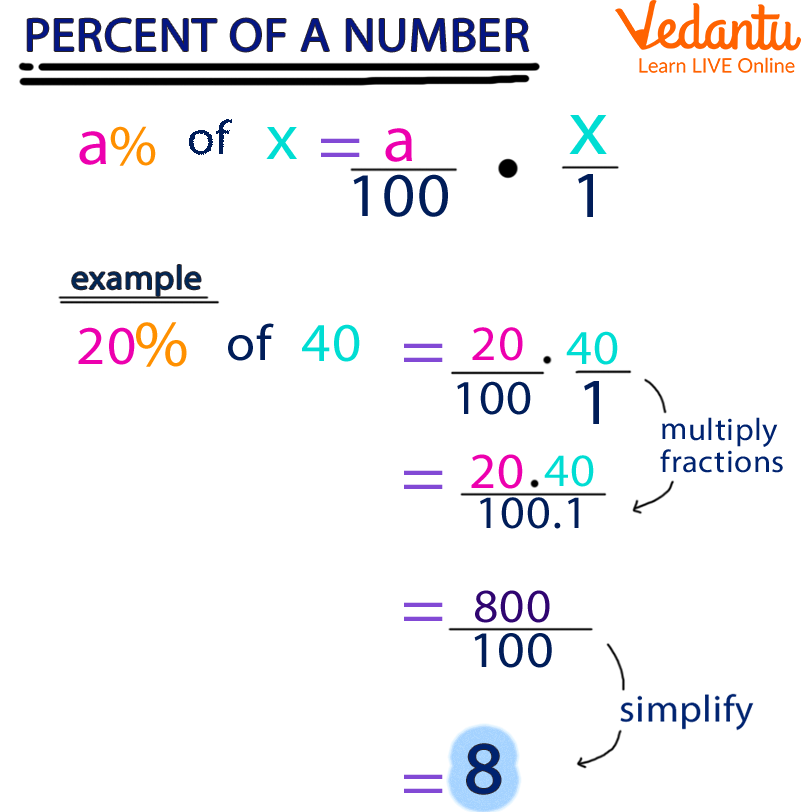
The Foundational Math: Understanding Percentages
Before we dive into real-world financial scenarios, let’s establish a solid understanding of what a percentage truly represents and the simple formula that underpins all calculations.
What Exactly is a Percentage?
At its heart, “percent” literally means “per hundred.” It’s a way of expressing a number as a fraction of 100. So, 25% means 25 out of every 100, or 25/100. This standardization makes it incredibly useful for comparing different quantities or understanding proportions, regardless of the original total amount. For instance, knowing that you spent 10% of your budget on dining out is more insightful than just knowing you spent $200, especially if your budget changes month to month.
The Basic Formula: Part / Whole x 100
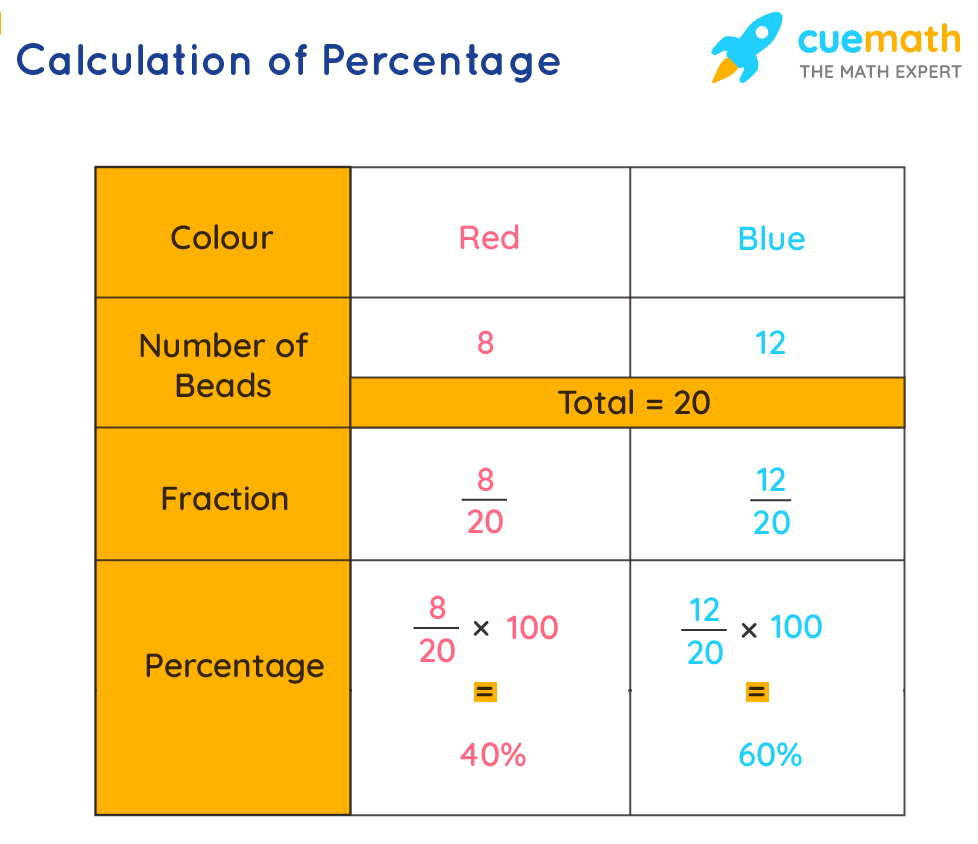
The core formula for converting any number (the “part”) into a percentage of another number (the “whole”) is straightforward:
Percentage = (Part / Whole) × 100
Let’s illustrate with a simple, non-financial example: If you got 80 questions right on a 100-question test, your “part” is 80 and your “whole” is 100.
(80 / 100) × 100 = 0.80 × 100 = 80%.
Now, imagine you got 17 questions right on a 20-question quiz.
(17 / 20) × 100 = 0.85 × 100 = 85%.
Notice how comparing 80% to 85% is easier than comparing “80 out of 100” to “17 out of 20.” This highlights the power of percentages for clear comparison.
Working with Decimals and Fractions
It’s also crucial to understand the relationship between percentages, decimals, and fractions.
-
Percentage to Decimal: To convert a percentage to a decimal, simply divide by 100 (or move the decimal point two places to the left). So, 25% becomes 0.25. This is often necessary when performing calculations within formulas.
-
Decimal to Percentage: To convert a decimal to a percentage, multiply by 100 (or move the decimal point two places to the right). So, 0.75 becomes 75%.
-
Fraction to Percentage: Convert the fraction to a decimal first by dividing the numerator by the denominator, then multiply by 100. For example, 3/4 = 0.75 = 75%.
Practical Applications in Personal Finance
Percentages are the bedrock of personal financial management. Understanding how to calculate them allows you to make smarter decisions about your everyday money.
Budgeting and Expense Tracking
A fundamental use of percentages in personal finance is budgeting. By calculating what percentage of your income goes to various categories, you gain clear insight into your spending habits and can identify areas for adjustment.
Example: If your monthly take-home income is $4,000, and you spend $1,200 on rent:
($1,200 / $4,000) × 100 = 0.30 × 100 = 30% of your income goes to rent.
This approach is key to strategies like the popular 50/30/20 rule, which suggests allocating 50% of your income to needs, 30% to wants, and 20% to savings and debt repayment. You can only adhere to such a rule if you can accurately calculate these percentages.
Discounts, Sales, and Markups
Whether you’re a savvy shopper or a small business owner, percentages are critical for understanding pricing.
Example (Discount): A shirt originally costs $50 and is on sale for $35. What is the percentage discount?
First, find the discount amount: $50 – $35 = $15.
Then, calculate the percentage discount relative to the original price:
($15 / $50) × 100 = 0.30 × 100 = 30% discount.
Example (Markup for a Business): If a product costs you $20 to make and you sell it for $30, what’s your percentage markup?
Markup amount: $30 – $20 = $10.
Percentage markup (relative to cost):
($10 / $20) × 100 = 0.50 × 100 = 50% markup.
Interest Rates: Loans, Savings, and Credit Cards
Interest rates are almost universally expressed as percentages – Annual Percentage Rate (APR) for loans, Annual Percentage Yield (APY) for savings accounts. Understanding how to calculate and compare these is vital.
Example (Simple Interest on Savings): You have $1,000 in a savings account with a 2% annual interest rate. How much interest do you earn in a year?
Interest Earned = Principal × Rate × Time
Interest Earned = $1,000 × (2/100) × 1 = $1,000 × 0.02 × 1 = $20.
Knowing how interest compounds and how percentage rates translate into actual dollars can save you significant money on loans or earn you more on investments.
Percentages in Investing and Wealth Building

For those looking to grow their wealth, percentages are the metrics that measure success, risk, and potential.
Investment Returns and Growth
The performance of your investments is almost always measured in percentage terms.
Example (Stock Gain): You buy a stock for $100 per share and sell it for $115 per share. What’s your percentage return?
Profit = $115 – $100 = $15.
Percentage Return = ($15 / $100) × 100 = 15%.
This is essential for evaluating whether an investment meets your expectations or comparing the performance of different assets or fund managers. For long-term investments, understanding Compound Annual Growth Rate (CAGR) – a smoothed average annual percentage growth rate – provides a clearer picture of sustained performance.
Portfolio Allocation
Financial advisors often recommend diversifying investments by allocating different percentages of your portfolio to various asset classes (e.g., 60% stocks, 30% bonds, 10% cash). This percentage-based approach helps manage risk and align your investments with your financial goals.
If you have a $100,000 portfolio and aim for 60% in stocks, you’d allocate $60,000 to stocks ($100,000 × 0.60).
Inflation and Purchasing Power
Inflation, often reported as a percentage, directly impacts the purchasing power of your money. If inflation is 3%, your dollar can buy 3% less goods and services than it could a year ago. Understanding this helps you calculate the real return on your investments (nominal return minus inflation rate) and plan for future expenses.
Business Finance and Operational Insights
In the business world, percentages are indispensable for analyzing performance, profitability, and financial health.
Profit Margins and Revenue Growth
Key performance indicators (KPIs) like gross profit margin and net profit margin are expressed as percentages and are vital for assessing a company’s efficiency and profitability.
Example (Gross Profit Margin): If a company has $1,000,000 in revenue and its cost of goods sold is $600,000:
Gross Profit = $1,000,000 – $600,000 = $400,000.
Gross Profit Margin = ($400,000 / $1,000,000) × 100 = 40%.
This tells you that for every dollar of revenue, the company keeps 40 cents after accounting for direct production costs.
Similarly, revenue growth is calculated as a percentage increase from one period to another. If revenue increased from $1M to $1.2M, that’s a 20% growth.
Understanding Financial Ratios
While many financial ratios are expressed as a number (e.g., debt-to-equity ratio of 1.5), understanding the components often involves a part-to-whole relationship that benefits from percentage thinking. For example, understanding what percentage of assets are financed by debt, or the percentage of revenue consumed by operating expenses, offers deep operational insights.
Tax Rates and Deductions
Taxes are levied at various percentage rates, from income tax brackets to sales tax. Understanding your effective tax rate (the percentage of your total income paid in taxes) is crucial for financial planning. Tax deductions and credits often reduce your taxable income, indirectly affecting the percentage of your gross income that you end up paying.
Tools and Tips for Accurate Percentage Calculations
While the basic formula is simple, various tools can help you perform percentage calculations quickly and accurately, especially for more complex financial scenarios.
The Humble Calculator
For quick, one-off calculations, any basic calculator (physical or on your smartphone) will suffice. Just remember the order of operations: divide the part by the whole, then multiply by 100.
Spreadsheet Software (Excel, Google Sheets)
For budgeting, investment tracking, or business analysis, spreadsheet software like Microsoft Excel or Google Sheets is invaluable.
-
Automatic Calculation: You can set up cells to automatically calculate percentages. If cell A1 contains the “part” and B1 contains the “whole,” simply type
=(A1/B1)*100into another cell to get the percentage. -
Percentage Format: Spreadsheets also have a “Percentage” format that multiplies the decimal by 100 and adds the percent sign automatically. If you have A1/B1 resulting in 0.25, applying the percentage format will display it as 25%. This is incredibly efficient for large datasets.
Online Calculators and Financial Apps
The internet is replete with specialized percentage calculators for specific financial needs:
-
Loan Calculators: Input loan amount, interest rate, and term to see monthly payments and total interest paid.
-
Investment Return Calculators: Project potential returns based on initial investment, regular contributions, and an assumed annual percentage return.
-
Tip Calculators: Automatically calculate tip percentages on restaurant bills.
These tools automate the math, allowing you to focus on the financial implications of the results.
Conclusion
Calculating a number into a percentage is more than just arithmetic; it’s a foundational financial skill that unlocks a deeper understanding of your money. From managing your daily budget and spotting sale bargains to making informed investment decisions and analyzing business performance, percentages provide the crucial context that raw numbers often lack.
By embracing this simple formula – (Part / Whole) × 100 – and applying it across your financial landscape, you gain clarity, confidence, and control. Take the time to practice these calculations, utilize the tools available, and cultivate a “percentage mindset.” The ability to fluently speak the language of percentages will undoubtedly serve as a powerful asset in your journey toward financial mastery and sustained wealth creation.