
In the intricate world of finance, percentages are ubiquitous. From calculating interest rates on savings accounts and loans to understanding investment returns, sales discounts, and budgeting allocations, percentages serve as a vital shorthand for expressing proportions and changes. However, while percentages offer a convenient way to represent relative values, their true utility in financial decision-making often lies in translating them back into concrete numbers. Knowing “how to get a number from a percentage” isn’t merely a mathematical exercise; it’s a critical skill that empowers individuals and businesses to make informed, data-driven financial choices.

This guide will demystify the process, transforming an abstract percentage into a tangible figure. We’ll explore the foundational mathematics, delve into diverse financial applications, highlight advanced scenarios, and equip you with the tools to master this essential financial literacy component.
The Fundamental Formula: Converting Percentages to Decimals
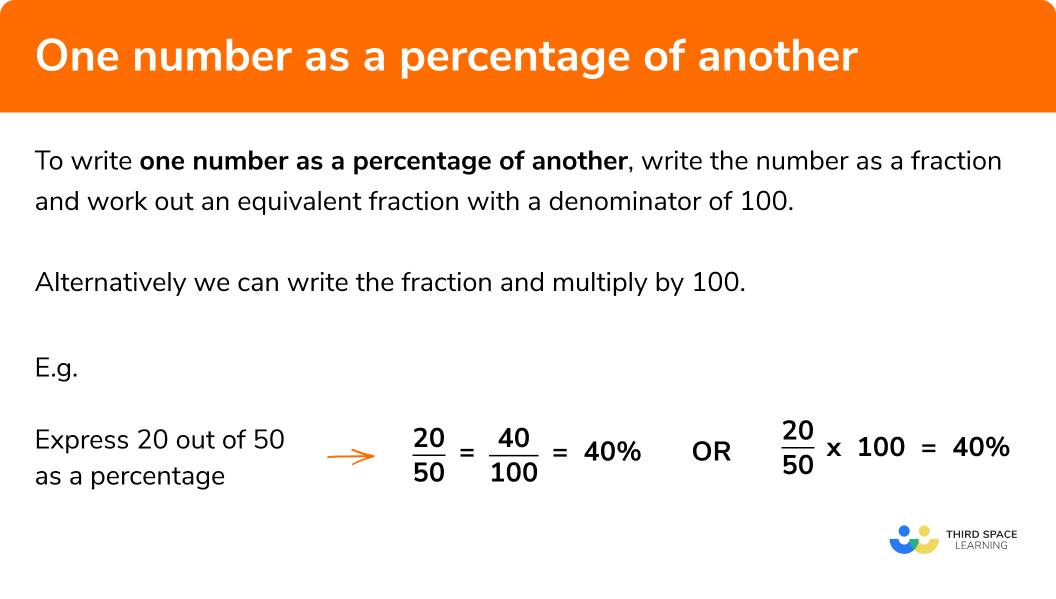
At its core, getting a number from a percentage involves a simple, yet powerful, conversion: transforming the percentage into a decimal. A percentage, by definition, represents a fraction out of 100. Thus, 25% means 25 out of 100, which can be written as 25/100.
The Basic Conversion Rule: Divide by 100
The most straightforward way to convert any percentage into a decimal is to divide it by 100. This effectively moves the decimal point two places to the left.
-
Example 1: If you have 15%, you divide 15 by 100, which equals 0.15.
-
Example 2: For 75%, dividing by 100 yields 0.75.
-
Example 3: Even for percentages greater than 100%, the rule applies. 120% becomes 1.20.
-
Example 4: For single-digit percentages, say 5%, dividing by 100 gives 0.05. It’s crucial to remember to fill the tens place with a zero.
Once you have the decimal form, obtaining the numerical value from a base amount is simple: you multiply the base amount by the decimal.
Formula: Numerical Value = Base Amount × (Percentage / 100)
Or, more simply:
Formula: Numerical Value = Base Amount × Decimal Equivalent of Percentage
Why Decimals Matter in Financial Calculations
Using the decimal equivalent of a percentage is crucial because most calculators, spreadsheets, and financial software perform operations using decimals, not percentage symbols. Attempting to directly multiply a number by “20%” on a standard calculator won’t work correctly. The decimal conversion standardizes the input, ensuring accuracy and consistency across all financial computations. This foundational step is the gateway to unlocking deeper financial understanding, from calculating simple interest to modeling complex investment growth.
Practical Applications in Personal Finance
Understanding how to convert percentages to numbers is indispensable for managing personal finances effectively. It empowers individuals to take control of their budgets, debt, and savings goals.
Calculating Discounts and Savings
One of the most common applications is calculating discounts. Whether it’s a “25% off” sale or a “10% cash back” offer, knowing the exact monetary value of the savings helps in making purchasing decisions.
-
Scenario: You want to buy a jacket priced at $200, and it’s on sale for 30% off.
-
Calculation:
-
Convert 30% to a decimal: 30 / 100 = 0.30.
-
Multiply the original price by the decimal: $200 × 0.30 = $60.
-
This $60 is the amount of the discount. To find the final price, subtract the discount from the original price: $200 – $60 = $140.
-
Understanding Interest: Loan Payments and Savings Growth
Interest rates are almost always expressed as percentages. Whether you’re paying interest on a loan or earning interest on savings, converting the percentage to a number is vital.
-
Scenario 1 (Savings): You have $1,000 in a savings account that offers a 2% annual interest rate.
-
Calculation:
-
Convert 2% to a decimal: 2 / 100 = 0.02.
-
Multiply your principal by the decimal: $1,000 × 0.02 = $20.
-
This means you’d earn $20 in interest for the year. Your new balance would be $1,000 + $20 = $1,020. (This is a simplified example, ignoring compounding for clarity).
-
-
Scenario 2 (Loan): You take out a $5,000 personal loan with a 7% annual interest rate.
-
Calculation:
-
Convert 7% to a decimal: 7 / 100 = 0.07.
-
Multiply the loan amount by the decimal: $5,000 × 0.07 = $350.
-
This $350 represents the annual interest you’d pay (again, simplified for illustration, actual loan payments involve amortization schedules).
-
Budgeting and Expense Tracking
Budgeting often involves allocating a certain percentage of your income to different categories like housing, food, and entertainment.
-
Scenario: Your monthly take-home income is $4,000, and you aim to spend no more than 30% on housing.
-
Calculation:
-
Convert 30% to a decimal: 30 / 100 = 0.30.
-
Multiply your income by the decimal: $4,000 × 0.30 = $1,200.
-
This means your maximum monthly housing budget should be $1,200.
-
Taxes and Commissions
Many financial transactions involve taxes or commissions calculated as percentages of a base amount.
-
Sales Tax: If an item costs $50 and the sales tax is 8%.
- Calculation: $50 × (8/100) = $50 × 0.08 = $4. Your total cost would be $54.
-
Sales Commission: A salesperson earns a 15% commission on a $1,000 sale.
- Calculation: $1,000 × (15/100) = $1,000 × 0.15 = $150. The salesperson earns $150.
Navigating Investments and Business Finance
In the realm of investments and business, converting percentages to numbers is not just helpful; it’s absolutely essential for evaluating performance, making strategic decisions, and understanding financial health.
Investment Returns and Portfolio Growth

Investors constantly deal with percentage returns to gauge the performance of their assets.
-
Scenario: You invested $10,000, and your portfolio yielded an 8% return this year.
-
Calculation:
-
Convert 8% to a decimal: 8 / 100 = 0.08.
-
Multiply your initial investment by the decimal: $10,000 × 0.08 = $800.
-
Your investment grew by $800, bringing your portfolio value to $10,800.
-
Profit Margins and Business Performance
Businesses rely on percentage metrics like gross profit margin, operating profit margin, and net profit margin to assess their profitability and efficiency.
-
Scenario: A company generates $500,000 in revenue and has a net profit margin of 12%.
-
Calculation:
-
Convert 12% to a decimal: 12 / 100 = 0.12.
-
Multiply total revenue by the decimal: $500,000 × 0.12 = $60,000.
-
The company’s net profit is $60,000. This numerical figure is crucial for understanding the actual earnings available to shareholders or for reinvestment.
-
Debt-to-Equity Ratios and Financial Health
Financial ratios, often expressed as percentages, provide insights into a company’s financial structure and risk profile.
-
Scenario: A company has $1,500,000 in equity, and its desired debt-to-equity ratio is 50%.
-
Calculation:
-
Convert 50% to a decimal: 50 / 100 = 0.50.
-
Multiply equity by the decimal: $1,500,000 × 0.50 = $750,000.
-
This means the company can comfortably take on up to $750,000 in debt while maintaining its target ratio.
-
Market Share and Growth Metrics
Businesses use percentages to track their market share and growth.
-
Scenario: The total market for a product is $10 million, and a company aims to capture 20% of it.
-
Calculation:
-
Convert 20% to a decimal: 20 / 100 = 0.20.
-
Multiply the total market size by the decimal: $10,000,000 × 0.20 = $2,000,000.
-
The company’s target revenue from this product segment is $2 million.
-
Advanced Scenarios and Common Pitfalls
While the basic conversion is straightforward, finance often involves more complex scenarios where precision and careful interpretation are key.
Multi-Step Percentage Calculations
Sometimes, multiple percentages are applied sequentially, such as a discount followed by sales tax. The order of operations can significantly impact the final number.
-
Scenario: A $100 item is 20% off, and then 5% sales tax is applied to the discounted price.
-
Calculation:
-
Discount: $100 × (20/100) = $100 × 0.20 = $20 discount.
-
Discounted Price: $100 – $20 = $80.
-
Sales Tax: $80 × (5/100) = $80 × 0.05 = $4 sales tax.
-
Final Price: $80 + $4 = $84.
- Note: If you incorrectly applied tax to the original price, then the discount, the result would be different (e.g., $100 + $5 tax = $105, then $105 – $21 discount = $84. This happens to work out in this specific case, but not always. The rule is tax applies to the sales price).
-
Compound Interest: The Power of Reinvestment
Compound interest, where interest is earned on both the initial principal and the accumulated interest from previous periods, requires a slightly different approach over time.
-
Formula (simplified annual compounding): Future Value = Principal × (1 + interest rate)^number of periods
-
Scenario: Invest $1,000 at 5% annual compound interest for 3 years.
-
Calculation:
-
Convert 5% to decimal: 0.05.
-
Year 1: $1,000 × (1 + 0.05) = $1,000 × 1.05 = $1,050.
-
Year 2: $1,050 × 1.05 = $1,102.50.
-
Year 3: $1,102.50 × 1.05 = $1,157.63.
- This demonstrates how converting the percentage to a decimal is integrated into more complex financial formulas.
-
Avoiding Common Misinterpretations
It’s crucial to distinguish between “percentage points” and “percentage change.” A percentage point change is an absolute change, whereas a percentage change is a relative change.
- Example: If an interest rate goes from 5% to 6%, that’s a 1 percentage point increase. However, it’s a ( (6-5)/5 ) × 100 = 20% percentage change (a 20% increase on the original rate). Misunderstanding this distinction can lead to significant financial miscalculations.
Tools and Strategies for Accuracy
While the math is simple, financial calculations often involve large numbers and numerous variables, making accuracy paramount.
Leveraging Calculators and Spreadsheets
For anything beyond very basic mental math, utilize financial calculators or spreadsheet software (like Excel or Google Sheets). These tools are designed to handle complex calculations efficiently and accurately. In spreadsheets, you can directly input percentages (e.g., 20%) and they will automatically convert them to decimals for calculations, or you can explicitly use the decimal form (0.20).
Mental Math Shortcuts for Quick Estimates
For quick estimates, knowing some common percentage-to-decimal conversions can be helpful. For example:
-
10% is easy: just move the decimal one place left (e.g., 10% of $500 is $50).
-
5% is half of 10% (e.g., 5% of $500 is $25).
-
25% is a quarter (e.g., 25% of $400 is $100).
These mental shortcuts can help you quickly verify if a calculated number makes sense.
Double-Checking Your Calculations
Always double-check critical financial calculations. A small error in a percentage conversion or multiplication can lead to significant discrepancies, especially with large sums or over extended periods (as with compound interest). Using inverse operations or re-performing the calculation in a different way can help catch mistakes.
Conclusion
Understanding “how to get a number from a percentage” is more than just arithmetic; it’s a fundamental pillar of financial literacy. This simple conversion skill empowers individuals and businesses to decode complex financial data, make astute decisions about spending, saving, investing, and business operations. By mastering the conversion of percentages to their decimal equivalents and applying this to real-world financial scenarios, you gain a powerful tool that transforms abstract figures into actionable insights, paving the way for greater financial control and success. Embrace this essential skill, and watch as your ability to navigate the financial landscape becomes clearer, more confident, and ultimately, more profitable.
aViewFromTheCave is a participant in the Amazon Services LLC Associates Program, an affiliate advertising program designed to provide a means for sites to earn advertising fees by advertising and linking to Amazon.com. Amazon, the Amazon logo, AmazonSupply, and the AmazonSupply logo are trademarks of Amazon.com, Inc. or its affiliates. As an Amazon Associate we earn affiliate commissions from qualifying purchases.