
In the vast and often complex world of finance, few mathematical concepts are as fundamental and universally applicable as the percentage. From personal budgeting to global investment strategies, understanding how to calculate and interpret percentages is not just a useful skill—it is an indispensable tool for informed decision-making and financial empowerment. Whether you’re assessing a discount, evaluating an interest rate, or analyzing investment returns, a firm grasp of percentages is the bedrock upon which sound financial acumen is built. This article delves into the core mechanics of percentage calculation, explores its critical applications in various financial contexts, and equips you with the knowledge to confidently navigate your financial landscape.
The Ubiquitous Role of Percentages in Your Financial Life
Every day, we encounter percentages in scenarios that directly impact our wallets and financial well-being. From a 20% off sale at your favorite store to a 3% annual interest rate on your savings account, or a 15% capital gains tax on an investment, percentages are the language of financial comparison and change. Without a clear understanding of what they represent and how to calculate them, individuals can easily misinterpret financial data, make suboptimal spending choices, or fail to maximize their savings and investments.
What Exactly Is a Percentage?
At its simplest, a percentage is a way of expressing a number as a fraction of 100. The word “percent” literally means “per hundred.” It’s a standardized way to talk about proportions, allowing for easy comparison between different quantities or total amounts. For instance, saying “50% of your income goes to rent” is a more intuitive and comparable statement than saying “half of your income goes to rent” or “if your income is $4,000, $2,000 goes to rent.” The 50% remains constant regardless of your total income, providing a clear ratio.
Why Financial Acumen Demands Percentage Proficiency
In the realm of personal and business finance, percentages serve multiple critical functions:
-
Comparison: They allow for easy comparison of ratios or changes, even when the underlying totals are different. (e.g., comparing profit margins across companies of different sizes).
-
Rate of Change: They express growth or decline in a standardized manner (e.g., inflation rate, stock price change, salary increase).
-
Proportions: They indicate how much of a whole a certain part represents (e.g., asset allocation in a portfolio, budget distribution).
-
Risk Assessment: They quantify probabilities and potential losses (e.g., probability of default, investment volatility).
Mastering percentage calculations empowers you to critically evaluate financial claims, negotiate better deals, build effective budgets, and make strategic investment choices. It moves you from passively accepting financial information to actively understanding and leveraging it.
The Core Mechanics: How to Calculate Percentages
Calculating percentages is a straightforward process once you understand the basic formula and its variations. This fundamental skill forms the bedrock for all more complex financial calculations.
The Foundational Formula: Part Over Whole
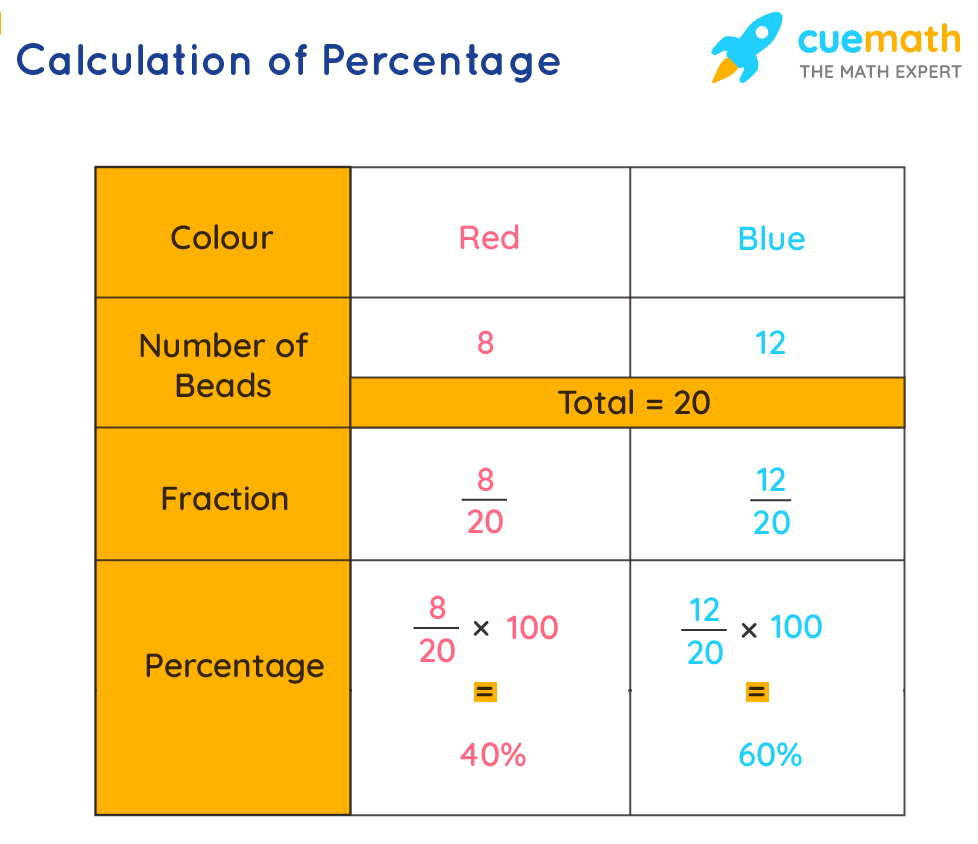
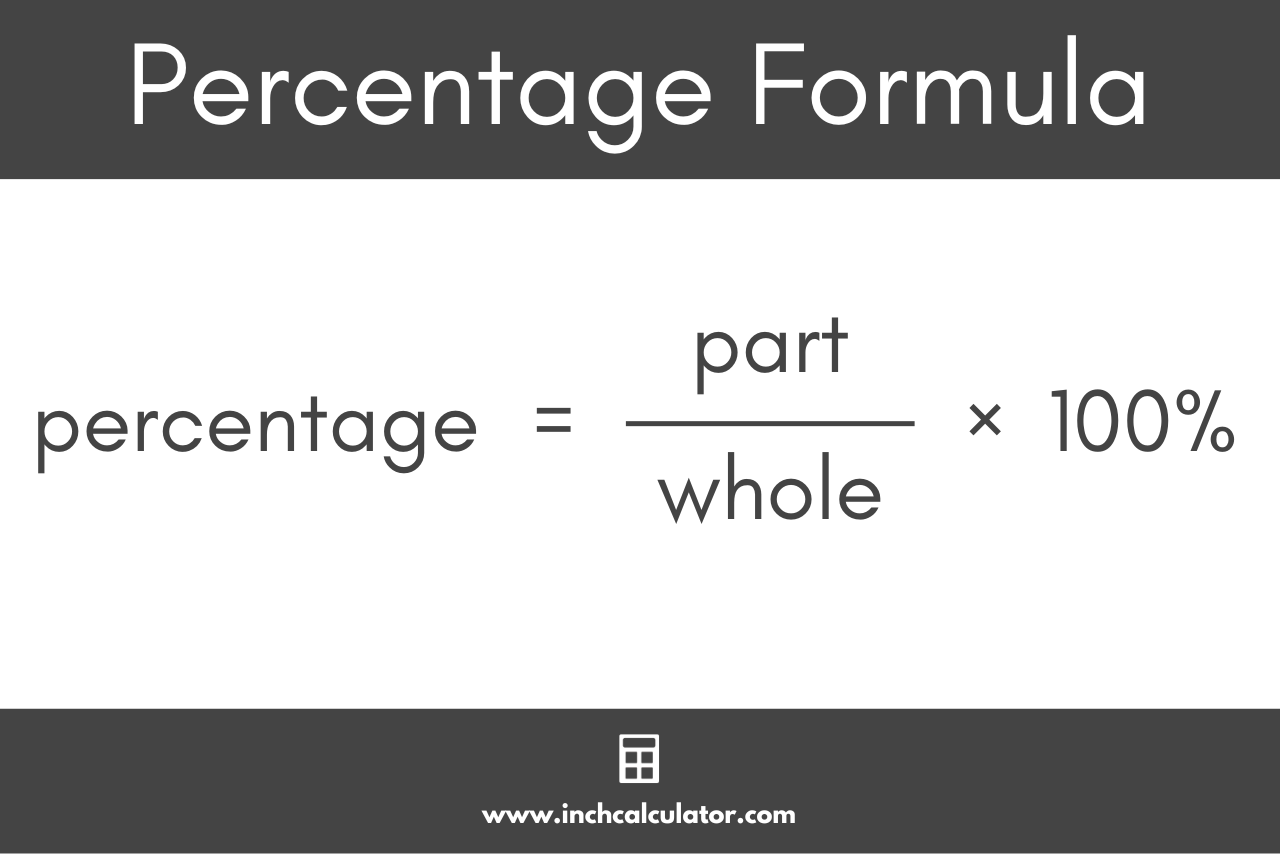
The most common and fundamental way to calculate a percentage is by using the formula:
Percentage (%) = (Part / Whole) × 100
Let’s break down the components:
-
Part: This is the specific amount or quantity you want to express as a percentage.
-
Whole: This is the total amount, the base, or the entire quantity against which you are comparing the “part.”
-
× 100: This step converts the resulting decimal or fraction into a percentage, representing it out of 100.
Example 1: Calculating a Discount
You see a jacket originally priced at $200, and it’s on sale for $150. What is the percentage discount?
-
Calculate the discount amount (Part): $200 – $150 = $50
-
Identify the original price (Whole): $200
-
Apply the formula: ($50 / $200) × 100 = 0.25 × 100 = 25%
So, the jacket has a 25% discount.
Example 2: Calculating a Portion of a Budget
If your monthly income is $4,000 and you spend $1,200 on rent, what percentage of your income goes to rent?
-
Identify the rent cost (Part): $1,200
-
Identify your total income (Whole): $4,000
-
Apply the formula: ($1,200 / $4,000) × 100 = 0.30 × 100 = 30%
Thus, 30% of your income is allocated to rent.
Practical Examples: Tips, Taxes, and Simple Ratios
The “Part / Whole” formula extends to many daily financial situations:
-
Tipping: If a restaurant bill is $60 and you want to leave a 15% tip, you’re essentially finding the “part” (tip amount) when the “whole” is $60 and the “percentage” is 15%. To do this, you reverse the formula: Tip = (15 / 100) * $60 = 0.15 * $60 = $9.
-
Sales Tax: If an item costs $50 and the sales tax is 8%, the tax amount is (8 / 100) * $50 = $4. The total cost would be $50 + $4 = $54.
-
Finding the Whole: If you know 20% of your take-home pay is $500, how much is your total take-home pay? Total Pay = Part / (Percentage / 100) = $500 / (20 / 100) = $500 / 0.20 = $2,500.
Converting Between Decimals, Fractions, and Percentages
Understanding these conversions is crucial for flexibility in calculations:
-
Percentage to Decimal: Divide the percentage by 100.
- Example: 25% = 25 / 100 = 0.25
-
Decimal to Percentage: Multiply the decimal by 100.
- Example: 0.75 = 0.75 × 100 = 75%
-
Fraction to Percentage: Convert the fraction to a decimal (numerator ÷ denominator), then multiply by 100.
- Example: 3/4 = 0.75 = 0.75 × 100 = 75%
-
Percentage to Fraction: Write the percentage as a fraction with a denominator of 100, then simplify.
- Example: 40% = 40/100 = 2/5
Essential Financial Applications of Percentage Calculations
Beyond basic calculations, percentages are the backbone of more complex financial analyses.
Navigating Sales and Discounts: Real Savings Unveiled
One of the most common applications of percentages in daily life is understanding sales and discounts. Knowing how to quickly calculate the actual savings or the final price of a discounted item prevents overspending and helps identify genuine bargains.
-
Single Discount: A $300 item with a 30% discount means you save $300 * 0.30 = $90. The final price is $300 – $90 = $210.
-
Successive Discounts: Beware of “additional 10% off the sale price.” If an item is already 20% off, and then an additional 10% is applied, it’s not a total of 30% off the original price.
-
Original Price: $100
-
First Discount (20%): $100 * 0.80 = $80
-
Second Discount (10% off new price): $80 * 0.90 = $72
-
Total discount from original: ($100 – $72) / $100 = 28%. This is lower than a simple 30% addition.
-
Demystifying Interest Rates: Loans, Savings, and Credit Cards
Interest rates are perhaps the most impactful financial application of percentages. They determine how much you earn on savings or investments and how much you pay for loans and credit card debt.
-
Simple Interest: Calculated only on the principal amount. Formula: Principal × Rate × Time.
- Example: A $1,000 loan at 5% simple interest for 2 years means you pay $1,000 * 0.05 * 2 = $100 in interest.
-
Compound Interest: The “interest on interest” phenomenon, where interest earned is added to the principal, and subsequent interest is calculated on the new, larger principal. This is crucial for long-term savings and investments (positive compounding) and can be devastating for credit card debt (negative compounding).
-
The formula for compound interest is $A = P(1 + r/n)^{nt}$, where A = final amount, P = principal, r = annual interest rate (as a decimal), n = number of times interest is compounded per year, t = number of years.
-
Understanding compound interest is critical for planning retirement, saving for large purchases, and managing debt.
-
Evaluating Investments: Understanding Returns on Investment (ROI)
When you invest money, you want to know how much profit you’ve made relative to your initial outlay. This is where Return on Investment (ROI) comes in, expressed as a percentage.
-
ROI Formula: (($text{Current Value of Investment} – text{Original Cost of Investment}$) / $text{Original Cost of Investment}$) × 100
-
Example: You bought shares for $5,000, and they are now worth $6,500.
-
ROI = (($6,500 – $5,000) / $5,000) × 100 = ($1,500 / $5,000) × 100 = 0.30 × 100 = 30%
-
This percentage allows you to compare the performance of different investments, regardless of the initial capital invested.
Budgeting and Financial Planning: Allocating Your Income
Effective budgeting involves allocating your income across various categories like housing, food, transportation, savings, and entertainment. Percentages provide a clear framework for this allocation.
-
The 50/30/20 Rule: A popular budgeting guideline suggests allocating 50% of your after-tax income to needs, 30% to wants, and 20% to savings and debt repayment. Understanding how to calculate these percentages helps you stay within your financial limits and achieve your savings goals.
-
Tracking Spending: Monitoring what percentage of your income goes to discretionary spending each month can highlight areas where you can cut back or reallocate funds.
Understanding Taxes: From Sales to Income
Taxes are an unavoidable part of financial life, and they are almost always expressed as percentages.
-
Sales Tax: A percentage added to the price of goods and services.
-
Income Tax: A percentage of your earnings that goes to the government. Progressive tax systems use different percentage brackets based on income levels.
-
Property Tax: A percentage of your property’s assessed value.
-
Capital Gains Tax: A percentage applied to profits from the sale of assets like stocks or real estate.
Calculating these percentages helps you understand your tax burden, plan for tax season, and explore tax-efficient strategies.
Advanced Concepts and Common Misconceptions
While the core percentage formula is simple, its application in finance can lead to nuances and common errors if not approached carefully.
Percentage Change vs. Percentage Point Change
It’s crucial to distinguish between a “percentage change” and a “percentage point change,” especially when discussing rates.
-
Percentage Point Change: This is a simple subtraction of two percentages. If an interest rate increases from 4% to 5%, that’s a 1 percentage point increase.
-
Percentage Change: This calculates the percentage increase of the original percentage. An increase from 4% to 5% is a (5-4)/4 * 100 = 25% increase in the interest rate itself, not just 1%.
Misunderstanding this distinction can significantly misrepresent financial growth or decline.
Multi-Step Percentage Calculations: Successive Discounts/Increases
As seen with successive discounts, applying percentages in sequence requires careful calculation. Another common scenario is a percentage increase followed by a percentage decrease, or vice versa. For example, if a stock increases by 10% and then decreases by 10%, it does not return to its original value.
-
Start: $100
-
Increase 10%: $100 * 1.10 = $110
-
Decrease 10%: $110 * 0.90 = $99
The net effect is a 1% loss, because the second percentage was applied to a different base value.
Avoiding Common Errors in Financial Calculations
-
Incorrect Base Value: Always ensure you are dividing by the correct “whole” or original amount when calculating a percentage change. For example, if calculating an increase, divide by the original amount.
-
Rounding Errors: When dealing with monetary figures, especially large ones or those subject to compounding, small rounding errors can accumulate. Use precise figures or calculator functions where possible.
-
Confusing Additive vs. Multiplicative: Remember that “20% more” means multiplying by 1.20, while “20% less” means multiplying by 0.80.
Tools and Strategies for Efficient Percentage Calculation
While mental math is valuable, for accuracy and speed in complex financial scenarios, leveraging tools is essential.
The Power of Spreadsheets: Excel and Google Sheets
Spreadsheets are indispensable for financial calculations. They allow you to:
-
Automate Calculations: Set up formulas once and apply them across rows or columns.
-
Model Scenarios: Easily change variables (e.g., interest rate, discount percentage) to see their impact.
-
Track Trends: Calculate percentage changes over time for budgets, investments, or sales.
-
Common Functions:
=(A2/B2)*100for basic percentages;=(B2-A2)/A2for percentage change; built-in percentage formatting.
Leveraging Online Calculators and Financial Apps
Numerous online tools and smartphone apps are designed to simplify percentage calculations, especially for specific financial needs:
-
Loan Calculators: Determine monthly payments, total interest paid, or how different interest rates affect a loan.
-
Mortgage Calculators: Calculate affordability, principal, and interest breakdowns.
-
Savings/Compound Interest Calculators: Project future savings growth.
-
Tip Calculators: Quickly determine tip amounts and split bills.
Developing Your Mental Math Muscles
While tools are helpful, a strong foundation in mental math can provide quick estimates and a better intuitive understanding. Practice calculating common percentages like 10% (move decimal one place left), 20% (double 10%), 50% (half), 25% (half of half), or 1% (move decimal two places left). These shortcuts are invaluable for on-the-spot financial assessments.

Conclusion
The ability to calculate percentages is far more than a basic math skill; it is a critical component of financial literacy and empowerment. From deciphering sale prices and understanding the true cost of loans to accurately assessing investment performance and effectively managing personal budgets, percentages are the common thread weaving through nearly every financial decision we make. By mastering the core calculation methods, understanding their diverse applications, and recognizing common pitfalls, you equip yourself with the confidence and insight needed to navigate the financial world successfully. Invest in your financial fluency today by sharpening your percentage calculation skills – it’s a dividend that pays off for life.
aViewFromTheCave is a participant in the Amazon Services LLC Associates Program, an affiliate advertising program designed to provide a means for sites to earn advertising fees by advertising and linking to Amazon.com. Amazon, the Amazon logo, AmazonSupply, and the AmazonSupply logo are trademarks of Amazon.com, Inc. or its affiliates. As an Amazon Associate we earn affiliate commissions from qualifying purchases.