
In the vast and ever-evolving landscape of the digital world, establishing a presence on key platforms is often the first step toward unlocking a wealth of services, information, and opportunities. Among these platforms, Amazon stands as a towering giant, an undisputed leader in e-commerce, digital content, cloud computing, and a host of other technological innovations. For anyone looking to navigate the modern digital economy, whether as a consumer, a content creator, or a budding entrepreneur, understanding how to effectively engage with Amazon’s ecosystem begins with a fundamental action: creating an account.
This isn’t merely a transactional step; it’s an entry point into a sophisticated technological infrastructure designed to streamline shopping, provide entertainment, and even facilitate business operations. This comprehensive guide will walk you through the process of creating an Amazon account, not just as a series of steps, but as an insightful tutorial into digital identity management, platform integration, and robust digital security practices essential for today’s connected user. We will delve into the why behind each action, ensuring you not only establish your presence but also understand the technological underpinnings and best practices for secure and efficient interaction within Amazon’s expansive digital realm.
The Gateway to a Digital Ecosystem: Why an Amazon Account Matters
An Amazon account is far more than just a login for online shopping; it’s a universal key that unlocks a multifaceted digital ecosystem. In the context of technology, it represents a single sign-on (SSO) credential that grants access to a diverse array of interconnected services, each leveraging cutting-edge software and infrastructure to enhance user experience. Understanding its significance from a technological perspective highlights why this initial setup is a crucial step in digital literacy.
Unlocking E-commerce Convenience
At its core, Amazon revolutionized e-commerce, transforming how consumers discover, purchase, and receive products. An account centralizes your shopping history, order tracking, preferred shipping addresses, and payment methods. This technological integration means a personalized experience, where algorithms suggest products based on past interactions, making shopping more efficient and tailored. From a software perspective, your account is a persistent data profile that fuels these personalized recommendations and streamlines the checkout process, minimizing friction points and optimizing user flow. It’s an exemplary case of how data-driven design enhances user convenience.
Accessing Digital Services and Media
Beyond physical goods, an Amazon account is your portal to a vast array of digital services that extend into entertainment, productivity, and knowledge. Services like Prime Video (streaming movies and TV shows), Amazon Music (audio streaming), Kindle (e-books and digital publications), and Audible (audiobooks) are all tied to your central Amazon login. This single account provides seamless access across different applications and devices, reflecting a sophisticated backend architecture that manages user entitlements and content licensing. It demonstrates the power of a unified digital identity across disparate media platforms, showcasing efficient software integration and content delivery networks. For tech enthusiasts, this highlights Amazon’s prowess in developing and maintaining a robust digital media infrastructure.
Personalization and Streamlined Interaction
The technological sophistication of Amazon truly shines in its personalization capabilities. Your account acts as a repository for your preferences, search queries, purchase history, and even reviews. This data is processed by advanced machine learning algorithms to create a highly individualized user experience. From a tech standpoint, this means not just product recommendations, but also tailored content on Prime Video, customized news feeds on Alexa-enabled devices, and personalized marketing communications. This level of personalization, driven by massive data analytics and AI tools, streamlines interactions, reduces cognitive load, and enhances overall user satisfaction, making the Amazon platform incredibly sticky. It’s a prime example of how big data and AI are used to optimize the digital experience.
Step-by-Step: Your Guide to Amazon Account Creation
Creating an Amazon account is a straightforward process, but understanding each step from a technological and security perspective ensures a robust and reliable digital identity. This section breaks down the tutorial into actionable, insightful steps, emphasizing best practices for digital security.
Initiating the Process: Navigating to Amazon
The journey begins by accessing Amazon’s primary digital interface.
-
Open your web browser: Navigate to
www.amazon.com(or your regional Amazon domain, e.g.,amazon.co.uk,amazon.ca,amazon.de). This URL directs your browser to Amazon’s front-end web application, hosted on their robust cloud infrastructure (AWS). -
Locate the “Account & Lists” or “Hello, Sign in” section: Typically found in the top right corner of the homepage. Hovering over or clicking this option will reveal a dropdown menu.
-
Click “Start here” under “New customer?”: This action initiates a request to Amazon’s servers to load the account creation form. The underlying software prepares the necessary fields for new user registration.
Inputting Your Essential Information
This stage involves providing the foundational data for your digital identity.
-
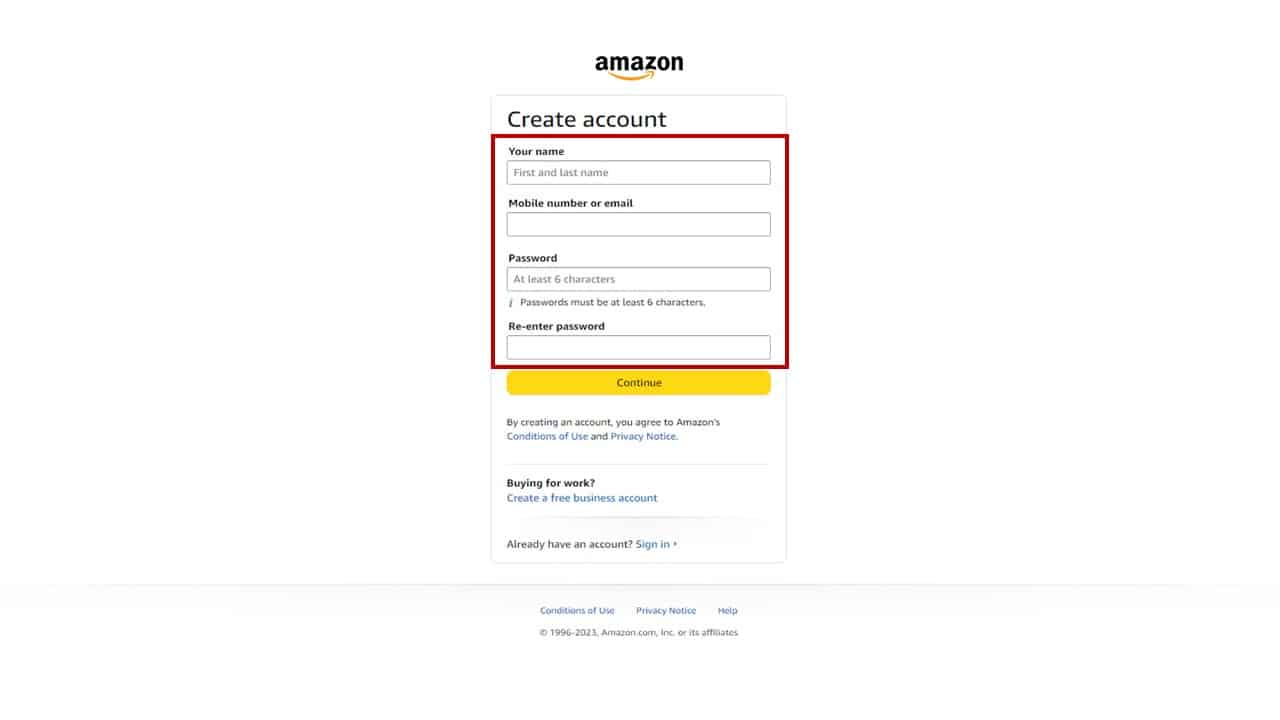
Your name: Enter your full name. This is crucial for personalization and shipping purposes. From a data management perspective, this field helps Amazon associate your account with a real-world identity.
-
Mobile number or email: Choose one to serve as your primary login identifier.
-
Email: This is a common and reliable method. Ensure it’s an email address you check regularly and control exclusively, as it will be used for account verification and communications.
-
Mobile Number: Increasingly popular for its convenience and role in two-factor authentication. Like email, it should be a number you own and can access readily.
-
Insight: Whichever you choose, this will be your primary username. It’s a key piece of your digital identity within Amazon’s system, and its security is paramount.
-
-
Password: This is arguably the most critical piece of information you’ll input.
- Insight: Amazon’s system requires a minimum of 6 characters. However, best practice dictates a much stronger password. Aim for a phrase or combination that is at least 12-16 characters long, incorporating a mix of uppercase and lowercase letters, numbers, and special characters. Avoid easily guessable information like birthdays, pet names, or common dictionary words. A strong password acts as the primary digital security barrier for your account.
Crafting a Robust Password
While mentioned above, the importance of password strength warrants a deeper dive, especially in a tech context. Password management is a cornerstone of digital security.
-
Complexity: The more diverse the character types and the longer the length, the higher the entropy, making it exponentially harder for brute-force attacks or dictionary attacks to succeed.
-
Uniqueness: Never reuse passwords across different online services. If one service is compromised, all accounts sharing that password become vulnerable. Use a password manager (e.g., LastPass, 1Password, Bitwarden) to generate and store unique, strong passwords securely. This is a vital cybersecurity tool for managing multiple digital identities.
-
Memorability vs. Security: While random strings are strongest, they are hard to remember. Consider passphrase methods (e.g., “This-Is-My-Unique-Amazon-Password-2024!”). These are long, complex, and easier to recall than arbitrary character sequences.
Verifying Your Account (OTP, Email Confirmation)

After submitting your information, Amazon employs a verification step to confirm your ownership of the provided email or mobile number. This is a fundamental digital security measure to prevent fraudulent account creation.
-
One-Time Password (OTP) or Verification Code: A unique code will be sent to your registered email address or mobile number.
-
Enter the code: Input this code into the designated field on Amazon’s website.
- Insight: This process is known as “out-of-band” verification. It leverages a communication channel separate from your current browsing session to verify identity, adding an extra layer of security. The OTP is time-sensitive and typically valid for a very short period, further mitigating interception risks. This showcases a standard practice in secure online transactions and account management.
Post-Creation: Initial Setup and Profile Refinement
Once verified, your basic Amazon account is active. However, several steps can enhance its utility and security further.
-
Add Shipping Address: Navigate to “Your Account” -> “Your Addresses” to add your primary shipping location. This streamlines future purchases.
-
Add Payment Method: Go to “Your Account” -> “Payment Options” to add credit/debit cards or other payment methods. Amazon’s payment processing system is PCI DSS compliant, ensuring secure handling of sensitive financial data.
-
Explore “Your Account” settings: Familiarize yourself with options for managing orders, digital content, privacy, and communication preferences. This central hub provides granular control over your digital footprint on the platform.
Beyond the Basics: Enhancing Your Account’s Security and Utility
Creating an account is just the beginning. To truly leverage Amazon’s technological offerings securely and efficiently, proactive management of security settings and an understanding of its integration capabilities are crucial. This falls squarely within the domain of digital security and effective use of technological tools.
Implementing Two-Factor Authentication (2FA)
Two-Factor Authentication (2FA), sometimes called Multi-Factor Authentication (MFA), is an indispensable security feature that adds a critical layer of protection beyond just a password.
-
Access Security Settings: Go to “Your Account” -> “Login & Security.”
-
Enable 2FA: Follow the prompts to set up 2FA, typically using a mobile authenticator app (like Google Authenticator, Authy) or your phone number for SMS-based codes.
- Insight: 2FA works by requiring a second piece of evidence (something you have, like your phone or a token from an app) in addition to something you know (your password). Even if a malicious actor obtains your password, they cannot access your account without this second factor. This is a fundamental cybersecurity best practice for protecting any online account and is highly recommended for Amazon, given the sensitive data (payment, addresses) it holds. SMS-based 2FA is convenient but app-based 2FA is generally considered more secure as it’s not susceptible to SIM-swapping attacks.
Managing Payment Methods and Addresses Securely
Your Amazon account centralizes sensitive financial and personal information. Regular review and secure management are vital.
-
Review Saved Information: Periodically check “Your Payments” and “Your Addresses” sections. Remove outdated cards or addresses.
-
Strong Password & 2FA: With 2FA enabled, the risk of unauthorized access to your payment methods is significantly reduced.
-
Payment Tokenization: Amazon, like most major e-commerce platforms, uses payment tokenization. When you save a card, the actual card number is replaced with a unique, encrypted token. This token is useless outside of Amazon’s system, enhancing security and reducing the risk of your card details being compromised if Amazon’s database were breached (though Amazon has robust security measures in place). This demonstrates advanced cryptographic techniques used in digital transactions.
Understanding Privacy Settings
Amazon collects significant amounts of data to power its personalization and services. Understanding and managing your privacy settings is a key aspect of digital citizenship.
-
Advertising Preferences: Review and adjust settings related to interest-based ads. While these are designed to enhance relevance, you have control over how your data informs them.
-
Communication Preferences: Manage the types of emails and notifications you receive from Amazon.
-
Alexa Privacy (if applicable): If you use Alexa devices, delve into the Alexa Privacy settings to review voice recordings and manage data usage, showcasing the intersection of AI, IoT, and user privacy.
-
Insight: Proactive privacy management is essential in today’s data-driven world. Amazon provides tools within your account settings to understand and adjust how your personal data is utilized, reflecting evolving regulations and user expectations around digital privacy.
Exploring the Broader Amazon Ecosystem
An Amazon account serves as the central identity for an expanding universe of services and devices. From a technological perspective, this interconnectedness highlights advanced API integrations, cloud computing capabilities, and a seamless user experience across multiple platforms and gadgets.
Integrating with Amazon Prime
An Amazon Prime membership, tied to your core Amazon account, significantly expands the scope of services. It unlocks:
-
Expedited Shipping: Leveraging Amazon’s vast logistics network and fulfillment centers.
-
Prime Video: Unlimited streaming of movies and TV shows.
-
Prime Music: Ad-free music streaming.
-
Prime Reading/Kindle Owners’ Lending Library: Access to a rotating selection of e-books.
-
Whole Foods Market discounts: Physical retail integration.
-
Insight: Prime exemplifies a subscription model that bundles a multitude of digital and physical services under a single technological umbrella, demonstrating Amazon’s ability to create a “sticky” ecosystem that encourages deeper engagement and recurring revenue through value-added features.
Seller Accounts vs. Buyer Accounts: Differentiating Tech Functionality
It’s important to distinguish between the standard customer account (primarily for buying and consuming services) and an Amazon Seller account. While both utilize the same core login credentials, a Seller account activates an entirely different set of backend tools and interfaces designed for inventory management, order fulfillment, listing creation, analytics, and customer service for businesses.
-
Buyer Account (Consumer Focus): Optimized for browsing, purchasing, and managing personal digital content.
-
Seller Account (Business Focus): Accesses Amazon Seller Central, a complex web application providing tools for managing an online storefront, processing transactions, and leveraging Amazon’s logistics (Fulfillment by Amazon – FBA).
-
Insight: This distinction showcases Amazon’s multi-tenant architecture, where a single user identity can be granted different levels of access and functionality based on their role, demonstrating a flexible and scalable software design.

Device Integration (Alexa, Fire TV, Kindle)
Your Amazon account acts as the central hub for integrating Amazon’s vast array of hardware devices into your digital life.
-
Alexa-enabled devices (Echo speakers): Link directly to your account to access your music, shopping lists, smart home controls, and personalized skills. The account manages voice profiles and privacy settings.
-
Fire TV devices: Your Amazon account seamlessly syncs your Prime Video watchlists, purchased content, and streaming app subscriptions across all your Fire TV devices.
-
Kindle e-readers/Fire tablets: Connect to your account to access your entire library of e-books, audiobooks, and apps, ensuring content is available on any Amazon device.
-
Insight: This seamless device integration highlights Amazon’s strengths in IoT (Internet of Things) and ubiquitous computing, where your digital identity follows you across various form factors, powered by cloud services and consistent API design.
In conclusion, creating an Amazon account is more than a simple registration; it’s a foundational step in engaging with one of the most comprehensive digital ecosystems in the world. By understanding the technological implications of each step, from crafting a strong password to enabling two-factor authentication and exploring the broader integration with services and devices, users can not only establish a secure presence but also unlock the full potential of Amazon’s innovative offerings. Adhering to these best practices for digital security and account management ensures a professional, secure, and highly efficient interaction with the platform, positioning you to fully leverage the convenience and power of Amazon’s technological advancements.
aViewFromTheCave is a participant in the Amazon Services LLC Associates Program, an affiliate advertising program designed to provide a means for sites to earn advertising fees by advertising and linking to Amazon.com. Amazon, the Amazon logo, AmazonSupply, and the AmazonSupply logo are trademarks of Amazon.com, Inc. or its affiliates. As an Amazon Associate we earn affiliate commissions from qualifying purchases.