
For investors, analysts, and anyone tracking the pulse of the global economy, knowing “when do Apple report earnings” is more than just a date on a calendar; it’s a pivotal event. Apple Inc. (AAPL) is not merely a technology giant; it’s an economic powerhouse whose quarterly financial disclosures offer deep insights into consumer spending, supply chain health, and the broader tech landscape. Understanding the timing and implications of these reports is fundamental for informed decision-making in the financial markets.
As one of the world’s most valuable companies, Apple’s earnings calls are scrutinized by millions. They can send ripples across the stock market, influence investor sentiment, and even hint at shifts in global economic trends. This comprehensive guide will delve into why these reports are so important, how to track them, what key metrics to focus on, and how investors can strategically approach these critical disclosures.
Understanding the Significance of Apple’s Earnings Reports
Apple’s earnings reports transcend the typical quarterly financial update due to the company’s sheer size, market influence, and deep integration into consumer and enterprise ecosystems worldwide. Their performance is often a bellwether for multiple sectors and even global economic health.
A Bellwether for the Tech Sector and Broader Market
Apple’s massive market capitalization and extensive global operations mean its financial results often serve as an indicator for the entire technology sector. A strong quarter for Apple can signal robust consumer demand for electronics and digital services, benefiting chipmakers, component suppliers, and software developers alike. Conversely, a weaker performance might suggest headwinds for the industry as a whole, from supply chain disruptions to waning consumer confidence. Beyond tech, Apple’s ubiquitous products and services make its sales figures a proxy for discretionary consumer spending, offering a snapshot of economic vitality across different regions. For example, iPhone sales in China can provide insights into the economic health and consumer behavior within one of the world’s largest economies.
Impact on AAPL Stock Price
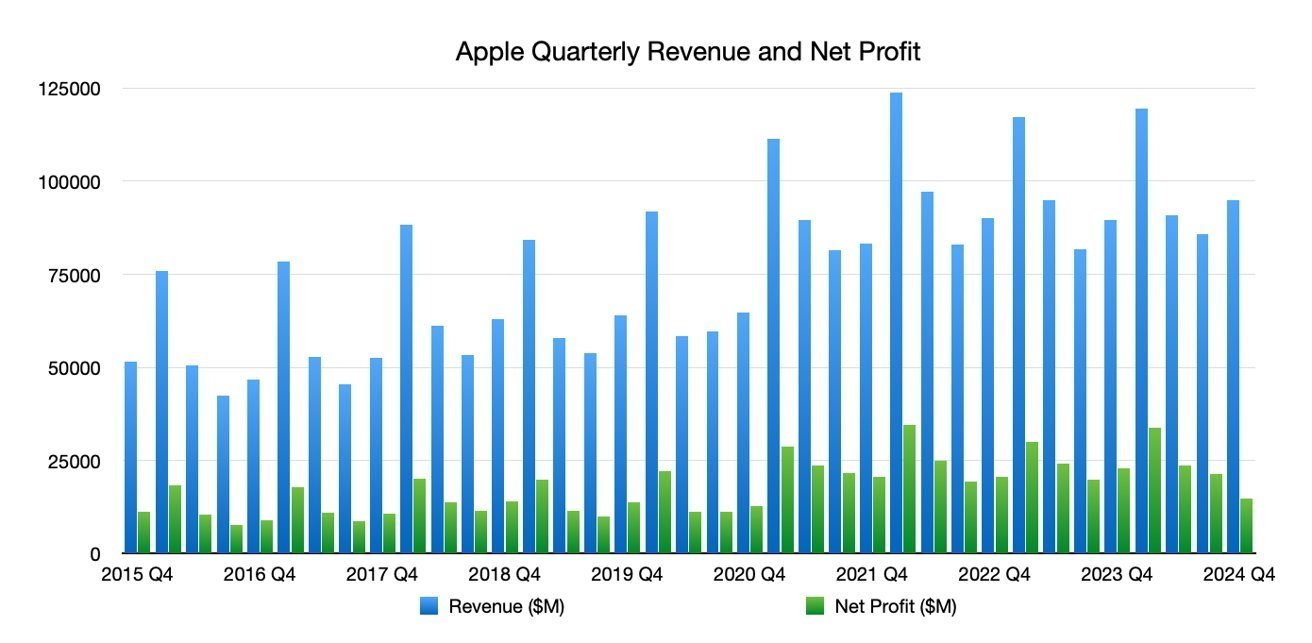
Perhaps the most immediate and tangible effect of an Apple earnings report is its impact on the company’s stock price (AAPL). These reports are typically met with significant volatility. If the reported figures—especially revenue and earnings per share (EPS)—exceed analyst expectations, the stock often sees a positive surge. Conversely, missing estimates, or offering weaker-than-expected guidance for future quarters, can lead to a sharp decline. This short-term reaction is driven by a rapid recalibration of investor sentiment and future expectations. While long-term investors generally focus on fundamental growth trajectories, the immediate post-earnings move can be substantial, creating both opportunities and risks for traders and short-term position holders. The market also pays close attention to how management frames their outlook, as this often dictates the forward-looking sentiment more than the past quarter’s numbers alone.
Revealing the Health of a Global Giant
An Apple earnings report is far more than just a profit and loss statement; it’s a detailed health check of a multinational corporation operating in diverse markets and product categories. It provides granular data on product segment performance (e.g., iPhone, Mac, iPad, Wearables), the accelerating growth of its Services division (App Store, Apple Music, iCloud, Apple TV+), and geographical revenue breakdowns. This level of detail allows investors to assess which areas of the business are thriving, which are facing challenges, and how the company is diversifying its revenue streams. For instance, strong Services growth can demonstrate Apple’s ability to generate recurring revenue beyond hardware sales, a crucial factor for long-term valuation. Likewise, insights into supply chain constraints or production ramp-ups for new products offer real-time understanding of operational efficiency and future sales potential.
Navigating the Earnings Calendar: How to Track Apple’s Reports
Successfully leveraging Apple’s earnings reports begins with knowing when they are scheduled. Unlike smaller companies that might have less predictable schedules, Apple adheres to a relatively consistent quarterly cadence.
The Quarterly Cycle Explained
Apple, like most publicly traded companies, reports its earnings on a quarterly basis. However, it’s crucial to distinguish between Apple’s fiscal quarters and standard calendar quarters. Apple’s fiscal year typically ends in September. This means:
-
Q1 (Fiscal Year): Covers October to December, usually reported in late January. This is often the most critical quarter, encompassing holiday sales.
-
Q2 (Fiscal Year): Covers January to March, usually reported in late April.
-
Q3 (Fiscal Year): Covers April to June, usually reported in late July.
-
Q4 (Fiscal Year): Covers July to September, usually reported in late October.
These reporting dates are not fixed to a specific day but typically fall within the last week of the month following the end of the fiscal quarter. The company will usually announce the exact date and time of its earnings release and conference call about two weeks in advance.
Official Sources for Earnings Dates
To ensure you have the most accurate and up-to-date information, rely on official sources:
-
Apple Investor Relations Website: This is the primary and most reliable source. Apple typically publishes a press release announcing the date and time of the upcoming earnings call on its Investor Relations page (investor.apple.com). Here, you can also find past earnings transcripts, webcasts, and financial filings.
-
SEC Filings: All public companies in the U.S. are required to file quarterly reports (10-Q) and annual reports (10-K) with the U.S. Securities and Exchange Commission (SEC). While these contain the detailed financials after the earnings release, the press releases announcing earnings dates are also often filed.
-
Reputable Financial News Outlets: Major financial news organizations like Bloomberg, Reuters, The Wall Street Journal, and CNBC will widely report Apple’s earnings dates as soon as they are announced. Financial data providers such as Yahoo Finance, Google Finance, and investing platforms also integrate these dates into their company profiles.
Setting Up Alerts and Calendars
Given the importance of these dates, proactive tracking is highly recommended.
-
Calendar Reminders: Add Apple’s announced earnings dates to your personal digital calendar (Google Calendar, Outlook Calendar, etc.) with multiple reminders leading up to the event.
-
Financial Apps and Brokerage Platforms: Many popular financial news apps (e.g., Investing.com, Stocktwits) and brokerage platforms (e.g., Fidelity, Schwab, Robinhood) offer integrated earnings calendars and the ability to set up personalized alerts for stocks you follow.
-
Email Subscriptions: The Apple Investor Relations website often provides an option to subscribe to email alerts for news and upcoming events, ensuring you receive timely notifications directly from the source.
What to Look For: Key Metrics and Insights within Apple’s Reports
Simply knowing when Apple reports isn’t enough; understanding what to look for in their reports is crucial for translating numbers into actionable insights. The devil is often in the details, beyond just the headline revenue and profit figures.
Revenue Breakdown by Product and Service
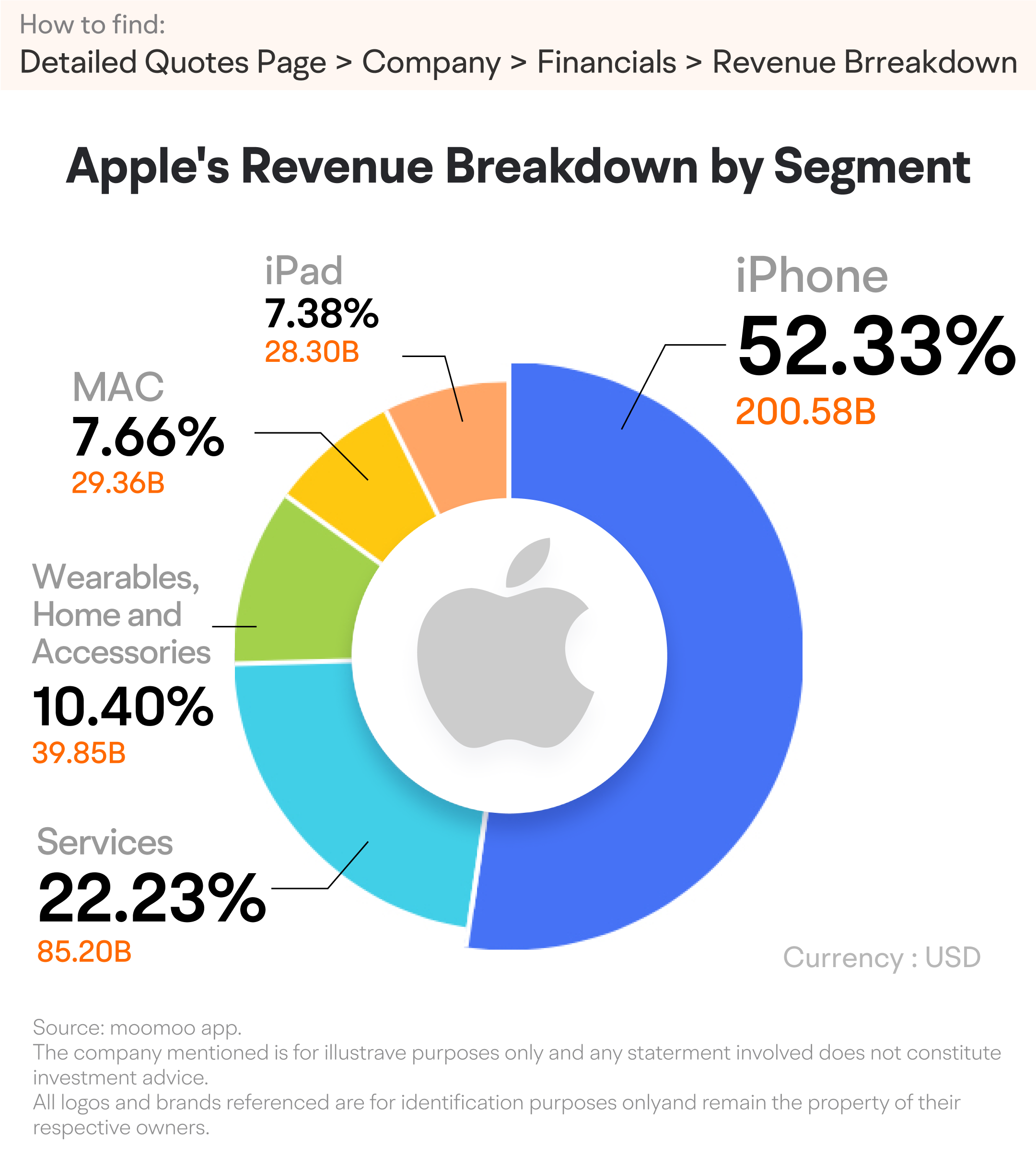
One of the most critical sections of Apple’s earnings report is the revenue breakdown. This categorizes sales into:
-
iPhone: Remains Apple’s flagship product and largest revenue driver. Investors look at unit sales (though Apple has stopped reporting this for some time), average selling price (ASP), and overall revenue growth compared to previous periods and analyst estimates.
-
Mac & iPad: These segments provide insights into demand for personal computing and tablets, particularly important in remote work and education environments.
-
Wearables, Home & Accessories: This rapidly growing segment includes Apple Watch, AirPods, HomePod, and other accessories. Its growth rate is a key indicator of Apple’s ability to diversify beyond its core devices and capture new market opportunities.
-
Services: This segment, encompassing the App Store, Apple Music, iCloud, Apple Pay, AppleCare, and advertising, is a high-margin, recurring revenue powerhouse. Its continued growth and increasing contribution to overall revenue are vital for Apple’s long-term valuation and market perception as a platform company. Investors closely track its subscriber numbers and growth acceleration.
Profitability Metrics
Beyond revenue, profitability metrics reveal how efficiently Apple is converting sales into profit:
-
Gross Margin: This shows the percentage of revenue left after subtracting the cost of goods sold. A strong or improving gross margin indicates efficient production and pricing power.
-
Operating Income: This measures profit from Apple’s core operations before interest and taxes, reflecting the company’s operational efficiency.
-
Net Income & Earnings Per Share (EPS): Net income is the “bottom line” profit, and EPS (net income divided by outstanding shares) is the most commonly cited profitability metric for investors. Growth in EPS is a primary driver of stock price appreciation.
-
Guidance for Future Quarters: Apple’s management often provides forward-looking guidance for key metrics like revenue and gross margin for the upcoming quarter. This guidance is frequently more impactful than the past quarter’s results, as it shapes future analyst expectations and investor sentiment.
Geographic Performance and Emerging Markets
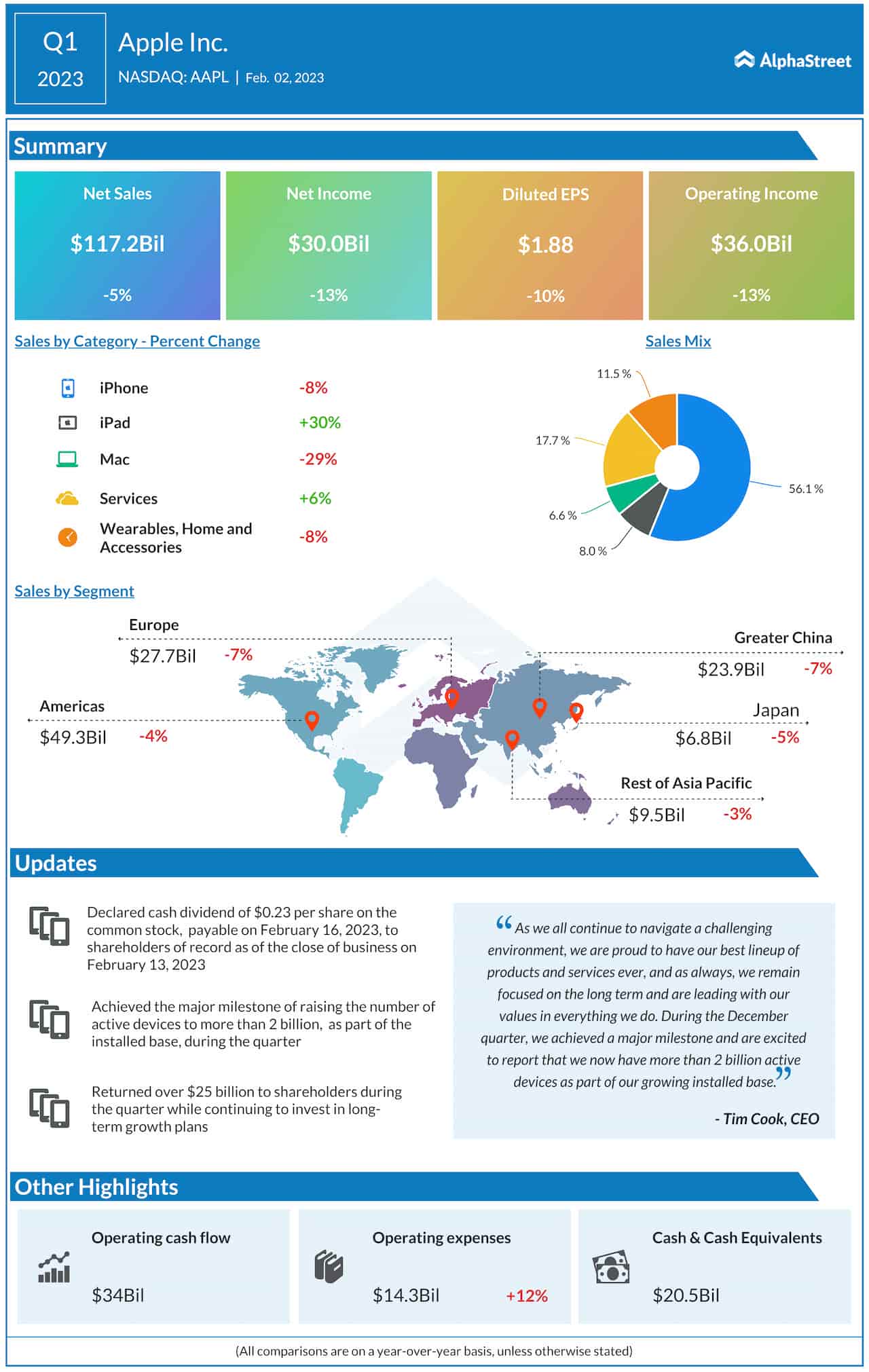
Apple’s reports segment revenue by major geographical regions (e.g., Americas, Europe, Greater China, Japan, Rest of Asia Pacific). Analyzing these figures can reveal regional economic strengths or weaknesses, market penetration, and the success of localized strategies. “Greater China” is often a particular focus due to its massive market potential and geopolitical significance. Growth in emerging markets, often driven by increased smartphone adoption and rising middle classes, can signal new avenues for long-term expansion.
Capital Allocation and Shareholder Returns
Investors also scrutinize how Apple manages its vast cash reserves:
-
Dividends: Apple regularly pays a dividend to shareholders. Any increases or changes in dividend policy are closely watched.
-
Share Buybacks: Apple frequently engages in massive share repurchase programs, which reduce the number of outstanding shares and thus boost EPS, making each share more valuable. The scale and pace of these buybacks are important for long-term investors.
-
Cash on Hand: While Apple has vast cash reserves, a portion is held overseas due to tax considerations. Understanding the company’s net cash position (cash minus debt) and its allocation plans is critical for assessing financial health and potential future investments or returns to shareholders.
Management Commentary and Conference Call Highlights
The earnings conference call, which usually follows the release of the financial report, is a treasure trove of qualitative information. During this call, Apple’s CEO, Tim Cook, and CFO provide additional context, answer analyst questions, and offer insights into:
-
Future Outlook: More detailed commentary on challenges, opportunities, and strategic priorities.
-
Supply Chain Issues: Updates on production, component availability, and logistics.
-
New Initiatives: Hints at upcoming products, services, or market expansions.
-
Competitive Landscape: Management’s perspective on market dynamics and competitive pressures.
Listening to these calls or reading the transcripts is essential for a holistic understanding that goes beyond the raw numbers.
Strategies for Investors: Responding to Earnings Reports
The period around an earnings report can be fraught with uncertainty, yet it also presents distinct opportunities for different types of investors. A well-thought-out strategy is paramount.
Pre-Earnings Analysis: Setting Expectations
Before Apple reports, smart investors engage in thorough pre-earnings analysis:
-
Analyst Consensus: Familiarize yourself with the consensus estimates for revenue, EPS, and key product/service growth rates. These are compiled by financial data providers from numerous Wall Street analysts. The “whisper number” (unofficial, often higher expectations circulating among traders) can also play a role.
-
Historical Performance: Review Apple’s past earnings beats or misses, and how the stock reacted. Look at seasonality and typical trends.
-
Macroeconomic Factors: Consider broader economic indicators, consumer spending trends, geopolitical events, and competitor performance that might influence Apple’s results. For instance, global inflation or currency fluctuations can impact international sales.
-
Company-Specific News: Any product launches, major supply chain news, or regulatory developments leading up to the report can provide clues about potential outcomes. The goal isn’t to perfectly predict the numbers but to form a realistic range of expectations.
Post-Earnings Reaction: Deciphering Market Moves
Once the earnings are released and the market reacts, understanding why the stock moved is more important than the initial movement itself:
-
“Beat and Raise” vs. “Miss and Lower”: If Apple beats estimates and raises guidance, it’s typically a strong positive signal. Missing estimates and lowering guidance is often a negative. However, a “beat and lower” (strong past quarter, weak future outlook) or “miss and raise” (weak past quarter, strong future outlook) can create complex, nuanced reactions.
-
The “Why”: Did the Services segment accelerate as expected? Were iPhone sales weaker than feared due to supply issues or demand softening? Was the gross margin pressured? Identifying the specific drivers behind the numbers and management’s commentary is crucial.
-
Short-Term vs. Long-Term Perspective: The initial market reaction can be emotional and driven by algorithmic trading. Long-term investors should evaluate if the news fundamentally alters their thesis for investing in Apple, rather than reacting impulsively to short-term price swings.
Long-Term Investing vs. Short-Term Trading
Earnings reports cater to different investment philosophies:
-
Long-Term Investors: Often use earnings reports to confirm or challenge their original investment thesis. They focus on underlying growth trends, profitability, capital allocation, and management’s strategic vision over multiple quarters. They might use significant post-earnings dips (if their long-term thesis remains intact) as buying opportunities, or consider trimming positions if fundamental issues emerge.
-
Short-Term Traders: May engage in options strategies or aggressive buying/selling around earnings to capitalize on volatility. This is a high-risk, high-reward approach that requires deep market understanding, technical analysis, and robust risk management. It’s generally not recommended for novice investors.
The Importance of Diversification
While closely following Apple’s earnings is beneficial, it’s vital to remember the principle of diversification. No single stock, no matter how dominant, should represent an outsized portion of an investment portfolio. Earnings events highlight the inherent volatility of individual stocks. A diversified portfolio, spread across various asset classes, industries, and geographies, helps mitigate the impact of any single company’s performance on overall financial goals. This is particularly true during high-stakes events like earnings reports, where even the most robust companies can experience unexpected setbacks or market overreactions.
Beyond the Numbers: The Broader Economic Impact
Apple’s quarterly performance offers a unique lens through which to view broader economic trends, extending its relevance beyond just investors in AAPL stock.
Consumer Spending Barometer
With its vast array of consumer electronics and services, Apple’s sales figures serve as a critical barometer for global consumer spending. Strong iPhone sales, for instance, often indicate consumer confidence and willingness to upgrade to premium devices, reflecting disposable income levels. Conversely, stagnant or declining sales can hint at tighter consumer budgets or economic slowdowns. This makes Apple’s reports a key data point for economists and policy makers looking to gauge the health of household finances and discretionary consumption.
Supply Chain Health and Global Manufacturing
Apple’s intricate global supply chain, involving hundreds of suppliers and manufacturers across dozens of countries, makes its operational updates a powerful indicator of global manufacturing health. When Apple discusses production bottlenecks, logistics challenges, or capacity expansions, it provides real-time insights into the broader industrial landscape. These insights can affect other companies reliant on similar supply chains and offer clues about inflation pressures or economic recovery patterns, especially in major manufacturing hubs like Asia. Any commentary on component availability, labor markets, or factory utilization resonates through various industries.
Innovation and R&D Investment
While not directly a “number” in the same way as revenue, the implied or explicit updates on Apple’s research and development (R&D) investments and future product pipelines are crucial for understanding innovation trends. Apple’s continuous investment in R&D not only secures its own future but also drives advancements across the technology sector, influencing everything from chip design to software capabilities and user interfaces. Insights into new product categories, AI integration, or health initiatives during earnings calls can therefore signal broader shifts in technological development and economic growth drivers for years to come.
In conclusion, “When do Apple report earnings?” is a question that opens the door to a wealth of financial and economic understanding. For anyone engaged in the financial markets, tracking these dates, diligently analyzing the reports, and understanding their broader implications are essential practices. By focusing on key metrics, management commentary, and adopting a strategic approach, investors can navigate the complexities of these events, leveraging them for informed decision-making within a well-diversified portfolio. The quarterly unfolding of Apple’s financial story is not just a corporate update; it’s a significant chapter in the ongoing narrative of the global economy.
aViewFromTheCave is a participant in the Amazon Services LLC Associates Program, an affiliate advertising program designed to provide a means for sites to earn advertising fees by advertising and linking to Amazon.com. Amazon, the Amazon logo, AmazonSupply, and the AmazonSupply logo are trademarks of Amazon.com, Inc. or its affiliates. As an Amazon Associate we earn affiliate commissions from qualifying purchases.