
In the traditional laboratory setting, the answer to the question “what is the monomer for a protein” is simple: the amino acid. However, in the contemporary landscape of high-performance computing, synthetic biology, and artificial intelligence, the amino acid is more than just a biological building block; it has become a fundamental unit of data. As we transition into an era where biology is treated as programmable software, understanding these monomers is the first step in mastering the most complex technology on the planet: life itself.

The convergence of biotechnology and information technology has reframed our understanding of protein synthesis. By treating the sequence of amino acids as a digital code, researchers are now using advanced algorithms to predict structures, design novel enzymes, and even “program” bacteria to manufacture sustainable materials. The monomer is no longer just a chemical entity; it is the input variable for the next generation of deep-learning models.
Understanding the Biological Monomer: The Amino Acid Data Point
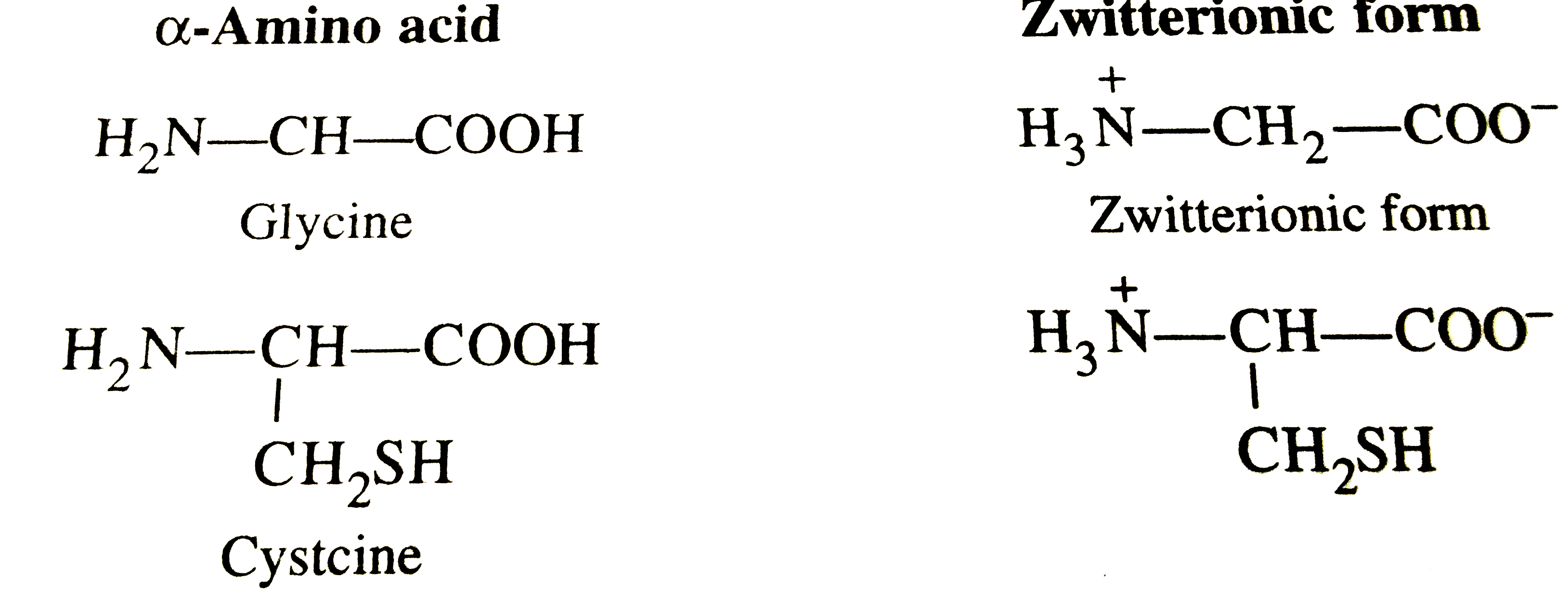
To understand why the monomer of a protein is the cornerstone of modern biotech, one must look at its structural versatility. Proteins are polymers composed of long chains of amino acids, linked by peptide bonds. There are 20 standard amino acids that serve as the “alphabet” for all known life. In the tech sector, this alphabet is being mapped into high-dimensional vector spaces to enable machine learning models to “read” and “write” biological functions.
From Biological Sequences to Computational Inputs
In computational biology, each amino acid monomer is assigned a specific set of parameters, including hydrophobicity, charge, and molecular weight. When these monomers are linked into a polypeptide chain, they create a specific sequence that dictates how the protein will fold in three-dimensional space. For a software engineer, this is analogous to a string of code where the order of characters determines the execution of a program.
The challenge—and the technological opportunity—lies in the fact that the sequence-to-structure relationship is non-linear. Small changes in the monomeric sequence can lead to radical shifts in the final protein’s function. This complexity is exactly what modern AI thrives on, turning the study of protein monomers into a data science discipline.
The Complexity of the 20 Essential Monomers
The 20 essential amino acids are categorized based on the properties of their side chains. Some are polar, some are non-polar, and some carry electrical charges. In the context of “Bio-Tech,” these properties are viewed as constraints in an optimization problem. When designing a new drug or an industrial enzyme, engineers use software to simulate how different monomer combinations will interact with target molecules. This “In Silico” design process saves years of “wet lab” experimentation by narrowing down the trillions of possible monomer combinations to a few hundred viable candidates.
AlphaFold and the Digital Mapping of Protein Monomers
The most significant tech breakthrough regarding protein monomers in recent years is undoubtedly Google DeepMind’s AlphaFold. For fifty years, the “protein folding problem” remained one of biology’s greatest challenges: how can we predict the 3D shape of a protein just by looking at its monomeric sequence?
DeepMind’s Breakthrough in Structural Prediction
AlphaFold utilized a deep learning architecture known as a “transformer”—the same technology that powers large language models like GPT—to analyze the relationships between amino acid monomers. By training on hundreds of thousands of known protein structures, the AI learned the “grammar” of how these monomers interact.
The result was a database that provides the predicted structures of nearly all proteins known to science. This has effectively “open-sourced” the blueprint of life. For developers and researchers, this means that the monomeric sequence is now a searchable, actionable piece of metadata. We can now look at a string of amino acids and instantly visualize the molecular machine it will become.
Training Models on Monomer Sequences
The tech industry is now moving beyond prediction and into generation. Generative AI models, such as ProteinMPNN and RFdiffusion, allow scientists to specify a desired function or shape and then “reverse-engineer” the necessary sequence of monomers. This is a paradigm shift. Instead of discovering proteins in nature, we are now writing the code for proteins that have never existed.

This process relies on “protein language models” (pLMs). These models treat amino acid monomers as “tokens” in a sentence. By understanding the context of these tokens, the AI can suggest mutations or entirely new sequences that optimize for stability, heat resistance, or catalytic efficiency.
Synthetic Biology: Programming Life with New Monomers
As our software for designing proteins improves, our hardware for building them must keep pace. This is where synthetic biology and automated “bio-foundries” come into play. If the amino acid is the monomer (the code), then the ribosome is the 3D printer.
CRISPR and the Editing of Monomeric Chains
CRISPR-Cas9 and other gene-editing technologies allow us to alter the DNA instructions that tell a cell which monomers to assemble. By precisely editing the genetic code, we can swap one amino acid for another within a protein chain. In the tech world, this is equivalent to a “hotfix” or a patch in a software deployment.
Modern biotech firms are using this capability to create “cell factories.” These are engineered microbes designed to produce high-value chemicals, fuels, or medicines by assembling specific monomer sequences at scale. This merges the digital precision of software design with the physical output of chemical manufacturing.
Custom Proteins for Sustainable Tech Solutions
The ability to manipulate protein monomers is also driving a revolution in materials science. Startups are currently developing “programmable” proteins that can replace plastics, create self-healing concrete, or even act as biological semiconductors.
For instance, by repeating specific monomeric motifs, researchers can create silk-like proteins that are stronger than steel but entirely biodegradable. The tech stack for this involves cloud-based design platforms where a user can drag and drop monomer sequences, simulate their mechanical properties, and then order the physical protein through a DNA synthesis service.
The Future of Biotech: High-Performance Computing Meets Molecular Biology
The relationship between the protein monomer and technology is only going to deepen as we integrate quantum computing and advanced robotics into the workflow. The computational power required to simulate the quantum interactions between thousands of monomers in a protein is immense, representing the next frontier for specialized hardware.
Quantum Computing’s Role in Monomer Interaction
Traditional binary computers struggle with the sheer number of variables involved in molecular dynamics. Quantum computers, however, operate in a way that is naturally suited to simulating atomic bonds and electronic states. In the near future, quantum algorithms will allow us to observe how monomers vibrate, rotate, and bond in real-time. This level of granularity will enable the design of “smart proteins” that can change shape in response to external signals like light or temperature—effectively creating biological logic gates.
Scaling Drug Discovery Through Algorithmic Analysis
The most immediate financial and technological impact of understanding the protein monomer is in the pharmaceutical industry. The “Trial and Error” method of drug discovery is being replaced by “Rational Design.” By identifying the specific monomers that make up a viral spike protein or a cancer receptor, AI can design “inhibitor” proteins that fit perfectly into the target’s structure.
This shift toward “Bio-SaaS” (Biology as a Software Service) is attracting massive investment from the tech sector. Platforms that offer monomer-level analysis and protein design are becoming the new operating systems for the biotech industry. They allow for a decentralized model of research where a small team with a powerful laptop can design a life-saving molecule, outsourcing the physical synthesis to automated labs.
In conclusion, while the monomer for a protein is biologically defined as an amino acid, its technological definition is much broader. It is the fundamental unit of biological information, the “bit” of the organic world. As we refine our ability to sequence, simulate, and synthesize these monomers, we are moving toward a future where biology is not something we just study, but something we build, optimize, and scale using the full power of the modern tech stack.
aViewFromTheCave is a participant in the Amazon Services LLC Associates Program, an affiliate advertising program designed to provide a means for sites to earn advertising fees by advertising and linking to Amazon.com. Amazon, the Amazon logo, AmazonSupply, and the AmazonSupply logo are trademarks of Amazon.com, Inc. or its affiliates. As an Amazon Associate we earn affiliate commissions from qualifying purchases.