
In the rapidly evolving landscape of digital architecture, computer-aided design (CAD), and computational geometry, the fundamental principles of mathematics serve as the bedrock for complex software solutions. While the basic formula for a triangle’s perimeter—summing the lengths of its three sides—is taught in elementary classrooms, its application within the technology sector requires a sophisticated understanding of data structures, algorithmic efficiency, and floating-point precision. Whether you are developing a physics engine for a high-end video game, training a computer vision model to recognize shapes, or building a responsive UI framework, the “simple” formula for a triangle’s perimeter is a critical building block.
The Algorithm of Geometry: From Basic Arithmetic to Code
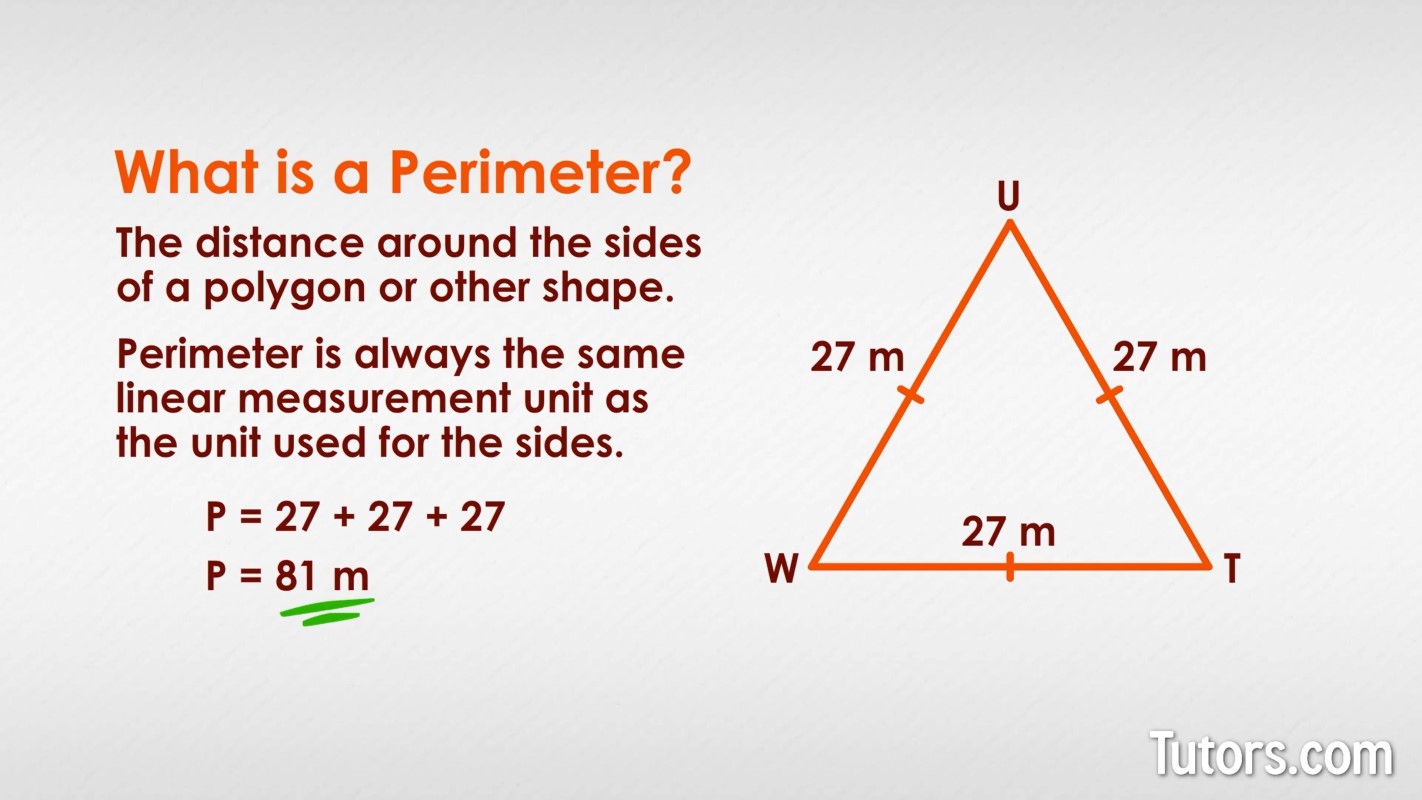
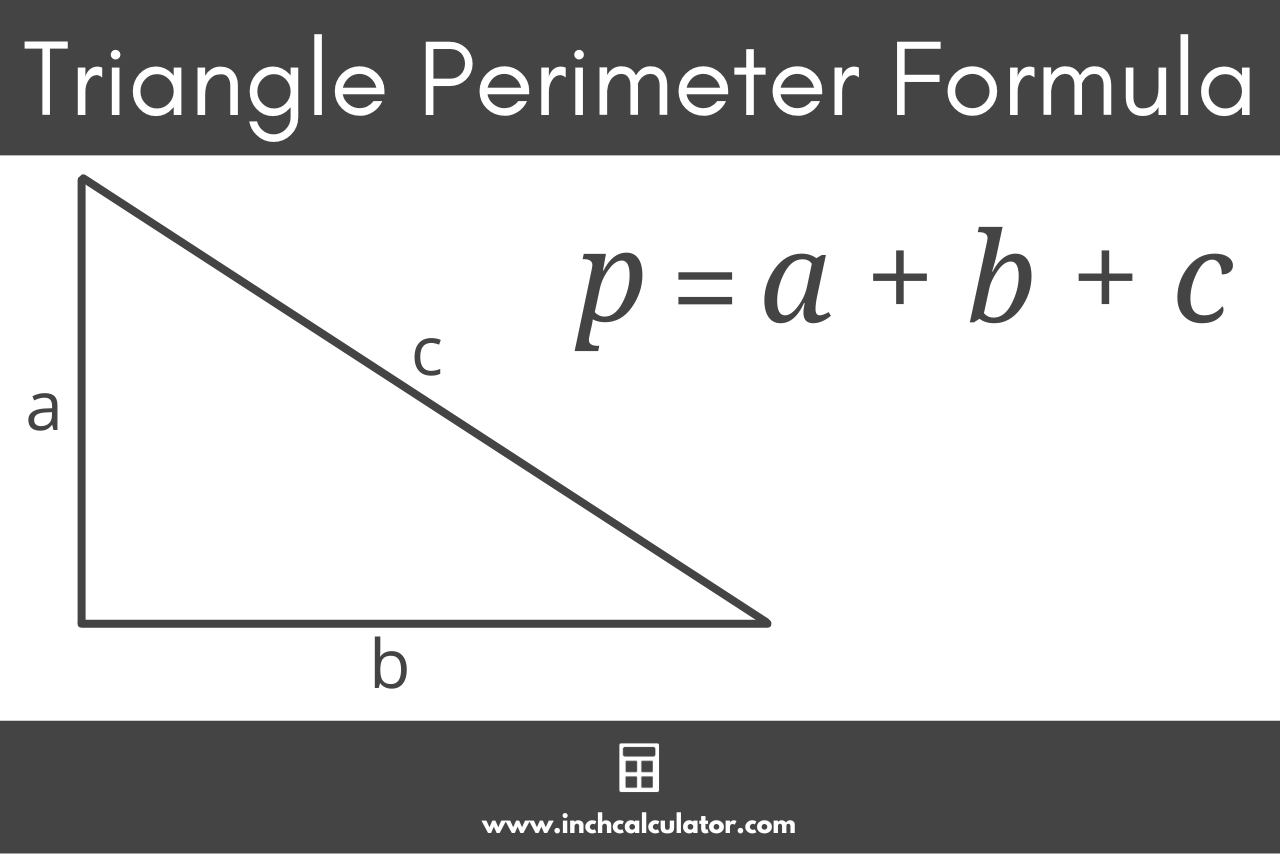
The mathematical definition of a triangle’s perimeter is the total distance around the outside of the shape. Symbolically, this is expressed as $P = a + b + c$, where $a, b,$ and $c$ represent the lengths of the three segments. However, in the realm of software engineering and technical development, we rarely start with the side lengths as given constants. Instead, we typically deal with coordinates, vectors, and dynamic data points.
Translating Mathematical Formulas into Functional Logic
To a developer, a triangle is rarely just a shape; it is an object or an array of three vertices in a Cartesian plane. When a program needs to calculate the perimeter, it must first determine the lengths of the segments connecting these vertices $(x1, y1), (x2, y2),$ and $(x3, y3)$. This involves the application of the Distance Formula, derived from the Pythagorean theorem: $d = sqrt{(x2-x1)^2 + (y2-y1)^2}$.
The computational logic for a triangle’s perimeter in a technical environment follows a specific sequence:
- Input Acquisition: The system retrieves the coordinates of the three vertices from a database, a user interaction, or a sensor.
- Edge Calculation: The software computes the Euclidean distance between each pair of vertices.
- Summation: The three distances are added to produce the final perimeter value.
- Normalization: The result is formatted according to the required precision (e.g., rounding to the nearest ten-thousandth for engineering applications).
Handling Floating-Point Errors in Computational Mathematics
One of the most significant challenges in implementing geometric formulas in tech is the management of floating-point arithmetic. Computers represent real numbers in binary, which often leads to slight precision errors during complex calculations involving square roots and division. For instance, in a sensitive digital security application where geometric hashing is used, a difference of $0.000000001$ can result in a failed validation.
Engineers must utilize specialized libraries or data types, such as “Decimals” in Python or “BigNumber.js” in JavaScript, to ensure that the sum of $a + b + c$ remains accurate across different hardware architectures. This is particularly vital in fields like aerospace or architectural software, where a perimeter calculation might be scaled by a factor of millions, magnifying even the smallest initial error.
Programmable Geometry: Implementing the Perimeter Formula in Tech Stacks
In modern software development, calculating a triangle’s perimeter is a common task in graphics programming, front-end design, and data analysis. Different programming languages offer various methodologies for handling these geometric computations, ranging from low-level memory management to high-level abstraction.
Python for Data Science and Rapid Prototyping
Python has become the industry standard for scientific computing and AI development. Using libraries like NumPy, developers can vectorize geometric calculations, allowing for the simultaneous perimeter computation of millions of triangles in a mesh. This is essential for researchers working with geospatial data or large-scale topographical maps.
A typical implementation involves creating a function that accepts a list of coordinate tuples. By leveraging the math.sqrt or numpy.linalg.norm functions, the developer can calculate the perimeter with minimal code while maintaining high readability. In data science, this formula might be used to calculate the “bounding triangle” of a cluster of data points, providing insights into the spatial density of information.
JavaScript for Interactive Web Geometry
On the web, the triangle perimeter formula is frequently used in Canvas API projects, SVG manipulations, and WebGL-based gaming. Frontend developers use these calculations to determine collision detection boundaries or to animate elements along a triangular path.
In a React or Vue.js environment, a component might calculate a perimeter to dynamically adjust the stroke-dasharray of an SVG, creating a drawing effect that perfectly matches the triangle’s edge. Because web applications often run on devices with varying processing power, optimizing these calculations is key to maintaining a high frame rate in interactive visualizations.
Beyond the Basics: Coordinate Geometry and Euclidean Distance
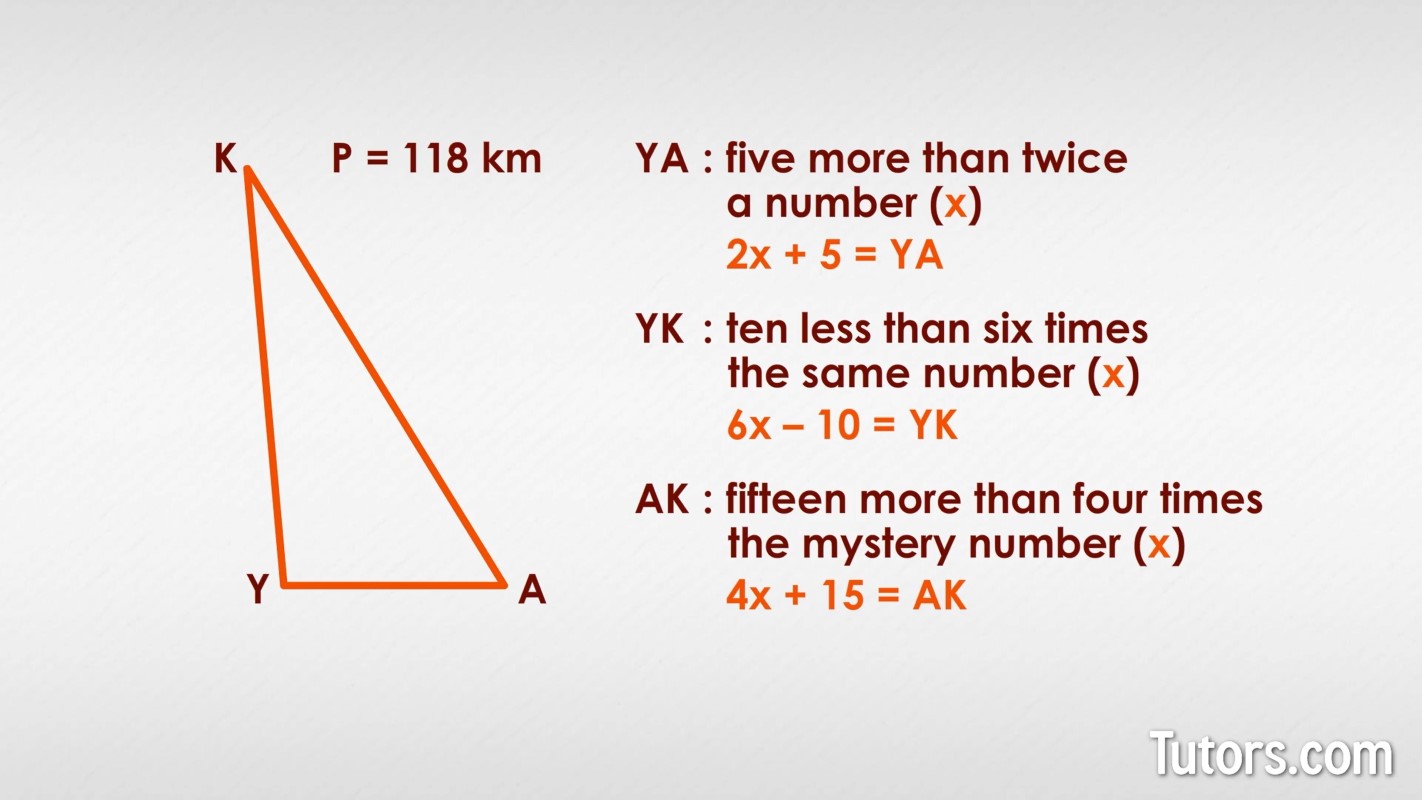
In advanced tech applications, we often move beyond the simple $a + b + c$ model. When working with 3D modeling software like Blender or game engines like Unreal Engine, triangles are the fundamental units of “polygonal meshes.” Every complex 3D object—from a character in a game to a digital twin of a factory—is composed of thousands or millions of triangles.
The Distance Formula and Vertex Arrays
In a 3D environment, the formula for triangle perimeter expands to include the Z-axis: $d = sqrt{(x2-x1)^2 + (y2-y1)^2 + (z2-z1)^2}$. Modern Graphics Processing Units (GPUs) are specifically designed to perform these calculations in parallel. Using shaders (written in HLSL or GLSL), a graphics card can calculate the perimeters and areas of millions of triangles per second to determine how light should bounce off a surface or how a texture should be wrapped.
The concept of a “Vertex Array” allows developers to store the coordinates of an entire mesh efficiently. To calculate the total surface perimeter of a non-closed mesh, the software iterates through these arrays, identifying “naked edges” (edges not shared by two triangles) and summing their lengths using the perimeter logic.
Calculating Perimeter in 3D Environments and Game Engines
In game physics, the perimeter calculation is often a precursor to determining the barycentric coordinates of a point within a triangle. This is used for “ray casting,” which is the technology behind realistic lighting (ray tracing) and user interaction (clicking on an object in a 3D space). If a ray intersects a triangle, the engine must quickly calculate the geometric properties of that triangle to determine the point of impact and the resulting visual effect.
The Role of Artificial Intelligence and Computer Vision in Geometric Analysis
As we move into the era of AI-driven automation, the formula for a triangle’s perimeter finds new utility in computer vision and machine learning. From autonomous vehicles identifying road signs to medical AI analyzing cell structures, geometry is the language through which machines interpret the physical world.
Edge Detection and Perimeter Estimation
In computer vision, an algorithm like Canny Edge Detection identifies the boundaries of objects in an image. Once these edges are found, the software often approximates the shape into a polygon—frequently a triangle for simplicity. The “perimeter” of this identified shape helps the AI determine the size and distance of the object. For example, if a self-driving car identifies a triangular “Yield” sign, it can compare the calculated perimeter of the sign in the video feed to its known physical dimensions to estimate how far away the sign is from the vehicle.
Machine Learning Models for Shape Recognition
Deep learning models, particularly Convolutional Neural Networks (CNNs), are trained on millions of geometric samples. During the training phase, the model learns to associate specific perimeter-to-area ratios with specific objects. While the human-readable formula $P = a + b + c$ is hidden within the layers of the neural network, the underlying mathematical relationship is what allows the AI to distinguish between a right-angled triangle and an equilateral one, even when the image is distorted or partially obscured.
Optimizing Geometric Performance in Modern Software Architecture
Efficiency is paramount in large-scale technical systems. When a geometric calculation is performed billions of times—such as in a global positioning system (GPS) or a financial modeling tool—the choice of how to implement the perimeter formula can have significant impacts on latency and server costs.
API Integration for Complex Mathematical Calculations
For many businesses, building a custom geometry engine is unnecessary. Instead, they integrate with specialized APIs like WolframAlpha, Google Maps Geometry Library, or Microsoft Azure’s spatial analysis tools. These services provide highly optimized functions for calculating perimeters on a spherical plane (taking into account the Earth’s curvature) which is a far more complex variation of the triangle perimeter formula known as the Great-Circle distance.
Security Considerations in Mathematical Libraries
Digital security is another area where geometry plays a surprising role. In certain types of cryptography and hashing, the geometric properties of multi-dimensional shapes are used to create secure keys. If a mathematical library used to calculate these properties has a vulnerability or a logic error in how it handles geometric formulas, it could potentially lead to a security breach. Consequently, technical leads must ensure that the libraries used for even “basic” math like triangle perimeters are regularly audited and maintained by the open-source community or trusted vendors.
In conclusion, while the formula for the perimeter of a triangle is a simple sum of three sides, its implementation in the tech industry is a gateway to high-level computer science. From the precision of floating-point arithmetic to the massive parallel processing of GPUs and the analytical power of AI, $a + b + c$ is a foundational element that powers the digital world. For developers and technical professionals, mastering these geometric basics is not just about math—it is about building the infrastructure for the next generation of technological innovation.
aViewFromTheCave is a participant in the Amazon Services LLC Associates Program, an affiliate advertising program designed to provide a means for sites to earn advertising fees by advertising and linking to Amazon.com. Amazon, the Amazon logo, AmazonSupply, and the AmazonSupply logo are trademarks of Amazon.com, Inc. or its affiliates. As an Amazon Associate we earn affiliate commissions from qualifying purchases.