
In the contemporary landscape of precision agriculture and AgTech, the question “what is the composition of soil” has evolved far beyond a simple geological inquiry. Traditionally, soil was defined by its physical constituents—sand, silt, clay, organic matter, water, and air. However, in the era of the Internet of Things (IoT) and artificial intelligence, the composition of soil is increasingly being viewed through the lens of high-fidelity data, chemical signaling, and digital mapping. For the modern technologist, soil is the ultimate complex system, a biological hardware layer that requires sophisticated software and sensing tools to decode and optimize.
The Digital Blueprint: Redefining Soil Constituents through AgTech
To understand soil composition today, one must look at it as a multidimensional data set. While a traditional scientist sees minerals and microbes, a technology-driven approach views these elements as variables in a massive, living algorithm. The fundamental composition remains the same, but our ability to quantify it has undergone a digital revolution.
The Mineral Matrix and Remote Sensing
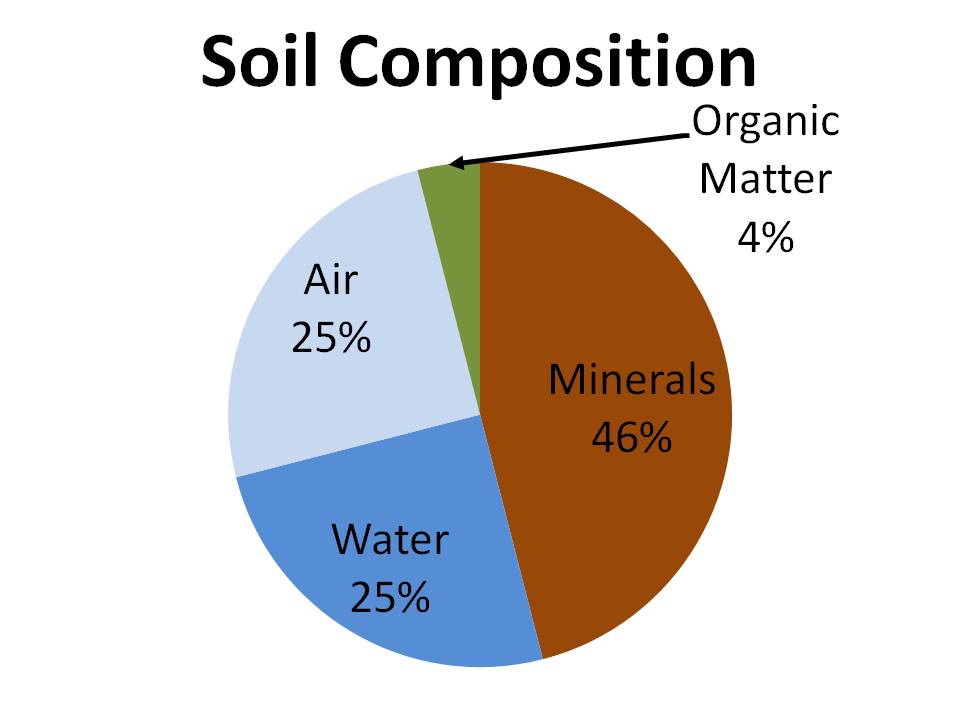
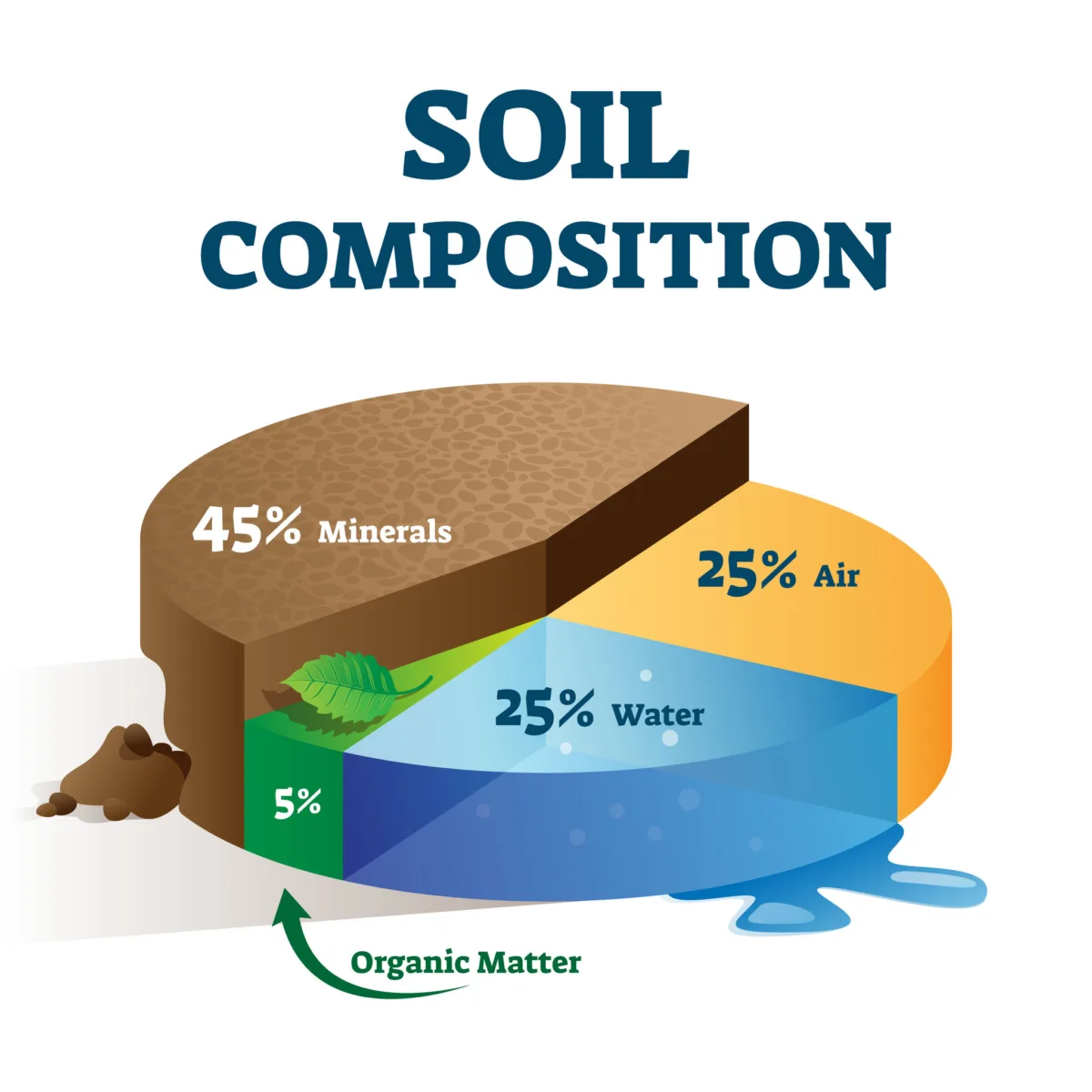
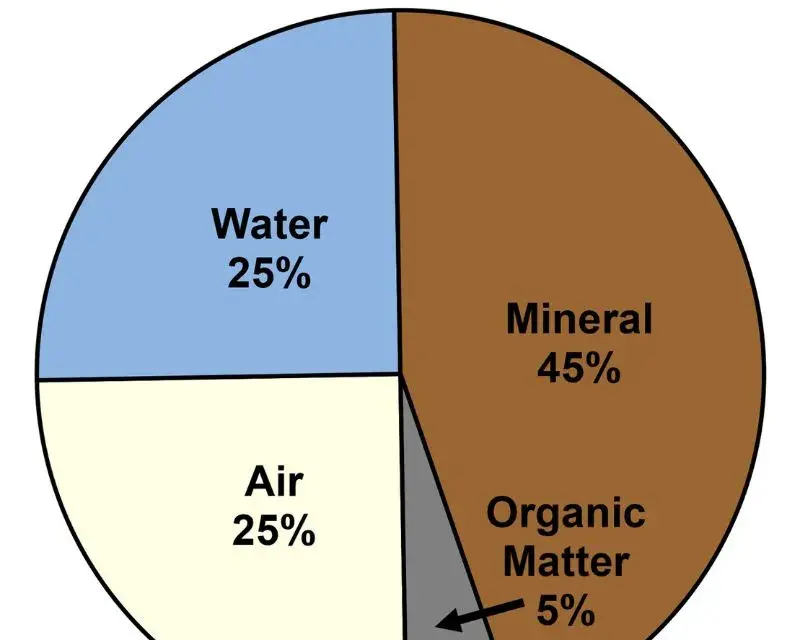
Approximately 45% of soil composition is mineral-based, derived from weathered rock. In the tech sector, this is the “infrastructure” of the field. Using Geographic Information Systems (GIS) and hyperspectral imaging, tech platforms can now map the mineralogy of a landscape without ever touching the ground. High-resolution satellite imagery uses specific light wavelengths to detect the presence of iron oxides, carbonates, and silicates. This allows for the creation of “digital twin” maps of the earth’s surface, providing a foundational layer for autonomous farming equipment to adjust its pressure and depth based on the structural density of the mineral composition.
Organic Matter as a Carbon Data Point
Organic matter typically makes up about 5% of soil, yet it is the most critical component for carbon sequestration—a major focus of modern GreenTech. Through the use of Near-Infrared (NIR) spectroscopy, sensors can now measure the organic carbon content in real-time. This technology allows tech companies to develop “Carbon Credits” platforms, where the composition of the soil is digitized and verified on a blockchain. By treating organic matter as a tradable asset, technology has turned a biological component into a financial and environmental metric.
Precision Sensing: Monitoring the Liquid and Gaseous Phases
The remaining 50% of soil composition is split between water and air, held within the pore spaces of the mineral matrix. In a legacy environment, measuring these was a matter of guesswork. In the modern tech stack, these are dynamic variables monitored by sophisticated IoT sensor networks.
The IoT of Soil Moisture
Water is the primary solvent in soil, carrying nutrients to plant roots. Tech-driven soil management utilizes capacitive and TDR (Time Domain Reflectometry) sensors buried at various depths. These devices communicate via LoRaWAN or cellular NB-IoT protocols to provide a real-time stream of the soil’s “liquid composition.” By integrating this data with AI-driven weather APIs, smart irrigation systems can automate water delivery with millimetric precision. This reduces waste and ensures that the soil’s composition maintains the ideal balance of moisture to prevent anaerobic conditions.
Aeration and Gas Exchange Sensors
The air in the soil is not the same as the air in the atmosphere; it is higher in carbon dioxide and lower in oxygen due to microbial respiration. New gas-sensing technologies are being deployed to monitor “soil breath.” By analyzing the gaseous composition, AI tools can diagnose soil compaction or drainage issues before they become visible to the naked eye. This level of technical insight allows for the deployment of robotic aerators that only target areas where the air-to-mineral ratio has fallen below optimal thresholds.
Advanced Chemical Analysis: The Rise of Lab-on-a-Chip
One of the most significant shifts in understanding soil composition is the move from laboratory testing to “in-situ” digital analysis. The chemical composition of soil—specifically the availability of Nitrogen, Phosphorus, and Potassium (NPK)—is the primary driver of agricultural productivity.
NPK Sensors and Electrochemical Impedance
Traditionally, determining the chemical makeup of soil required taking physical samples to a lab, a process that took weeks. Modern AgTech is introducing “Lab-on-a-Chip” (LOC) technology. These are microfluidic devices that can be deployed directly in the field. Using electrochemical impedance spectroscopy, these chips can identify the concentration of ions in the soil solution. This data is then uploaded to a cloud platform, allowing farmers to view a real-time “chemical dashboard” of their land.
Digital Soil Mapping (DSM)
Digital Soil Mapping uses mathematical models to predict the composition of soil across a landscape based on limited sample points and environmental covariates. By feeding variables like topography, climate data, and satellite imagery into machine learning algorithms, tech platforms can generate 3D maps of soil composition. These maps are the “software” that runs the hardware of variable-rate fertilizer spreaders, ensuring that chemicals are only applied where the composition actually requires them.
The Role of AI and Machine Learning in Soil Health
As we gather more data on the composition of soil, the challenge shifts from data collection to data interpretation. This is where Artificial Intelligence and Machine Learning (ML) play a pivotal role.
Predictive Modeling for Compositional Trends
Soil is not static; its composition changes with every rainfall, crop cycle, and temperature shift. AI algorithms are now capable of performing “predictive composition modeling.” By analyzing years of historical data alongside real-time sensor inputs, these tools can predict when the soil’s organic matter will deplete or when salt concentrations will reach toxic levels. This proactive approach allows for regenerative tech interventions, such as the automated planting of cover crops by autonomous drones to restore nitrogen levels.
The Microbiome and DNA Sequencing
Perhaps the most “high-tech” aspect of soil composition is the biological component. A single teaspoon of healthy soil contains billions of microbes. Tech startups are now using high-throughput DNA sequencing to catalog the “soil microbiome.” By treating the genetic makeup of soil as code, bio-engineers can develop microbial inoculants—essentially “software updates” for the soil—that improve its ability to fix nitrogen or resist pathogens. This intersection of biotech and software is redefining what we mean when we talk about a “healthy” soil composition.
The Future of Soil Tech: Robotics and Autonomy
The final layer in the technology of soil composition is the physical interaction provided by robotics. We are moving toward a future where the monitoring and maintenance of soil composition are entirely autonomous.
Autonomous Soil Samplers
Companies are currently testing robotic rovers equipped with automated probes. These robots navigate via GPS and LiDAR, stopping at precise coordinates to take core samples. The robot doesn’t just collect the dirt; it processes it using on-board sensors, uploading the composition data to the cloud in real-time. This removes human error from the sampling process and provides a granular look at soil variability that was previously impossible to achieve.
Swarm Robotics and Targeted Intervention
In the future, we may see “swarm” robotics—small, interconnected machines that live in the field. These robots would monitor the soil composition at the root level for every individual plant. If a specific plant’s “micro-soil” composition is lacking a certain mineral, a drone or a small ground robot could deliver a targeted micro-dose of that nutrient. This represents the ultimate convergence of hardware, software, and biology, where the composition of the soil is managed with the same precision as a server farm or a semiconductor cleanroom.
Digital Sovereignty and the Data of the Earth
As soil composition becomes a digital asset, the questions of data ownership and security become paramount. The information regarding the fertility, carbon content, and moisture levels of a nation’s soil is a matter of strategic importance.
Data Security in AgTech
The platforms that store soil composition data are becoming targets for cyber threats. If a competitor or a hostile actor can access or manipulate soil data, they could disrupt food supplies or manipulate commodity markets. As a result, digital security for soil data is becoming a niche within the cybersecurity industry. Multi-factor authentication, end-to-end encryption for IoT devices, and secure cloud architectures are now as important to agriculture as tractors and seeds.
The Democratization of Soil Data
Open-source software and open-data initiatives are also making an impact. Global databases of soil composition are being built to help small-scale farmers in developing nations access the same technological advantages as large corporate farms. By providing accessible tools for analyzing soil composition, the tech industry is playing a vital role in global food security and climate resilience.
In conclusion, when we ask “what is the composition of soil,” we are no longer just asking about dirt. We are asking about a complex, data-rich ecosystem that serves as the foundation for our most advanced technological interventions in the physical world. Through sensors, AI, robotics, and biotechnology, we are learning to speak the language of the earth, turning the ancient composition of the soil into the most important tech stack of the 21st century.
aViewFromTheCave is a participant in the Amazon Services LLC Associates Program, an affiliate advertising program designed to provide a means for sites to earn advertising fees by advertising and linking to Amazon.com. Amazon, the Amazon logo, AmazonSupply, and the AmazonSupply logo are trademarks of Amazon.com, Inc. or its affiliates. As an Amazon Associate we earn affiliate commissions from qualifying purchases.