
In an era where digital connectivity is as essential as electricity or water, the monthly mobile phone bill has become a permanent fixture in the household budget. For many consumers, the rising cost of living has triggered a search for more efficient ways to manage recurring expenses without sacrificing service quality. Straight Talk Wireless, a joint venture between TracFone and Walmart (now owned by Verizon), has long positioned itself as a disruptor in the telecommunications space by offering “no-contract” plans that significantly undercut the prices of traditional postpaid carriers.
However, finding the “cheapest” plan isn’t just about looking at the smallest number on a price tag; it is about understanding the intersection of cost, utility, and long-term financial strategy. In the world of personal finance, the goal is to maximize the value of every dollar spent. To determine which Straight Talk plan offers the best financial advantage, we must dissect the options through a lens of budgeting and expense management.
Understanding the Baseline: The $35 Bronze Unlimited Plan
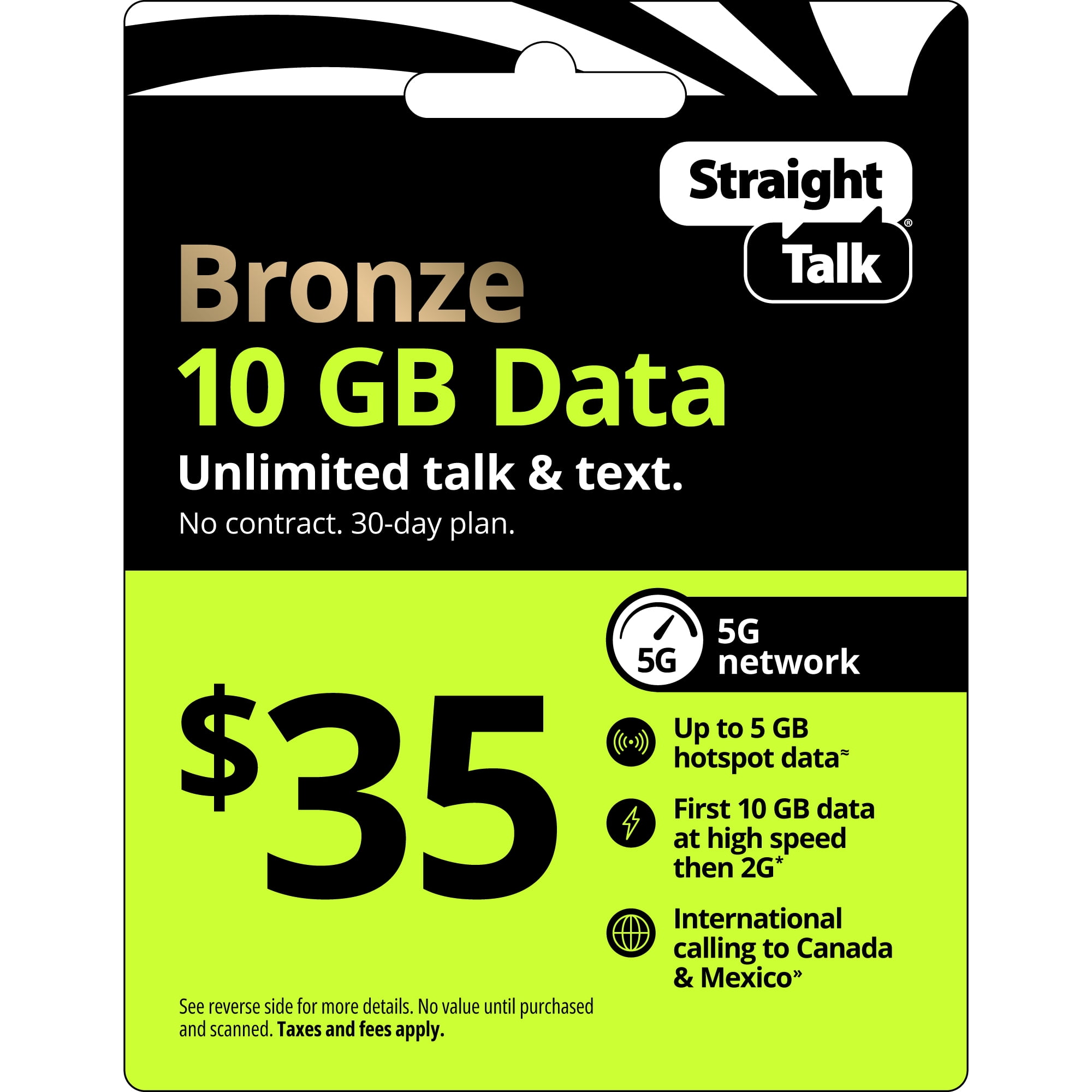
When looking for the absolute lowest entry point for a smartphone plan on Straight Talk, the search begins and ends with the $35 Bronze Unlimited Plan. In terms of raw numbers, this is the least expensive comprehensive service tier offered by the provider.
Features and Limitations
The $35 Bronze Plan provides users with unlimited talk and text, along with 10GB of high-speed data. Once the 10GB threshold is reached, data speeds are reduced to 2G levels for the remainder of the billing cycle. From a financial perspective, this plan is designed for the “light-to-moderate” user. It caters to individuals who primarily use Wi-Fi at home or work and only rely on cellular data for navigation, basic messaging, and occasional browsing.
The limitations are where the “hidden costs” of convenience come into play. If a user regularly exceeds 10GB of data, the throttling of speeds can lead to productivity losses or the need to purchase “add-on” data cards, which are typically priced at $5 for 2GB or $10 for 5GB. If you find yourself buying data add-ons more than once or twice a year, the “cheapest” plan actually becomes a more expensive liability than a higher-tier plan.
Who Should Choose This Plan?
From a personal finance standpoint, the Bronze Plan is ideal for students, seniors, or budget-conscious individuals who have disciplined data habits. It serves as an excellent “fixed-cost” tool. Because it is prepaid, there is zero risk of overage fees—a common pitfall in traditional postpaid billing that can wreak havoc on a monthly budget. By locking in a $35 monthly expense, a consumer can accurately forecast their annual communication costs at $420 (plus taxes and fees).
The Math of Mobile Savings: Auto-Refill and Reward Systems
In the realm of money management, “pennies make dollars.” Straight Talk offers several mechanisms to lower the cost of their plans even further, effectively making the “cheapest” plan even cheaper through strategic automation and loyalty.
The Auto-Refill Discount
Straight Talk incentivizes consistency. For many of their plans, including the Bronze and Silver tiers, customers can opt into “Auto-Refill.” This is a pre-authorized payment system where the plan cost is automatically deducted from a debit or credit card every 30 days. In exchange for this predictability, Straight Talk often provides a discount (frequently around $1 to $2.50 depending on the plan and current promotions).
While a couple of dollars may seem negligible, a $2.50 monthly discount represents a 7% reduction in the cost of a $35 plan. In the world of investing, a guaranteed 7% return is considered excellent. Applying this same logic to your bills allows you to shave nearly $30 off your annual expenses with zero effort beyond the initial setup.
Straight Talk Rewards: Turning Loyalty into Cash
Another financial tool often overlooked is the Straight Talk Rewards program. This is a point-based system where users earn points for renewing their plans, playing in-app games, or referring friends. These points can eventually be redeemed for free service plans.
For the savvy financial planner, this represents a “rebate” on their communication spend. By consistently engaging with the rewards platform, a user might earn one or two free months of service per year. If you are on the $35 plan and earn two free months via rewards, your effective monthly cost drops from $35 to approximately $29.16. This level of optimization is what separates basic budgeting from advanced personal finance management.
Comparing the Silver, Gold, and Platinum Tiers for Long-Term Value
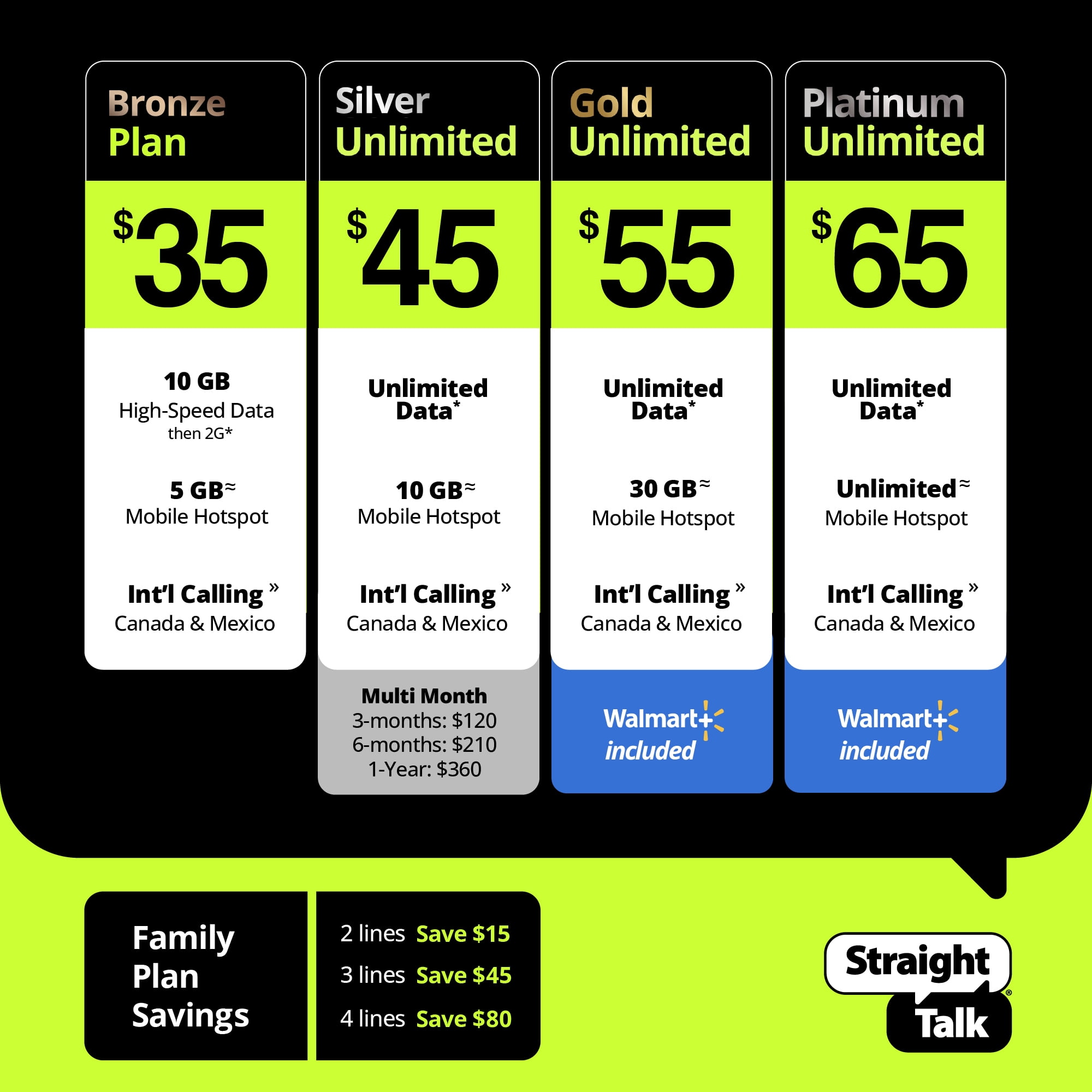
A common mistake in financial planning is choosing the lowest price while ignoring the highest value. Sometimes, spending $10 more per month can save you hundreds of dollars in other areas of your life. This is where we must compare the $35 Bronze plan against its “big brothers.”
The Silver Plan ($45): The Middle Ground
The $45 Silver Unlimited Plan is arguably the most popular choice. It offers unlimited high-speed data (with a soft cap for network management after 60GB) and 5GB of hotspot data. From a money-saving perspective, the Silver Plan’s inclusion of hotspot data is its most valuable asset. If you are a remote worker or a student who occasionally needs to tether a laptop in a pinch, having a built-in hotspot can eliminate the need for expensive “Boingo” subscriptions or the risk of using unsecure public Wi-Fi.
Gold and Platinum: Are They Worth the Premium?
The Gold ($55) and Platinum ($65) plans add features like cloud storage, international calling, and subscriptions to streaming services like Walmart+ (which includes Paramount+).
When evaluating these from a financial standpoint, you must perform a “bundle audit.” If you already pay $12.99 a month for a streaming service and $98 a year for a delivery service like Walmart+, the Platinum plan might actually be “cheaper” for your overall household budget than the $35 plan. If the plan’s cost is $65 but it replaces $25 worth of other monthly subscriptions, your “adjusted” mobile cost is only $40. Always look at the total ecosystem of your spending rather than viewing the phone bill in a vacuum.
Prepaid Mobile Service as a Tool for Financial Discipline
Beyond the specific dollar amounts, the decision to use a provider like Straight Talk is often a strategic choice for those looking to tighten their financial discipline. Prepaid services offer unique psychological and structural advantages over traditional contract-based carriers.
Eliminating Overages and Surprise Fees
Traditional postpaid carriers often have complex billing statements filled with regulatory recovery fees, administrative charges, and “easy-pay” device installments. These can cause the bill to fluctuate, making it difficult to maintain a strict zero-based budget. Straight Talk’s prepaid model operates on a “what you see is what you pay” basis. You buy the airtime, and when it’s gone, it’s gone. This hard limit prevents the “spending creep” that often occurs when users have unfettered access to data and services that bill on the backend.
No Credit Checks and the “Pay-As-You-Go” Mentality
For individuals working to rebuild their credit or those who prefer to keep their credit reports “clean” of unnecessary inquiries, Straight Talk is a boon. Because it is a prepaid service, there is no credit check required. This protects your credit score from the “hard pull” typically associated with starting a new contract. Furthermore, it prevents you from being locked into a 24-month or 36-month device payment plan. In the world of personal finance, debt is often the greatest enemy. By buying a phone outright and using a cheap Straight Talk plan, you avoid paying interest on a depreciating asset (the smartphone).
Maximizing ROI: Selecting the Right Plan for Your Usage Profile
To truly find the cheapest plan for you, you must perform a data audit. Personal finance is personal, and your usage patterns dictate your return on investment.
Data Auditing: Tracking Your Consumption
Most smartphones track data usage in the settings menu. Before choosing the $35 plan to save money, check your last three months of usage. If you consistently use 12GB of data, the $35 plan (which caps at 10GB) will lead to frustration and potential “emergency” data purchases. In this scenario, the $45 plan is the financially responsible choice because it provides “insurance” against the higher costs of per-GB add-ons.
The Opportunity Cost of Overpaying for Mobile Service
The difference between the cheapest Straight Talk plan ($35) and a standard “big carrier” unlimited plan (often $80-$90) is roughly $50 per month. To put this in perspective for an investor, $50 a month invested in a low-cost S&P 500 index fund with an average 7% annual return would grow to over $8,500 in ten years.
Choosing the cheapest Straight Talk plan isn’t just about saving money today; it’s about the opportunity cost of that capital. By opting for a $35 or $45 plan, you are effectively “paying yourself” $500 to $600 a year that can be redirected toward an emergency fund, debt repayment, or a retirement account.
In conclusion, while the $35 Bronze Plan is technically the cheapest Straight Talk plan, the “smartest” plan is the one that aligns with your specific data needs while allowing you to automate savings through Auto-Refill. By treating your mobile service as a strategic line item rather than a fixed burden, you can ensure that you stay connected without overextending your financial resources.
aViewFromTheCave is a participant in the Amazon Services LLC Associates Program, an affiliate advertising program designed to provide a means for sites to earn advertising fees by advertising and linking to Amazon.com. Amazon, the Amazon logo, AmazonSupply, and the AmazonSupply logo are trademarks of Amazon.com, Inc. or its affiliates. As an Amazon Associate we earn affiliate commissions from qualifying purchases.