
When consumers ask, “What is the best fuel economy car?” they are rarely asking a purely mechanical question. In the context of personal finance and wealth management, this inquiry is actually a question of capital allocation. Choosing a vehicle with superior fuel economy is not merely about environmental stewardship; it is a strategic financial move designed to minimize recurring liabilities and optimize the total cost of ownership (TCO). In a volatile economic landscape where energy prices fluctuate and inflation erodes purchasing power, the “best” fuel economy car is the one that provides the highest return on investment (ROI) over the duration of its lifecycle.
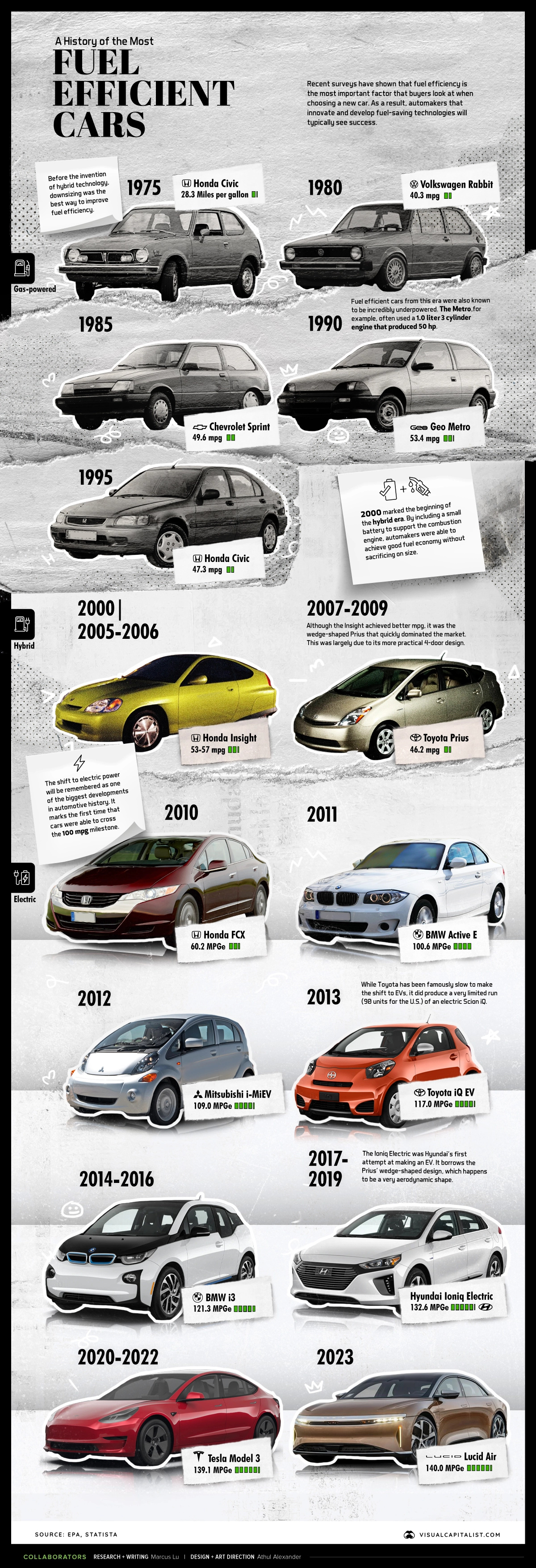
To identify the best fuel economy car from a financial perspective, we must move beyond the simple Miles Per Gallon (MPG) rating on the window sticker. We must analyze the intersection of purchase price, depreciation, maintenance costs, and energy efficiency.
The Financial Case for Fuel Efficiency: Beyond the Pump
The primary driver for seeking high fuel economy is the reduction of monthly operational expenses. For the average household, transportation is the second-largest expense after housing. By optimizing fuel efficiency, an individual is essentially giving themselves a tax-free raise.
Calculating the Total Cost of Ownership (TCO)
The true value of a fuel-efficient vehicle is revealed through a TCO analysis. This formula includes the purchase price, financing costs, fuel expenses, insurance, maintenance, and—most importantly—depreciation. A car that achieves 50 MPG but depreciates by 60% in three years may actually be a poorer financial choice than a car that achieves 35 MPG but retains 70% of its value.
When evaluating the “best” car, savvy investors look at the “cost per mile.” For instance, a high-efficiency hybrid might cost $0.45 per mile when all factors are considered, whereas a standard internal combustion engine (ICE) SUV might cost $0.72 per mile. Over an average annual driving distance of 15,000 miles, this represents a $4,050 annual difference in cash flow. Over a five-year ownership period, that is $20,250—capital that could have been diverted into a brokerage account or a high-yield savings vehicle.
Fuel as a Variable Expense Hedge
Investing in a high-MPG or high-MPGe (Miles Per Gallon equivalent) vehicle acts as a hedge against energy inflation. When gasoline prices spike due to geopolitical instability or supply chain disruptions, the owner of a fuel-efficient vehicle experiences significantly less “budget shock.” From a personal finance standpoint, this reduces the variance in monthly cash flow, making it easier to maintain a consistent savings rate. The “best” car in this regard is one that decouples your lifestyle from the volatility of the global oil market.
Analyzing the ROI of Hybrids and EVs
The debate over the best fuel economy car often centers on the choice between traditional hybrids, plug-in hybrids (PHEVs), and battery electric vehicles (EVs). Each of these represents a different financial strategy.
The Break-Even Point: Fuel Savings vs. Upfront Premium
The most significant hurdle in the pursuit of fuel economy is the “green premium”—the additional cost one pays for advanced powertrain technology. To determine if a high-efficiency car is the best financial choice, one must calculate the break-even point.
For example, if a hybrid version of a sedan costs $4,000 more than its gasoline counterpart but saves $1,000 per year in fuel, the break-even point is four years. If the owner intends to keep the car for ten years, the final six years represent a pure profit of $6,000. However, if the owner trades in vehicles every three years, the hybrid is a sub-optimal financial choice because the fuel savings never recoup the initial capital outlay. The “best” car is therefore relative to the owner’s holding period.
Maintenance Costs and Long-Term Savings
A hidden component of fuel economy is the simplicity—or complexity—of the vehicle’s mechanical systems. Electric vehicles, which offer the highest “fuel” economy in terms of MPGe, often boast lower maintenance costs due to the absence of oil changes, spark plugs, and complex transmissions.
From a wealth-building perspective, the reduction in maintenance is a critical factor. Regenerative braking systems found in hybrids and EVs significantly extend the life of brake pads and rotors, further lowering the TCO. When we define the “best” car as the one that keeps the most money in the owner’s pocket, the lower service frequency of high-efficiency vehicles gives them a distinct competitive advantage.
Tax Incentives and Financial Leverages

In the current fiscal environment, the “best” fuel economy car is often the one that comes with the most significant government subsidies. Tax credits and rebates can fundamentally alter the ROI calculation of a vehicle.
Federal and State Credits for High-Efficiency Vehicles
In the United States, legislation such as the Inflation Reduction Act has provided substantial tax credits for qualifying electric and plug-in hybrid vehicles. A $7,500 federal tax credit, combined with potential state-level incentives ranging from $1,000 to $5,000, can effectively eliminate the “green premium” mentioned earlier.
When a consumer can purchase an EV for the same effective price as a gasoline car after incentives, the fuel savings become an immediate net gain. This makes certain EVs the “best” fuel economy cars not just because of their efficiency, but because of their subsidized entry price. Investors should view these incentives as a “margin of safety” that protects them from depreciation.
Insurance Premiums and Resale Value
It is a common misconception that high-efficiency cars are always cheaper to own. One must account for insurance premiums, which can be higher for EVs and hybrids due to the cost of specialized parts like battery packs. However, this is often offset by the high resale value of these vehicles.
In the secondary market, fuel-efficient cars tend to hold their value better during periods of high gas prices. This “liquidity” is an essential aspect of personal finance. A car that is easy to sell and retains a high percentage of its original price is an asset that minimizes the “realized loss” at the end of the ownership cycle.
Strategizing the Purchase: Financial Tools and Market Timing
Identifying the best fuel economy car is only half the battle; the other half is the financial execution of the purchase.
Financing vs. Leasing for Maximum Value
For those seeking the highest efficiency, leasing can sometimes be a more strategic financial tool than purchasing. This is particularly true in the EV sector, where technology advances rapidly. Leasing allows a driver to benefit from the highest fuel economy available today without the risk of “technological obsolescence” hurting the car’s resale value in five years.
Furthermore, many manufacturers pass the federal tax credit directly into the lease payment, resulting in significantly lower monthly outflows. For a business owner, leasing a high-efficiency vehicle can also offer tax advantages through deductible business expenses, further enhancing the financial profile of the car.
The Impact of Interest Rates on Your Efficiency Investment
In a high-interest-rate environment, the cost of financing a more expensive hybrid or EV can outweigh the fuel savings. A 7% interest rate on a $40,000 car creates a much higher “hurdle rate” for fuel savings to overcome compared to a 2% rate.
To find the best fuel economy car for your specific budget, you must run the numbers using current financing terms. If the interest paid on the premium for a hybrid exceeds the projected fuel savings, the “best” car might actually be a highly efficient, lower-priced gasoline vehicle that requires a smaller loan.

Conclusion: Making the Data-Driven Choice
The quest for the best fuel economy car is a journey through data, spreadsheets, and financial forecasting. While the EPA ratings provide a baseline, the true winner is determined by the individual’s driving habits, tax bracket, and investment horizon.
The “best” car is the one that minimizes the erosion of your net worth. For a high-mileage commuter, an electric vehicle or a plug-in hybrid represents a massive opportunity for capital preservation. For a low-mileage driver, a reliable, used, fuel-efficient gasoline subcompact might offer the best financial outcome due to the lower initial capital requirement.
Ultimately, fuel economy should be viewed as a component of a broader financial strategy. By treating the purchase of a vehicle as a capital expenditure rather than an emotional whim, consumers can leverage the efficiency of modern automotive technology to bolster their personal balance sheets. The best fuel economy car isn’t just the one that uses the least gas; it’s the one that accelerates your path to financial independence.
aViewFromTheCave is a participant in the Amazon Services LLC Associates Program, an affiliate advertising program designed to provide a means for sites to earn advertising fees by advertising and linking to Amazon.com. Amazon, the Amazon logo, AmazonSupply, and the AmazonSupply logo are trademarks of Amazon.com, Inc. or its affiliates. As an Amazon Associate we earn affiliate commissions from qualifying purchases.