
In the competitive landscape of modern commerce, businesses are constantly seeking sophisticated levers to optimize their bottom line. Among the most effective financial strategies is product bundle pricing—a method where several products or services are grouped together and sold as a single unit for a combined price. While often viewed through the lens of marketing, product bundle pricing is, at its core, a powerful financial tool designed to manipulate unit economics, increase average order value (AOV), and extract maximum consumer surplus.
To understand product bundle pricing is to understand the intersection of behavioral economics and corporate finance. By strategically structuring these offers, a business can clear inventory, reduce operational overhead, and significantly enhance its net profit margins. For entrepreneurs, financial analysts, and business owners, mastering this strategy is essential for sustainable growth and capital efficiency.

The Financial Mechanics of Product Bundle Pricing
The fundamental objective of bundling is to increase the total revenue generated from a single customer interaction. In a traditional transactional model, a customer may purchase a single item based on its perceived utility relative to its price. However, bundling shifts the financial focus from individual item valuation to the collective value of a curated package.
Pure Bundling vs. Mixed Bundling
From a financial planning perspective, bundles generally fall into two categories: pure bundling and mixed bundling.
- Pure Bundling: In this model, the items within the bundle are not available for individual purchase. This strategy is often used to protect high-margin products or to force the adoption of new service tiers. From a financial standpoint, pure bundling allows a company to predict revenue with greater certainty, as the variability of individual item sales is eliminated. However, it carries the risk of alienating price-sensitive consumers who only want a specific component.
- Mixed Bundling: This is the more common and often more profitable approach. Here, consumers have the option to buy products individually or as part of a discounted bundle. The financial advantage of mixed bundling lies in its ability to capture a wider range of the market. It attracts the “cherry-pickers” who want specific items at full price while incentivizing the “value-seekers” to increase their total spend in exchange for a perceived discount.
The Impact on Average Order Value (AOV)
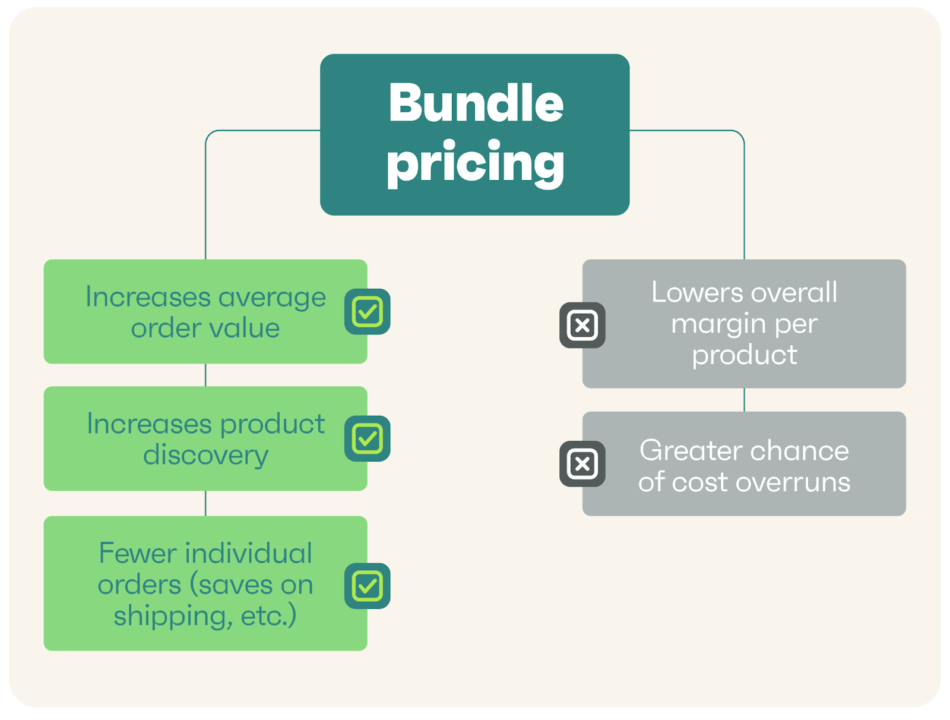
The most immediate financial metric impacted by bundling is the Average Order Value. By packaging a primary product with complementary “add-ons,” a business can effectively move a customer from a $50 transaction to a $75 or $100 transaction. Even if the profit margin on the bundle is slightly lower than on individual items (due to the discount offered), the absolute dollar amount of profit per transaction often increases. This is a critical distinction in business finance: maximizing total profit dollars is frequently more important than maintaining a specific margin percentage.
The Financial Rationale Behind Bundling
Why do businesses choose to discount their products through bundles rather than selling them at full price? The answer lies in the optimization of several key financial pillars: Customer Acquisition Cost (CAC), inventory turnover, and the extraction of consumer surplus.
Reducing Customer Acquisition Costs (CAC)
In the current digital economy, the cost to acquire a single customer is often the largest expense on a company’s income statement. Whether through paid search, social media advertising, or sales commissions, getting a prospect to pull out their credit card is expensive.
Product bundle pricing allows a company to spread that fixed acquisition cost across multiple units of inventory. If it costs $20 in marketing to acquire a customer, that $20 represents a 40% cost if the customer buys a $50 item. If that same customer is persuaded via a bundle to spend $100, the CAC drops to 20% of the transaction value. This efficiency significantly improves the Lifetime Value (LTV) to CAC ratio, a cornerstone metric for business valuation and investment readiness.
Inventory Management and Working Capital Optimization
Inventory is often “dead cash” sitting on a balance sheet. For businesses dealing with physical goods, slow-moving inventory ties up working capital that could be better deployed in growth initiatives or high-yield investments. Bundling provides a mechanism to move stagnant inventory by pairing it with “hero” products (high-demand items).
By bundling a slow-moving item with a bestseller, a company can liquidate stock without the brand-damaging optics of a “clearance sale.” This increases the inventory turnover ratio and improves the cash conversion cycle. For a CFO, the ability to turn inventory back into cash quickly—even at a lower margin—is often preferable to holding onto assets that are depreciating or incurring storage costs.
Capturing Consumer Surplus
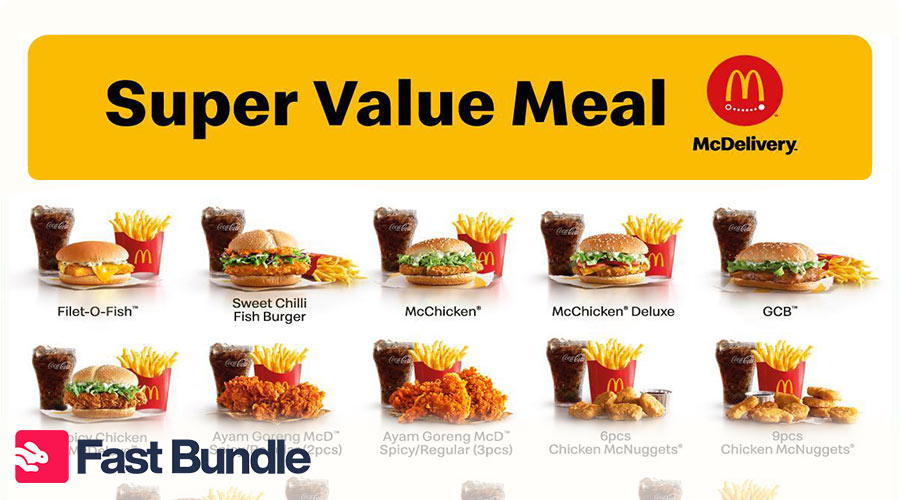
Consumer surplus is the difference between what a consumer is willing to pay for a product and what they actually pay. In a standard pricing model, if a customer is willing to pay $30 for a product priced at $20, the business “loses” $10 of potential revenue. Bundling allows businesses to capture this surplus by creating packages that align more closely with the aggregate willingness to pay across a suite of products. It smooths out the valuation disparities between different customers, ensuring that the business extracts the maximum possible value from every segment of its audience.
Strategic Implementation: Pricing Models and Psychology
Implementing a bundle is not as simple as putting two items in a box and lowering the price. It requires a deep understanding of price psychology and the financial implications of “anchoring.”
The Decoy Effect and Price Anchoring
In financial strategy, “anchoring” refers to the tendency of consumers to rely heavily on the first piece of information offered—the “anchor”—when making decisions. When a business presents an individual item at $100 and a bundle of three items (including the first) at $130, the $100 price serves as the anchor. The incremental cost of $30 for two additional items feels like a financial win for the consumer, even if the business’s marginal cost for those extra items is only $5. This “decoy” positioning guides the customer toward the higher-revenue option, optimizing the company’s top-line growth.
Leader-Follower Bundling
This strategy involves pairing a high-demand “leader” product with several lower-demand “follower” products. This is common in the technology and software industries (e.g., a core software platform bundled with premium support and advanced analytics modules). The leader product drives the initial purchase intent, while the followers increase the total contract value and create higher switching costs. From a financial perspective, the follower products often have much higher margins, meaning the bundle effectively hides a high-margin upsell within a value-driven package.
Volume-Based Financial Incentives
Commonly seen in B2B and wholesale finance, volume bundling offers tiered pricing based on the quantity of units purchased. This is a strategic play to secure a larger share of a client’s budget and lock out competitors. By offering a “buy more, save more” bundle, a company can secure large upfront payments, which significantly improves cash flow and provides the capital necessary for further scaling.
Calculating the ROI of Your Bundling Strategy
To ensure that bundling is contributing to financial health rather than eroding it, businesses must rigorously track specific Key Performance Indicators (KPIs).
Key Performance Indicators (KPIs) to Track
- Contribution Margin per Bundle: It is vital to calculate the margin of the bundle after all variable costs (COGS, shipping, packaging) are deducted. If the discount is too steep, the increased volume may not compensate for the lost margin.
- Bundle Attachment Rate: This measures the percentage of customers who opt for the bundle over individual items. A high attachment rate suggests the bundle is well-priced and attractive, while a low rate may indicate that the “anchor” price or the bundle components are mismatched.
- Net Profit Per Transaction: This is the ultimate metric. A successful bundling strategy should result in a higher net profit per transaction compared to the average of individual sales, factoring in the reduced CAC and operational efficiencies.
Avoiding the “Cannibalization” Trap
A significant financial risk in bundling is cannibalization—where the bundle replaces sales of high-margin individual items that customers would have bought anyway at full price. To prevent this, financial analysts must perform sensitivity testing. If the bundle is too attractive, it may “steal” revenue from the standalone products in a way that decreases total company profit. The goal is to ensure the bundle attracts new spending or increases the spend of those who would otherwise have bought only one low-value item.
Future-Proofing Revenue Through Digital and Service Bundling
As the global economy shifts toward digital services and subscriptions, bundling has evolved from physical goods to “access-based” financial models. Digital bundling—such as streaming services or software suites—carries near-zero marginal cost for each additional unit included in the bundle.
For businesses, this represents the pinnacle of financial efficiency. Once the initial product is developed, every additional “follower” product added to a digital bundle increases the perceived value for the customer without increasing the cost of goods sold for the company. This leads to exponential margin expansion.
Furthermore, bundling services with products (e.g., a physical gadget bundled with a 2-year insurance plan and cloud storage) creates recurring revenue streams. From an investment and valuation standpoint, recurring revenue is far more valuable than one-time transactional revenue. It provides a predictable cash flow “moat” that stabilizes the business against market volatility and increases the company’s enterprise value (EV).
In conclusion, product bundle pricing is far more than a promotional tactic; it is a sophisticated financial framework. By understanding the mechanics of AOV, the efficiencies of CAC reduction, and the psychology of price anchoring, businesses can utilize bundling to drive robust revenue growth and superior profitability. When executed with analytical precision, bundling transforms the balance sheet, optimizes inventory, and creates a sustainable competitive advantage in an increasingly crowded marketplace.
aViewFromTheCave is a participant in the Amazon Services LLC Associates Program, an affiliate advertising program designed to provide a means for sites to earn advertising fees by advertising and linking to Amazon.com. Amazon, the Amazon logo, AmazonSupply, and the AmazonSupply logo are trademarks of Amazon.com, Inc. or its affiliates. As an Amazon Associate we earn affiliate commissions from qualifying purchases.