
In the world of finance, economics, and wealth management, we often talk about the “compounding” of interest or the “reinvestment” of profits. We assume that capital is a self-sustaining engine: you invest money, you generate a return, and that return becomes new capital. However, a fundamental question remains that many modern financial textbooks gloss over: where did the very first “seed money” come from? How did the initial concentration of wealth occur so that the cycles of investment and profit could begin in the first place?
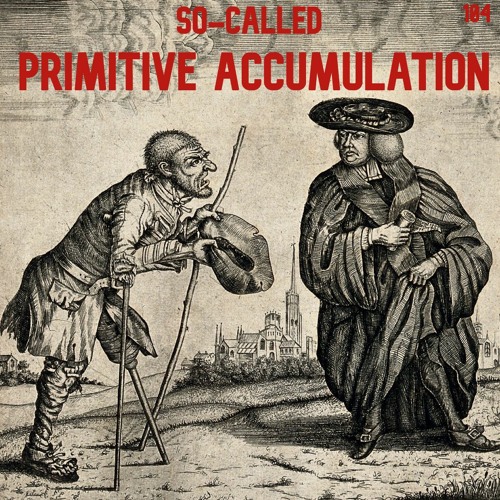
This concept is known as primitive accumulation. Originally coined by classical economists and later famously deconstructed by Karl Marx, primitive accumulation refers to the historical process that divorced the producer from the means of production, creating a class of owners who held the capital and a class of workers who had nothing to sell but their labor. For the modern investor, entrepreneur, or student of finance, understanding primitive accumulation is not just a history lesson; it is a vital exercise in understanding the structural foundations of the global economy and the “original” mechanics of wealth creation.
The Historical Foundations of Primitive Accumulation
To understand primitive accumulation, one must look back to the transition from the feudal systems of the Middle Ages to the early stages of the industrial revolution. In a feudal society, the majority of the population had direct access to the land. While they owed labor or crops to a lord, they were not “landless” in the modern sense. They could grow their own food and utilize “the commons”—shared lands used for grazing livestock and gathering wood.
The Transition from Feudalism to Capitalism
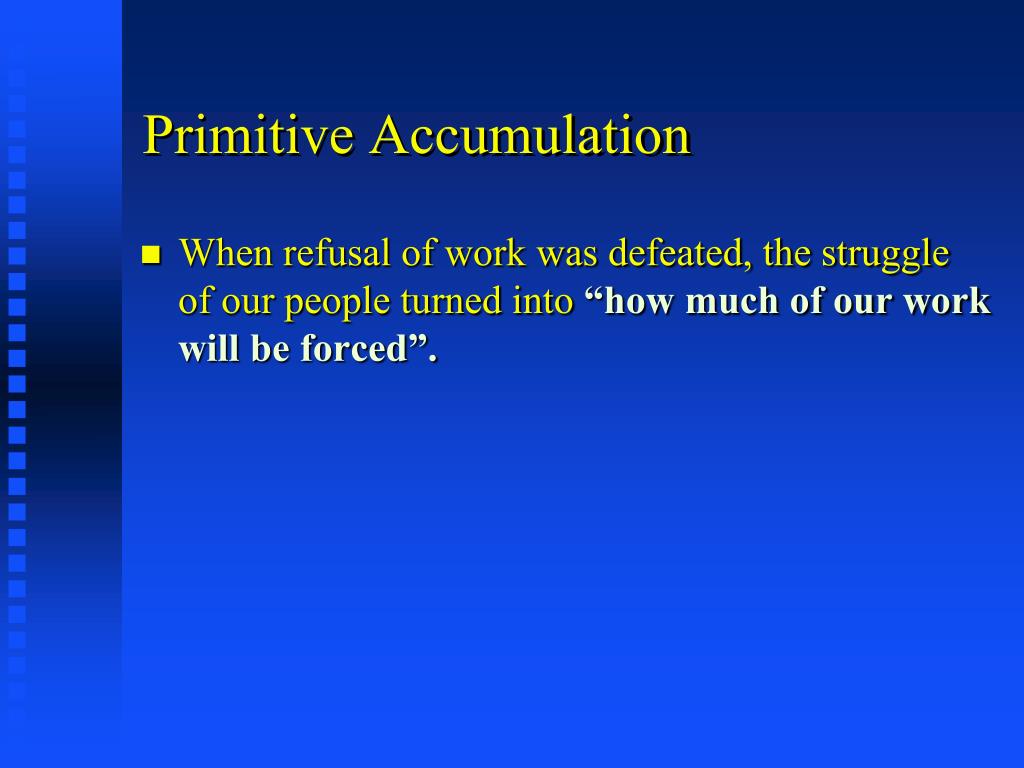
Primitive accumulation describes the violent and often state-sanctioned process of ending this arrangement. It was the “pre-history” of capital. Before money could be invested to make more money, there had to be a significant amount of wealth concentrated in the hands of a few, and a large pool of people who were forced to work for wages because they no longer had access to their own means of subsistence.
This was not a natural or peaceful evolution. It required a radical shift in how society viewed property. The concept of “private property” as we know it today—exclusive, transferable, and legally protected—began to replace the overlapping rights of the feudal era.
The Enclosure Acts and the Creation of the Proletariat
One of the most clear-cut examples of primitive accumulation was the Enclosure Movement in England. Between the 15th and 19th centuries, a series of legislative acts and private actions “enclosed” the common lands, turning them into private pastures for sheep (to fuel the burgeoning wool trade).
The impact was twofold and serves as the template for primitive accumulation:
- Concentration of Assets: Large landowners consolidated their holdings, creating massive agricultural enterprises that could generate significant surplus wealth.
- Creation of a Labor Market: Displaced peasants, now unable to support themselves on common land, were forced into cities. This provided the “human capital” necessary for the Industrial Revolution to take off. Without this mass displacement, the factories of the 18th century would have had no workers, and the owners would have had no way to scale their operations.
Mechanisms of Wealth Concentration
Primitive accumulation is often described as the “original sin” of capital because it involves the use of force, legislation, and systemic displacement to jumpstart the economic engine. While modern finance relies on contracts and voluntary exchange, the foundations were often built through much more assertive means.
Dispossession and State Power
A critical component of primitive accumulation is the role of the state. Governments provided the legal framework that validated the seizure of land and the criminalization of those who resisted. Vagrancy laws, for instance, were used to force displaced peasants into low-paying factory work. By making it illegal to be unemployed or homeless, the state ensured a steady supply of cheap labor for the new merchant class.
In a financial context, this represents a massive transfer of value. Resources that were once held in common—and thus had no “price” but provided immense “value”—were commodified. Once they entered the market as private property, they could be leveraged, sold, or used as collateral for loans, which is the baseline for all modern business finance.
Colonialism and Global Resource Extraction
Primitive accumulation was not limited to the domestic borders of Europe. On a global scale, colonialism served as the ultimate engine for the initial accumulation of capital. The extraction of gold and silver from the Americas, the transatlantic slave trade, and the forced cultivation of cash crops like sugar and tobacco provided the massive influx of liquid wealth that funded the development of European banking systems.
This “outside” wealth was brought into the domestic financial systems, allowing for the creation of the first joint-stock companies and national banks. When we look at the balance sheets of historical financial institutions, many of them find their roots in this era of global extraction. It was this concentrated wealth that allowed for the financing of infrastructure, the development of new technologies, and the eventual transition into the modern financial era.
Modern Perspectives: Primitive Accumulation in the 21st Century
While the term originated in the study of early industrialism, many economists argue that primitive accumulation is not a one-time event that happened hundreds of years ago. Instead, it is an ongoing process that occurs whenever new spheres of life are brought into the orbit of capital.
The “New Enclosures”: Data and Intellectual Property
In the 21st century, the most prominent form of primitive accumulation is occurring in the digital realm. We can view the “Big Tech” era through the lens of “digital enclosures.” In the early days of the internet, the web was largely a digital “commons”—a space for free exchange and open protocols.
Today, huge swaths of that digital territory have been enclosed by private platforms. Our personal data, which was once a “common” byproduct of our social lives, has been enclosed and commodified. Companies like Meta, Google, and Amazon have accumulated vast “data capital” through a process that mirrors the enclosure of English fields. They have taken a resource that was previously outside the market, claimed ownership over it, and used it as the foundation for multi-billion dollar advertising and AI industries.
Financialization and the Modern Global Market
In the world of modern finance, we see primitive accumulation in the privatization of public utilities and the “financialization” of basic needs like housing and water. When a public water system is privatized, it is moved from the “commons” into the realm of private capital. The immediate spike in valuation and the ability to charge for access represents a new round of accumulation.
For the investor, this highlights where the highest returns often lie: at the frontier where non-commodified resources are being brought into the market system. Whether it is carbon credits, genetic sequences, or space exploration, the process of claiming a “new” resource and establishing property rights over it remains a primary driver of massive wealth creation.
Why Primitive Accumulation Matters for Investors and Entrepreneurs Today
Understanding the roots of capital changes how we perceive market dynamics, risk, and the “moats” that protect major corporations. It moves the conversation away from simple “meritocracy” toward an understanding of structural advantage and asset positioning.
Recognizing Barriers to Entry
In business finance, we often talk about “barriers to entry.” Many of these barriers are the modern remnants of primitive accumulation. Companies that “got in early” on a particular resource—whether it be land, patents, or user attention—essentially enclosed that market. For a new entrepreneur, the challenge is often that the “commons” have already been claimed. Understanding this allows for a more realistic assessment of market competition and the cost of acquiring assets that have already been privatized.
Sustainable vs. Extractive Growth Models
Investors are increasingly looking at ESG (Environmental, Social, and Governance) factors. The history of primitive accumulation provides a framework for understanding why this is necessary. Extractive growth—growth that relies on the “enclosure” of resources without replenishment—is inherently limited. As the “commons” (the environment, social stability, public data) become exhausted or over-exploited, the systemic risk to capital increases.
Modern wealth building is shifting from a model of accumulation by dispossession to a model of value creation through innovation. While the former is faster and creates massive short-term wealth, the latter is what builds a sustainable economy. An investor who understands the history of how capital was formed is better equipped to identify which companies are building real value and which are simply extracting the last bits of “common” value from the system.
Conclusion: Moving Beyond the Initial Spark of Capital
Primitive accumulation was the necessary, albeit often brutal, spark that ignited the engine of modern capitalism. It turned land into real estate, people into a labor force, and resources into capital. By studying this process, we gain a clearer picture of how the financial world arrived at its current state.
For the modern professional, recognizing these patterns is essential. It allows for a deeper critique of market trends, a better understanding of the relationship between the state and the economy, and a more nuanced approach to building wealth. While we cannot change the history of how capital was originally formed, we can choose how to deploy it today—ideally moving toward a model of finance that generates wealth through creation and innovation rather than through the enclosure of the shared foundations of our society. In the end, the most sophisticated financial minds are those that understand not just where the money is going, but where it truly began.
aViewFromTheCave is a participant in the Amazon Services LLC Associates Program, an affiliate advertising program designed to provide a means for sites to earn advertising fees by advertising and linking to Amazon.com. Amazon, the Amazon logo, AmazonSupply, and the AmazonSupply logo are trademarks of Amazon.com, Inc. or its affiliates. As an Amazon Associate we earn affiliate commissions from qualifying purchases.