
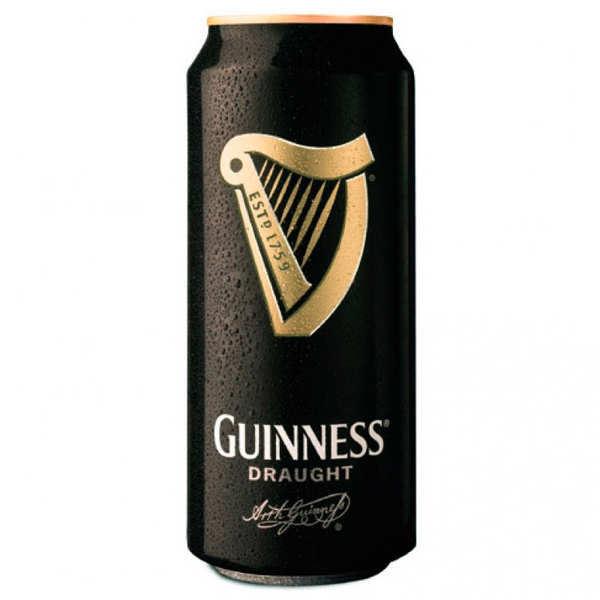
For decades, the distinct “rattle” heard when shaking an empty Guinness Draught can has sparked curiosity and urban legends alike. Far from being a manufacturing defect or a simple aesthetic choice, the object inside—a small, white plastic sphere known as a “widget”—represents one of the most significant breakthroughs in food and beverage engineering of the 20th century. This piece of industrial hardware was designed to solve a complex thermodynamic problem: how to replicate the pressurized, creamy experience of a nitrogen-poured stout from a tap within the confines of a portable aluminum vessel.

To understand what is inside a Guinness can, one must look beyond the plastic itself and into the sophisticated interplay of fluid dynamics, gas solubility, and pressure differentials. The widget is not merely a container; it is a mechanical delivery system that manages the transition of gases to create a specific physical reaction upon opening.
The Physics of the “Surge and Settle”: Engineering the Perfect Pour
The primary technological challenge in canning a stout like Guinness is the management of gas. Traditional beers rely on carbon dioxide (CO2) for carbonation. CO2 is highly soluble in liquid, and when a can is opened, the gas creates large, sharp bubbles that provide a stinging sensation on the tongue. Guinness, however, is famous for its “creamy” mouthfeel and dense, stable head, which are products of nitrogenation rather than standard carbonation.
Solubility and Gas Laws in Beverage Design
Nitrogen (N2) behaves differently than carbon dioxide under pressure. While CO2 dissolves easily into water-based liquids, nitrogen is largely insoluble. In a draft system at a pub, nitrogen is forced into the liquid at high pressure through a restrictive plate just before it hits the glass. This process creates “micro-bubbles” that are significantly smaller and more stable than CO2 bubbles.
When engineers attempted to put this experience into a can, they faced a hurdle: without the high-pressure mechanical agitation of a draft tap, nitrogen remains dormant in the liquid. If a nitrogenated stout were canned like a regular lager, it would pour flat and lifeless. The widget was engineered as an “on-board” agitation system to trigger the release of these micro-bubbles the moment the internal pressure of the can drops to atmospheric levels.
The Quest for the Micro-Bubble
The size of the bubble is the core metric of success in this engineering feat. Nitrogen micro-bubbles are roughly 1/10th the size of CO2 bubbles. Because they are smaller, they have less buoyancy and do not rise as quickly to the surface. This leads to the famous “cascading” effect, where the bubbles appear to flow downward against the sides of the glass. Achieving this effect requires a precise “nucleation” event—a sudden disturbance that forces the gas out of solution in a uniform manner. The widget is the hardware that facilitates this nucleation.
Deconstructing the Widget: A Masterclass in Industrial Design
The widget itself is a hollow, spherical piece of molded polypropylene, approximately three centimeters in diameter. While it looks like a simple plastic ball, its internal geometry and the precision of its construction are critical to its function.
Anatomy of the Plastic Sphere
The widget is designed to be buoyant, yet it is specifically weighted and shaped to interact with the liquid and gas during the canning process. Inside the sphere is a small reservoir that holds a portion of the beverage. This is not for consumption but acts as a pressurized “engine” for the rest of the can’s contents. The sphere is hollow, allowing it to store gas under high pressure.
The material choice—polypropylene—is intentional. It is food-grade, chemically inert, and capable of withstanding the rapid pressure changes during both the pasteurization process and the eventual opening of the can. The spherical shape is also a deliberate engineering choice, as a sphere is the most efficient geometry for containing internal pressure without structural failure.
The Role of the Laser-Drilled Orifice
The most critical feature of the widget is a microscopic hole, often less than one millimeter in diameter, which is precision-drilled using laser technology. This orifice serves as the gateway between the high-pressure environment inside the widget and the rest of the can.
During the canning process, a small amount of liquid nitrogen is added to the beer before the lid is seamed. As this nitrogen evaporates into gas, the pressure inside the can increases. This pressure forces a small amount of beer and nitrogen gas through the microscopic hole and into the hollow widget. The system then reaches a state of equilibrium, where the pressure inside the widget matches the pressure of the surrounding can.
The Thermodynamic Sequence of Opening a Can
The true “tech” of the Guinness can is revealed in the fraction of a second after the tab is pulled. This event triggers a three-phase thermodynamic sequence that transforms the still liquid into a dynamic, two-phase system of gas and fluid.

Phase 1: High-Pressure Equilibrium During Storage
While sitting on a shelf, the interior of the can is pressurized to approximately 30 to 40 psi (pounds per square inch). Because the pressure is equalized between the inside of the widget and the body of the can, the system remains stable. The nitrogen gas is “trapped” within the liquid and the widget’s internal chamber.
Phase 2: Instantaneous Pressure Release and Jet Agitation
When the can is opened, the pressure inside the headspace (the small gap of gas at the top of the can) drops instantly to 14.7 psi (standard atmospheric pressure). This creates a massive pressure differential. The high-pressure gas and liquid inside the widget are now at a much higher pressure than the beer in the rest of the can.
The contents of the widget are forced out of the tiny laser-drilled hole at high velocity. This creates a “jet” effect, shooting a stream of nitrogen-rich liquid into the body of the stout. This high-velocity jet provides the mechanical agitation necessary to “knock” the dissolved nitrogen out of the liquid, initiating a chain reaction of bubble formation throughout the entire volume of the can.
Phase 3: The Fluid Dynamic Illusion of Cascading Bubbles
As the jet from the widget agitates the beer, millions of micro-bubbles are formed simultaneously. These bubbles are so small that they are influenced more by the internal currents of the liquid than by their own buoyancy. As the bubbles rise in the center of the glass, they create an upward current that displaces liquid at the top. This liquid then flows down the sides of the glass, carrying bubbles with it. To the observer, it looks as though the beer is “falling” upward or swirling in a way that defies gravity. This is a classic example of a convection current within a non-Newtonian fluid environment, managed entirely by the initial energy burst from the widget.
Historical Innovation: From the “In-Cask” System to the Modern Widget
The development of this technology was not an overnight success. It was the result of decades of R&D by the Guinness “Project 1759” team, named after the year the brewery was founded. Before the widget, various mechanical solutions were attempted, including a specialized syringe that consumers had to use to “inject” air into their beer to create a head.
The 1969 Patent and the Evolution of Dispensing Tech
The first patent for a version of the widget was filed in 1969 by Alan Forage and William Byrne. However, the early iterations were not the spherical versions we see today. The first commercial version, released in the late 1980s, was a flat, saucer-shaped disc that sat at the bottom of the can. While functional, it was difficult to manufacture at scale and occasionally failed to activate if the can was not at the perfect temperature.
The “floating widget” (the current sphere) was developed later to ensure that the agitation jet would occur regardless of the angle at which the can was held or the temperature of the liquid. This design won the Queen’s Award for Technological Achievement in 1991, beating out innovations in the aerospace and medical sectors, which underscores the technical complexity of the device.
Overcoming the Limitations of Traditional Carbonation
The engineering of the widget allowed the brand to bypass the limitations of carbon dioxide. In traditional canning, if you want a thick head of foam, you have to over-carbonate the beer, which changes the flavor profile (making it more acidic) and the mouthfeel (making it “prickly”). By using the widget to manage nitrogen, engineers could keep the flavor profile smooth and mellow while still achieving the aesthetic and textural requirements of a premium stout.
The Technological Legacy of Nitrogenation in Modern Industry
The success of the Guinness widget paved the way for an entire sub-sector of beverage technology. Today, “Nitro” tech is a standard across several categories, proving that the hardware inside a Guinness can was a precursor to modern “active packaging.”
Scaling Nitrogen Tech for the Global Market
Following the success of the stout widget, the technology was adapted for other liquids. We now see nitrogen widgets or “nitro-dosing” systems in canned cold-brew coffee, which uses the same micro-bubble physics to provide a creamy texture without the need for dairy. The technology has even moved into the cocktail space, where nitrogen is used to mimic the aeration of a hand-shaken drink.
Future Applications: Beyond the Stout
As manufacturing tech advances, the widget is evolving. Modern versions are becoming smaller and more efficient, and some companies are experimenting with “fixed” widgets that are integrated into the structure of the can itself to facilitate easier recycling. The core principle—using a pressure-activated mechanical device to alter the state of a liquid—remains one of the most elegant solutions in industrial design.
When you look inside a Guinness can, you aren’t just seeing a plastic ball. You are seeing a sophisticated pressure-vessel system that utilizes the laws of thermodynamics to bridge the gap between a high-end industrial tap system and a portable consumer product. It is a reminder that even the most common consumer goods are often powered by extraordinary engineering.
aViewFromTheCave is a participant in the Amazon Services LLC Associates Program, an affiliate advertising program designed to provide a means for sites to earn advertising fees by advertising and linking to Amazon.com. Amazon, the Amazon logo, AmazonSupply, and the AmazonSupply logo are trademarks of Amazon.com, Inc. or its affiliates. As an Amazon Associate we earn affiliate commissions from qualifying purchases.