
In the rapidly evolving landscape of software engineering, time is the most valuable currency. As codebases grow in complexity, the time required to compile, test, and package software has increased exponentially. This phenomenon, often referred to as “build bloat,” can significantly hinder a development team’s agility, leading to long wait times, frequent context switching, and delayed release cycles. This is where Incredibuild enters the fray.
Incredibuild is a powerful software acceleration platform designed to drastically reduce the time required for compute-intensive tasks by leveraging distributed computing. By transforming a local network or cloud environment into a virtual supercomputer, Incredibuild allows developers to distribute processes across idle CPUs throughout their infrastructure. Whether it is compiling C++ code, running extensive unit tests, or rendering complex assets, Incredibuild optimizes resource utilization to turn hours of processing into mere minutes.
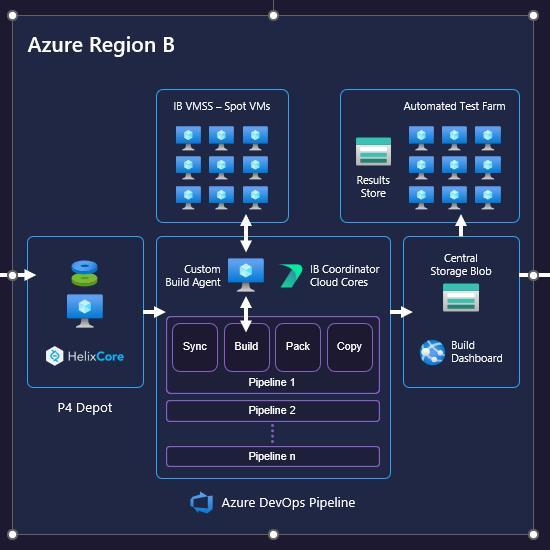
How Incredibuild Works: The Architecture of Distributed Computing
To understand Incredibuild, one must first understand the concept of grid computing. In a traditional development environment, when a developer initiates a build or a test suite, the task is processed locally on their machine. If the machine has eight cores, those eight cores handle the entire workload. Once those cores are saturated, the build speed hits a physical ceiling.
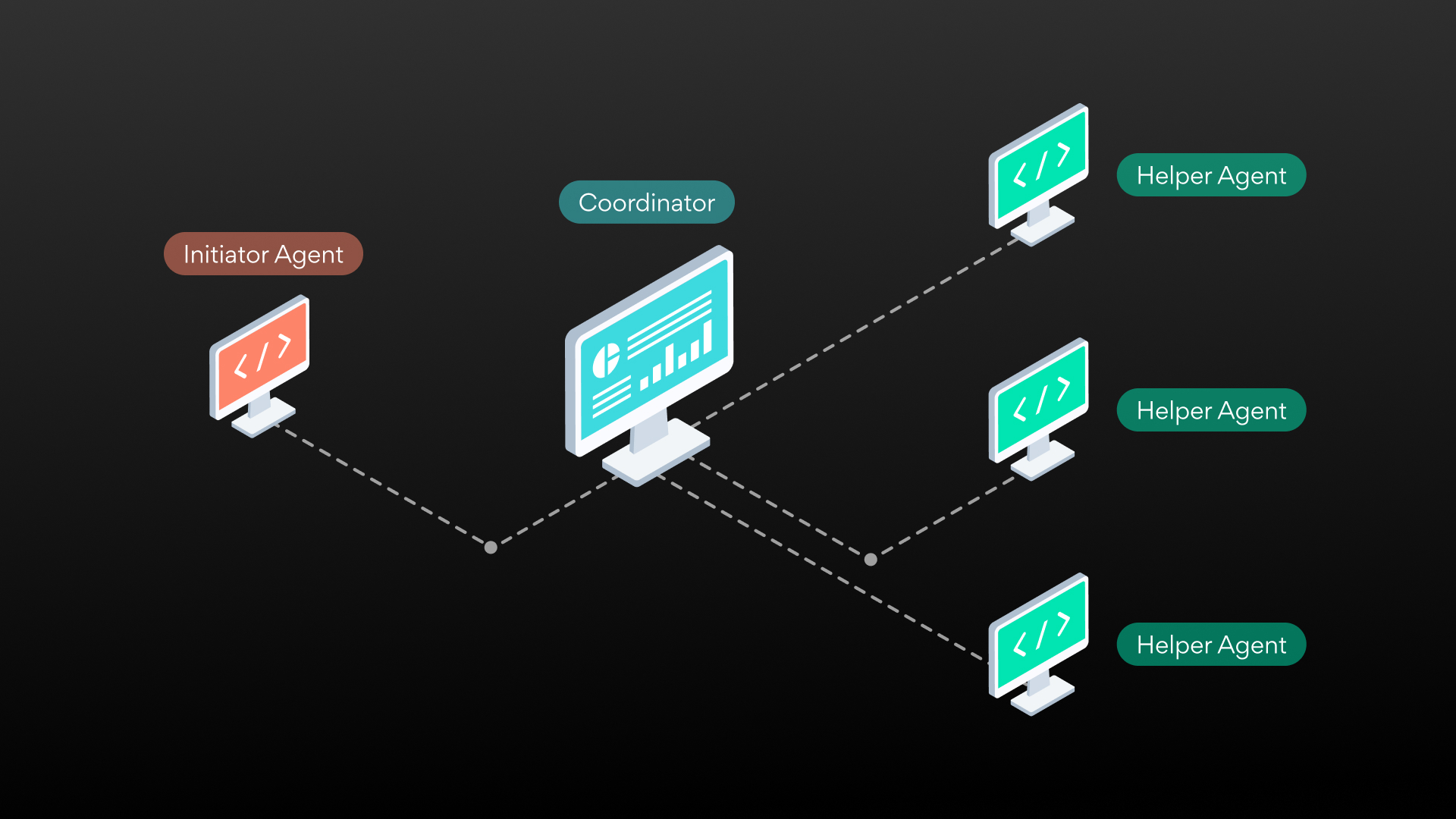
Incredibuild bypasses this limitation through a unique process-level virtualization technology. The architecture consists of three primary components: the Initiator, the Helper, and the Coordinator.
Grid Computing and Task Distribution
The “Initiator” is the machine where the task begins—typically a developer’s workstation or a Build Server in a CI/CD pipeline. When a task is launched, Incredibuild’s technology intercepts the processes at the OS level. Instead of forcing the Initiator to handle every process, Incredibuild breaks the task into hundreds of smaller, independent sub-tasks.
These sub-tasks are then distributed to “Helper” machines across the network. A Helper is any machine—be it a dedicated server, a colleague’s idle workstation, or a cloud instance—that has the Incredibuild agent installed. These Helpers execute the code in a remote, virtualized environment and send the results back to the Initiator.
Process-Level Virtualization
One of the most innovative aspects of Incredibuild is its virtualization layer. Unlike traditional virtual machines or containers that require a full OS stack to be mirrored, Incredibuild uses process-level virtualization. This means the Helper machine does not need to have the source code, compilers, or specific libraries installed.
The Initiator dynamically streams the necessary environment (files, tools, and DLLs) to the Helper on demand. This allows for a “plug-and-play” grid where any machine can contribute its CPU power to any task without prior manual configuration. Once the task is complete, the Helper is released, and no footprint is left behind on the remote machine.
The Role of the Coordinator
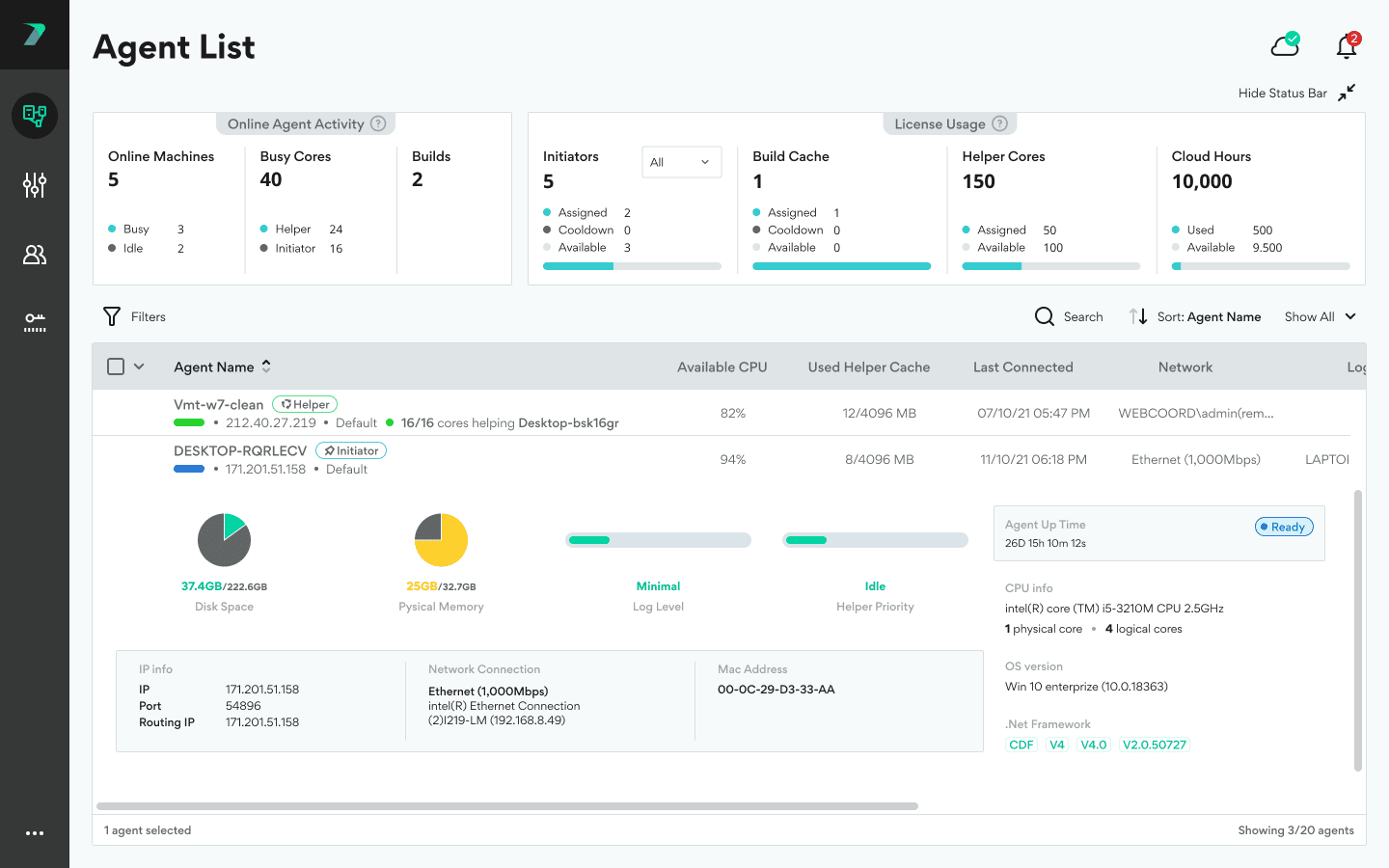
The Coordinator acts as the brain of the Incredibuild ecosystem. It monitors the entire network to see which machines are available, which are under heavy load, and which have the most powerful processors. It intelligently assigns tasks to ensure that the Initiator gets the maximum possible speed boost without disrupting the work of the people using the Helper machines. If a user returns to their desk and starts using their workstation, the Coordinator detects the increase in local activity and instantly reassigns the Incredibuild tasks to a different available node.
Key Use Cases: Beyond Just Compiling
While Incredibuild is most famous for its ability to accelerate C++ compilations, its utility extends far across the modern DevOps and development spectrum. Any task that can be executed in parallel is a candidate for acceleration.
Game Development and C++ Optimization
The gaming industry was one of the earliest adopters of Incredibuild, and for good reason. Game engines like Unreal Engine and CryEngine are massive, often containing millions of lines of code. A full rebuild of a modern AAA game can take several hours on a high-end workstation. By using Incredibuild, studios can distribute these builds across hundreds of cores, reducing wait times by 80% or 90%.
Beyond code, Incredibuild is also used for “shading” and asset conditioning. In game dev, shaders must be compiled for various hardware configurations, a process that is notoriously CPU-heavy. Incredibuild allows these shaders to be processed in parallel, enabling artists and developers to see their changes in the game world almost instantly.
CI/CD Pipelines and DevOps
In a modern Agile environment, Continuous Integration and Continuous Deployment (CI/CD) are critical. Every time a developer pushes code, a build is triggered. If that build takes an hour, the feedback loop is broken. Developers move on to other tasks, and if the build fails, they have to perform a “context switch” to go back and fix old code.
By integrating Incredibuild into CI tools like Jenkins, Azure DevOps, GitLab, or GitHub Actions, organizations can ensure that their build agents are not the bottleneck. Instead of buying more expensive, high-core-count build servers, companies can use Incredibuild to “burst” their build capacity into the cloud or across their existing internal server farm.
Unit Testing and Code Analysis
Software quality assurance requires running thousands of unit tests and static code analysis tools. Running these sequentially is a massive time sink. Because tests are usually independent units, they are perfectly suited for distributed execution. Incredibuild can take a test suite that normally runs for two hours and distribute it across 50 machines, completing the entire suite in a fraction of the time. This allows for “test-driven development” at scale, where developers can run full suites multiple times a day rather than waiting for an overnight run.
The Impact of Performance Acceleration on the Software Lifecycle
The benefits of implementing a tool like Incredibuild go beyond simple time-saving. It has a profound impact on the psychology of development teams and the financial health of a project.
Reducing Context Switching
Psychological studies in the tech industry show that it takes an average of 20 minutes for a developer to regain deep focus after being interrupted. When a developer has to wait 30 minutes for a build to finish, they often check emails, browse social media, or start a different task. This “context switching” is a major productivity killer. By reducing build times to the point where they are “coffee-break length” rather than “lunch-break length,” Incredibuild helps developers stay in the “flow state,” maintaining high levels of cognitive output.
Faster Time-to-Market
In a competitive market, being first can be the difference between success and failure. Speeding up the development cycle allows for more frequent iterations. Teams can experiment more, fail faster, and refine their products more thoroughly before launch. Incredibuild essentially provides a “speed multiplier” to the entire R&D department, allowing them to hit milestones earlier and respond to market feedback with greater agility.
Resource Optimization and Cost Efficiency
Hardware is expensive, and high-end developer workstations become obsolete quickly. Incredibuild allows organizations to extend the life of their hardware by pooling resources. Instead of upgrading every developer to a $5,000 workstation, a company can maintain a pool of powerful “Helper” servers or use cloud spots that everyone can tap into. This shared-resource model ensures that CPU cycles aren’t wasted; when one developer is in a meeting, their computer’s brainpower is helping a teammate finish a build.
Incredibuild in the Cloud: Scalability and Flexibility
The rise of cloud computing has added a new dimension to Incredibuild’s capabilities. With the advent of Incredibuild Cloud, the platform can now dynamically provision cloud instances (such as AWS, Azure, or Google Cloud) to meet sudden spikes in demand.
Hybrid Environments
Many large enterprises operate in a hybrid environment. They have substantial on-premise hardware but want the ability to scale into the cloud when deadlines approach. Incredibuild Cloud facilitates this by automatically spinning up high-performance cloud nodes when the local grid is saturated and shutting them down as soon as the task is complete. This “burst” capability ensures that developers are never throttled by hardware availability.
Cost Savings via Spot Instances
Cloud costs can spiral out of control if not managed properly. Incredibuild is designed to work seamlessly with “Spot Instances”—discounted cloud capacity that can be reclaimed by the provider at any time. Because Incredibuild’s tasks are granular and distributed, if a Spot Instance is reclaimed mid-build, the Coordinator simply reassigns that specific sub-task to another node. This allows companies to take advantage of up to 90% cost savings on cloud compute without risking the stability of their build process.
Conclusion: The Future of Build Acceleration
As we move toward a future dominated by AI-driven development, massive microservices architectures, and increasingly complex simulation requirements, the demand for raw compute power will only grow. The “monolithic” approach to computing—where a single machine handles a single task—is becoming a relic of the past.
Incredibuild represents a shift toward a collaborative, distributed model of software production. By treating an entire network’s CPU capacity as a single, fluid resource, it removes the physical barriers to innovation. For any organization where “waiting for the build” has become a part of the culture, Incredibuild offers more than just a technical fix; it offers a path to a more efficient, focused, and competitive development lifecycle. In the end, what is Incredibuild? It is the engine that allows developers to create at the speed of thought, rather than the speed of their hardware.
aViewFromTheCave is a participant in the Amazon Services LLC Associates Program, an affiliate advertising program designed to provide a means for sites to earn advertising fees by advertising and linking to Amazon.com. Amazon, the Amazon logo, AmazonSupply, and the AmazonSupply logo are trademarks of Amazon.com, Inc. or its affiliates. As an Amazon Associate we earn affiliate commissions from qualifying purchases.