
In the landscape of modern digital media, few entities have managed to bridge the gap between personal identity and corporate branding as successfully as FGTeeV. To the casual observer, FGTeeV is a high-energy YouTube channel focused on gaming and family antics. However, to brand strategists and marketing professionals, it represents one of the most sophisticated examples of personal brand scaling in the 21st century. While millions of fans daily search for the answer to “What is FGTeeV’s real name?” the answer lies not just in a single individual, but in an entire family unit—the Ryans—who have meticulously constructed a multi-platform media powerhouse.

Understanding the identity behind the brand requires a deep dive into how the Ryan family transitioned from private individuals to the “First Family of Gaming.” By examining their names, their roles, and their strategic approach to public persona, we can uncover the blueprint they used to build a brand that resonates with a global audience of millions.
Decoding the Identity: Who Are the People Behind FGTeeV?
The FGTeeV brand is not a singular entity but a collective of personalities. At the heart of the channel is the patriarch, Vincent Ryan, commonly known to his audience as “Duddy” or “FGTEEV Duddy.” Alongside him is his wife, Samantha Ryan, known as “Moomy.” Together, they have integrated their four children—Alexis (Lexi), Michael (Mike), Chase, and Shawn—into a cohesive narrative structure that fuels their content ecosystem.
The Ryan Family: From Individuals to Icons
The decision to lead with nicknames rather than their legal surnames in the early stages of their career was a strategic move that served two purposes: privacy and brandability. In the early 2010s, as the family began their journey with “The Skylander Boy and Girl” channel, the use of monikers allowed them to maintain a degree of separation between their domestic life and their burgeoning digital footprint. As the brand evolved into FGTeeV (Family Gaming Team), the transition from their real names to their “on-screen characters” helped solidify a brand identity that was easy for children to remember and engage with.
The Power of Monikers in Personal Branding
In brand strategy, a name is more than just a label; it is a promise of value. The name “Duddy” evokes a specific archetype: the fun-loving, slightly chaotic, yet deeply involved father. By leaning into these personas, the Ryan family transformed themselves into recognizable characters. This is a common tactic in professional branding where an individual’s “real name” becomes secondary to the “brand name.” Much like how a corporate identity uses a logo to signal consistency, the Ryans used their nicknames to signal a specific type of high-energy, family-friendly entertainment.
The Evolution of a Brand: From Skylanders to Global Dominance
The trajectory of FGTeeV is a masterclass in identifying market trends and pivoting with precision. The brand did not appear overnight; it was the result of consistent iteration and an acute understanding of audience psychology.
Identifying the Pivot Points
The Ryans initially found success by tapping into the “toys-to-life” gaming craze, specifically Activision’s Skylanders franchise. However, a brand built solely on a third-party intellectual property is inherently vulnerable. Recognizing this, the family strategically shifted their focus toward a broader range of gaming content, including Roblox, Minecraft, and Among Us, while simultaneously introducing more “vlog-style” content. This shift moved the brand’s value proposition from “the people who play Skylanders” to “the family we love to watch.” This is a critical lesson in brand longevity: to survive, a brand must transcend its initial product and become an experience or a relationship.
Creating a Unified Brand Aesthetic
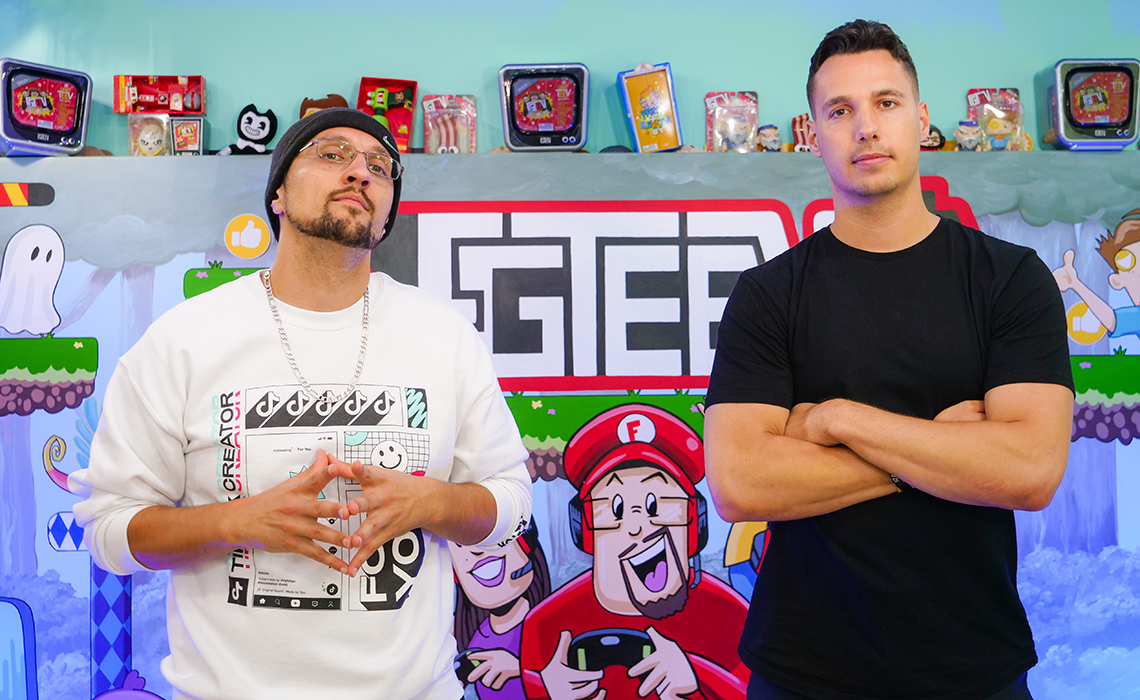
A key component of the FGTeeV brand is its visual and auditory consistency. From the neon-saturated thumbnails to the custom-produced music and catchphrases, every touchpoint is designed to be instantly recognizable. When a viewer sees the FGTeeV logo—a stylized, colorful wordmark—they immediately know what to expect. This level of brand cohesion is typically reserved for Fortune 500 companies, yet the Ryan family implemented it within a decentralized, creator-led environment. By the time fans were asking for their real names, the brand had already become more significant than the individuals themselves.
The Business of Being You: How the Ryans Scaled Personal Identity
Once the core identity was established, the Ryan family moved into the “Expansion Phase” of brand management. They moved beyond YouTube, transforming their digital presence into a tangible commercial empire.
Diversification of Revenue Streams
The FGTeeV brand is no longer just a series of videos; it is a retail powerhouse. Through partnerships with major retailers and publishers, the Ryans have released a series of best-selling graphic novels, a line of physical toys found in stores like Walmart and Target, and even mobile games.
This diversification is a classic brand strategy known as “Brand Extension.” By taking the essence of the FGTeeV brand—humor, gaming, and family adventure—and applying it to physical products, they have created multiple entry points for their audience. A child might first encounter the brand through a book at a school fair before ever seeing a video on YouTube. This creates a self-sustaining ecosystem where each product reinforces the other.
Intellectual Property and Character Development
Unlike many other family vloggers who focus on the mundane aspects of daily life, the FGTeeV brand treats its members as intellectual property. They have developed an internal mythology, complete with recurring “villains” and alter-egos. This elevates the brand from “real-life” content to a scripted, character-driven universe. From a brand perspective, this is genius; characters can be licensed, merchandised, and even animated, whereas a “real person” is limited by their physical presence and time.
Navigating Privacy and Public Persona in Brand Strategy
One of the most challenging aspects of personal branding—especially for a family—is the tension between authenticity and privacy. The question of “What is FGTeeV’s real name?” highlights this tension perfectly.
The Strategic Use of Real Names vs. Screen Names
By maintaining a slight distance between their legal identities and their digital personas, the Ryans have managed to protect their private lives while still appearing “authentic” to their audience. In the modern creator economy, authenticity is the most valuable currency. However, “brand authenticity” does not mean “total transparency.” It means staying true to the brand’s values and the audience’s expectations. The Ryans are authentic to the characters they have created, which satisfies the audience’s need for connection without compromising the family’s security.
Protecting the Brand Family Unit
Managing a brand that involves children requires a unique set of ethical and strategic considerations. The Ryans have been careful to frame their content around play and collaborative activities, which positions the brand as a wholesome, shared family project. This positioning is vital for attracting high-tier corporate sponsors and licensing deals. Large brands are often hesitant to partner with creators who exhibit volatile or unpredictable behavior; by maintaining a consistent, positive family image, FGTeeV has made themselves an “unskippable” partner for major toy and game manufacturers.
Future-Proofing a Personal Brand: Longevity in the Creator Economy
As the Ryan children grow older, the FGTeeV brand faces the inevitable challenge of audience maturation. How does a brand built on “kid-friendly” gaming content evolve as its core demographic—and its stars—enter new life stages?
Adapting to Audience Maturity
We are already seeing the brand adapt. Lexi and Mike have begun to explore their own individual interests and sub-channels, allowing the parent brand to remain a hub while specialized “spoke” brands develop around individual personalities. This “House of Brands” strategy is similar to how companies like Procter & Gamble or Disney operate. It allows the individual creators to explore different content niches (such as music or more mature gaming) without alienating the younger audience of the main FGTeeV channel.

Legacy Building Beyond YouTube
The ultimate goal of any high-level brand strategy is to create something that outlasts its founders. By moving into publishing and physical products, the Ryans are building a legacy that is not dependent on the YouTube algorithm. If YouTube were to disappear tomorrow, the FGTeeV brand would still exist in millions of homes via books, toys, and apparel.
In conclusion, while the “real name” of the FGTeeV family is Ryan, their true identity is that of pioneers in the digital brand space. They have demonstrated that with a clear vision, consistent execution, and a strategic approach to persona and intellectual property, a family can build a media empire that rivals traditional television networks. The FGTeeV story is not just one of gaming; it is a definitive case study in the power of personal branding in the digital age.
aViewFromTheCave is a participant in the Amazon Services LLC Associates Program, an affiliate advertising program designed to provide a means for sites to earn advertising fees by advertising and linking to Amazon.com. Amazon, the Amazon logo, AmazonSupply, and the AmazonSupply logo are trademarks of Amazon.com, Inc. or its affiliates. As an Amazon Associate we earn affiliate commissions from qualifying purchases.