
In the rapidly evolving landscape of technology, the line between product development and human behavioral research has become increasingly blurred. From A/B testing user interfaces to training sophisticated artificial intelligence on massive datasets, tech companies are constantly interacting with human subjects. At the heart of these interactions lies a critical regulatory framework known as the Common Rule. Formally titled the Federal Policy for the Protection of Human Subjects, the Common Rule is the ethical and legal cornerstone for conducting research involving people. While it originated in the halls of academia and medicine, its implications for modern software development, data science, and digital security are more profound than ever.

Understanding the Common Rule in the Digital Age
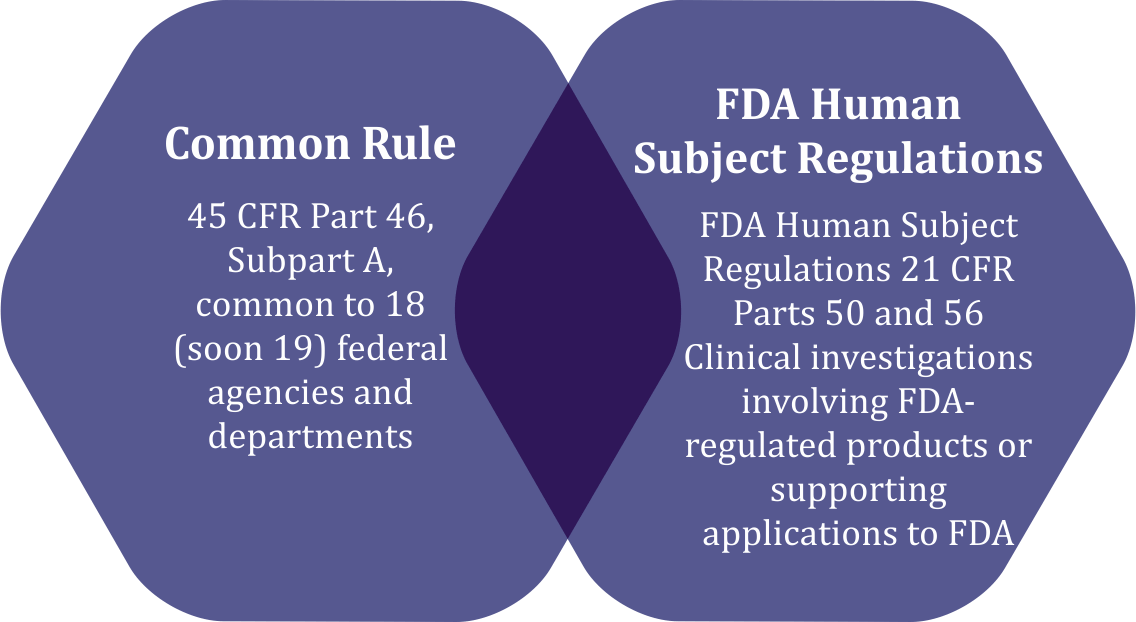
The Common Rule is a set of regulations adopted by various federal agencies in the United States to ensure that research involving human participants is conducted ethically. It was designed to prevent the historical abuses seen in 20th-century experiments by mandating oversight, informed consent, and risk assessment. In 2018, the rule underwent significant revisions—often called the “Revised Common Rule”—to better account for modern research methodologies, including the use of digital data and biospecimens.
Why Tech Companies and Developers Must Pay Attention
For a long time, many in the tech sector believed the Common Rule only applied to clinical trials or university labs. However, the ecosystem has changed. Many tech giants and startups now receive federal grants (such as from the NSF or NIH) to develop new technologies, bringing them directly under the jurisdiction of the Common Rule. Furthermore, as tech companies partner with academic institutions for AI research, they must align with these federal standards.
Even for companies not strictly bound by federal funding, the Common Rule serves as the “Gold Standard” for data ethics. In an era where data privacy scandals can result in billions of dollars in lost market value and regulatory fines, adopting Common Rule principles is a strategic move for digital security and brand trust. It provides a blueprint for how to handle sensitive user data without infringing on human rights.
The Scope of “Human Subject” Research in Tech
Under the Common Rule, a human subject is defined as a living individual about whom an investigator obtains information or biospecimens through intervention or interaction, or through the use of identifiable private information. In the tech world, this covers a wide spectrum:
- UX/UI Research: Testing how users react to new app features.
- Algorithm Training: Using personal data to teach machine learning models.
- Biometric Data Collection: Developing facial recognition or health-tracking wearables.
- Sociological Studies on Social Media: Analyzing user behavior and mental health based on platform interactions.
The Core Pillars of Compliance for Tech Developers
Navigating the Common Rule requires an understanding of its three foundational pillars: the Institutional Review Board (IRB) oversight, the process of informed consent, and the systematic assessment of risks versus benefits.
Institutional Review Boards (IRB) and Digital Oversight
The IRB is a committee designated to review and monitor research involving human subjects. For a tech project, the IRB’s job is to ensure that the research design is ethically sound. This presents a unique challenge in the tech industry, where the “move fast and break things” mentality often clashes with the methodical nature of IRB review.
To bridge this gap, forward-thinking tech firms are implementing “Internal Ethics Boards” that mimic IRB functions. These boards evaluate whether a new data-mining feature or an AI sentiment analysis tool poses an undue risk to users. The goal is to ensure that technological innovation does not outpace ethical accountability.
Informed Consent in the Era of Terms of Service
One of the most significant requirements of the Common Rule is obtaining “legally effective informed consent.” In the tech industry, consent is often buried in 50-page Terms of Service (ToS) agreements that users accept without reading. The Revised Common Rule specifically addresses this by requiring that the “key information” necessary to make a decision be presented first, in a clear and concise manner.
For developers, this means moving away from “dark patterns”—design choices that trick users into consenting to data collection. Instead, ethical tech development focuses on transparent, granular consent. This might look like just-in-time notifications that explain why a specific piece of data (like location or contacts) is being accessed and how it will be used in the research or product development phase.
Minimizing Risk in Virtual Environments
In physical research, risk is often defined by bodily harm. In tech research, risk is primarily digital: data breaches, de-anonymization, and psychological distress. The Common Rule requires researchers to minimize these risks. This is where digital security intersects with research ethics. Implementing robust encryption, utilizing differential privacy, and ensuring secure data silos are not just technical requirements; they are ethical mandates under the framework of the Common Rule.
Data Privacy and De-identification Challenges
Perhaps the most contentious area of the Common Rule in the technology sector involves the definition and use of “identifiable private information.” If data is truly de-identified, it often falls outside the scope of the Common Rule, allowing researchers more freedom. However, the definition of “anonymized” is a moving target in the world of Big Data.
The Definition of Identifiable Private Information
The Common Rule defines identifiable private information as data for which the identity of the subject is or may readily be ascertained by the investigator or associated with the information. In the past, removing a name and Social Security number was enough. Today, with the advent of “data linkage,” a user’s identity can often be reconstructed by combining several “anonymous” datasets, such as GPS pings, purchase history, and browsing habits.
AI, Big Data, and the Re-identification Risk
Machine learning thrives on large datasets. Tech companies often use “secondary research”—using data originally collected for one purpose (like customer billing) for a new purpose (like training a recommendation engine). The Common Rule allows for certain exemptions in secondary research, provided the data is de-identified.
However, tech professionals must be wary. Sophisticated AI tools can now re-identify individuals from datasets previously thought to be secure. This creates a “compliance debt” where data collected today might become “identifiable” tomorrow as technology advances. Adopting the Common Rule’s rigorous standards for data protection helps future-proof tech projects against evolving privacy definitions.
Applying Common Rule Standards to AI Training and User Testing
As artificial intelligence becomes the primary driver of technological growth, the ethical standards for how we train these models have come under intense scrutiny. The Common Rule provides a framework for managing two specific areas: Human-in-the-Loop (HITL) research and the use of public data.
Human-in-the-Loop (HITL) Research
AI training often requires thousands of human workers (often via platforms like Amazon Mechanical Turk) to label data, check for bias, or “red team” a model. These workers are, in many ways, research subjects. The Common Rule’s emphasis on “justice”—the fair distribution of the burdens and benefits of research—is highly relevant here. Ensuring that these workers are not exploited, are aware of the nature of the content they are reviewing (especially if it is traumatic or graphic), and are compensated fairly is an application of the Common Rule’s ethical foundations.
Navigating Secondary Research and Public Data
Many AI models are trained on data scraped from the internet. While “publicly available” data is often exempt from certain Common Rule requirements, the 2018 revisions introduced nuances. Just because a user posted information publicly on social media does not mean they consented to have that data used to train a surveillance algorithm or a deepfake generator. Ethical tech organizations use the Common Rule as a guide to determine when they need to seek additional permissions or when they should abstain from using specific datasets, even if they are technically “available.”
The Future of Ethical Tech: Moving Beyond Minimal Compliance
The tech industry is currently facing a “crisis of trust.” From data leaks to biased algorithms, the public is increasingly skeptical of how digital tools are built. In this climate, the Common Rule should not be viewed as a bureaucratic hurdle, but as a strategic asset.
Integrating Ethics into the Software Development Life Cycle (SDLC)
To truly implement the Common Rule, tech organizations must integrate ethical review into their Software Development Life Cycle (SDLC). This means:
- Requirement Gathering: Identifying if the project involves human subjects or identifiable data.
- Design Phase: Building in privacy by design and granular consent mechanisms.
- Testing Phase: Conducting risk assessments for bias and re-identification.
- Deployment: Continuous monitoring of how the tool interacts with real-world users.

Preparing for Global Regulatory Convergence
While the Common Rule is a U.S. federal policy, its principles mirror global regulations like the GDPR (General Data Protection Regulation) in Europe and the CCPA (California Consumer Privacy Act). By aligning internal research and development protocols with the Common Rule, tech companies are better prepared to navigate the global regulatory landscape. The emphasis on transparency, data minimization, and user rights is universal.
In conclusion, “What is the Common Rule?” is a question every tech leader, data scientist, and software engineer should be able to answer. It is the bridge between technical capability and human responsibility. By adhering to its principles, the tech industry can ensure that the next generation of digital tools is not only innovative but also fundamentally respectful of the individuals who make that innovation possible. In the digital economy, ethics is no longer an optional add-on—it is a core component of sustainable technology.
aViewFromTheCave is a participant in the Amazon Services LLC Associates Program, an affiliate advertising program designed to provide a means for sites to earn advertising fees by advertising and linking to Amazon.com. Amazon, the Amazon logo, AmazonSupply, and the AmazonSupply logo are trademarks of Amazon.com, Inc. or its affiliates. As an Amazon Associate we earn affiliate commissions from qualifying purchases.