
In the modern landscape of chemical engineering and digital transformation, the definition of an aqueous solution extends far beyond the basic high school classroom description. While traditional chemistry defines an aqueous solution as any medium where a substance is dissolved in water, the technological sector views these solutions as complex, dynamic systems that serve as the foundation for everything from battery electrolytes to pharmaceutical delivery mechanisms. Today, understanding “what is an aqueous solution” requires an exploration of the computational models, sensing technologies, and simulation software used to manipulate these liquid environments at the molecular level.

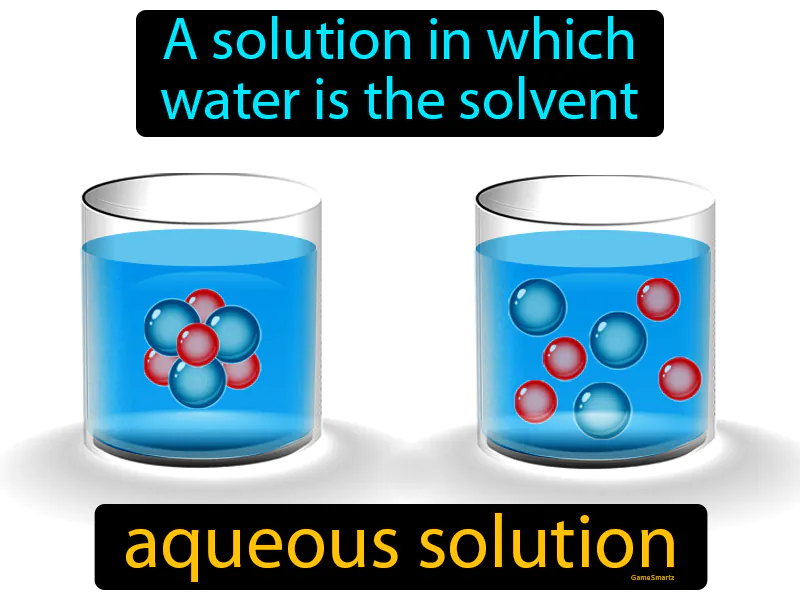
In an aqueous solution, water acts as the solvent, while the dissolved substance is known as the solute. Because water is a polar molecule, it possesses a unique ability to surround and stabilize ions and polar molecules. In the tech-oriented laboratory, this process—known as hydration or solvation—is no longer just observed; it is predicted and optimized using advanced algorithms.
The Digital Architecture of Aqueous Solutions: Modeling and Simulation
To understand aqueous solutions in a professional tech context, one must look at Molecular Dynamics (MD) and Density Functional Theory (DFT). These are the software-driven methodologies that allow researchers to visualize how water molecules interact with solutes.
Molecular Dynamics and Solvation Shells
When a salt like sodium chloride (NaCl) is introduced into water, it dissociates into ions. Digital simulation tools allow scientists to see the “solvation shell”—the structured layer of water molecules that orient themselves around the charged ions. High-performance computing (HPC) clusters run simulations that track the movement of thousands of atoms over nanosecond timescales. This tech-driven approach is critical in the development of new materials. For instance, in the tech sector of “Green Chemistry,” software is used to design aqueous solutions that can capture carbon dioxide more efficiently, minimizing the environmental footprint of industrial processes.
Predictive Modeling with AI
Machine learning (ML) models are now being trained on vast datasets of solubility and conductivity. These AI tools can predict how a new, hypothetical solute will behave in an aqueous environment before a single drop of liquid is even touched in a physical lab. By inputting parameters such as temperature, pressure, and ionic strength, these digital twins of aqueous systems provide insights into concentration gradients and reaction kinetics that were previously impossible to calculate manually.
Aqueous Technology in Energy Storage and Hardware
The tech industry’s push toward sustainable energy has put a spotlight on aqueous solutions, particularly in the realm of battery technology. While lithium-ion batteries often use organic solvents, there is a massive surge in research into Aqueous Ion Batteries (AIBs).
The Rise of Aqueous Electrolytes
Aqueous solutions serve as the electrolyte in various types of batteries, including lead-acid and certain types of flow batteries used for grid-scale storage. The primary technological hurdle has been the “electrochemical window” of water—the voltage range within which water remains stable before decomposing into hydrogen and oxygen.
Advanced chemical modeling software is currently being used to expand this window. By creating “Water-in-Salt” electrolytes—highly concentrated aqueous solutions—tech researchers have managed to suppress water’s reactivity, allowing for higher voltage and safer battery configurations. This is a critical development for the hardware sector, as aqueous-based batteries are inherently non-flammable compared to their organic counterparts, making them ideal for large-scale data center backups and residential energy storage.
Microfluidics and Lab-on-a-Chip
In the world of biotech and diagnostic hardware, aqueous solutions are the lifeblood of microfluidic devices. These “lab-on-a-chip” technologies manipulate minute volumes of aqueous solutions to perform rapid DNA sequencing or disease detection. The design of these chips relies heavily on Computational Fluid Dynamics (CFD) software, which calculates how an aqueous solution will flow through microscopic channels, ensuring that reagents mix perfectly at the right millisecond.
Digital Monitoring and IoT in Aqueous Systems
In industrial and environmental technology, the “what” of an aqueous solution is defined by its measurable parameters: pH, conductivity, dissolved oxygen, and turbidity. The integration of the Internet of Things (IoT) has transformed how we manage these solutions in real-time.
Smart Sensors and Real-Time Analytics
Modern industrial facilities use arrays of digital sensors to monitor aqueous solutions in cooling towers, waste treatment plants, and chemical reactors. These sensors feed data directly into Laboratory Information Management Systems (LIMS) or SCADA (Supervisory Control and Data Acquisition) systems.
For example, in semiconductor manufacturing—a pinnacle of modern technology—the purity of aqueous solutions used for wafer cleaning is paramount. Even a few parts per billion of a contaminant can ruin a production run. Smart sensors utilize laser-induced breakdown spectroscopy (LIBS) and high-frequency conductivity testing to ensure that the aqueous environment remains within strict digital tolerances.
Automating Concentration Control
The concentration of an aqueous solution—often expressed in molarity or mass percentage—is no longer a manual titration task in high-tech settings. Automated dosing systems use feedback loops to maintain precise concentration levels. If a sensor detects that an aqueous solution is becoming too dilute due to evaporation or reaction consumption, the system automatically triggers a precise injection of solute. This level of automation is essential for maintaining the consistency required in the production of high-tech chemicals and pharmaceuticals.
The Pharmaceutical Tech Perspective: Solubility and Bioavailability
Within the intersection of chemistry and health tech, aqueous solutions are the primary focus of drug delivery systems. The human body is essentially a collection of complex aqueous environments, and any digital drug design must account for how a molecule will dissolve and circulate within this medium.
In-Silico Solubility Screening
Many promising pharmaceutical compounds are poorly soluble in water, which limits their effectiveness. Tech-driven drug discovery uses “In-Silico” (computer-simulated) screening to modify molecular structures, making them more compatible with aqueous solutions. By simulating the Gibbs free energy of solvation, researchers can predict whether a drug will successfully dissolve in the bloodstream or if it requires a specific carrier technology, such as lipid nanoparticles.
Nanotechnology and Aqueous Dispersions
At the cutting edge of tech, we see the use of aqueous dispersions where nanoparticles are suspended in a water-based medium. These are technically colloids, but they behave like aqueous solutions in many digital modeling contexts. This tech is used in “smart” inks for printed electronics and in targeted cancer therapies, where the aqueous solution acts as the transport vehicle for nanobots or targeted proteins.
Future Horizons: Quantum Computing and the “Many-Body” Problem
As we look toward the future of chemical technology, the way we define and analyze aqueous solutions is set for a quantum leap. One of the greatest challenges in chemistry is the “many-body problem”—the difficulty of calculating the interactions of every single electron and nucleus in a solution simultaneously.
Quantum Chemistry Simulations
Traditional binary computers struggle with the complexity of water’s hydrogen-bonding network. However, emerging quantum computing technologies are uniquely suited to simulate the quantum states of an aqueous solution. Companies like IBM and Google are already partnering with chemical firms to develop algorithms that can model aqueous reactions at a level of precision that is currently impossible. This will lead to the discovery of new catalysts for water purification and more efficient methods for hydrogen production via aqueous electrolysis.
Digital Twins for Global Water Systems
On a macro tech scale, the concept of the aqueous solution is being applied to “Digital Twins” of entire ecosystems. By treating a river or a municipal water supply as a giant, flowing aqueous solution, environmental tech companies use satellite data and ground sensors to create a live digital replica. This allows for the prediction of how pollutants will spread or how changes in temperature will affect the solubility of life-sustaining oxygen in the water.
Conclusion: The Evolving Definition of Aqueous Solutions
In summary, when we ask “what is an aqueous solution” in the context of modern technology, the answer is far more than “salt in water.” It is a digitally mapped, sensor-monitored, and algorithmically optimized environment that serves as the foundation for the next generation of technological breakthroughs. From the electrolytes powering our devices to the simulations guiding our drug discoveries, the aqueous solution is a vital component of the global tech stack. As computational power increases and IoT sensors become more pervasive, our ability to manipulate these liquid systems will continue to drive innovation across the energy, manufacturing, and healthcare sectors.
aViewFromTheCave is a participant in the Amazon Services LLC Associates Program, an affiliate advertising program designed to provide a means for sites to earn advertising fees by advertising and linking to Amazon.com. Amazon, the Amazon logo, AmazonSupply, and the AmazonSupply logo are trademarks of Amazon.com, Inc. or its affiliates. As an Amazon Associate we earn affiliate commissions from qualifying purchases.