
Owing money to the Internal Revenue Service (IRS) is a situation that can induce significant anxiety for any taxpayer. Whether you are a freelance professional, a small business owner, or a W-2 employee who missed the mark on withholdings, the realization that you cannot pay your tax bill in full by the filing deadline is a heavy burden. However, the IRS is not interested in your financial ruin; rather, its primary goal is the collection of revenue. To facilitate this, the agency offers several structured pathways to resolve tax debt through payment plans, officially known as Installment Agreements.

Understanding how to navigate these options is a critical component of personal financial management. By proactively setting up a payment plan, you can stop aggressive collection actions—such as levies or liens—and gain a clear roadmap to financial recovery. This guide provides an in-depth exploration of the various IRS payment arrangements, the application process, and the strategic financial considerations you must keep in mind to maintain long-term compliance.
Understanding IRS Payment Plans: The Strategic Advantage
A payment plan with the IRS is a formal agreement where the agency allows you to pay your tax debt over an extended period. For many, this is the most viable alternative to high-interest credit card debt or personal loans. Engaging with the IRS early demonstrates “good faith,” which is often a prerequisite for future penalty abatements or more favorable negotiations.
Short-Term vs. Long-Term Agreements
The first step in managing your tax debt is identifying which timeframe fits your cash flow. The IRS generally categorizes plans into two main buckets:
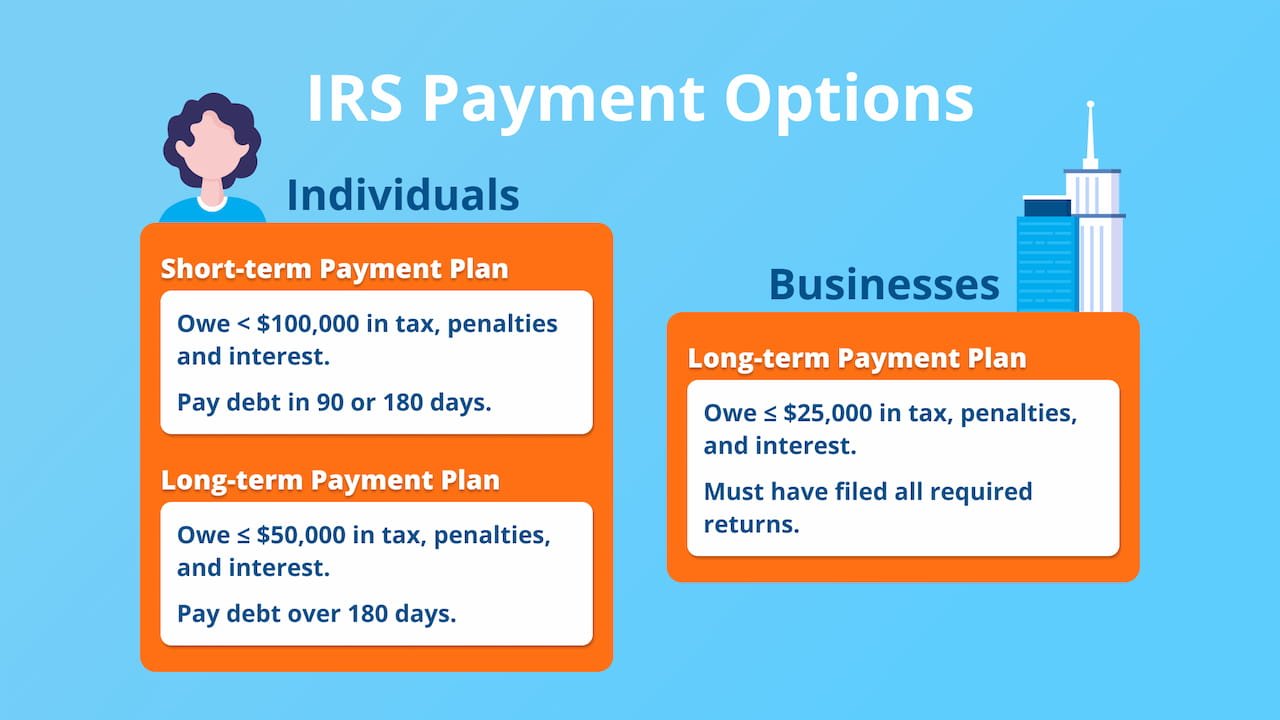
- Short-Term Payment Plan: This is an extension of time to pay the full amount, typically up to 180 days. While you will still accrue interest and some penalties, there is no setup fee for this arrangement. This is ideal for those who expect a liquidity event, such as a bonus or the sale of an asset, in the near future.
- Long-Term Payment Plan (Installment Agreement): If you require more than 180 days, you must enter into a monthly installment agreement. These plans can last for up to 72 months. While they provide breathing room, they often involve setup fees and require a more disciplined approach to monthly budgeting.
Eligibility Criteria for Online Applications
The IRS has modernized its systems, allowing most individuals to apply for payment plans online. To be eligible for an online application, an individual must owe less than $50,000 in combined income tax, penalties, and interest. For businesses, the threshold is $25,000 in unpaid employment taxes. If your debt exceeds these amounts, the process becomes more complex, often requiring the submission of Form 433-F (Collection Information Statement) to prove your financial standing and ability to pay.
The Importance of Current Compliance
You cannot set up a payment plan if you are not current with your tax filings. The IRS requires all prior-year returns to be filed before they will entertain an installment agreement. This is a non-negotiable step; from a financial perspective, the IRS views a failure to file as a more severe infraction than a failure to pay.
Step-by-Step Guide: Navigating the Online Payment Agreement Application
For most taxpayers, the Online Payment Agreement (OPA) tool is the fastest and most cost-effective way to establish a plan. Applying online significantly reduces the setup fee compared to applying via phone, mail, or in person.
Gathering Necessary Financial Information
Before logging into the IRS portal, ensure you have your financial house in order. You will need your Social Security Number or Individual Taxpayer Identification Number (ITIN), your filing status, and the exact amount of tax debt from your most recent notice. Furthermore, have your bank routing and account numbers ready. Opting for Direct Debit is highly recommended; not only does it lower the setup fee, but it also ensures you never miss a payment, which would otherwise put you in default.
Selecting Your Monthly Payment Amount
The IRS OPA tool will prompt you to propose a monthly payment. It is vital to be realistic here. While you want to pay off the debt as quickly as possible to minimize interest, proposing a payment that strains your monthly cash flow can lead to missed payments. If you default on an IRS agreement, you may be charged a reinstatement fee, and the agency may become less willing to work with you in the future. A common strategy is to select the minimum payment required by the IRS formulas but to manually pay extra whenever your budget allows.
Confirming the Agreement and Paying Setup Fees
Once you submit your application, you will usually receive immediate notification of whether your request has been approved. If you choose a long-term plan via Direct Debit, the setup fee (as of current regulations) is approximately $31 for online applications. If you choose a non-direct debit plan, the fee jumps significantly (up to $130 or more). Low-income taxpayers may be eligible for a waiver or reimbursement of these fees, which is a crucial detail for those facing extreme financial hardship.
Managing Your Cash Flow: Financial Considerations and Penalties
While an installment agreement provides a path to resolution, it is not a “free” service. Tax debt is an expensive form of credit. Understanding the math behind the interest and penalties is essential for making informed financial decisions.
The Cost of Interest and Failure-to-Pay Penalties
Even with a payment plan, the IRS continues to charge interest and penalties on the unpaid balance. The interest rate is determined quarterly and is typically the federal short-term rate plus 3%. Additionally, the failure-to-pay penalty is usually 0.5% of the unpaid taxes for each month or part of a month the tax remains unpaid. However, once a payment plan is established, this penalty is often reduced to 0.25% per month.
Direct Debit vs. Manual Payments
From a wealth-management perspective, automation is your best friend. Direct Debit Installment Agreements (DDIAs) are the IRS’s preferred method. By automating the payment, you eliminate the “human error” factor. If you choose to pay manually via the Electronic Federal Tax Payment System (EFTPS) or by check, you must remain hyper-vigilant. A single missed payment can trigger a “Notice of Intent to Levy,” which can have devastating effects on your credit and your ability to manage other financial obligations.
Prioritizing Debt: IRS vs. Private Lenders
A common financial dilemma is whether to pay off the IRS or high-interest credit cards first. Generally, IRS interest rates are lower than typical credit card APRs. However, the IRS has collection powers that no private bank possesses—including the ability to garnish wages and seize property without a court order. Therefore, even if the interest rate is lower, the IRS should often be prioritized in your debt-repayment hierarchy to protect your underlying assets and earning potential.
Maintaining Compliance and Avoiding Future Pitfalls
An IRS payment plan is not a “set it and forget it” solution. It is a dynamic agreement that requires ongoing financial discipline and compliance with tax laws.
The Requirement for Future Filing and Payment
One of the strictest conditions of an IRS installment agreement is that you must remain compliant with all future tax obligations. This means you must file all future tax returns on time and pay all future taxes in full. If you file a return in a subsequent year and owe a balance that you cannot pay, your existing payment plan will automatically go into default. To avoid this, many taxpayers adjust their W-4 withholdings or increase their estimated quarterly payments to ensure they do not owe at the end of the next fiscal year.
Handling Tax Refunds
If you are on an IRS payment plan and are entitled to a refund in a future tax year, do not expect to receive a check. The IRS will automatically apply any future refunds to your outstanding debt. This is known as a “refund offset.” While this helps pay down your balance faster and reduces the total interest you will pay, it can be a surprise if you were counting on that refund for other expenses.
Modifying Your Agreement
Financial circumstances change. If you lose your job or face an unexpected medical emergency, you may find that you can no longer afford your monthly installment. In such cases, it is imperative to contact the IRS immediately. You can often request a modification of your payment amount or a temporary stay of collection. Ignoring the problem will lead to a default, which is much harder to fix than proactively adjusting the terms of the agreement.
Long-Term Financial Health and Debt Resolution
Setting up a payment plan is the first step toward regaining control of your financial life. Once the plan is in motion, your focus should shift toward total debt elimination and preventing future occurrences.
Considering an Offer in Compromise (OIC)
For those in truly dire financial straits where the total tax debt may never be paid back, the IRS offers the Offer in Compromise program. This allows you to settle your tax debt for less than the full amount you owe. However, the qualification process is rigorous and requires full disclosure of all assets, income, and expenses. The IRS only accepts an OIC if they believe the amount offered is the most they can reasonably expect to collect within a specific timeframe. For most taxpayers, a standard installment agreement remains the more accessible and common path.
The “Currently Not Collectible” Status
If your income barely covers your basic living expenses (rent, food, utilities), you may qualify for “Currently Not Collectible” (CNC) status. This doesn’t make the debt go away, but it pauses all collection activities, including payment plans, until your financial situation improves. The IRS reviews CNC cases annually to see if your income has increased.
Conclusion: Taking the First Step
The most critical takeaway for managing IRS debt is that inaction is your greatest enemy. The penalties for failing to file and failing to pay accrue daily, and the psychological weight of unresolved debt can hinder your professional and personal life. By utilizing the IRS payment plan system, you transition from a position of vulnerability to one of strategic management. Whether through a 180-day short-term extension or a multi-year installment agreement, these tools provide a structured, legal, and manageable way to satisfy your obligations and move forward with your financial future.
aViewFromTheCave is a participant in the Amazon Services LLC Associates Program, an affiliate advertising program designed to provide a means for sites to earn advertising fees by advertising and linking to Amazon.com. Amazon, the Amazon logo, AmazonSupply, and the AmazonSupply logo are trademarks of Amazon.com, Inc. or its affiliates. As an Amazon Associate we earn affiliate commissions from qualifying purchases.