
In the realm of modern technology, a “ghost” is rarely a supernatural entity. Instead, it is the persistent, often invisible residue of data, code, and hardware artifacts that continue to influence our systems long after their primary utility has expired. To understand what a digital ghost is made of, one must look beneath the user interface and into the layers of technical debt, forensic remnants, and the opaque logic of neural networks. These ghosts are the building blocks of our digital environment, composed of everything from discarded metadata to the “black box” weights of artificial intelligence.
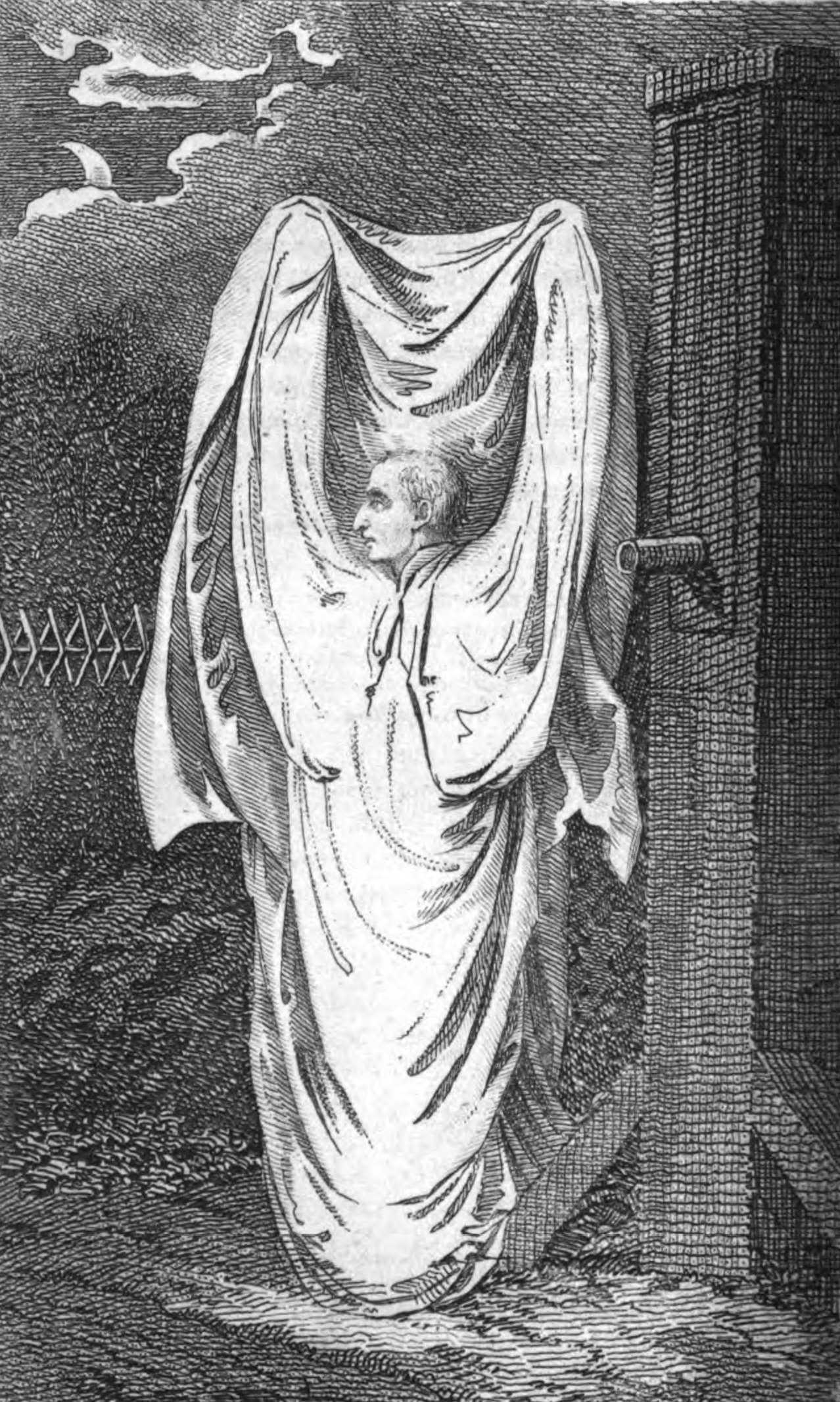
The Digital Skeleton: Legacy Code and the Persistence of Technical Debt
At the core of most enterprise systems lies a skeleton made of legacy code. This is the most literal form of a digital ghost—software that was written decades ago, often in languages like COBOL or early C, which still powers the foundational architecture of global banking, air traffic control, and government infrastructure.
The Undying Nature of Mainframe Logic
When we ask what these ghosts are made of, the answer is often “procedural logic from a different era.” Modern applications are frequently just sophisticated “wrappers” around these ancient cores. These ghosts exist because the cost and risk of exorcising them—rewriting the code from scratch—are too high. Consequently, the ghost remains, dictating the limits of modern speed and interoperability. This technical debt is not just a financial burden; it is a structural reality. It is made of undocumented dependencies and “spaghetti code” that no living developer fully understands, creating a haunting presence where a single change in a modern API can trigger a collapse in a forty-year-old subsystem.
Why We Can’t Just Delete Old Data
In software development, “ghosting” also refers to the remnants of deleted features or deprecated libraries. When a developer removes a function, vestiges often remain in the form of unused variables or “dead code.” These ghosts occupy memory and storage, increasing the attack surface for digital security threats. They are made of forgotten logic gates that can still be toggled by a clever exploit, proving that in technology, nothing is ever truly gone until the hardware itself is shredded.
The Materiality of the Invisible: Forensic Data and Binary Echoes
If you look at a hard drive under a metaphorical microscope, you will find that “deleted” files are the most common ghosts in the machine. To a computer, a ghost is made of unallocated space that still contains structured magnetic or electronic signatures.
Forensic Remnants and the Myth of Deletion
When a user hits “delete,” the operating system does not typically scrub the actual data from the disk. Instead, it simply removes the pointer to that data and marks the space as available for future writing. Until that space is overwritten by new 1s and 0s, the original file exists as a ghost. Digital forensic experts specialize in “summoning” these ghosts. They are made of residual magnetic flux on traditional HDDs or trapped electrons in the NAND flash cells of an SSD. This persistence is a cornerstone of digital security; it allows for the recovery of lost information but also poses a massive privacy risk if a device is disposed of without a cryptographic wipe.
Metadata: The Shadow of Every File
Every digital action leaves a shadow, or a “ghost,” known as metadata. A photograph is more than just pixels; it is made of EXIF data—timestamps, GPS coordinates, camera settings, and software versions. A document is made of its edit history, author identity, and original creation dates. These ghosts tell a story that the primary data hides. In the world of digital security, these ghosts are often more valuable than the “living” data itself, providing the context necessary to track breaches or verify the authenticity of a leaked file.
The Ghost in the Machine: Black Box Algorithms and Neural Networks

The phrase “ghost in the machine” has evolved from a philosophical critique to a technical description of modern Artificial Intelligence. As we move toward deep learning, we are creating systems whose decision-making processes are increasingly spectral.
Weights, Biases, and Opaque Logic
What is an AI ghost made of? It is made of billions of mathematical “weights” and “biases” stored in a neural network. When a generative AI model creates an image or a line of code, it isn’t “thinking” in the human sense. It is navigating a high-dimensional latent space. The “ghost” here is the emergent behavior—the ability of the machine to recognize a face or translate a language—without the programmers knowing exactly which specific neuron triggered the result. This is known as the “Black Box” problem. The ghost is the intelligence that lives in the connections between data points, a phenomenon that is statistically observable but logically difficult to trace.
The Problem of Explainability
As AI takes over critical functions in finance and medicine, the “ghostly” nature of its logic becomes a liability. If an algorithm denies a loan or diagnoses a disease, we need to know why. However, the “matter” of the AI’s decision is distributed across a massive matrix of floating-point numbers. Efforts in “Explainable AI” (XAI) are essentially attempts to give these ghosts a physical form—to translate the ghost’s whispers into a language that humans can audit and regulate.
Hardware Specters: Visual Artifacts and Display Ghosting
In the physical world of gadgets and hardware, ghosts take on a more visual form. Anyone who has used an older LCD or OLED screen is familiar with the phenomenon of “ghosting” or “burn-in.”
Pixels, Latency, and Visual Trails
Hardware ghosting is made of “liquid crystal sluggishness.” In LCD monitors, pixels take time to transition from one color to another. If the transition is slower than the refresh rate of the screen, a faint trail—a ghost—of the previous frame remains visible. This is a matter of material science: the physical properties of the liquid crystals and the voltage applied to them. In OLED screens, the ghost is made of “differential aging.” Because each pixel is its own light source, pixels that display bright, static images (like a taskbar) wear out faster than others. The “ghost” you see when you turn off the screen is actually a permanent physical change in the organic compounds of the display.
Phantom Inputs and Electromagnetic Interference
Another hardware ghost is the “phantom” or “ghost” touch on smartphones. This occurs when a capacitive touch screen registers an input that didn’t happen. These ghosts are made of electromagnetic interference (EMI) or static buildup. Environmental factors—like a cheap charging cable or moisture on the screen—distort the electrical field that the device uses to detect your finger. The device “feels” a touch that isn’t there, proving that even our most tactile tech is haunted by the invisible forces of physics.
The Future of Digital Hauntings: AI Avatars and Legacy Data
As we look toward the future of technology trends, we are seeing the rise of “Grief Tech”—using AI to create digital personas of the deceased. This brings the concept of the ghost full circle.
Deepfakes and AI Re-creations
These modern ghosts are made of massive datasets. By feeding an LLM the emails, text messages, and voice recordings of a person, developers can create a chatbot that mimics their personality and cadence. Here, the ghost is made of linguistic patterns and statistical likelihoods. While these tools offer comfort to some, they represent a new frontier in digital security and ethics. When a person’s likeness can be “reanimated” via deepfake technology, the definition of identity becomes fluid. We must ask: who owns the ghost? Is it the estate of the deceased, or the company that owns the servers where the ghost “lives”?

Managing Your Digital Estate
The sheer volume of data we produce ensures that our digital ghosts will outlive our physical bodies. Social media profiles, cloud storage, and subscription histories form a digital “body” that persists in the cloud. Managing these ghosts has become a legitimate branch of digital security and personal finance. “Digital inheritance” tools are being developed to help users decide which parts of their ghost should be deleted and which should be preserved, recognizing that in the 21st century, what we are “made of” is increasingly a collection of bits stored on a server in a remote data center.
In conclusion, a ghost in the world of technology is not an absence of matter, but a persistence of it. Whether it is the magnetic residue on a platter, the legacy logic in a banking mainframe, or the emergent patterns in a neural network, these ghosts are the very fabric of our digital lives. Understanding what they are made of is the first step in mastering the complex, invisible systems that define the modern age.
aViewFromTheCave is a participant in the Amazon Services LLC Associates Program, an affiliate advertising program designed to provide a means for sites to earn advertising fees by advertising and linking to Amazon.com. Amazon, the Amazon logo, AmazonSupply, and the AmazonSupply logo are trademarks of Amazon.com, Inc. or its affiliates. As an Amazon Associate we earn affiliate commissions from qualifying purchases.