
In the architecture of celebrity legacies, the narrative is often curated with the precision of a high-end corporate rebrand. For decades, the global brand of “The Man in Black”—Johnny Cash—was inextricably linked to a story of redemption, faith, and a legendary romance with June Carter Cash. However, in the process of building this cultural monolith, the story of Vivian Liberto Cash, Johnny’s first wife and the mother of his four daughters, was largely relegated to a footnote or, worse, cast as the antagonist in a carefully constructed mythos.

To understand what happened to Vivian Cash is to examine a profound case study in personal branding: how an individual’s identity can be overshadowed by a powerful corporate and artistic machine, and how, decades later, that identity can be reclaimed through strategic storytelling and legacy management.
The Shadow of the Man in Black: Personal Branding and the Erasure of Identity
In the early 1950s, the Johnny Cash brand was not yet the “outlaw” icon we recognize today. He was a young Air Force recruit, and Vivian Liberto was the teenage girl who captured his heart in a San Antonio roller rink. Their three-week courtship led to over 10,000 pages of letters—a foundational archive of a brand’s origin story that remained hidden for years.
The Early Brand of the Cash Family
During the first decade of their marriage, Vivian was the silent partner in the Cash brand. As Johnny’s fame exploded with Sun Records, the public image was one of a burgeoning superstar supported by a traditional family unit. Vivian stayed home in California, raising Rosanne, Kathy, Cindy, and Tara. In branding terms, she was the “Anchor Personality”—the stability that allowed the “Creative Force” to explore and expand.
However, as Johnny’s brand shifted toward the counter-culture and the dark, pill-fueled persona of the mid-60s, a “brand misalignment” occurred. The domestic stability Vivian represented no longer fit the narrative of the tortured, wandering artist.
The Pivot to June Carter and the Narrative Shift
The entry of June Carter into the professional sphere of Johnny Cash necessitated a complete rebranding of Johnny’s personal life. The “Johnny and June” narrative became one of the most successful marketing pivots in music history. It was a story of salvation: the wild man saved by the angelic woman from a musical dynasty.
In this new brand architecture, Vivian was an inconvenience. The divorce in 1966 and Johnny’s subsequent marriage to June in 1968 effectively archived Vivian’s role in the story. For the better part of forty years, the “official” history of Johnny Cash treated Vivian as a prologue rather than a protagonist.
The Impact of Media Representation on Brand Equity
The most significant blow to Vivian Cash’s personal brand came not from the divorce itself, but from the 2005 biopic Walk the Line. In the world of branding, film is the ultimate medium for cementing a narrative. The movie, while a critical success, portrayed Vivian (played by Ginnifer Goodwin) as a shrill, unsupportive spouse who lacked the vision to understand Johnny’s genius.
The Villainization of the First Wife
From a brand strategy perspective, Walk the Line utilized a common trope: the “Drag.” To make the hero’s journey more compelling, the writers positioned Vivian as the obstacle Johnny had to overcome. This representation significantly damaged Vivian’s public brand equity. She was viewed by a new generation of fans as a barrier to the “true” love of Johnny and June, rather than a woman who had endured the most volatile years of a superstar’s addiction and rise to fame.
The Documentary Correction: My Darling Vivian
The reclamation of Vivian’s brand began in earnest with the 2020 documentary My Darling Vivian. Produced by her daughters and directed by Matt Riddlehoover, this project served as a “brand audit” and correction. It utilized archival footage and those 10,000 letters to re-establish her as a multifaceted individual.
This move is a classic example of legacy management. By providing primary source evidence, the estate was able to pivot the public perception from “scorned ex-wife” to “foundational partner.” It highlighted the racial controversy she faced—having been targeted by white supremacists who erroneously believed she was of African American descent—which added a layer of resilience and complexity to her personal brand that had been previously ignored.
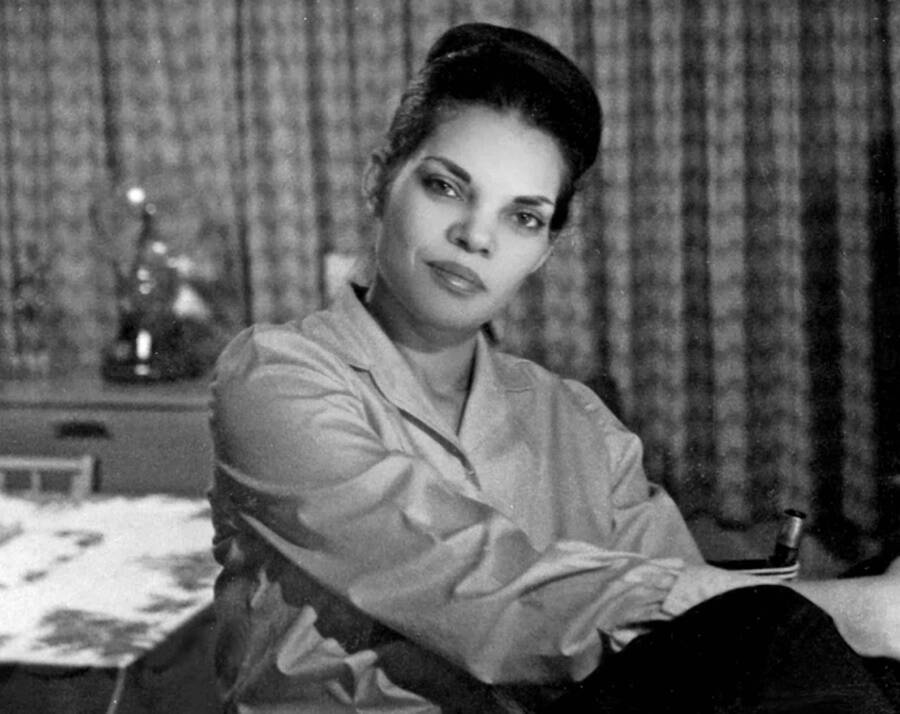
Reclaiming the Narrative: The Brand Evolution of Vivian Liberto
Vivian Liberto did not spend her post-divorce life in the shadows, though the media often acted as if she had. In 1968, she married Dick Distin, a police officer, and settled into a life in Ventura, California. This era represents a “Private Brand” phase—a deliberate withdrawal from the public eye to preserve personal integrity.
“I Walked the Line”: A Literary Rebranding
In 2007, shortly before her death, Vivian published her memoir, I Walked the Line: My Life with Johnny. The title itself was a brilliant piece of brand reclamation. By co-opting the title of Johnny’s most famous song—a song he wrote for her as a promise of fidelity—she reclaimed the intellectual and emotional property of their relationship.
The book functioned as a “Brand Manifesto.” It didn’t seek to tear down Johnny’s legacy; instead, it sought to integrate her story into it. She detailed the struggle of maintaining a home while her husband was descending into drug-fueled mania, providing the “behind-the-scenes” context that the polished “Johnny and June” brand had omitted.
Legacy Management and the Second Act
Vivian’s second act was defined by community involvement and the preservation of her own identity separate from the “Cash” name. She was active in her church and local charities, building a “Local Brand” that was respected and beloved. This is a vital lesson in personal branding: when the “Global Brand” (the association with a celebrity) becomes toxic or reductive, focusing on “Micro-Branding” (local community and personal integrity) can provide a sustainable and fulfilling identity.
Case Study: Lessons for Modern Personal Branding and Legacy
The story of Vivian Cash offers several high-level insights for brand strategists, publicists, and individuals navigating high-stakes personal narratives.
1. Control the Archive
The most powerful tool in Vivian’s eventual brand reclamation was the collection of letters and photographs she kept. In the digital age, this translates to data ownership. If you do not curate and own your history, others will write it for you based on their own agendas.
2. The Danger of the “Single Narrative”
For decades, the Johnny Cash brand suffered from a “single narrative” problem. While the Johnny/June story was profitable, it was incomplete. Modern brand strategy suggests that authenticity is more valuable than perfection. Vivian’s re-emergence into the story actually strengthened the overall Cash family brand by adding layers of truth, struggle, and human complexity that resonated more deeply with a modern audience.
3. Intellectual Property as Personal Legacy
Vivian’s memoir and the subsequent documentary show the importance of asserting rights over one’s own story. By speaking up—even decades later—she ensured that her brand would not be permanently defined by a Hollywood script.
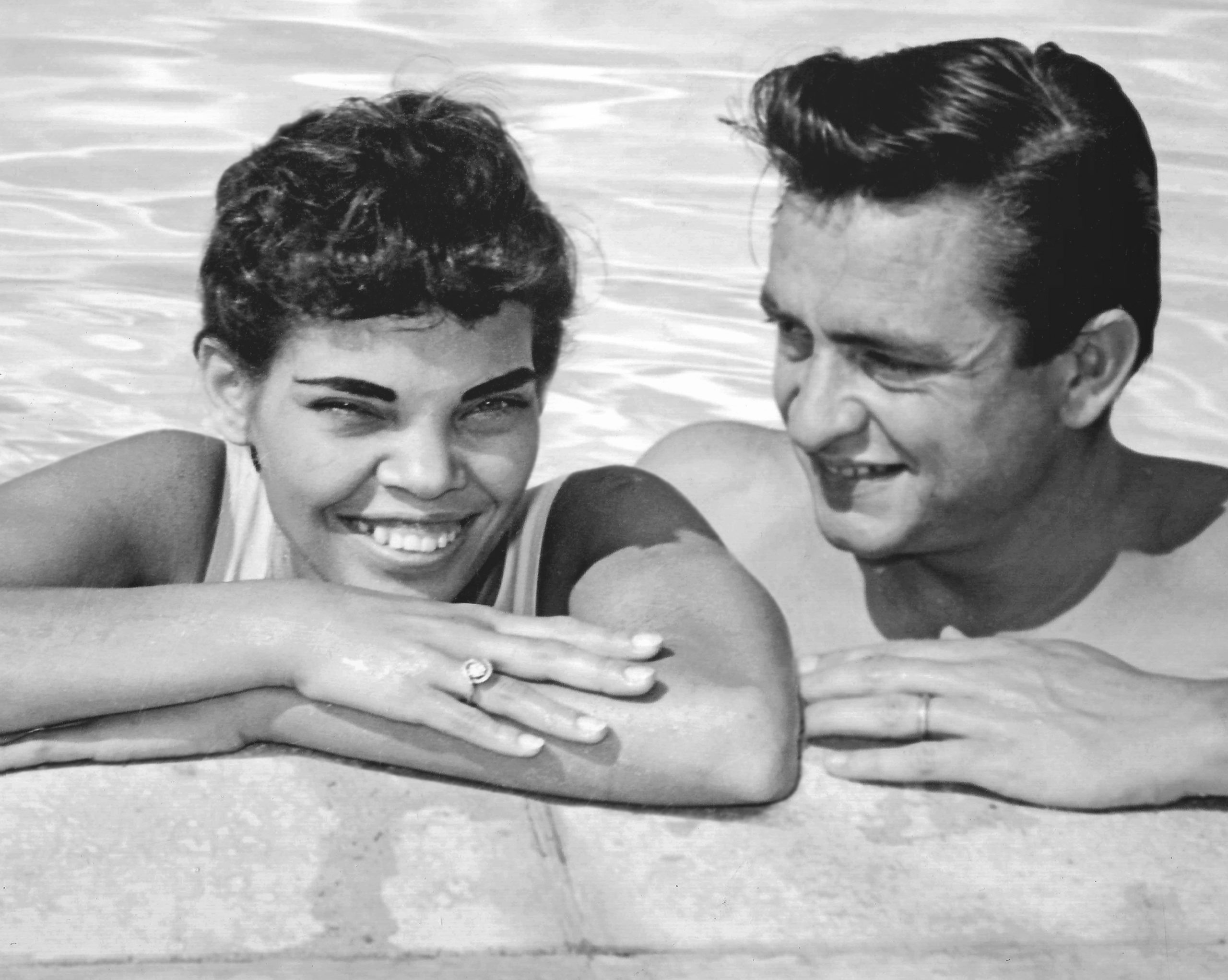
The Enduring Brand of Vivian Cash
Today, the “brand” of Vivian Cash is no longer one of erasure. She is recognized as a woman of profound strength, the mother of a musical dynasty (including the highly respected Rosanne Cash), and a figure who navigated the complexities of 20th-century fame with remarkable dignity.
What happened to Vivian Cash was a long period of cultural displacement followed by a strategic and emotional homecoming. Her life serves as a reminder that while a powerful brand can overshadow an individual for a time, the truth has a way of finding its own market. Through the efforts of her children and her own written word, she moved from the periphery of the “Man in Black” story to a central, respected figure in the history of American music culture.
In the final analysis, Vivian Cash’s legacy is a testament to the power of the “Long Game” in personal branding. By staying true to her account and preserving the artifacts of her life, she ensured that when the world was finally ready to hear the full story, she would be there to tell it. Her brand is no longer defined by who she lost, but by who she was—a distinct, resilient, and essential part of a narrative that is finally, and rightfully, complete.
aViewFromTheCave is a participant in the Amazon Services LLC Associates Program, an affiliate advertising program designed to provide a means for sites to earn advertising fees by advertising and linking to Amazon.com. Amazon, the Amazon logo, AmazonSupply, and the AmazonSupply logo are trademarks of Amazon.com, Inc. or its affiliates. As an Amazon Associate we earn affiliate commissions from qualifying purchases.