
In the landscape of 21st-century cable television, few genres have been as influential on consumer behavior as the “expert-led” reality series. At the forefront of this movement was Rick’s Restorations, a show that began as a humble spin-off and transformed into a global brand synonymous with American nostalgia and artisanal craftsmanship. For years, Rick Dale and his crew were the gold standard for the “restomod” and vintage preservation movement. However, the eventual disappearance of the show from the airwaves, followed by the closure of the physical storefront in Las Vegas, offers a profound case study in brand strategy, the risks of rapid scaling, and the precarious nature of personal branding within a corporate media framework.

To understand what happened to Rick’s Restorations, one must look beyond the television ratings and examine the brand’s trajectory from its inception on Pawn Stars to its ultimate fragmentation.
The Genesis of the Rick’s Restorations Brand
The brand of Rick’s Restorations was built on the foundation of specialized expertise and a unique aesthetic. Before he was a television star, Rick Dale was a local legend in Las Vegas, known for his ability to take a rusted, 1950s soda machine or a dilapidated gas pump and return it to a “better-than-new” condition. His brand was initially rooted in the “Expert Brand” archetype—a business built entirely around the singular talent of its founder.
The Pawn Stars Proving Ground
The Rick’s Restorations brand did not emerge in a vacuum. It was meticulously incubated through guest appearances on History Channel’s flagship program, Pawn Stars. Rick Dale served as the primary restoration expert for Rick Harrison, the face of the Gold & Silver Pawn Shop. These appearances acted as a high-value marketing funnel, establishing Dale’s credibility and visual brand identity before he ever headlined his own series. By the time American Restoration (the show’s official title) premiered in 2010, the audience already felt a sense of brand loyalty toward Dale.
Defining the Visual Identity
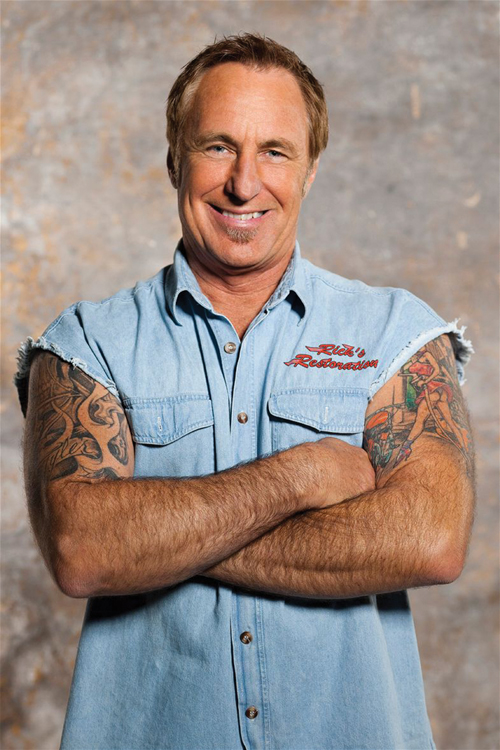
A core component of the brand’s success was its commitment to a specific era of American history. The Rick’s Restorations brand was not just about “fixing things”; it was about the “American Dream” of the mid-20th century. The shop’s logo—a retro, neon-inspired design—and the cast’s signature shop shirts became iconic symbols of blue-collar craftsmanship. This visual identity allowed the brand to transcend the service industry and enter the realm of lifestyle and merchandise.
The Monetization of Nostalgia: Brand Strategy in the Restoration Niche
As the show gained popularity, Rick Dale and his advisors moved to capitalize on the brand’s equity. This era of the business was defined by aggressive scaling and the transition from a service-based workshop to a tourist destination. At its peak, Rick’s Restorations was no longer just a shop; it was an experiential brand.
Experiential Marketing and Tourism
Recognizing the power of the television platform, Dale moved the business to a massive facility in Las Vegas that was designed to accommodate tours. This was a masterclass in experiential marketing. Fans were not just watching the show; they were visiting the set, purchasing “Rick’s Restorations” branded apparel, and paying for the opportunity to see the master at work. This diversified the brand’s revenue streams, moving away from the thin margins of manual labor toward the high-margin world of retail and tourism.
Personal Brand vs. Corporate Identity
One of the most complex aspects of the show’s brand strategy was the tension between Rick Dale’s personal brand and the History Channel’s corporate goals. The show was titled American Restoration, which is a broad, category-level brand. However, the business was Rick’s Restorations. This distinction became critical as the series progressed. While the network wanted a show that could potentially survive without its lead (a common strategy for long-running franchises), the audience was primarily invested in the Dale family brand. This misalignment would eventually lead to the brand’s most significant crisis.
Brand Dilution and the Catalyst for Decline
The decline of the Rick’s Restorations brand did not happen overnight; it was the result of a series of strategic pivots that alienated the core customer base and weakened the brand’s authentic appeal. In branding, “authenticity” is a finite resource, and by 2014, the show began to overextend its credit.
The Season 7 Rebrand
The most jarring shift occurred at the start of Season 7. In a move that shocked fans, the network decided to completely overhaul the cast. Rick Dale, his son Tyler, his wife Kelly, and the beloved crew of craftsmen were removed from the show. The network attempted to keep the American Restoration title but pivoted to a format that featured multiple shops across the country.
From a brand strategy perspective, this was a catastrophic failure in understanding audience psychology. The “Rick’s Restorations” brand was inextricably linked to the “American Restoration” television brand. By removing the face of the brand, the network severed the emotional connection with the audience. The “New” American Restoration felt like a generic imitation, lacking the personal stakes and the specific family-oriented brand narrative that Dale had cultivated for years.
The Risks of Reality TV Branding
The show’s disappearance highlights a major risk for businesses that rely on reality television for brand growth: the loss of control. When a business owner signs a contract with a production company, they often cede control over how their brand is portrayed and, more importantly, whether their brand remains on the air. When the show was restructured, Rick Dale lost his primary marketing engine. Without the weekly hour-long “infomercial” that was the television show, the high overhead of the massive Las Vegas facility became unsustainable.
The Aftermath: Corporate Identity vs. Personal Legacy
Following the cancellation of the original format, the physical Rick’s Restorations shop faced a difficult transition. The brand had been built to support a level of fame and foot traffic that was only possible with active television promotion. In 2016, reports emerged that the shop had closed its doors to the public, marking the end of an era for the Las Vegas landmark.
Brand Pivot and Digital Presence
Despite the closure of the physical shop and the end of the show, the Rick Dale brand did not vanish. It underwent a pivot toward digital engagement and smaller-scale consulting. Dale maintained a presence on social media, continuing to engage with a loyal community of restorers and fans. This transition illustrates the “long tail” of personal branding. While the corporate entity (American Restoration) moved on, the personal brand (Rick Dale) remained a valuable asset in the niche world of antique restoration.
Lessons in Brand Sustainability
The story of Rick’s Restorations serves as a cautionary tale for modern entrepreneurs regarding brand sustainability.
- Diversification of Discovery: Relying on a single platform (like a TV network or a specific social media algorithm) for brand discovery is a high-risk strategy. When the platform changes its direction, the brand can be left stranded.
- The “Founder’s Trap”: Building a brand entirely around a single personality makes scaling difficult and exit strategies nearly impossible. When the founder is removed or the “character” of the founder is changed, the brand equity often evaporates.
- Protecting the Core Identity: In the pursuit of growth or network demands, the show’s producers sacrificed the “family” element of the brand. This was the brand’s unique selling proposition (USP). Once that was gone, the brand became a commodity.

The Legacy of a Fragmented Brand
What happened to the show Rick’s Restoration was not a failure of craftsmanship or a lack of interest in history. It was a failure of brand management at the intersection of entertainment and business. The show fell victim to the “formulaic” tendencies of cable networks that prioritize format over personality, failing to recognize that in the restoration niche, the personality is the product.
Today, the legacy of the show lives on in the thousands of restored items scattered across the world and in the revived interest in vintage Americana that Rick Dale helped spark. While the neon lights of the Las Vegas shop may have dimmed, the brand’s impact on the “maker” culture remains significant. For professionals in the branding and marketing space, Rick’s Restorations remains a definitive example of how a brand can rise to incredible heights through authentic storytelling—and how quickly that same brand can falter when it loses control of its own narrative.
aViewFromTheCave is a participant in the Amazon Services LLC Associates Program, an affiliate advertising program designed to provide a means for sites to earn advertising fees by advertising and linking to Amazon.com. Amazon, the Amazon logo, AmazonSupply, and the AmazonSupply logo are trademarks of Amazon.com, Inc. or its affiliates. As an Amazon Associate we earn affiliate commissions from qualifying purchases.