
Transitioning from a traditional W-2 employee role to being a business owner, freelancer, or independent contractor is a significant milestone in any professional’s financial journey. However, with this newfound autonomy comes a shift in financial responsibility, most notably in how you handle taxes. Unlike the “set it and forget it” nature of employer withholding, the burden of calculating and remitting taxes falls squarely on the shoulders of the self-employed.
In the United States, the tax system operates on a “pay-as-you-go” basis. This means the Internal Revenue Service (IRS) expects to receive tax revenue as you earn your income throughout the year, rather than in one lump sum every April. Failure to comply with these requirements can lead to liquidity issues, interest charges, and underpayment penalties. This guide provides a comprehensive framework for understanding, calculating, and submitting your quarterly estimated tax payments to ensure your business remains financially healthy and compliant.
Understanding the Fundamentals of Estimated Tax Obligations
The first step in mastering your business finances is determining whether you are legally required to make quarterly payments. While the annual tax return filed in April reconciles your total tax liability for the previous year, quarterly payments are the mechanism used to pay that liability in real-time.
Who Is Required to Pay?
Generally, individuals, including sole proprietors, partners, and S corporation shareholders, must make estimated tax payments if they expect to owe at least $1,000 in tax for the year after subtracting their withholding and refundable credits. If you still receive a W-2 from a part-time job but also have a side hustle, your employer’s withholding might cover your total tax bill. However, for full-time entrepreneurs, this is rarely the case. Corporations generally must make estimated tax payments if they expect to owe tax of $500 or more.
The Safe Harbor Rule
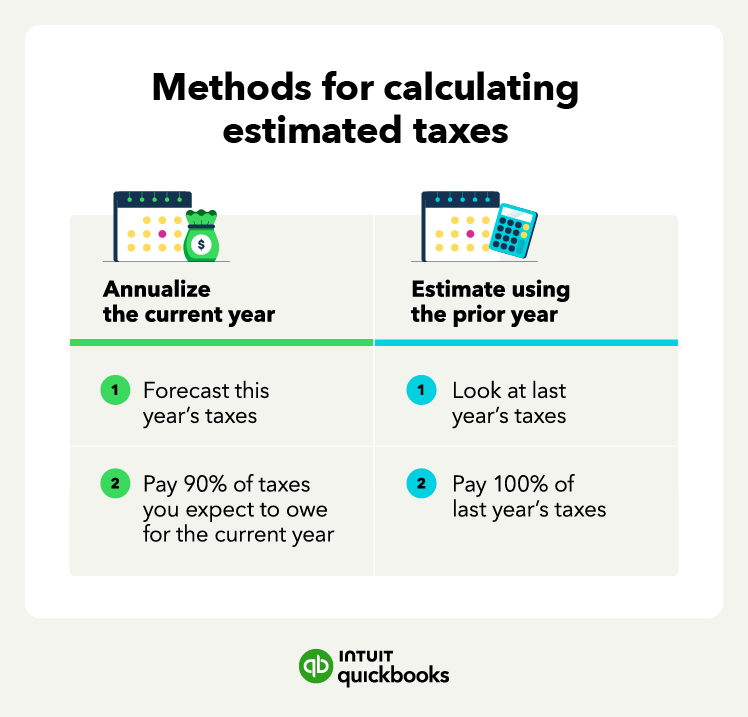
The IRS provides a “Safe Harbor” provision to protect taxpayers from underpayment penalties, even if their income fluctuates significantly. To avoid a penalty, you generally must pay at least 90% of the tax for the current year or 100% of the tax shown on the return for the prior year, whichever is smaller. For high-income taxpayers (those with an adjusted gross income over $150,000), the prior-year safe harbor requirement increases to 110%. Utilizing the safe harbor rule is a classic financial strategy for those experiencing a high-growth year, as it allows you to defer the tax on your increased profits until the following April without penalty.
The Consequences of Underpayment
Neglecting quarterly payments is not merely a matter of delaying the inevitable; it carries a financial cost. The IRS calculates underpayment penalties based on how much you owed and how late the payment was. These interest-based penalties can erode your profit margins and complicate your year-end financial planning. Understanding these stakes is essential for maintaining the fiscal discipline required to run a successful enterprise.
Calculating Your Quarterly Liability
Accurately projecting your income is perhaps the most challenging aspect of quarterly taxes, particularly for businesses with seasonal revenue or volatile growth. However, a systematic approach can demystify the process.
Utilizing IRS Form 1040-ES
The primary tool for this calculation is Form 1040-ES, “Estimated Tax for Individuals.” This document includes a worksheet that helps you estimate your expected adjusted gross income, taxable income, taxes, deductions, and credits for the year. It serves as a financial roadmap, allowing you to bridge the gap between your gross revenue and your actual tax liability. When filling this out, it is advisable to use your prior year’s tax return as a baseline, adjusting for any known changes in your business model or market conditions.
Factoring in Self-Employment Tax
A common pitfall for new business owners is forgetting to account for the self-employment tax. When you are an employee, you pay 7.65% for Social Security and Medicare, and your employer matches that amount. When you are self-employed, you are both the employer and the employee, meaning you are responsible for the full 15.3%. While you can deduct the employer-equivalent portion of your self-employment tax in figuring your adjusted gross income, the total amount must still be factored into your quarterly cash flow projections.
Adjusting for Fluctuating Income
If your business is highly seasonal—for example, a retail brand that makes 60% of its revenue in Q4—you may choose the “Annualized Income Installment Method.” This allows you to pay smaller amounts during slow quarters and larger amounts during your peak season. While this requires more complex record-keeping and the filing of Form 2210 with your annual return, it is an effective way to manage cash flow and ensure you aren’t overpaying during lean months.
Practical Methods for Submitting Payments
Once you have calculated your liability, the next step is the actual transfer of funds. The IRS has modernized its systems significantly, offering several digital and traditional pathways for payment.
IRS Direct Pay and EFTPS
For most individuals and sole proprietors, IRS Direct Pay is the most efficient method. This free service allows you to pay directly from your checking or savings account without prior registration. You receive an immediate confirmation number, which is vital for your financial records. For larger businesses or those who prefer to schedule all four payments in advance, the Electronic Federal Tax Payment System (EFTPS) is the gold standard. It requires a one-time enrollment but offers a robust dashboard for tracking payment history and managing high-value transactions.
Payment via Mail and Vouchers
While digital payments are preferred for their speed and security, the IRS still accepts physical checks. If you choose this route, you must include the appropriate payment voucher from Form 1040-ES. It is critical to ensure your check is postmarked by the due date to avoid late fees. However, from a business management perspective, mailing a check is less efficient than digital methods, as it introduces the risk of mail delays and manual processing errors.
State-Level Quarterly Obligations
It is important to remember that federal taxes are only half the battle. Most states with an income tax also require quarterly estimated payments. The thresholds and deadlines often mirror federal rules, but they can vary. Some states, like California or New York, have aggressive enforcement and different safe harbor percentages. Always check with your state’s Department of Revenue to ensure you are meeting local obligations alongside your federal ones.
Strategic Financial Management for Tax Season
Viewing quarterly taxes as a strategic component of your business operations, rather than a bureaucratic hurdle, can significantly improve your long-term financial stability.
Setting Up a Dedicated Tax Reserve
The most effective way to manage quarterly payments is to never “feel” the loss of the money. High-performing freelancers often set up a separate, high-yield savings account dedicated solely to taxes. By transferring 25% to 30% of every incoming payment into this account immediately, you ensure that the funds are available when the quarterly deadline arrives. Furthermore, keeping this money in a high-yield account allows you to earn a small amount of interest on the “float” before the money is remitted to the government.
Record-Keeping and Documentation
Meticulous bookkeeping is the foundation of accurate tax payments. By using accounting software to track your expenses and income in real-time, you can move away from “guesstimates” and toward data-driven calculations. Keeping digital copies of all receipts and maintaining a clear profit-and-loss (P&L) statement allows you to identify deductible business expenses—such as marketing costs, home office deductions, and equipment depreciation—which lower your taxable income and, consequently, your quarterly payment amounts.
Leveraging Professional Help
As your business grows in complexity, the value of a Certified Public Accountant (CPA) or a tax strategist increases. A professional can help you navigate nuanced areas like Section 199A deductions (the Qualified Business Income deduction) or the tax implications of shifting from a sole proprietorship to an S-Corp. The cost of professional advice is often offset by the tax savings they identify and the peace of mind they provide by ensuring full compliance.
The Quarterly Tax Calendar: Key Deadlines
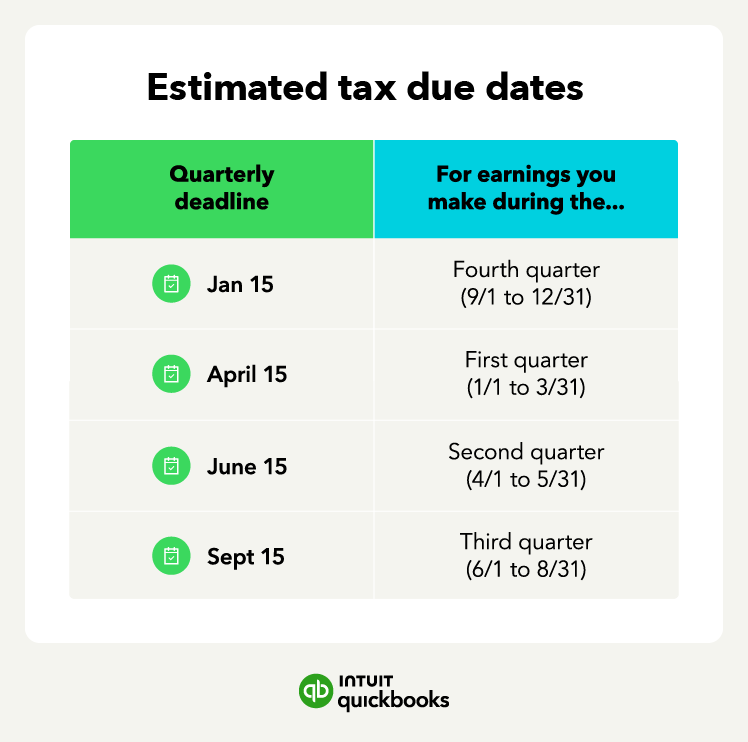
To maintain a healthy relationship with the IRS, you must mark your calendar for the four specific windows of the tax year. Note that these dates do not always fall exactly three months apart:
- Q1 (January 1 – March 31): Payment is due April 15.
- Q2 (April 1 – May 31): Payment is due June 15.
- Q3 (June 1 – August 31): Payment is due September 15.
- Q4 (September 1 – December 31): Payment is due January 15 of the following year.
If these dates fall on a weekend or a legal holiday, the deadline is pushed to the next business day. Consistently meeting these deadlines is a hallmark of a disciplined business owner. By mastering the art of the quarterly payment, you remove the “tax season stress” that plagues so many, allowing you to focus on what matters most: growing your business and building your wealth.
aViewFromTheCave is a participant in the Amazon Services LLC Associates Program, an affiliate advertising program designed to provide a means for sites to earn advertising fees by advertising and linking to Amazon.com. Amazon, the Amazon logo, AmazonSupply, and the AmazonSupply logo are trademarks of Amazon.com, Inc. or its affiliates. As an Amazon Associate we earn affiliate commissions from qualifying purchases.