
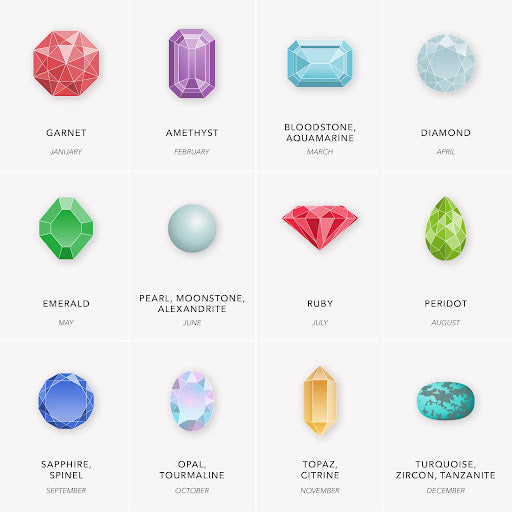
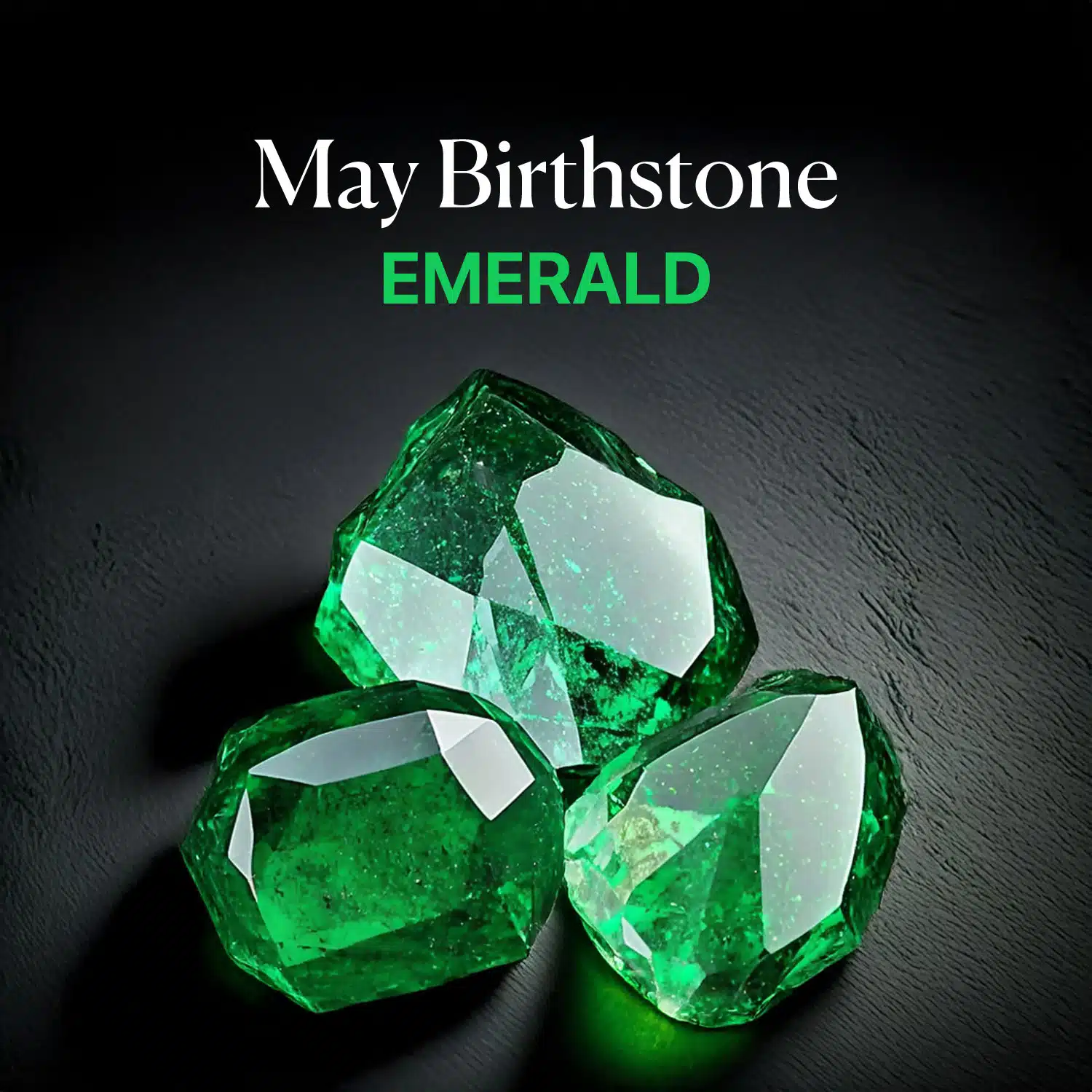
For those born in May, the emerald serves as a vibrant symbol of spring and renewal. However, beyond its aesthetic appeal and historical significance, the emerald—the primary birthstone for the month of May—represents a sophisticated asset class within the alternative investment market. While diamonds have traditionally dominated the conversation surrounding gemstone investments, the “Big Three” of the colored stone world (emeralds, rubies, and sapphires) have seen a meteoric rise in valuation over the last decade. Understanding the financial mechanics of the emerald market is essential for investors looking to diversify their portfolios with tangible assets that offer both aesthetic pleasure and long-term capital appreciation.

The emerald market is driven by a unique combination of extreme rarity, geological complexity, and a growing global demand for high-quality colored stones. As traditional markets experience volatility, many high-net-worth individuals are turning to “portable wealth”—assets that can be easily transported, hold significant value in a small physical footprint, and remain relatively uncorrelated with standard equity markets. The May birthstone, characterized by its deep, lush green hue, is currently one of the most sought-after commodities in this space.
The Economic Allure of the Emerald: More Than Just a Birthstone
To understand why the emerald is a strategic financial asset, one must first look at its scarcity. High-quality emeralds are significantly rarer than diamonds. While diamonds are found in abundance across several continents and their supply is carefully managed by large syndicates, emeralds are the result of specific, rare geological conditions where beryllium and chromium meet under intense pressure and heat. These conditions occur in only a few places on Earth, making the supply of “investment-grade” stones inherently limited.
Over the past twenty years, the price per carat for fine emeralds has outpaced many traditional investment vehicles. According to data from various auction houses like Christie’s and Sotheby’s, exceptional emeralds have seen price increases of over 100% in certain five-year windows. This appreciation is fueled by the burgeoning middle and upper classes in emerging markets, particularly in Asia, where colored stones are viewed as both a status symbol and a store of value.
Unlike gold, which is a fungible asset where every ounce is identical to the next, every emerald is unique. This uniqueness creates a “collector’s premium.” For the savvy investor, this means that while the entry barrier is higher in terms of required knowledge, the potential for outsized returns is significantly greater than with standardized commodities. The May birthstone is not just a piece of jewelry; it is a finite resource with a diminishing supply from legendary mines, driving a supply-demand imbalance that favors the long-term holder.
Mastering the Valuation Metrics: How to Assess Emerald Quality for Profit
Investing in emeralds requires a shift in mindset from consumer purchasing to asset acquisition. In the world of finance, the value of an emerald is determined by a specific set of metrics that go beyond the standard “4 Cs” of diamond grading. For an emerald to be considered an investment-grade asset, it must excel in color, clarity, and, most importantly, origin.
The Color Component: Identifying the “Investment Green”
In the gemstone trade, color is the single most important factor in determining value. For the May birthstone, the ideal color is a vivid, high-saturation green, often referred to as “Muzo Green” in honor of the famous Colombian mine. The tone should be medium to dark, and the saturation should be as pure as possible.
Investors should look for stones that do not have strong blue or yellow overtones, as these can detract from the stone’s marketability. The “glow” of an emerald—its internal fire—is a result of its chromium content. When evaluating a stone for a portfolio, the intensity of this green can mean the difference between a stone worth $2,000 per carat and one worth $20,000 per carat.
Clarity and the “Jardin”: Why Inclusions Matter
Emeralds are almost always found with internal inclusions, which the trade poetically refers to as the “jardin” (French for garden). In the diamond world, inclusions are often seen as flaws; in the emerald world, they are proof of the stone’s natural origin. However, from a financial perspective, the “cleaner” the stone, the higher the exponential price jump.
A “no-oil” emerald—a stone so clear and well-formed that it has not required any resin or oil treatment to fill surface-reaching fissures—is the “holy grail” of gemstone investing. These stones command a massive premium, often selling for two to three times the price of “minor oil” stones. For an investor, focusing on stones with minimal treatment is the best way to ensure liquidity and value retention over time.
Geographic Origin and Its Impact on ROI
In the gemstone market, provenance is everything. Colombian emeralds remain the gold standard and typically command the highest prices due to their historical prestige and unique chemical composition. However, Zambian emeralds have emerged as a strong contender for investors. Zambian stones often have higher clarity and a slightly more bluish-green tint, and because they were historically undervalued, they have shown significant room for price growth.
An investor should always insist on a certificate from a top-tier laboratory (such as GIA, SSEF, or Gübelin) that confirms the stone’s origin. A confirmed “Old Mine” Colombian emerald is a blue-chip asset, whereas a stone of unknown origin, regardless of its beauty, will always struggle to reach peak valuation in the secondary market.
Portfolio Diversification: Integrating Precious Stones into a Modern Financial Strategy
Modern portfolio theory suggests that a well-diversified portfolio should include alternative assets that do not move in lockstep with the S&P 500 or the bond market. Emeralds offer a unique hedge against inflation and currency devaluation. Because they are priced in U.S. dollars globally but traded in every major financial hub, they provide a layer of protection against localized economic downturns.
The Portability Advantage
One of the most overlooked financial benefits of high-value emeralds is their density of value. A high-quality emerald weighing just a few grams can be worth hundreds of thousands of dollars. In scenarios of extreme economic instability or when an investor needs to move capital across borders efficiently, precious stones offer a level of portability that real estate, gold bullion, or heavy machinery cannot match. This “emergency liquidity” aspect makes them a favorite among international investors who prioritize asset protection.
Emeralds as an Inflation Hedge
As central banks increase money supplies, the purchasing power of fiat currency tends to diminish. Tangible assets with a finite supply, like the May birthstone, historically act as a vacuum for excess liquidity. When the cost of living rises, the price of luxury goods and rare gems typically rises alongside it, often at an accelerated rate. For an investor looking to park capital for 10 to 20 years, an emerald provides a “hard asset” foundation that is immune to the digital risks of the modern banking system.
Navigating the Secondary Market: Auction Houses and Resale
The primary challenge of gemstone investing is liquidity. Unlike a stock, you cannot sell an emerald at the click of a button. However, the secondary market for high-quality emeralds is more robust than ever. Major auction houses like Christie’s and Sotheby’s have seen record-breaking sales for emerald jewelry, with the “Rockefeller Emerald” setting a world record at $305,516 per carat.
To maximize resale value, investors should focus on “investment-grade” pieces rather than commercial-grade jewelry found in mall retail stores. Buying at the right point in the supply chain—ideally through reputable wholesalers or specialized gemstone brokers—is crucial. By eliminating the high markups of retail branding, the investor starts with a much lower cost basis, shortening the time required to reach a profitable exit.
Managing Risk in the Gemstone Market
No investment is without risk, and the emerald market is no exception. The primary risks involve synthetic (lab-grown) stones and undisclosed treatments. Lab-grown emeralds have become chemically identical to natural ones, but they have zero investment value. They are mass-produced and their price continues to drop as technology improves.
To mitigate this risk, an investor must never purchase an emerald without a contemporary report from a recognized gemological laboratory. This report identifies whether the stone is natural, its level of treatment (oil), and its origin. Furthermore, investors should be wary of “trendy” cuts and instead stick to classic shapes like the emerald cut or oval, which maintain the widest market appeal and facilitate easier resale.
Furthermore, price transparency can be an issue. Unlike the transparent pricing of a public company, gemstone prices are negotiated. This is where professional appraisal and a deep understanding of the current market “per-carat” rates become essential. By treating the acquisition of a May birthstone with the same due diligence one would apply to a commercial real estate deal or a private equity venture, the investor can turn a beautiful natural wonder into a powerful engine for wealth preservation and growth.
In conclusion, the emerald is much more than a celebratory stone for those born in May. It is a sophisticated, high-performing asset that offers rarity, portability, and a proven track record of value appreciation. For the modern investor, the lush green of the emerald represents not just the beauty of nature, but the enduring strength of a well-diversified financial legacy.
aViewFromTheCave is a participant in the Amazon Services LLC Associates Program, an affiliate advertising program designed to provide a means for sites to earn advertising fees by advertising and linking to Amazon.com. Amazon, the Amazon logo, AmazonSupply, and the AmazonSupply logo are trademarks of Amazon.com, Inc. or its affiliates. As an Amazon Associate we earn affiliate commissions from qualifying purchases.