
For decades, the battle against mosquito-borne diseases and seasonal irritations has been fought with chemical repellents, nets, and traditional UV-based “zappers.” However, as biotechnology and sensory engineering evolve, a new frontier in pest management has emerged: the study of insect vision and its application in high-tech deterrents. Understanding what colors mosquitoes are attracted to is no longer a matter of simple naturalistic observation; it has become a cornerstone of digital vector control, smart-home engineering, and the development of next-generation wearable technologies.
The intersection of entomology and tech reveals that mosquitoes—specifically the Aedes aegypti species, known for transmitting Zika, West Nile, and dengue—do not perceive the world through a human lens. Instead, they rely on a sophisticated multi-sensory integration system that combines olfactory cues, thermal signatures, and, crucially, specific light wavelengths. Recent breakthroughs in spectral analysis and neuro-engineering have identified exactly which colors trigger the hunting instincts of these insects, allowing tech developers to design smarter, more efficient solutions for global health and personal comfort.

The Neuro-Visual Interface: How Technology Decodes Mosquito Behavior
To understand the color preferences of mosquitoes, one must first look at the hardware of the insect itself. Mosquitoes possess a visual system that is highly tuned to certain parts of the electromagnetic spectrum. Research utilizing high-speed cameras and tracking software has demonstrated that the mosquito’s visual search is “unlocked” by the presence of carbon dioxide (CO2).
The Spectral Sensitivity of the Aedes aegypti
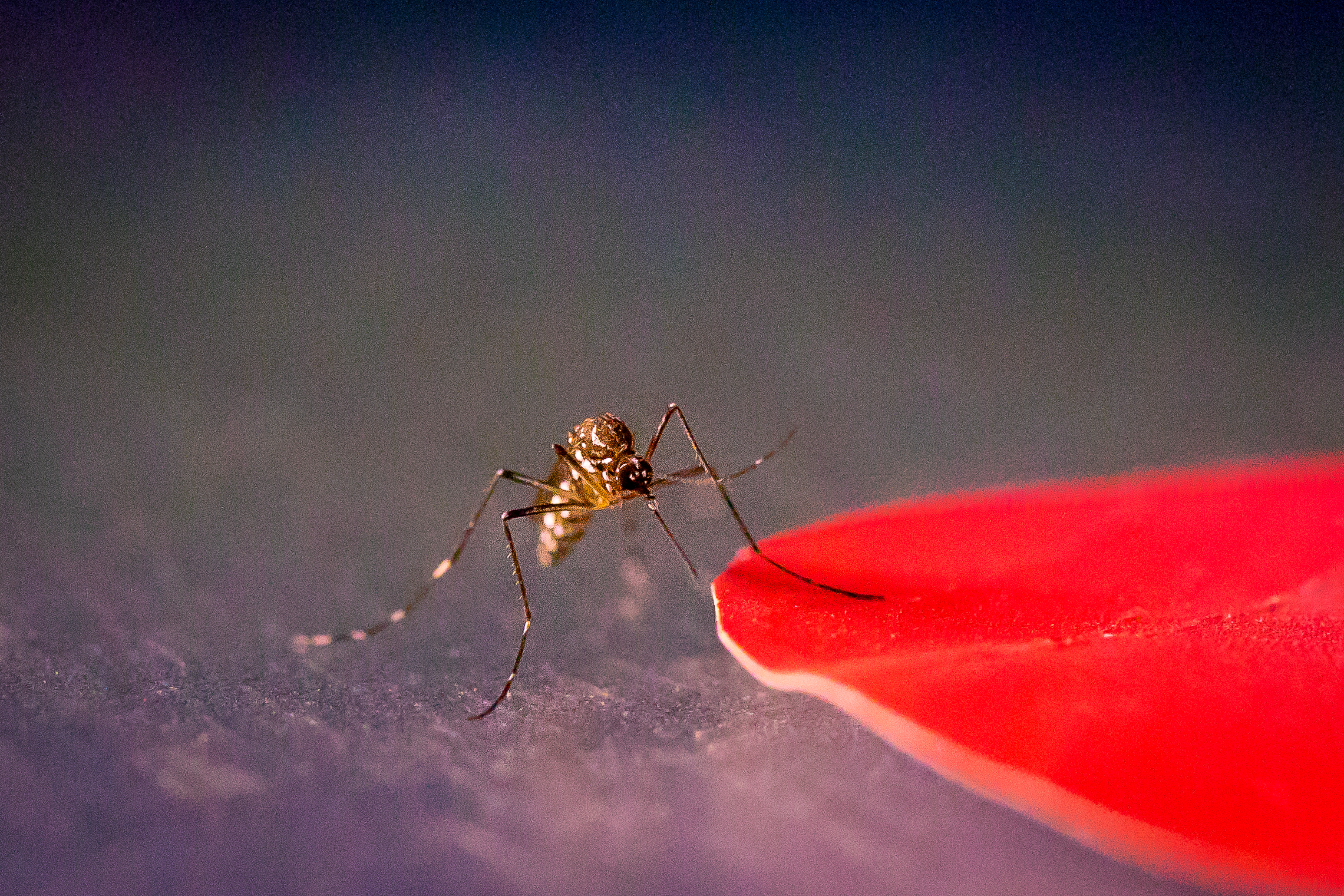
In a landmark study conducted at the University of Washington and published in Nature Communications, researchers used wind tunnels and digital tracking systems to observe how mosquitoes responded to visual stimuli. The technology revealed that after detecting a plume of CO2, the mosquito’s brain triggers a search for specific long-wavelength light. This corresponds to the colors red, orange, and black.
From a technical perspective, these colors are significant because human skin, regardless of pigmentation, emits a strong signal in the red-orange wavelength. By using spectral imaging, engineers have been able to map how a mosquito perceives a human target as a glowing beacon of long-wavelength light against a backdrop of cooler, short-wavelength colors like green and blue.
Why Modern Sensors Target the Red-Orange Spectrum
This discovery has profound implications for the design of optical sensors and traps. Traditional “bug zappers” utilize ultraviolet (UV) light, which is highly effective for moths and beetles but largely ignored by many mosquito species. Modern pest-tech companies are now pivoting toward the development of devices that utilize specialized LEDs calibrated to the 600nm to 700nm range. By mimicking the visual signature of human skin through precise spectral output, these tech-driven traps can lure mosquitoes with far greater accuracy than previous generations of hardware.
Engineering the Next Generation of Phototactic Traps
As the “Internet of Things” (IoT) expands into the realm of home maintenance and public health, the engineering of mosquito traps has shifted from passive mechanical devices to active, data-driven systems. By integrating knowledge of color attraction with advanced hardware, developers are creating “smart” traps that are significantly more effective at reducing local populations.
Moving Beyond the Blue Light Fallacy
For years, the consumer electronics market was flooded with blue-light insect killers. However, data analytics have shown that these devices often kill beneficial insects while failing to capture the mosquitoes that actually bite humans. The transition to red-wavelength and infrared technology marks a significant upgrade in hardware efficacy. Modern engineering focuses on “phototaxis”—the movement of an organism in response to light. By utilizing red and black contrast patterns, tech companies are creating “visual lures” that exploit the mosquito’s inherent biological coding.
Integrating IoT and Carbon Dioxide Emulators
The most advanced systems currently hitting the market do not rely on light alone. They utilize a multi-modal approach. Smart traps now feature integrated CO2 emulators and thermal heating elements that mimic human body temperature, all housed within a chassis designed with specific high-contrast color patterns. These devices are often connected to home automation systems, allowing users to monitor “capture metrics” via mobile apps. This data-driven approach allows for the optimization of trap placement based on real-time environmental factors, such as humidity and wind speed, which are tracked via onboard sensors.
Smart Fabrics and Nanotechnology: The Wearable Defense Tech
Beyond stationary traps, the technology sector is revolutionizing personal protection through the development of smart textiles. If certain colors attract mosquitoes, it follows that specific digital and physical modifications to clothing can render a human “invisible” to an insect’s visual sensors.
The Role of Reflective Coatings and Light-Diffusing Fibers
Textile engineers are currently experimenting with nanostructures that can alter the way light reflects off a fabric’s surface. By engineering fibers that diffuse the red and orange wavelengths that mosquitoes crave, or by incorporating pigments that reflect shorter wavelengths like blue and green (which mosquitoes typically ignore), companies are creating “visual camouflage.”
This is not merely about the dye used in the fabric; it is about the physics of the material. Some high-tech outdoor gear now uses microscopic glass beads or specialized polymer coatings to shift the spectral signature of the wearer. In the world of tech-wear, this is known as “spectral masking,” and it represents a significant leap forward from simply soaking clothes in chemical repellents like DEET.
Wearable Frequency Generators
In addition to visual masking, there is an emerging niche in the wearable market for devices that claim to disrupt mosquito sensors through ultrasonic frequencies or light-pulse technology. While the efficacy of sound-based wearables remains a subject of intense debate in the scientific community, the development of “light-pulsing” wearables is a growing area of interest. These gadgets use high-frequency flickering of specific light wavelengths to overwhelm or “blind” the mosquito’s visual processing unit, preventing them from locking onto a target.
Computer Vision and AI-Driven Vector Monitoring
On a macro scale, the technology used to track mosquito populations is becoming increasingly sophisticated, leveraging AI and computer vision to identify and mitigate risks before they become outbreaks.
Real-Time Identification via Spectral Imaging
Public health tech platforms are now deploying drones equipped with multispectral cameras to identify mosquito breeding grounds. These cameras can detect the specific “color signature” of stagnant water enriched with organic matter, which is often invisible to the naked eye. Furthermore, AI algorithms are being trained to identify different species of mosquitoes in mid-flight based on their wing-beat frequency and their visual profile.
By using computer vision, these systems can distinguish between a harmless forest mosquito and a high-risk Anopheles or Aedes mosquito. This allows for precision-targeted intervention, such as the deployment of automated lasers or localized bio-treatments, reducing the need for broad-spectrum chemical spraying that can harm the ecosystem.
The Role of Edge Computing in Global Health Tech
In regions where malaria and Zika are endemic, tech firms are deploying “edge-computing” devices—low-power sensors that process data locally rather than in the cloud. These sensors monitor the movement patterns of mosquito swarms. By analyzing the “visual flow” and the colors to which these swarms are gravitating, the software can predict potential hotspots for disease transmission. This provides a digital early-warning system that empowers local governments to take preemptive action.
The Future of Light-Based Mosquito Mitigation
The future of pest control lies in the convergence of biological insight and precision engineering. As we continue to refine our understanding of how mosquitoes perceive color, the tech industry will move toward even more radical solutions.
Laser Defense Systems and Precision Targeting
One of the most ambitious projects in this space is the “Photonic Fence.” Developed by tech visionaries and backed by significant R&D funding, this system uses infrared sensors to detect the flight of a mosquito, utilizes computer vision to identify its species and gender (as only females bite), and then neutralizes it with a precision laser. This is the ultimate application of visual-tech in pest management—a system that uses the very colors and light signatures emitted by the insect to locate and eliminate it in milliseconds.
Developing “Digital Camouflage” for the Human Body
Looking forward, we may see the integration of augmented reality (AR) and smart-home lighting that automatically shifts the color temperature of a room to “mask” occupants from insect vision. Imagine a smart lighting system that, upon detecting the entry of a mosquito through a door sensor, shifts all indoor lighting to a specific frequency that disrupts the mosquito’s ability to navigate, effectively creating a “digital shield.”
The study of what colors mosquitoes are attracted to has evolved far beyond basic biology. It is now a sophisticated field of tech development that encompasses everything from semiconductor engineering (LEDs) to machine learning and nanotechnology. By mastering the spectral preferences of these ancient predators, the tech industry is not just making outdoor gatherings more comfortable—it is building the tools necessary to combat some of the most pressing public health challenges of the 21st century. Through the lens of technology, the simple question of “what color” becomes a gateway to a future of precision-engineered safety and environmental harmony.
aViewFromTheCave is a participant in the Amazon Services LLC Associates Program, an affiliate advertising program designed to provide a means for sites to earn advertising fees by advertising and linking to Amazon.com. Amazon, the Amazon logo, AmazonSupply, and the AmazonSupply logo are trademarks of Amazon.com, Inc. or its affiliates. As an Amazon Associate we earn affiliate commissions from qualifying purchases.