
In the modern culinary landscape, the kitchen is no longer a purely analog environment. The shift from traditional flame-and-pot methods to data-driven precision has transformed how we approach even the most fundamental staples of the human diet. When asking what the best way is to cook corn on the cob, the answer today is found at the intersection of thermodynamics, sensor technology, and precision engineering.
For decades, the “best” way was subjective, often involving a pot of boiling water and a timer that was rarely accurate. However, as kitchen gadgets evolve into sophisticated IoT devices, we can now define “best” through measurable metrics: enzymatic breakdown, cellular integrity, and optimal sugar retention. To achieve the perfect ear of corn, one must move beyond the stovetop and embrace the suite of technological tools available to the modern digital chef.

Precision Temperature Control and the Science of Sweetness
The primary challenge in cooking corn is the management of its natural sugars. Corn’s sweetness is dictated by the conversion of sugar to starch, a process that begins the moment the ear is harvested. From a technical standpoint, the goal of cooking is to deactivate the enzymes responsible for this conversion while simultaneously softening the pericarp (the outer skin) without over-denaturing the proteins within the kernels.
Digital Induction and Thermal Stability
Traditional gas burners are notoriously inefficient, with significant heat loss to the surrounding environment and fluctuating temperatures that make precision difficult. The high-tech solution is the precision induction cooktop. Unlike traditional thermal conduction, induction uses electromagnetic fields to heat the vessel directly.
For the modern technician in the kitchen, high-end induction burners offer “Probe Control” modes. By utilizing an external digital temperature probe submerged in the cooking liquid, the burner’s internal logic (often a Proportional-Integral-Derivative or PID controller) adjusts the power output in real-time. This prevents the “boil-over” common in analog cooking and ensures the corn is held at exactly 185°F (85°C)—the sweet spot where the starches gelatinize without the sugars leaching into the water.
Smart Sensors and Real-Time Monitoring
Beyond the burner itself, the integration of smart thermometers has revolutionized the internal monitoring of produce. Devices such as the Meater or the Yummly Smart Thermometer, while typically used for proteins, are being increasingly adapted for high-moisture vegetables. By inserting a micro-sensor into the cob’s core, a chef can monitor the thermal gradient of the corn via a smartphone app. This data-driven approach removes the guesswork, providing a push notification the exact second the core temperature reaches the optimal threshold for consumption.
The Sous Vide Advantage: Leveraging Software for the Perfect Texture
If the goal is the absolute optimization of flavor and texture, many tech-focused culinary experts point to sous vide as the definitive method. Sous vide, or low-temperature long-time (LTLT) cooking, relies on a thermal immersion circulator controlled by sophisticated software to maintain a water bath within a fraction of a degree.
Circulator Technology and App Integration
Modern immersion circulators, such as those from Anova or Breville (Joule), are essentially high-powered heating elements paired with a water pump and a Wi-Fi-enabled microcontroller. The “best” way to cook corn via this method involves vacuum-sealing the ears with a small amount of fat (butter or coconut oil) and salt.
The software side of this technology is where the magic happens. Through companion apps, users can select the specific variety of corn—whether it is a high-sugar “super sweet” hybrid or a more traditional field variety. The app then calculates the necessary time-to-temperature curve. Because the corn is sealed in a non-permeable BPA-free bag, there is zero osmotic transfer between the corn and the water bath. Every milligram of flavor and sugar remains trapped within the kernels.
Algorithmic Cooking: Time vs. Temperature Curves
The precision of sous vide allows for a level of consistency that is mathematically impossible with boiling. By setting the circulator to 183°F (84°C), the chef initiates a specific chemical reaction: the breakdown of pectin. Pectin is the cellular “glue” that keeps the kernels tough. Using an algorithmic approach, the software ensures that the corn stays at this temperature for exactly 30 minutes. This duration is long enough to soften the pectin for a “snap-to-the-bite” texture, but short enough to prevent the kernels from becoming mushy. This level of repeatability is the hallmark of a tech-first kitchen.
Smart Ovens and the Role of Computer Vision
The next frontier in cooking corn on the cob lies in the rise of the “smart oven.” These devices, such as the June Oven or the Brava, represent a significant leap in kitchen hardware, incorporating cameras, AI-driven recognition, and multi-zone heating elements.
Automated Recognition and Targeted Heating
When you place an ear of corn into a smart oven, internal cameras powered by computer vision algorithms identify the item immediately. The software compares the image against a database of thousands of food items to determine its size, density, and moisture content.
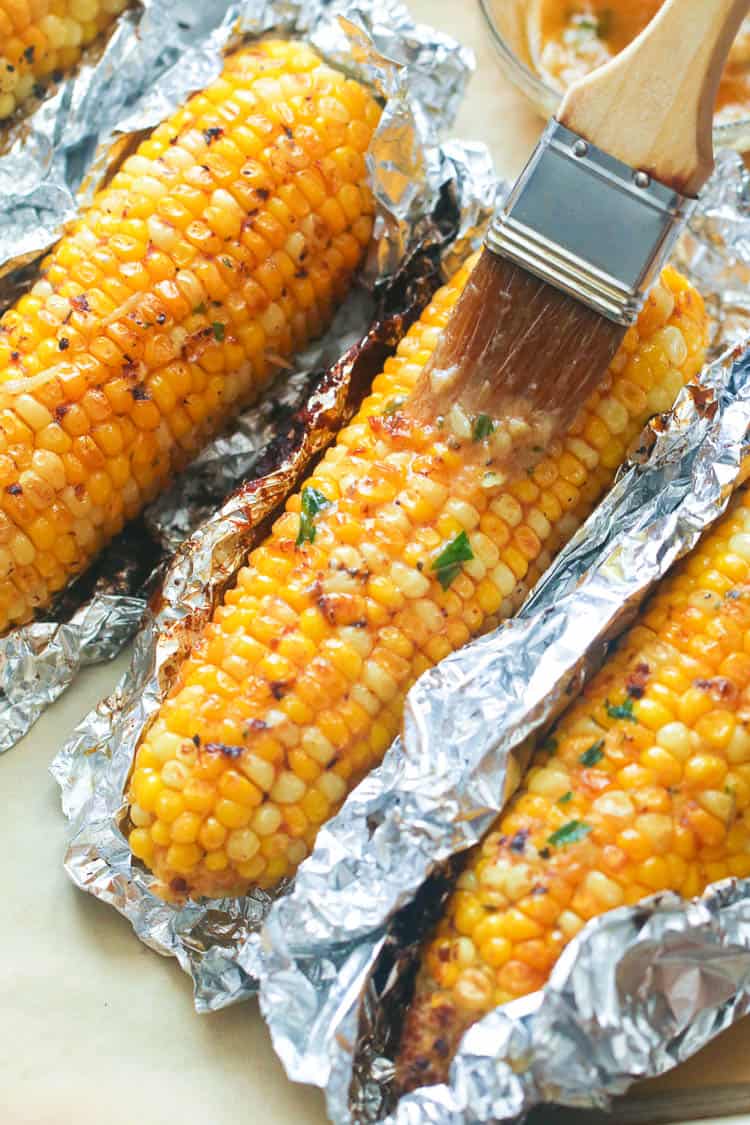
The “best” tech-forward roasting method involves using infrared lamps rather than traditional heating coils. In a Brava oven, for example, light is used to transfer heat. Because light can be targeted, the oven can sear the exterior of the corn to create a Maillard reaction—enhancing the savory, toasted notes—while leaving the interior succulent. This is achieved through “Light Cooking” technology, which can pulse different wavelengths of light to penetrate the cob at varying depths.
Multi-Zone Convection Systems
For those using high-end steam-convection ovens (often referred to as Combi-ovens in professional circles), the technology allows for the simultaneous control of humidity and dry heat. By injecting steam into the chamber during the first five minutes of the cycle, the oven prevents the corn from dehydrating. Then, the system automatically switches to high-velocity convection to crisp the edges. This automated transition between “modes” is a prime example of how software-controlled hardware produces superior results compared to manual intervention.
The Rise of AI-Guided Gastronomy
The hardware is only half of the story. The “best” way to cook corn is increasingly being dictated by generative AI and machine learning platforms that analyze flavor profiles and chemical compositions.
Recipe Optimization via Machine Learning
New platforms are emerging that allow users to input the specific ingredients they have on hand and receive a chemically optimized recipe. If you have a specific variety of corn, an AI can analyze the known terpene and sugar profile of that strain and suggest a cooking medium—perhaps a specific pH-balanced milk bath or a butter infused with aromatics that share similar molecular structures with the corn’s own volatile compounds.
This level of customization represents a shift from “following a recipe” to “executing a chemical formula.” By using AI to optimize the variables of salt concentration, fat content, and heat exposure, the home technician can achieve a result that was previously reserved for high-end laboratory kitchens.
Voice-Controlled Kitchen Ecosystems
The integration of voice assistants like Alexa or Google Home into kitchen gadgets has streamlined the workflow of the modern chef. “Agnostic” kitchen platforms allow different brands of appliances to talk to one another. For instance, your smart fridge can notify your smart oven that the corn you bought three days ago needs to be cooked at a slightly higher humidity setting to compensate for moisture loss. This interconnected ecosystem ensures that the “best way” to cook is always adjusted based on the real-time state of the ingredients.
Efficiency and Sustainability: The ROI of High-Tech Cooking
In the tech world, the “best” method must also be the most efficient. Traditional boiling is remarkably wasteful, requiring several liters of water and the energy to bring that water to a boil, only for most of that heat to be discarded down the drain.
Energy Consumption and Smart Grid Integration
High-tech cooking methods like air frying or induction are significantly more energy-efficient. An air fryer—essentially a high-density convection heater—uses a fraction of the energy of a conventional oven and cooks corn in roughly 12 minutes using rapid air technology. Many of these devices are now being designed with “smart grid” capabilities, allowing them to operate during off-peak energy hours or to optimize their power draw based on the household’s solar output.
Longevity and Software Updates for Hardware
One of the most significant changes in kitchen tech is the shift toward “Software as a Service” (SaaS) and firmware updates for physical goods. A smart oven or sous vide circulator purchased today will likely be better at cooking corn on the cob two years from now than it is today. As manufacturers collect anonymized data from millions of “corn-cooking cycles,” they can push firmware updates that refine the heating algorithms, adjust the fan speeds, or improve the computer vision accuracy.
This means the “best way” is a moving target—constantly improving as more data is ingested into the culinary cloud. For the tech-savvy consumer, the investment is not just in a piece of stainless steel and plastic, but in a platform that evolves.
In conclusion, the best way to cook corn on the cob in the current era is to embrace the precision, automation, and data-driven insights offered by modern food technology. Whether it is through the thermal stability of induction, the flavor-locking capabilities of sous vide, or the intelligent automation of a smart oven, technology has provided us with the tools to achieve culinary perfection with mathematical certainty. The kitchen has become a lab, the recipe has become an algorithm, and the result is quite simply the most delicious corn on the cob ever produced.
aViewFromTheCave is a participant in the Amazon Services LLC Associates Program, an affiliate advertising program designed to provide a means for sites to earn advertising fees by advertising and linking to Amazon.com. Amazon, the Amazon logo, AmazonSupply, and the AmazonSupply logo are trademarks of Amazon.com, Inc. or its affiliates. As an Amazon Associate we earn affiliate commissions from qualifying purchases.