
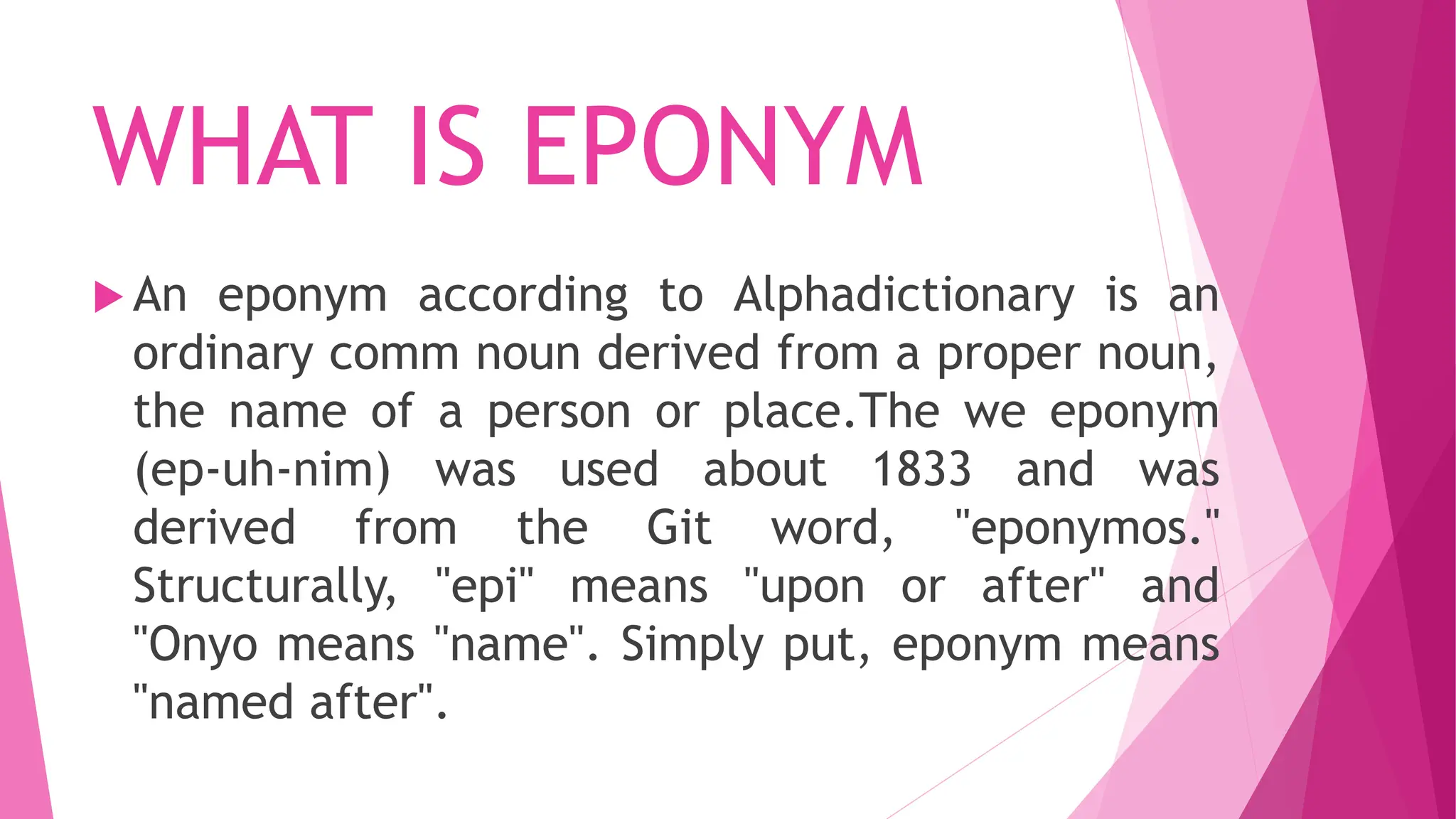
In the world of brand strategy and corporate identity, the terminology we use often dictates the strength of a market position. One of the most powerful, yet frequently misunderstood, tools in a marketer’s arsenal is the eponym. By definition, an eponym is a person, place, or thing after which something else is named. In a commercial context, it refers to a brand, product, or company that shares its name with its creator, a historical figure, or a fictional character.
From the high-fashion runways of Paris to the industrial hubs of Detroit, eponymous branding has defined the global economy for centuries. Names like Ford, Chanel, Disney, and Bloomberg are not merely labels; they are vessels for legacy, trust, and a specific set of values. Understanding what an eponym is—and more importantly, how it functions as a strategic asset—is essential for any entrepreneur or brand strategist looking to build a lasting identity.
The Strategic Power of the Eponymous Brand
When a founder chooses to name a company after themselves, they are doing more than just simplifying the naming process. They are engaging in a high-stakes act of personal branding that bridges the gap between the individual and the institution. In the early stages of a business, an eponymous name serves as a “seal of quality.” It signals to the consumer that a real person stands behind the product, willing to stake their personal reputation on its performance.
Humanizing the Corporate Identity
One of the primary challenges for modern corporations is the “facelessness” of the brand. Consumers in the 21st century are increasingly skeptical of large, anonymous entities. Eponymous brands have an inherent advantage here: they are human by design. When a brand is named “Estée Lauder” or “Ralph Lauren,” it immediately evokes a persona, a style, and a human narrative.
This humanization creates an emotional shortcut. Instead of learning a complex set of brand values from scratch, the consumer associates the brand with the perceived traits of the namesake. This is particularly effective in luxury and service-based industries where personal taste and individual expertise are the primary selling points.
Legacy and Longevity
Eponyms are uniquely suited for building long-term brand equity. Because a person’s name is static, it provides a stable foundation that can weather shifting market trends. While descriptive names (like “General Motors” or “International Business Machines”) may eventually feel dated or restrictive as a company pivots, a name like “Ferrari” remains relevant because it represents a philosophy rather than a specific utility. The eponymous brand transitions from being about the person to being about the “spirit” of the person, allowing the company to evolve over decades or even centuries.
The Risks and Challenges of Personal Names
While the rewards of eponymous branding are significant, the strategy carries unique risks that can complicate a brand’s growth or exit strategy. Before a founder puts their name on the door, they must consider the long-term implications of tying their personal identity to a commercial entity.
The “Key Person Risk” and Scalability
The most immediate risk is “Key Person Risk.” If the brand is entirely synonymous with the founder, what happens when that founder retires, moves on, or passes away? Investors often view eponymous brands with caution because the value of the company is heavily concentrated in one individual.
For example, when a designer brand loses its namesake founder, the brand often undergoes a period of identity crisis. The challenge for the brand strategy team then becomes: how do we maintain the “essence” of the founder without the founder being present? Successfully navigating this transition requires transforming the eponym from a living person into a set of design codes and brand guidelines.
The Challenge of Brand Dilution and Scandal
In the age of social media and 24-hour news cycles, the reputation of an eponymous founder is the brand’s greatest vulnerability. If a founder is involved in a personal scandal, the brand suffers immediate and direct collateral damage. Unlike a brand with an abstract name (like Nike or Amazon), an eponymous brand cannot easily distance itself from the actions of its namesake.
Furthermore, if a founder sells their company but keeps the brand name, they may find themselves in a legal battle over the right to use their own name in future ventures. This “loss of self” is a common pitfall in the fashion and beauty industries, where founders frequently sell their eponymous labels to conglomerates only to find they can no longer trade under their own identity.
Case Studies: From Founders to Global Icons

To truly understand the impact of eponyms, one must look at how they have been utilized across different industries. Each of these examples demonstrates a different facet of eponymous strategy, from industrial reliability to creative genius.
The Industrial Eponym: Ford and Boeing
In the industrial era, naming a company after the founder was the standard for establishing trust in new, unproven technologies. Henry Ford didn’t just sell cars; he sold his vision of American industry. The name “Ford” became synonymous with the assembly line and the democratization of travel. Similarly, William Boeing’s name became a shorthand for the safety and engineering prowess of the burgeoning aerospace industry. In these cases, the eponym functioned as a guarantee of engineering integrity.
The Luxury Eponym: Chanel and Versace
In the luxury sector, the eponym is the ultimate expression of creative authority. Coco Chanel’s name was not just a label; it was a revolution in women’s fashion. The brand strategy for Chanel has always been to keep the spirit of Coco alive, using her personal story—from her humble beginnings to her apartment at 31 Rue Cambon—to add layers of depth and mystique to the products. Here, the eponym acts as a curator of taste, elevating a physical product into a piece of cultural history.
The Modern Tech Eponym: Dell and Bloomberg
While abstract names like “Google” and “Apple” dominate the tech landscape, eponymous brands still hold significant weight in the B2B and financial sectors. Michael Dell used his name to disrupt the PC market, signaling a direct-to-consumer reliability. Michael Bloomberg turned his name into the gold standard for financial data and journalism. In these instances, the eponym signals expertise and a “buck stops here” accountability that is highly valued in high-stakes professional environments.
The “Proprietary Eponym”: When a Brand Becomes a Noun
One of the most fascinating phenomena in branding is when an eponym—or a brand name in general—becomes so successful that it replaces the generic term for the product. This is known as a “proprietary eponym” or “genericized trademark.” While this is the ultimate sign of market dominance, it is also a significant legal risk for brand owners.
The Double-Edged Sword of Market Dominance
Think of how often you hear someone say they are “Googling” something, or asking for a “Kleenex” instead of a facial tissue. Other examples include Band-Aid, Post-it, and Xerox. When a brand name becomes a verb or a common noun, it means the brand has achieved 100% mindshare. However, this success can lead to “genericide,” where the brand loses its trademark protection because it is no longer seen as a brand name, but as the name of the product category itself.
Protecting the Eponymous Identity
Brand strategists must work tirelessly to prevent their eponymous names from becoming generic. This is why you will see advertisements stating “Xerox brand photocopiers” or “Band-Aid brand adhesive bandages.” The goal is to remind the public that the name belongs to a specific company, not the entire industry. For an eponymous brand, losing the exclusive right to the name is the ultimate failure of brand protection.
Implementing an Eponymous Strategy in the Modern Market
Is an eponymous brand right for your business? In an era where “authenticity” is the most sought-after brand trait, the answer is often yes—but with caveats. Modern brand strategy suggests that while using a personal name can jumpstart a brand’s emotional connection with the audience, it must be supported by a robust corporate identity that can eventually stand on its own.
The Hybrid Approach
Many modern founders are opting for a hybrid approach. They might use their name for a personal brand or a high-end “prestige” line, while using a more scalable, abstract name for their mass-market offerings. This allows the founder to leverage their personal reputation without tethering the entire company’s future to their individual persona.

Decision Matrix for Eponymous Naming
When deciding whether to use an eponym, consider the following:
- Specialization: Is the product’s value derived from your personal expertise (e.g., law, design, consulting)?
- Scalability: Do you intend to sell the company in the near future? If so, will the name be a hurdle for a buyer?
- Distinctiveness: Is your name unique enough to be trademarked and remembered?
- Legacy: Are you building a “house” that you want to outlive you, or a business meant for a quick exit?
In conclusion, an eponym is far more than a naming convention; it is a strategic decision that shapes the DNA of a brand. It offers a shortcut to trust and a foundation for a powerful narrative, but it requires a careful balance between personal identity and corporate longevity. Whether you are looking at the historic legacies of the 20th century or the digital-first brands of today, the eponym remains one of the most potent symbols of human enterprise in the marketplace.
aViewFromTheCave is a participant in the Amazon Services LLC Associates Program, an affiliate advertising program designed to provide a means for sites to earn advertising fees by advertising and linking to Amazon.com. Amazon, the Amazon logo, AmazonSupply, and the AmazonSupply logo are trademarks of Amazon.com, Inc. or its affiliates. As an Amazon Associate we earn affiliate commissions from qualifying purchases.