
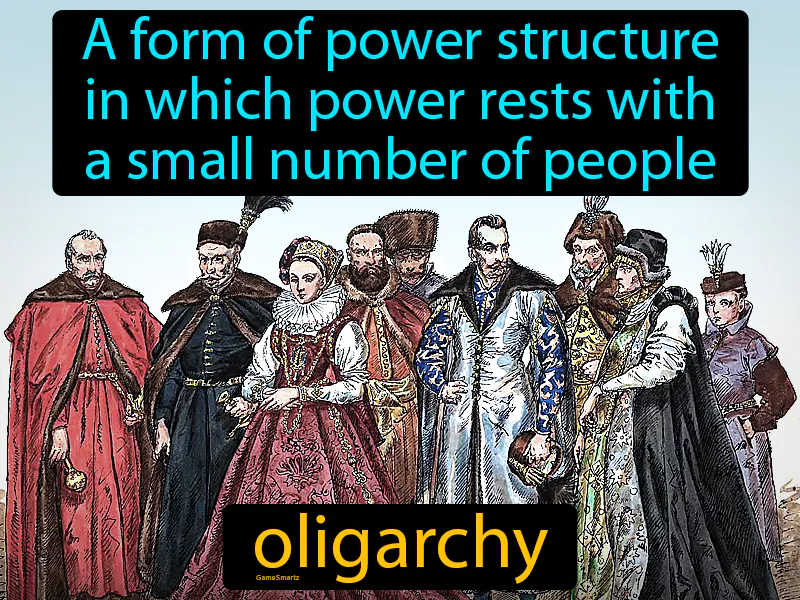
The term “oligarchy” has long been associated with the smoke-filled rooms of ancient political regimes or the post-Soviet transition of the 1990s. However, in the contemporary landscape of global finance, the concept has undergone a radical transformation. What was once a system of direct political rule by a privileged few has evolved into a sophisticated framework of market concentration, institutional dominance, and capital accumulation. For the modern investor and business professional, understanding “what was oligarchy” is no longer a history lesson; it is a prerequisite for navigating the complexities of personal finance, corporate strategy, and the global economy.

In the financial niche, oligarchy manifests as the control of vast swaths of the economy by a limited number of entities—be they mega-corporations, institutional asset managers, or ultra-high-net-worth individuals. This concentration of wealth and influence dictates market trends, sets the barriers to entry for new businesses, and shapes the investment vehicles available to the public. To thrive in this environment, one must understand how these power structures operate and how they influence the flow of capital across the globe.
The Institutional Oligarchy: How Asset Managers Control the Global Ledger
The most significant shift in the modern financial definition of oligarchy is the rise of institutional asset managers. Unlike the industrial barons of the 19th century who owned factories and railroads directly, today’s financial “oligarchs” are often the entities that manage the world’s retirement funds, endowments, and private wealth. This has created a paradoxical situation where a small number of firms wield immense power over the majority of the world’s publicly traded companies.
The Influence of the “Big Three”
At the heart of this institutional concentration are the “Big Three” asset managers: BlackRock, Vanguard, and State Street. Together, these entities manage trillions of dollars in assets, making them the largest shareholders in the vast majority of S&P 500 companies. This level of concentration represents a new form of financial oligarchy. While they do not “own” the money—it belongs to millions of individual investors—they hold the voting power.
This concentration affects corporate governance and, by extension, the financial performance of individual stocks. When a handful of institutions decide the board members and sustainability mandates for the world’s largest companies, they effectively steer the direction of the global economy. For the retail investor, this means that “market sentiment” is often just a reflection of the strategic shifts made by these few institutional giants.
Proxy Voting and the Consolidation of Corporate Direction
The mechanism of this modern oligarchy is the proxy vote. In the past, corporate power was fragmented among thousands of individual shareholders. Today, because most individuals invest through index funds and ETFs, their voting rights are delegated to the fund managers. This consolidation has led to a “permanent class” of corporate influencers.
From a business finance perspective, this concentration simplifies certain aspects of capital raising but complicates others. A company seeking to change its strategic direction must win the approval of these institutional gatekeepers. This creates a feedback loop where only certain types of business models—usually those that prioritize consistent dividends and buybacks—are rewarded with capital, potentially stifling the kind of radical innovation that requires long-term, risky investment.
Wealth Concentration and the Individual Investment Landscape
Understanding “what was oligarchy” also requires an analysis of wealth distribution and its impact on the “Money” niche. When wealth is concentrated at the top, the mechanics of investing and saving change for the average person. The traditional pathways to wealth creation are being reshaped by the sheer gravity of concentrated capital.
The Erosion of Competitive Markets
In a classic competitive market, low barriers to entry allow new businesses to challenge incumbents, driving innovation and providing diverse opportunities for investors. In an oligarchic financial structure, however, dominant players use their capital reserves to acquire potential competitors before they become a threat. This is frequently seen in the tech and pharmaceutical sectors, where “killer acquisitions” prevent market disruption.
For the personal investor, this means the “small cap” gems of the past are harder to find. Often, the most promising startups are absorbed into the balance sheets of mega-cap companies long before they reach a public exchange. Consequently, individual investors are often forced to buy into the top-heavy indices, further fueling the cycle of concentration and limiting their exposure to high-growth, independent challengers.
Navigating the Squeeze on Retail Investors
As capital becomes more concentrated, the cost of entry for various asset classes—particularly real estate and private equity—has risen significantly. This “wealth gap” is a hallmark of oligarchic economic structures. When institutional investors move into residential real estate or exclusive private credit markets, they drive up prices, making it difficult for the individual to build a diversified portfolio.

To counter this, modern financial tools have emerged, such as fractional ownership and retail-accessible private equity funds. However, these tools often come with layers of fees that further favor the institutional providers. Understanding this dynamic allows an investor to look for “anti-oligarchic” opportunities—investments in sectors that are too small or specialized for the giants to bother with, or emerging markets where the institutional footprint is still light.
Business Finance Strategies in a Concentrated Market
For entrepreneurs and business leaders, the reality of market oligarchy dictates how they approach finance, scaling, and exit strategies. The dream of “going public” has been replaced for many by the goal of “being acquired,” a direct result of the financial environment where a few companies hold most of the liquid capital.
Capital Moats and Entry Barriers
In an oligarchic financial system, the “moat” around a business is often its access to cheap capital. Large, established firms can borrow at near-prime rates, while smaller competitors face much higher costs of debt. This disparity creates an uneven playing field where the “financial oligarchy” of established players can simply outspend challengers, regardless of the quality of the product.
Strategic business finance now involves finding ways to bypass these capital moats. This might include leveraging crowdfunding, utilizing specialized FinTech lenders, or focusing on “bootstrapped” growth that avoids the dilutive and often controlling influence of venture capital firms that are themselves part of the larger institutional web.
Scalability vs. Consolidation
The drive for consolidation is a defining feature of modern business finance. When a market becomes an oligarchy, the path to profit often lies in efficiency and scale rather than innovation. This is why we see massive mergers in the banking, airline, and media industries. For a business owner, the strategic question is whether to play the game of consolidation or to carve out a niche that is “unscalable” for the giants.
Small-to-medium enterprises (SMEs) are increasingly focusing on “hyper-localization” and “premium branding” as a defense against the scale of oligarchic competitors. By focusing on the one thing a billion-dollar entity cannot do—provide a personalized, high-touch experience—businesses can maintain healthy margins and financial independence in a crowded market.
The Future of Money: From Centralization to Decentralization
The final chapter in the story of “what was oligarchy” is the current move toward decentralization. Just as the historical oligarchies were eventually challenged by broader democratic movements, the current financial concentration is being challenged by new technologies and philosophies regarding money and value.
The Rise of DeFi and Peer-to-Peer Networks
Decentralized Finance (DeFi) represents the most direct challenge to the modern financial oligarchy. By using blockchain technology to remove the intermediaries—the banks and asset managers who act as the “oligarchs” of the current system—DeFi aims to democratize access to financial services like lending, borrowing, and trading.
For the forward-thinking investor, DeFi offers a glimpse into a world where capital is not filtered through a few massive institutions. While the risks are currently high due to volatility and regulatory uncertainty, the underlying movement is a response to the perceived stagnation and exclusivity of the traditional oligarchic financial system. It represents an attempt to return the power of the “ledger” to the individual.
Democratizing Access to Wealth Creation
Beyond technology, there is a growing movement toward “democratized” investing. This includes the rise of “side hustles” that leverage global platforms to generate independent income, bypassing traditional corporate employment. While these platforms (like Amazon, Uber, or Etsy) have their own oligarchic tendencies, they also provide the tools for individuals to build micro-businesses that would have been impossible twenty years ago.
The shift is moving from a system where wealth was something “granted” or “managed” by an elite few, to one where the tools of wealth creation are increasingly available to anyone with an internet connection. The challenge for the modern individual is to recognize the remnants of the old oligarchic structures while positioning themselves to take advantage of the more open, albeit more volatile, financial future.
In conclusion, “what was oligarchy” has transformed from a political system into a pervasive financial reality. It is characterized by the concentration of market power in the hands of institutional giants, the rising barriers to traditional wealth building, and the consolidation of corporate influence. However, by understanding these structures, investors and businesses can develop sophisticated strategies to navigate the landscape, whether by operating within the gaps left by the giants or by embracing the decentralized tools that promise to reshape the future of money entirely.
aViewFromTheCave is a participant in the Amazon Services LLC Associates Program, an affiliate advertising program designed to provide a means for sites to earn advertising fees by advertising and linking to Amazon.com. Amazon, the Amazon logo, AmazonSupply, and the AmazonSupply logo are trademarks of Amazon.com, Inc. or its affiliates. As an Amazon Associate we earn affiliate commissions from qualifying purchases.