
The trajectory of a global brand often begins with a product that fails to find its market fit. In the world of music and entertainment, few brands are as recognizable or as commercially potent as Eminem. However, before the multi-platinum awards, the global tours, and the establishment of Shady Records as a corporate powerhouse, there was a foundational effort that serves as a vital case study for brand strategists: his first album, Infinite. Released in 1996, Infinite was not the explosive debut the world remembers; rather, it was a soft launch that lacked the unique selling proposition (USP) necessary to disrupt a saturated market. Understanding the story of Infinite is essential for any professional looking to understand how a personal brand can pivot from a generic identity to a disruptive market leader.
The Genesis of a Global Icon: Analyzing the “Infinite” Prototype
To understand the brand we now know as Eminem, we must first look at the raw data of his 1996 debut. Infinite was recorded at the Bassment, a studio in Ferndale, Michigan, and released under the independent label Web Entertainment. At this stage, the brand was in its “Minimum Viable Product” (MVP) phase. The artist, then known primarily as Marshall Mathers, was attempting to break into a competitive hip-hop industry dominated by the coastal sounds of New York and Los Angeles.
The Sound of Market Conformity
From a brand strategy perspective, the primary issue with Infinite was its lack of differentiation. In 1996, the aesthetic of lyricism was heavily influenced by artists like Nas, AZ, and the Wu-Tang Clan. Eminem’s delivery on his first album was dense, polysyllabic, and technically proficient, but it was also derivative. He was adopting the industry standard rather than challenging it. The album featured smooth, jazz-influenced beats and lyrics that focused on the struggles of poverty and the desire for success—themes that were common in the genre at the time.
Identifying the Brand Audience
The target demographic for Infinite was narrow: local Detroit hip-hop purists. Because the marketing budget was virtually non-existent, the “product” relied entirely on word-of-mouth and local radio play. However, the feedback from the market was harsh. Local DJs and listeners criticized the artist for “sounding like Nas,” a critique that highlighted a failure in brand positioning. When a new brand enters a space and is immediately compared to an established incumbent, it risks being dismissed as a “me-too” product. This was the initial fate of the Eminem brand.
Market Saturation and the Lack of Differentiation: Why the Initial Brand Failed
The failure of Infinite—which reportedly sold only around 1,000 copies upon its initial release—provides a masterclass in the importance of market research and brand identity. In a saturated market, technical excellence is rarely enough to ensure success. A brand must possess a “Reason to Believe” (RTB) that separates it from the competition.
The Problem of the “Generic” Identity
During the Infinite era, the Marshall Mathers brand was too polite. It lacked the “edge” or the “disruptive personality” that would later define his global success. In corporate branding terms, he had developed a high-quality product that lacked a compelling brand story. The lyrics were aspirational and focused on providing for his young daughter, a narrative that, while relatable, did not have the shock value or the unique emotional hook required to capture national attention.
The Value of Negative Market Feedback
One of the most critical stages in brand development is the response to failure. Rather than abandoning the venture after the poor performance of Infinite, Mathers and his creative team treated the album’s failure as a form of rapid prototyping. They analyzed the feedback—specifically the accusations of being a “Nas clone”—and realized that to succeed, the brand needed a radical pivot. This demonstrates a core principle of personal branding: if the current iteration of your identity is being ignored or rejected by the market, you must either find a new market or reinvent the identity.
The Slim Shady Pivot: Strategic Rebranding Through Personal Archetypes
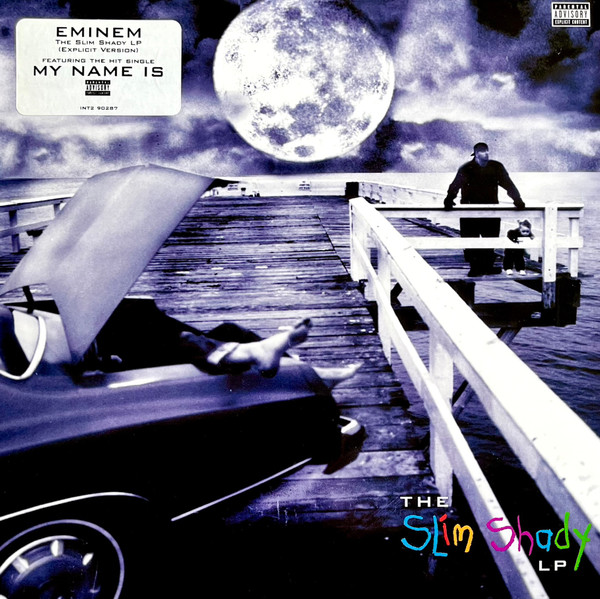
The transition from the Infinite era to the The Slim Shady EP and subsequent LP represents one of the most successful rebrandings in entertainment history. This was not merely a change in musical style; it was the creation of a “Brand Architecture” that allowed the artist to speak to multiple demographics simultaneously.

The Introduction of a Brand Persona
To solve the problem of differentiation, Mathers introduced the “Slim Shady” persona. In branding, a persona serves as a vehicle for specific values or attributes. Slim Shady was the antithesis of the Infinite era; he was provocative, nihilistic, dark, and humorous. This move allowed the brand to move away from the “struggling lyricist” trope and into the “unfiltered disruptor” category. By adopting this archetype, the brand immediately carved out a niche that was previously unoccupied.
Psychological Positioning and Emotional Connection
While Infinite appealed to the intellect through complex rhyme schemes, the rebranded “Slim Shady” persona appealed to the emotions—specifically frustration, anger, and the desire for rebellion. From a marketing standpoint, this expanded the brand’s reach from a small group of hip-hop aficionados to a massive audience of disillusioned youth across the globe. The brand shifted from being a “product” to being a “movement.”
Visual Identity and Messaging Consistency
The rebranding also included a visual shift. The bleached blonde hair and the adoption of a “white trash” aesthetic served as visual shorthand for the brand’s new identity. This consistency across audio, visual, and lyrical content ensured that the market understood exactly what the Eminem brand represented: a challenge to the status quo. This is a vital lesson for corporate identity—alignment across all touchpoints is essential for brand recognition.
Leveraging Controversy as a Brand Asset: From Detroit Local to Global Disruptor
Once the brand had pivoted with the Slim Shady persona, it faced a new challenge: how to scale. The answer lay in the strategic use of controversy as a marketing tool. While many brands avoid controversy to protect their corporate identity, the Eminem brand leaned into it, using it to generate millions of dollars in earned media.
Controversy as Earned Media
Between 1999 and 2002, the Eminem brand was constant fodder for news cycles. Organizations, politicians, and parents’ groups frequently attacked the brand’s messaging. In modern marketing terms, this was high-level viral growth. Every attempt to “cancel” or censor the brand only served to increase its brand equity among its target demographic. This taught a valuable lesson in “Antifragile Branding”: a brand that grows stronger when attacked.
Vertical Integration and Brand Expansion
Following the success of the rebrand, the Eminem brand began a process of vertical integration. The establishment of Shady Records was a move toward corporate autonomy. Instead of just being a “product” under a larger label (Aftermath/Interscope), Eminem became a “platform” for other brands, such as D12 and 50 Cent. This transition from “Artist” to “Entrepreneur” is the pinnacle of personal brand evolution.
The Infinite Legacy: Long-Term Brand Equity and Corporate Sustainability
Today, Infinite is viewed not as a failure, but as a “collector’s item” and a foundational artifact. Its value has shifted from a failed commercial product to a piece of brand mythology. This transition illustrates the long-tail value of early-stage experimentation.
Managing a Mature Brand
As the Eminem brand has aged, it has faced the challenge of “Brand Fatigue.” To combat this, the strategy has shifted toward legacy management and technical authority. Recent albums have moved away from the Slim Shady shock tactics and toward a more mature, executive-level reflection on his place in the industry. This is a classic “Harvesting Strategy” for a mature brand, focusing on maintaining the core loyalists while cementing a place in the historical record.

Lessons for Modern Brand Builders
The story of Eminem’s first album offers several key takeaways for today’s entrepreneurs and brand strategists:
- Iterate and Pivot: If your initial product (like Infinite) fails to differentiate itself, don’t be afraid to perform a radical brand pivot.
- Define Your USP: Technical skill is common; a unique perspective is rare. Find the “Slim Shady” in your brand—the element that no one else can replicate.
- Embrace the Feedback Loop: The harshest criticisms of your early work often contain the blueprints for your eventual success.
- Control the Narrative: By creating multiple personas (Marshall Mathers, Eminem, Slim Shady), the artist created a complex brand architecture that protected his personal identity while allowing his public persona to take risks.
In conclusion, Infinite was more than just a musical debut; it was the research and development phase of a multi-billion dollar brand. It serves as a reminder that the most successful identities are rarely born fully formed. They are forged through failure, refined through market feedback, and ultimately defined by the courage to be different in a world that rewards conformity. For any professional looking to build a lasting legacy, the evolution from the generic sounds of Infinite to the disruptive power of the Slim Shady era remains a definitive blueprint for brand success.
aViewFromTheCave is a participant in the Amazon Services LLC Associates Program, an affiliate advertising program designed to provide a means for sites to earn advertising fees by advertising and linking to Amazon.com. Amazon, the Amazon logo, AmazonSupply, and the AmazonSupply logo are trademarks of Amazon.com, Inc. or its affiliates. As an Amazon Associate we earn affiliate commissions from qualifying purchases.