
While a diner sees a delicate slice of Otoro resting atop seasoned vinegared rice, a business analyst sees a complex tapestry of global logistics, high-stakes auctions, and precision human capital. To understand what sushi is truly “made of” from a financial and business perspective, one must look beyond the ingredients on the plate and examine the economic machinery that sustains a global industry valued at over $100 billion. The “ingredients” of a successful sushi enterprise are not merely biological; they are financial, operational, and strategic.
The Raw Material Economics: Sourcing the “Blue Gold”
At the heart of the sushi business model lies the procurement of raw materials, a process that represents one of the most volatile and high-pressure supply chains in the global food industry. In premium sushi establishments, the Cost of Goods Sold (COGS) can fluctuate wildly based on seasonal availability, weather patterns, and international auction prices.
The Toyosu Factor and Global Supply Chains
For the elite tier of the industry, the “ingredients” of sushi start at the Toyosu Market in Tokyo. Here, the financial stakes are highest. A single Bluefin tuna can fetch hundreds of thousands, sometimes millions, of dollars. This is not just food procurement; it is commodity trading. The business must factor in the “yield” of these massive investments. A tuna isn’t just one price; it is a breakdown of Akami (lean), Chutoro (medium-fatty), and Otoro (fatty). The profitability of a high-end sushi bar depends on the chef’s ability to maximize the yield of these cuts, ensuring that every gram of the “blue gold” is converted into revenue.
Cost of Goods Sold (COGS) in Premium vs. Casual Models
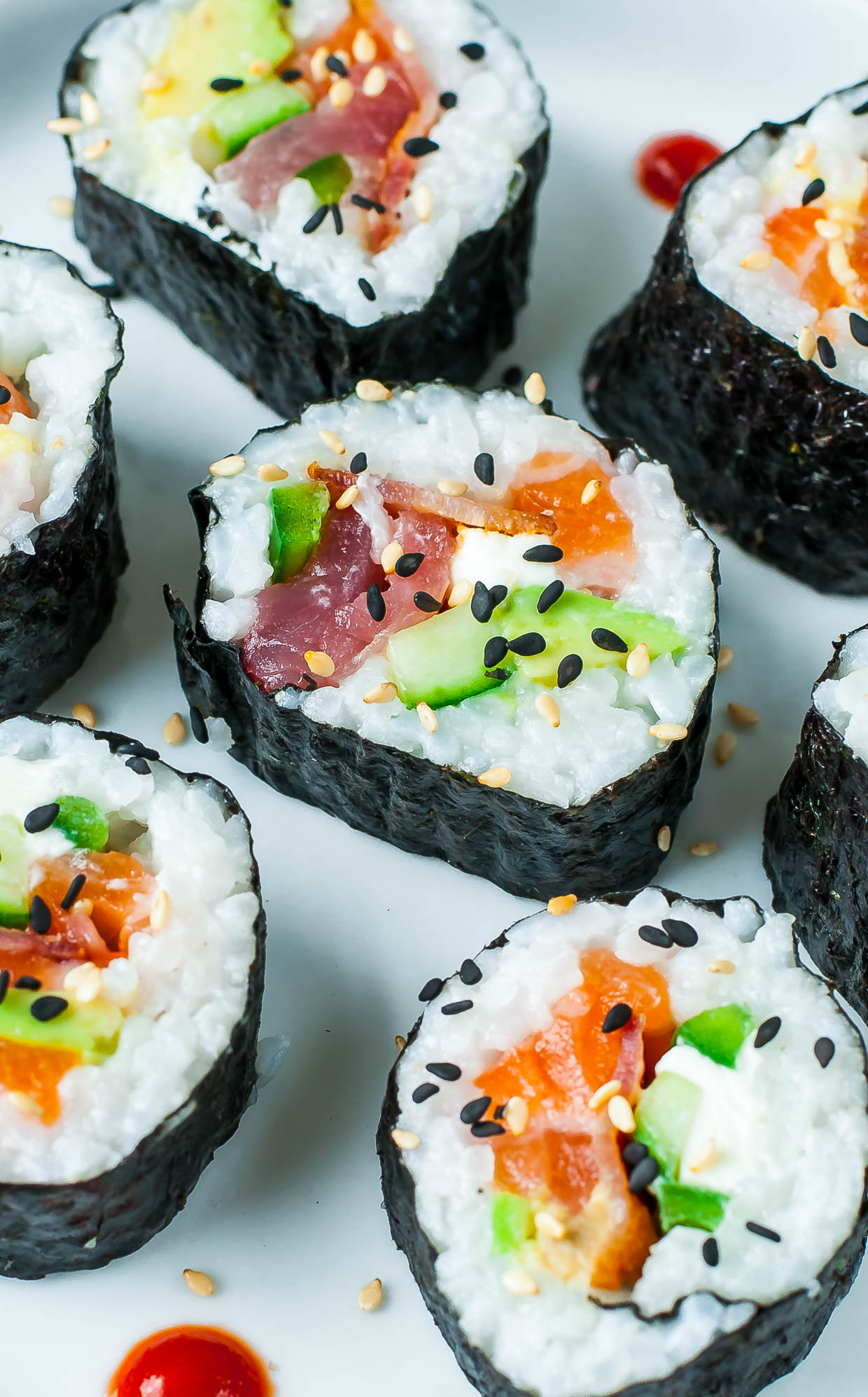
In traditional dining, a COGS of 25% to 30% is considered healthy. However, premium sushi operations often push their food costs to 40% or even 50% to maintain the quality required for Michelin-starred status. They offset these thin margins through high-ticket “Omakase” (chef’s choice) menus that remove consumer choice and allow for zero-waste inventory management. Conversely, casual sushi chains rely on volume and “filler” ingredients—such as avocado, cucumber, and spicy mayo—to dilute the cost of expensive proteins, bringing their effective COGS down to a more sustainable 20-25%.
Labor and Artistry: The High Price of Human Capital
If the fish is the material, the chef’s skill is the value-added service that transforms a commodity into a luxury good. In the sushi world, labor is not just a line item; it is an intangible asset that carries significant weight in the brand’s valuation.
The Itamae Training Pipeline: An Investment in Skill
The traditional path to becoming an Itamae (sushi chef) is a decade-long apprenticeship. From a business finance perspective, this represents a massive investment in human capital. For the first several years, an apprentice provides low-cost labor while learning the fundamentals of rice preparation and fish cleaning. However, as they progress, their market value skyrockets. Top-tier sushi chefs are often recruited with signing bonuses and profit-sharing agreements, mirroring the compensation structures found in private equity or law firms rather than traditional kitchens.
Balancing Labor Costs with Traditional Craft
The challenge for modern sushi businesses is balancing the rising cost of skilled labor with the need for operational efficiency. While high-end establishments can justify high labor costs through premium pricing, mid-market restaurants are increasingly looking toward “semi-skilled” models. This involves centralized prep kitchens where master fishmongers process the catch, leaving the final assembly to less expensive staff at individual locations. This “hub-and-spoke” model allows the brand to scale without losing the essential “hand-made” perception that drives consumer willingness to pay.
Scaling the “Okaidoku”: The Profitability of Conveyor Belt Sushi
On the opposite end of the spectrum from the $500-per-head Omakase is Kaiten-zushi, or conveyor belt sushi. This sector reveals what sushi is made of in the context of high-frequency trading and industrial engineering.
Automation and Efficiency in Kaiten-zushi
In the Kaiten-zushi model, the “ingredients” include RFID chips and AI-driven demand forecasting. Companies like Kura Sushi and Sushiro use sensors to track how long a plate has been on the belt. If a plate exceeds its freshness window, it is automatically discarded, but the data is captured to refine future production schedules. This reduces waste—the primary enemy of sushi profitability—to nearly zero. By automating the “Shari” (rice ball) production with robotic nigiri makers, these businesses drastically reduce their labor overhead, allowing them to offer plates at price points that would be bankrupting for traditional restaurants.
High Turnover vs. High Margin Models
The financial engine of conveyor belt sushi is “turnover rate.” While a luxury sushi bar might seat 10 people for two hours (one turn), a Kaiten-zushi restaurant aims for multiple seatings per hour. The profit per plate may only be pennies, but the sheer volume of transactions creates a massive, predictable cash flow. This model is highly attractive to institutional investors because it is repeatable, scalable, and less dependent on the individual talent of a single chef.
The Logistics and Infrastructure of Freshness
The sushi industry is essentially a race against biological decay. Therefore, what sushi is made of, in a structural sense, is a world-class cold chain infrastructure.
Cold Chain Management as a Capital Expenditure
To serve raw fish in landlocked cities like Las Vegas or Chicago, a business must invest in (or outsource to) a sophisticated logistics network. “Sushi-grade” is not a legal term, but a commercial standard involving “super-freezers” that can reach -76°F (-60°C). This temperature stops all cellular activity and preserves the texture of the fish. For a sushi brand, the reliability of its logistics partners is a critical risk factor. A single break in the cold chain can result in tens of thousands of dollars in lost inventory and catastrophic brand damage.
Waste Mitigation and Inventory Optimization
Successful sushi businesses treat their inventory like a ticking clock. Advanced POS (Point of Sale) systems are utilized to track the velocity of specific fish varieties. If the Bluefin isn’t moving, the “ingredient” is repurposed—perhaps into a “spicy tuna” roll or a fermented preparation. This ability to cycle inventory through different price points and menu items is what separates profitable sushi businesses from those that succumb to high spoilage rates.
Future-Proofing the Sushi Business: Sustainability and Innovation
As we look at the long-term viability of the sushi industry, the “ingredients” are changing. Environmental, Social, and Governance (ESG) factors are becoming central to the business’s financial health.
The Rise of Plant-Based and Lab-Grown Alternatives
With overfishing threatening traditional tuna and eel stocks, the “Money” in sushi is moving toward alternative proteins. Venture capital is pouring into companies creating plant-based “tuna” from tomatoes or “salmon” from fungi. From a business perspective, these alternatives offer something traditional fish cannot: price stability. Without the volatility of ocean catches and auction fluctuations, restaurant chains can lock in long-term contracts and stabilize their margins.
Investing in the Future of Seafood Scarcity
Institutional investors are increasingly viewing the sushi industry through the lens of resource scarcity. Companies that own their own aquaculture farms (vertical integration) are seen as more resilient than those relying on the open market. By controlling the “ingredients” from the hatchery to the plate, these enterprises hedge against the rising costs of wild-caught seafood.
In conclusion, what sushi is made of is far more than rice and fish. It is an intricate balance of high-stakes commodity sourcing, specialized human capital, and sophisticated technological infrastructure. Whether it is a solo chef in a basement in Ginza or a multi-national conveyor belt chain, the “recipe” for sushi success is fundamentally grounded in the mastery of these financial and operational variables. To invest in or operate within this space requires a deep understanding that in the world of sushi, the freshest product is only as good as the economic model that delivers it.
aViewFromTheCave is a participant in the Amazon Services LLC Associates Program, an affiliate advertising program designed to provide a means for sites to earn advertising fees by advertising and linking to Amazon.com. Amazon, the Amazon logo, AmazonSupply, and the AmazonSupply logo are trademarks of Amazon.com, Inc. or its affiliates. As an Amazon Associate we earn affiliate commissions from qualifying purchases.