
In the landscape of modern computation, the way we represent numerical data is often taken for granted. We input digits into a spreadsheet or a line of code, and we expect the output to be exact. However, underneath the user interface lies a complex struggle between hardware limitations and mathematical purity. For developers, engineers, and data scientists, the question “what rational number is most appropriate for this task?” is not merely a mathematical inquiry; it is a critical technical decision that impacts system performance, financial accuracy, and the safety of critical infrastructure.
As we push the boundaries of artificial intelligence, blockchain, and high-frequency trading, the standard methods of numerical representation are being scrutinized. The reliance on floating-point arithmetic—the industry standard for decades—is revealing its cracks. To understand why the shift toward explicit rational number representation is gaining momentum, we must first explore the inherent flaws in how computers traditionally “think” about numbers.
The Computational Limits of Floating-Point Arithmetic
The vast majority of software today utilizes the IEEE 754 standard for floating-point arithmetic. This system is designed for speed and range, allowing a computer to represent very small and very large numbers using a fixed amount of memory (typically 32 or 64 bits). However, this efficiency comes at a cost: precision.
The Binary Approximation Dilemma
The core of the problem lies in the base-2 system. Humans operate in base-10 (decimal), where a rational number like 0.1 is simple and terminal. However, in base-2 (binary), 0.1 becomes an infinite repeating fraction, much like how 1/3 becomes 0.333… in decimal. Because a computer has finite memory, it must truncate this infinite sequence.
This truncation introduces a “rounding error.” While a single error of 0.0000000000000001 might seem negligible, these errors accumulate during iterative loops or complex calculations. In software development, this is known as “floating-point drift.” When building a simple calculator app, this might result in an answer of 0.30000000000000004 when a user adds 0.1 and 0.2. In a tech stack managing billions of dollars in micro-transactions, these fractions of a cent can lead to massive systemic imbalances.
IEEE 754 and the Cost of Speed
The reason floating-point numbers remain the default is their hardware optimization. Modern CPUs and GPUs have dedicated Floating Point Units (FPUs) designed to perform these approximations at blistering speeds. For graphics rendering or real-time gaming, these approximations are perfect. The human eye cannot detect if a pixel is 0.00001 millimeters off its “true” mathematical position.
However, as we move into the realm of “Precision Tech”—software where the rational number must be exact—IEEE 754 becomes a liability. This has led to the rise of specialized libraries and data types that prioritize mathematical integrity over raw hardware speed.
Implementing Rational Number Libraries for Absolute Accuracy
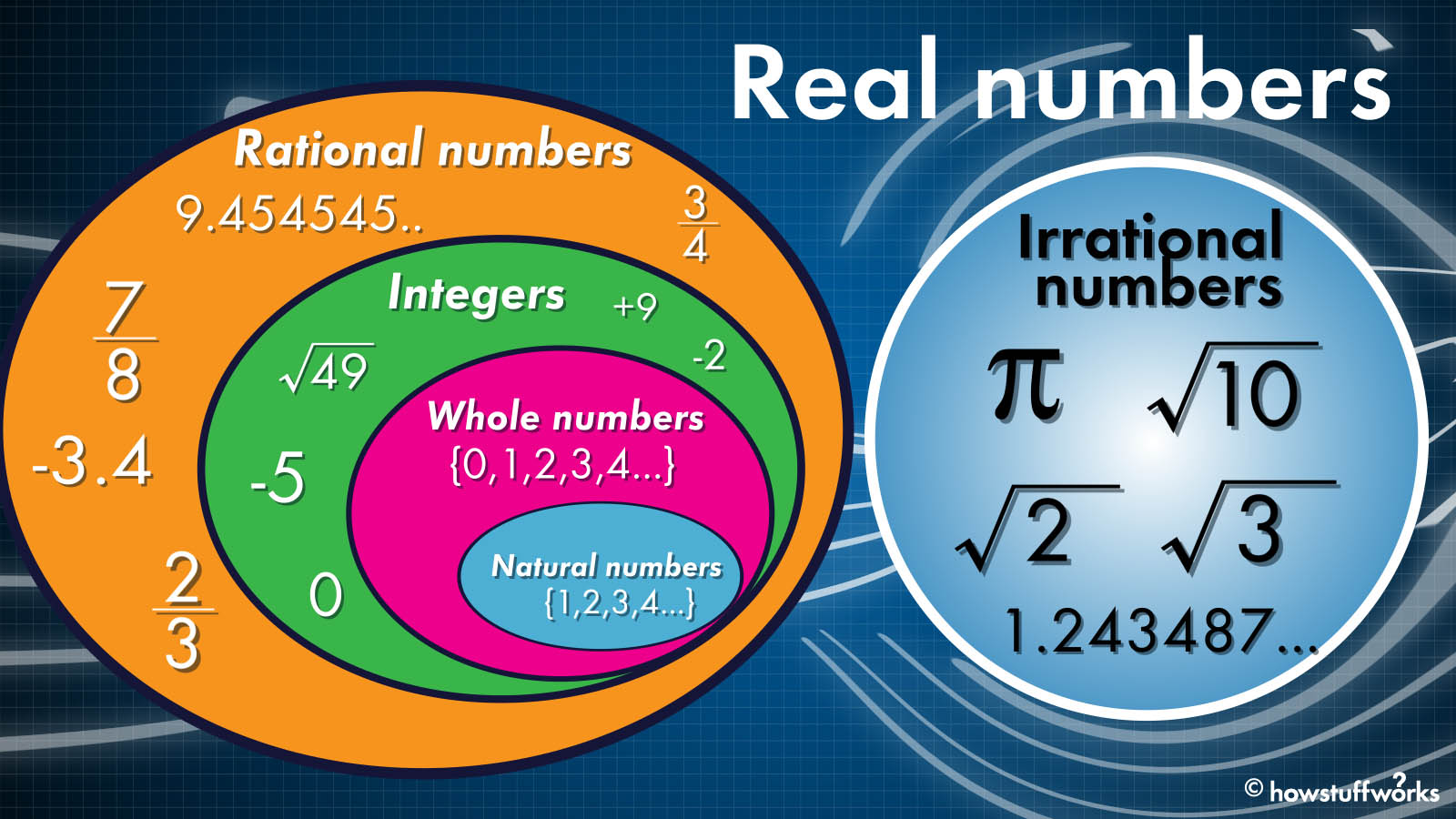
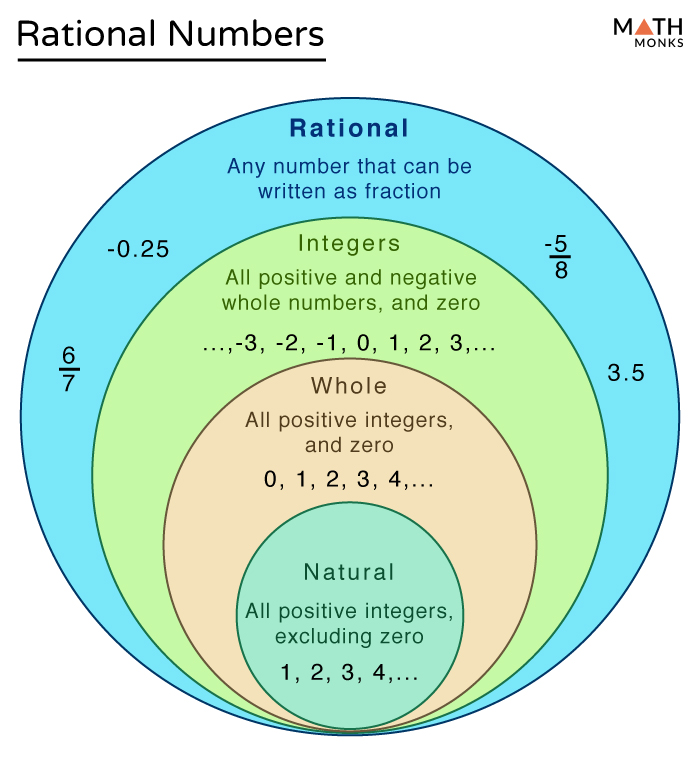
A rational number is defined as the quotient of two integers (p/q). In software engineering, representing numbers as fractions rather than decimals allows for infinite precision without the pitfalls of binary approximation. By storing the numerator and the denominator as separate integers, a system can perform addition, subtraction, and multiplication with 100% accuracy.
Data Structures for Exact Fractions
Implementing a rational number system requires a specific architecture. Most high-level programming languages now offer “Rational” or “Fraction” classes. These structures do not store the result of the division; they store the relationship. For example, instead of storing 1/3 as 0.3333, the system stores the integer 1 and the integer 3.
When two rational numbers are added (a/b + c/d), the system uses the formula (ad + bc) / bd. This ensures that the result remains a rational number, with no rounding occurring until the final output is requested by the user. This approach is fundamental in fields such as CAD (Computer-Aided Design) software, where a rounding error in a structural calculation could lead to architectural failure.
Use Cases in Cryptography and Blockchain
In the world of decentralized finance (DeFi) and blockchain technology, precision is non-negotiable. Smart contracts often deal with “tokens” that have 18 decimal places. Using standard floating-point numbers in these environments is impossible because different hardware might round the same number differently, leading to a “fork” in the consensus.
Instead, blockchain developers utilize “Fixed Point” or “Rational” arithmetic. By treating every number as a rational fraction or a large integer scaled by a factor of 10^18, the network ensures that every node arrives at the exact same result, down to the last atom of value. This is a prime example of how “what rational number” we choose to implement defines the security and reliability of a digital economy.
Languages and Frameworks Leading the Charge
Not all programming environments handle numerical precision equally. As the tech industry evolves, certain languages have positioned themselves as the go-to tools for precision-heavy applications by offering native support for rational numbers.
Python’s Fraction Module
Python is often the language of choice for data science and research. Its standard library includes the fractions module, which allows developers to create Fraction objects. This is particularly useful in algorithmic research where maintaining the purity of a mathematical model is more important than execution speed. Python’s ability to handle “arbitrary-precision integers” means that the numerator and denominator can grow as large as the available RAM, allowing for calculations that would overflow standard hardware registers.
Ruby’s Native Rational Class
Ruby takes this a step further by making the Rational class a core part of the language. In Ruby, you can append an ‘r’ to a number (e.g., 2/3r) to treat it as a rational number immediately. This design philosophy encourages developers to think about precision from the outset, making Ruby a popular choice for certain types of fintech prototyping and complex logic engines.
C++ and Boost.Rational
For performance-critical applications like aerospace software or high-frequency trading engines, C++ is the standard. While C++ does not have a native rational type in its standard library (STL), the Boost.Rational library is the industry benchmark. It provides a template-based rational type that allows developers to maintain precision while leveraging the low-level optimizations of C++. This allows for the creation of systems that are both mathematically perfect and fast enough to operate in microsecond environments.
The Future of Numeric Computing in AI and Big Data
As we look toward the future of technology, the role of rational numbers is expanding into unexpected territories, most notably in the field of Artificial Intelligence.
Rational Quantization in Neural Networks
Large Language Models (LLMs) and Deep Learning networks are notoriously resource-hungry. They typically use 16-bit or 32-bit floating-point numbers for their “weights.” However, a new trend called “quantization” is emerging. Quantization involves reducing the precision of these weights to save memory and increase speed.
Researchers are now experimenting with “Rational Quantization,” where weights are represented as small, optimized rational numbers rather than imprecise floats. This allows for more efficient hardware implementation, as integer-based rational math can sometimes be faster and more power-efficient than complex floating-point logic on specialized AI chips (ASICs). By asking “what rational number” can best approximate a neural weight, engineers are managing to run massive AI models on edge devices like smartphones.
Toward Arbitrary-Precision Architectures
The next frontier of hardware design may involve CPUs that handle rational arithmetic natively. Current architectures are built around the limitations of the 1980s when IEEE 754 was codified. As we move into an era of quantum computing and advanced symbolic logic, the need for “exact computation” is growing.
We are seeing the rise of Symbolic Computation Systems (like Mathematica or Maple) being integrated into standard software workflows. These systems don’t just calculate; they reason about numbers. They treat “pi” or “sqrt(2)” as symbols rather than approximations. As these tools become more integrated into the standard developer’s toolkit, the distinction between a “number” and a “mathematical expression” will continue to blur, leading to software that is more robust, predictable, and intelligent.

Conclusion: The Strategic Importance of Numerical Choice
In the tech industry, the choice of numerical representation is a strategic one. For a social media app, floating-point numbers are more than sufficient. But for the architect of a global payment gateway, the developer of a medical imaging device, or the engineer of a self-driving car, the question of “what rational number” to use is a matter of professional integrity and system safety.
Understanding the trade-offs between the speed of floating-point units and the precision of rational number libraries is a hallmark of a senior engineer. As our world becomes increasingly digitized, the “rounding errors” of the past are no longer acceptable. By embracing exact rational representations and the specialized tools that support them, the tech industry is moving toward a future where “almost correct” is replaced by “mathematically certain.” This shift will be the foundation of the next generation of reliable, high-performance technology.
aViewFromTheCave is a participant in the Amazon Services LLC Associates Program, an affiliate advertising program designed to provide a means for sites to earn advertising fees by advertising and linking to Amazon.com. Amazon, the Amazon logo, AmazonSupply, and the AmazonSupply logo are trademarks of Amazon.com, Inc. or its affiliates. As an Amazon Associate we earn affiliate commissions from qualifying purchases.