
In the contemporary digital landscape, the question “What movie should we watch?” has transitioned from a simple domestic query into a complex technological challenge. As the volume of available content expands exponentially across platforms like Netflix, Disney+, Max, and Prime Video, the phenomenon known as “analysis paralysis” has become a significant barrier to user engagement. To combat this, the tech industry has deployed sophisticated machine learning models, data-driven discovery tools, and advanced user interface (UI) designs. Understanding the technology behind content discovery reveals how data science is currently reshaping our entertainment habits and solving the choice paradox through algorithmic precision.

The Evolution of Content Discovery: From Linear Grids to Machine Learning
Before the advent of high-speed broadband and cloud computing, movie selection was limited by physical inventory or linear broadcast schedules. The “tech” involved was minimal—printed TV guides or the physical organization of VHS tapes on a rental store shelf. Today, content discovery is an intricate dance of backend data processing and frontend personalization.
The Shift to Algorithmic Curation
The transition from manual browsing to algorithmic curation represents one of the most significant shifts in consumer technology. In the early days of streaming, platforms relied on basic metadata—genre, director, and actor—to suggest titles. However, these static categories failed to capture the nuance of human preference. Modern recommendation engines now utilize “Collaborative Filtering,” a method that makes automatic predictions about the interests of a user by collecting preferences from many users. If User A and User B share a similar history of watching high-concept sci-fi, and User B watches a new release, the algorithm will instantly flag that title for User A.
Overcoming the “Cold Start” Problem
A recurring challenge in the tech space is the “cold start” problem—how an algorithm recommends a movie to a brand-new user or suggests a newly released film with no viewing history. To solve this, developers use “Content-Based Filtering.” This approach analyzes the intrinsic properties of the movie itself—its pacing, color palette, emotional tone, and narrative structure—rather than relying on user behavior. By leveraging computer vision and natural language processing (NLP) to analyze scripts and trailers, platforms can categorize new content with surgical accuracy before a single person has pressed “play.”
The Mechanics of the Recommendation Engine: Deep Learning and Neural Networks
At the heart of the “what movie to watch” dilemma is a massive data processing operation. Leading streaming services use deep learning—a subset of artificial intelligence—to build multi-layered neural networks that simulate human decision-making processes.
Latent Factor Models and Vector Embeddings
To represent the relationship between a user and a movie, engineers use “vector embeddings.” In this technical framework, every movie and every user is represented as a point in a high-dimensional mathematical space. Movies with similar “latent factors”—such as “dark humor,” “strong female leads,” or “80s nostalgia”—cluster together. When a user asks what they should watch, the system identifies the user’s position in this multi-dimensional space and calculates the “distance” to the nearest movie clusters. The closer the movie is to the user’s coordinate, the higher the likelihood of a successful recommendation.
Real-Time Data Processing and Dwell Time
The data points used to answer the movie-watching question go far beyond what a user “likes” or “dislikes.” Modern tech stacks track “implicit signals” in real-time. This includes “dwell time” (how long you hovered over a thumbnail), whether you watched the trailer to completion, the time of day you are searching, and even the device you are using. If the data shows that you watch 20-minute sitcoms on your phone during your commute but three-hour epics on your Smart TV on Friday nights, the recommendation engine will dynamically re-rank its suggestions based on the hardware and the time-stamp of the query.
Emerging Tech Tools for Cross-Platform Discovery

As the streaming market has become fragmented, a new niche of technology has emerged to answer the question of what to watch across multiple services. When content is siloed, the user experience (UX) suffers, leading to “app fatigue.”
Aggregator Apps and Universal Search
Third-party applications like JustWatch, Reelgood, and Letterboxd have utilized API integrations to create centralized databases. These tools serve as a meta-layer over the individual streaming apps. Technically, these platforms use “Universal Search” architectures that index millions of titles and their current licensing status across different regions. By utilizing cloud-based synchronization, these apps allow users to maintain a single “watchlist” that tracks content availability, price points for digital rentals, and critic scores from various APIs like Rotten Tomatoes or IMDb.
The Rise of AI-Powered Chatbots
The most recent leap in this niche is the integration of Generative AI and Large Language Models (LLMs). Instead of scrolling through a grid, users can now engage with AI assistants in natural language. A user might type, “I want a movie like Inception but with more focus on character drama and less on action, available on Hulu.” The LLM processes this complex, multi-variable request by cross-referencing its training data on film theory with real-time streaming databases. This transition from “search” to “conversation” represents a significant UX milestone, moving away from rigid filters toward a more intuitive, human-like discovery process.
The Role of UI/UX Design in Reducing Decision Fatigue
While the backend algorithms do the heavy lifting, the frontend user interface is the final gatekeeper in the decision-making process. The way a movie is presented can be just as important as the movie itself.
Dynamic Thumbnail Optimization
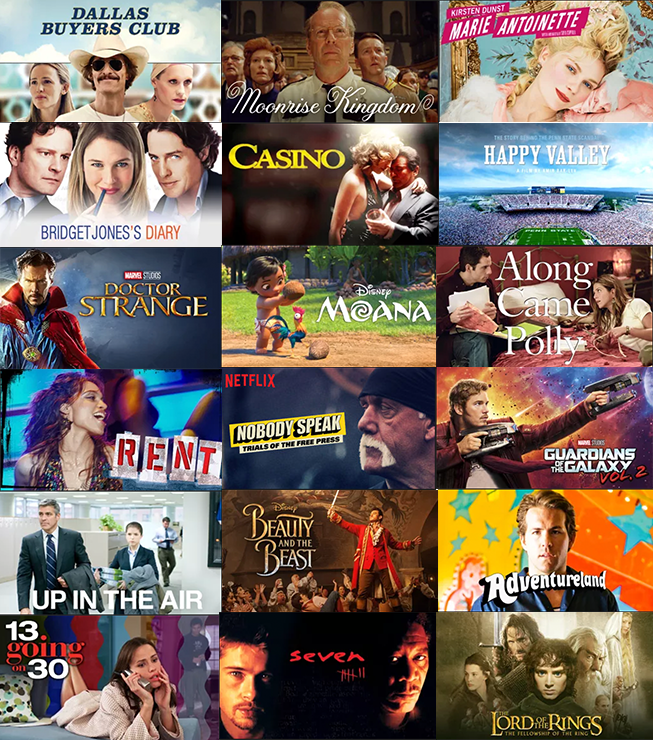
One of the most fascinating technological interventions in content discovery is “Dynamic Creative Optimization.” Platforms like Netflix do not show the same movie poster to every user. If a user has a history of watching romantic comedies, the algorithm might display a thumbnail of the movie featuring the two lead actors in a close-up. If the same user has a preference for action, the system might swap that image for a high-energy chase sequence from the same film. This A/B testing at scale ensures that the visual metadata is optimized for the specific psychological profile of the viewer.
Frictionless Navigation and Auto-Play Logic
The goal of the UI is to reduce “friction.” Tech features such as “Play Something” (a shuffle feature) or “Continue Watching” are designed to bypass the conscious decision-making process entirely. By using predictive pre-fetching—where the first few minutes of a highly recommended movie are pre-loaded in the background—platforms can ensure that once a user makes a choice, the transition to viewing is instantaneous. This reduces the cognitive load and prevents the user from exiting the app out of frustration.
The Future of Choice: Biometrics and Predictive Analytics
As we look toward the future, the technology used to answer “What movie should we watch?” is set to become even more invasive and predictive. We are moving toward an era where the software might know what you want to watch before you do.
Affective Computing and Sentiment Analysis
“Affective computing” is an area of tech that allows systems to recognize and process human emotions. Future smart home ecosystems could use cameras or wearable devices (like a smartwatch) to detect a user’s heart rate, pupil dilation, or facial expressions. If the system detects high levels of stress after a workday, it might automatically filter out horror or intense dramas, instead presenting “comfort viewing” options. While this raises significant privacy considerations, it represents the logical conclusion of hyper-personalization.
The Ethical Challenge of the Filter Bubble
As discovery technology becomes more efficient, a new technical and philosophical challenge arises: the “filter bubble.” If an algorithm only shows you what it knows you will like, it limits your exposure to diverse perspectives and cinematic styles. Developers are now experimenting with “Serendipity Coefficients”—mathematical injections of randomness into the algorithm designed to break the feedback loop. By intentionally suggesting “outlier” content that sits just outside a user’s typical profile, tech companies hope to maintain a balance between satisfying existing tastes and fostering new ones.
In conclusion, the simple act of choosing a movie has become a showcase for the power of modern technology. From the deep learning models that map our preferences in high-dimensional space to the AI chatbots that understand our nuanced moods, the tech industry is dedicated to eliminating the friction of choice. As these tools continue to evolve, the “what should we watch” dilemma will likely transform from a frustrating search into a seamless, automated extension of our own personalities.
aViewFromTheCave is a participant in the Amazon Services LLC Associates Program, an affiliate advertising program designed to provide a means for sites to earn advertising fees by advertising and linking to Amazon.com. Amazon, the Amazon logo, AmazonSupply, and the AmazonSupply logo are trademarks of Amazon.com, Inc. or its affiliates. As an Amazon Associate we earn affiliate commissions from qualifying purchases.