
To understand the modern global financial system, one must first look back at the rigid, competitive, and state-driven economic theory that dominated Europe from the 16th to the 18th centuries: mercantilism. While today’s markets largely operate on the principles of free trade and supply and demand, the shadows of mercantilist thought still influence national trade policies, corporate strategies, and investment landscapes. Mercantilism was more than just a fiscal policy; it was a comprehensive system designed to maximize the power and wealth of a nation through strict government regulation of the economy.
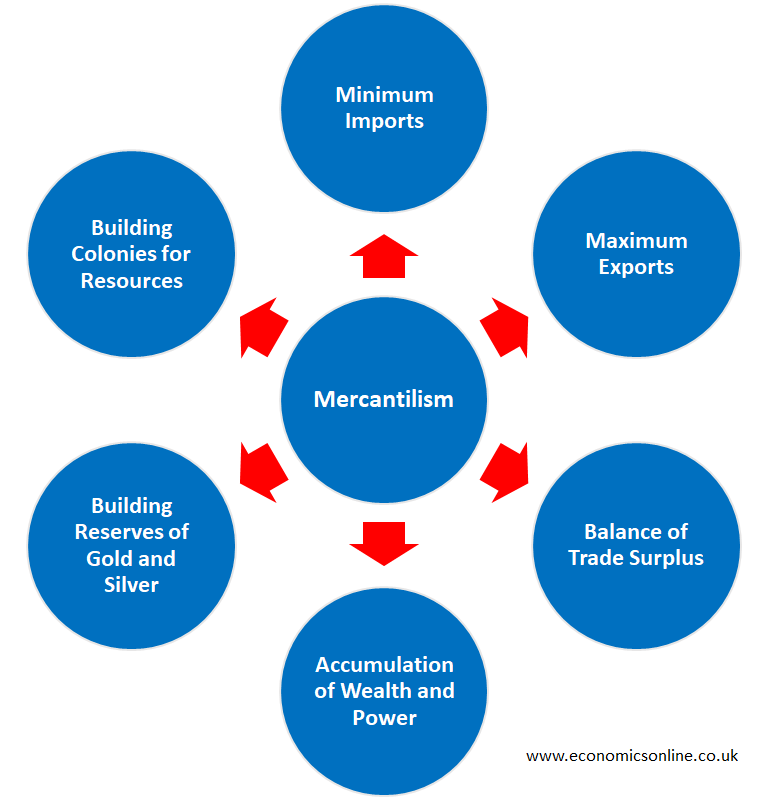
At its core, mercantilism is an economic theory that suggests a nation’s wealth and power are best served by increasing exports and minimizing imports. It is built on the belief that the world’s wealth is finite—a “zero-sum game” where one nation’s gain is inevitably another’s loss. For the modern investor or business leader, understanding mercantilism is essential to navigating the complexities of protectionism, currency manipulation, and the strategic subsidies that define the current geopolitical financial climate.
The Core Principles of Mercantilism: Wealth as Power
The mercantilist era was defined by a specific set of financial priorities that differ significantly from modern capitalistic ideals. During this period, the health of a national economy was measured not by its standard of living or the diversity of its markets, but by the physical accumulation of precious metals and the strength of its trade balance.
The Pursuit of Bullionism
The most fundamental tenet of mercantilism was bullionism. In this framework, gold and silver were the ultimate measures of success. Governments believed that the more gold and silver they held in their treasuries, the more powerful they were. This led to strict prohibitions on the export of precious metals. From a business finance perspective, this created a rigid environment where liquidity was strictly controlled by the state, and private investment was often secondary to the accumulation of national reserves.
The Zero-Sum Game Mentality
Unlike modern economics, which posits that trade can create mutual benefit and “expand the pie,” mercantilists viewed the global economy as a fixed pie. If England gained a larger share of trade, France or Spain must necessarily lose an equivalent amount. This mentality fueled centuries of trade wars and colonial expansion, as nations scrambled to secure exclusive access to resources and markets. For the modern strategist, recognizing when a government or industry is operating under a zero-sum mentality is crucial for assessing risk in international markets.
The Favorable Balance of Trade
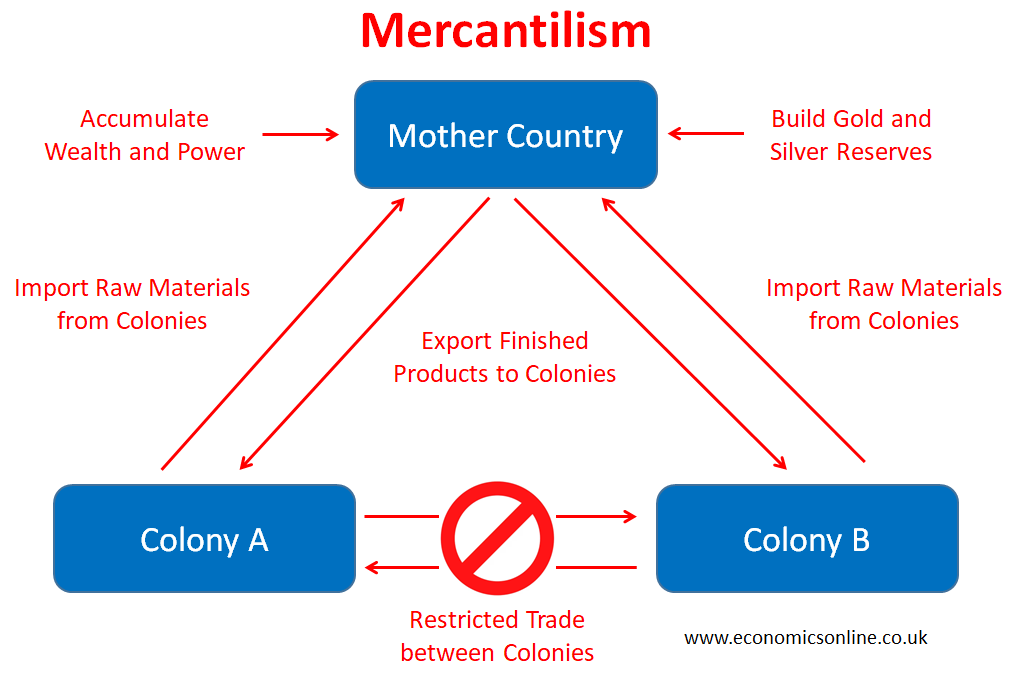
To ensure a constant inflow of gold and silver, mercantilist states sought a favorable balance of trade. This meant exporting high-value manufactured goods while importing only the raw materials necessary to produce them. To achieve this, governments utilized a suite of financial tools: high tariffs on foreign imports, subsidies for domestic industries, and the granting of monopolies to favored companies. This interventionist approach ensured that the state remained the primary architect of economic activity.
How Mercantilism Shaped Early Global Markets and Business Finance
The legacy of mercantilism is most visible in the birth of the modern corporation and the expansion of global trade networks. The financial structures created during this era laid the groundwork for contemporary business finance, particularly in how risk is managed and how large-scale ventures are funded.
State-Chartered Monopolies and Corporate Ancestry
The most famous products of the mercantilist era were the state-chartered monopolies, such as the British East India Company and the Dutch East India Company. These were the precursors to the modern multinational corporation. Governments granted these companies exclusive rights to trade in specific regions in exchange for a share of the profits and the advancement of national interests.
These entities introduced early forms of the joint-stock company, allowing multiple investors to pool their capital to fund high-risk, high-reward maritime expeditions. For the modern student of business finance, these companies represent the first large-scale experiments in corporate governance, dividend payments, and limited liability.
Colonialism and Resource Extraction
Mercantilism provided the economic justification for colonialism. Colonies were viewed as sources of cheap raw materials and captive markets for the mother country’s manufactured goods. This created a closed-loop financial system where wealth flowed from the periphery to the center. While the ethical and social costs were devastating, the financial mechanisms developed to manage colonial trade—such as complex credit systems and maritime insurance—formed the basis of modern international finance and logistics.
Government Intervention and Infrastructure
Under mercantilist thought, the state took an active role in developing the infrastructure necessary for trade. This included building ports, roads, and a powerful navy to protect trade routes. This era taught us that business finance does not exist in a vacuum; it is deeply intertwined with state capacity and the physical security of assets. Even today, the most successful industries are often those that benefit from robust state-sponsored infrastructure and research.
The Transition from Mercantilism to Modern Capitalism
The decline of mercantilism was not a sudden event but a gradual shift driven by new economic theories and the pressures of the Industrial Revolution. As the limitations of protectionism became clear, a new philosophy began to take hold.
Adam Smith and the Critique of Protectionism
The death knell for mercantilist dominance was the publication of Adam Smith’s The Wealth of Nations in 1776. Smith argued that mercantilism was fundamentally flawed because it prioritized the interests of producers and the state over those of consumers. He demonstrated that wealth was not a fixed quantity of gold, but the total production and consumption of a nation. Smith’s concept of the “invisible hand” suggested that when individuals pursue their own financial interests, they inadvertently benefit the entire economy—a stark contrast to the state-directed mercantilist model.
The Move Toward Comparative Advantage
Following Smith, David Ricardo introduced the theory of comparative advantage. He argued that even if one country is better at producing everything, it still benefits from trading with others by focusing on what it produces most efficiently. This shifted the focus of business finance from hoarding reserves to optimizing production and seeking global market efficiencies. The transition to free trade allowed for the explosive growth of the 19th and 20th centuries, as capital began to move more freely across borders.
Modern Neomercantilism: Its Influence on Today’s Financial Landscape
While “classical” mercantilism ended centuries ago, its DNA persists in the form of neomercantilism. In the modern financial world, neomercantilism refers to policies that prioritize domestic industry and export growth through state intervention.
Currency Manipulation and Trade Deficits
In the contemporary era, some nations are accused of practicing neomercantilism by artificially devaluing their currencies. By keeping their currency low against the dollar or euro, these countries make their exports cheaper and imports more expensive, thereby maintaining a favorable trade balance. For investors, this creates a complex environment where exchange rates are influenced as much by political will as by market forces.
Strategic Industry Subsidies
Modern governments often provide massive subsidies to “strategic” industries, such as green energy, semiconductors, or aerospace. These subsidies are designed to give domestic firms a competitive edge in the global market, echoing the mercantilist practice of supporting favored monopolies. Business finance professionals must account for these “non-market” factors when evaluating the long-term viability of an industry or a specific company.
The Rise of Economic Nationalism
The recent trend toward economic nationalism and the “reshoring” of supply chains is a return to mercantilist thinking. National security concerns are now frequently cited as reasons to restrict trade or subsidize domestic manufacturing. For personal finance and institutional investing, this shift means a potential end to the era of hyper-globalization and a return to a world where geopolitical borders define financial opportunity.
Lessons for Today’s Investors and Business Strategists
Understanding the history and persistence of mercantilist thought provides valuable insights for navigating today’s volatile financial markets. Whether you are managing a personal portfolio or leading a corporate finance department, these lessons remain relevant.
Analyzing Supply Chain Resilience
The mercantilist obsession with self-sufficiency has seen a resurgence. Modern businesses are moving away from “just-in-time” supply chains toward “just-in-case” models. This shift requires a different approach to business finance, emphasizing liquidity and inventory management over lean operations. Investors should look for companies that are proactively managing their supply chain risks in a world of increasing trade friction.
Navigating Protectionist Policies
As trade barriers and tariffs become more common, businesses must adapt their pricing and sourcing strategies. The mercantilist era showed that when trade becomes restricted, the cost of goods rises for the consumer. In a neomercantilist environment, inflation and trade policy are inextricably linked. Diversifying investments across different regulatory jurisdictions can help mitigate the risks associated with sudden shifts in a nation’s trade policy.

The Role of Intangible Assets
Unlike the mercantilists who focused solely on physical bullion, modern wealth is increasingly found in intangible assets like data, software, and intellectual property. However, the struggle for dominance in these “new commodities” mirrors the old mercantilist struggles for gold. The nation or company that controls the key technologies of the future—AI, quantum computing, or biotechnology—will hold the modern equivalent of the Spanish silver mines. Understanding this helps investors identify where the next generation of value will be created.
In conclusion, while mercantilism is often relegated to history books, its fundamental concepts of state-driven growth and trade competition continue to shape the financial world. By recognizing the patterns of mercantilist thought in modern policy, investors and business leaders can better position themselves to thrive in a global economy that is increasingly defined by a mix of market freedom and state-driven strategy.
aViewFromTheCave is a participant in the Amazon Services LLC Associates Program, an affiliate advertising program designed to provide a means for sites to earn advertising fees by advertising and linking to Amazon.com. Amazon, the Amazon logo, AmazonSupply, and the AmazonSupply logo are trademarks of Amazon.com, Inc. or its affiliates. As an Amazon Associate we earn affiliate commissions from qualifying purchases.