
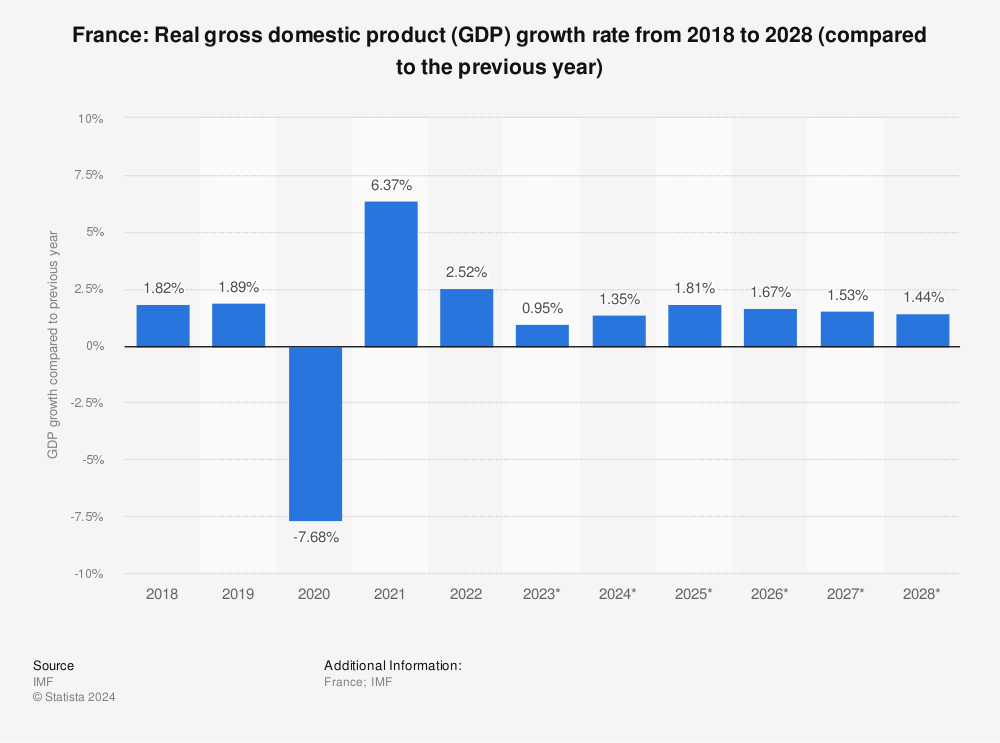
Gross Domestic Product (GDP) is the primary barometer used to gauge the economic health of a nation, representing the total value of all goods and services produced over a specific period. When asking “what is the GDP of France,” one is looking at one of the world’s most sophisticated and diversified economies. As of the current fiscal landscape, France consistently ranks as the seventh-largest economy globally and the second-largest in the European Union, trailing only Germany.
With a GDP typically hovering around $3 trillion (USD) in nominal terms, France represents a cornerstone of the global financial system. However, understanding French GDP requires looking beyond a single headline figure. It involves analyzing a complex interplay of high-tech industry, a dominant service sector, luxury exports, and a unique state-led economic model that balances market competition with robust social protections.
The Composition of French GDP: A Sectoral Analysis
The French economy is characterized by its transition from a traditional industrial base to a modern, service-oriented powerhouse. To understand where the trillions of dollars in value come from, we must break down the GDP by sector.
The Dominance of the Service Sector
The service sector is the undisputed engine of the French economy, accounting for approximately 70% to 75% of the total GDP. This category is incredibly broad, encompassing everything from retail and hospitality to high-end financial services and information technology.
Paris, as a global financial hub, contributes significantly to this percentage. The French banking sector, led by giants such as BNP Paribas, Crédit Agricole, and Société Générale, represents a massive portion of the nation’s economic output. Furthermore, the real estate market and professional services—including legal, consulting, and engineering firms—provide a stable foundation for year-on-year growth.
Industrial Strength and Manufacturing
While many Western nations have seen a decline in manufacturing, France maintains a potent industrial core that contributes roughly 17% to 19% of its GDP. Unlike some neighbors who focus on mid-market goods, France specializes in high-value-added industrial production.
Key industries include:
- Aerospace: Home to Airbus, France is a global leader in aviation technology. The aerospace sector is a primary driver of export revenue.
- Automotive: Brands like Renault and the Stellantis group (which includes Peugeot and Citroën) continue to be major employers and contributors to the industrial GDP.
- Pharmaceuticals: France is a global hub for medical research and chemical production, with companies like Sanofi leading the way in international markets.
Agriculture and the Agribusiness Powerhouse
While agriculture accounts for a relatively small percentage of the total GDP (around 1.5% to 2%), France remains the largest agricultural producer in the European Union. The value of this sector is amplified by the “agribusiness” chain. France does not just export raw wheat or grapes; it exports high-value finished products like wine, spirits, and cheese. This “value-added” approach ensures that even a small primary sector has a disproportionately large impact on the nation’s trade balance and global brand identity.
Key Drivers of the French Economy
Several unique factors propel France’s GDP and differentiate it from other major economies. These drivers are the reason why France remains a top destination for foreign direct investment (FDI) in Europe.
The Global Luxury Market
France is the undisputed leader in the global luxury goods market. Companies like LVMH (Moët Hennessy Louis Vuitton), Kering, and Hermès are more than just fashion houses; they are economic titans. During global economic fluctuations, the luxury sector often remains resilient, providing a steady stream of tax revenue and high-value exports. The “Made in France” label carries a premium that allows these companies to maintain high profit margins, directly inflating the national GDP figures through corporate earnings and high-wage employment.
Tourism as an Economic Pillar
France consistently ranks as the most visited country in the world. Tourism is not merely a cultural asset; it is a vital economic pillar that accounts for nearly 8% of the GDP. This includes revenue from international travelers, domestic tourism, and the vast infrastructure of hotels, restaurants, and transport services that support millions of visitors annually. The impact of tourism is felt across the country, from the urban density of Paris to the vineyards of Bordeaux and the alpine resorts of the Savoie.
Energy Independence and Nuclear Power
A unique aspect of the French economic model is its energy strategy. France derives about 70% of its electricity from nuclear energy, managed largely by the state-owned EDF (Électricité de France). This high level of energy independence provides a degree of insulation from the volatile global fossil fuel markets. In terms of GDP, this translates to lower energy costs for industrial manufacturers and a significant export market, as France often sells excess electricity to its European neighbors.
Fiscal Policy and the Role of the State
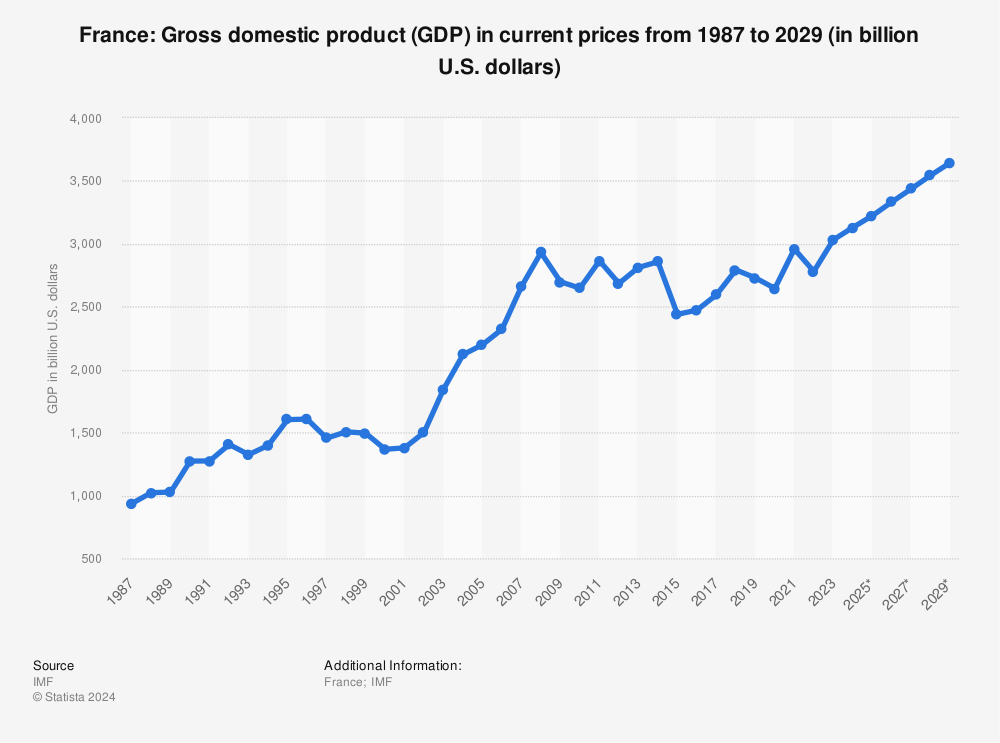
To answer “what is the GDP of France” accurately, one must acknowledge the role of the French government. France has one of the highest ratios of public spending to GDP among OECD countries, often exceeding 55%.
Public Spending and Social Security
The French model, often described as a “social market economy,” involves significant state intervention. High levels of public spending are directed toward healthcare, education, and social security. While this requires a high tax burden, it also creates a massive “public sector GDP” that provides stability during economic downturns. The government acts as a buffer, using fiscal policy to stimulate demand when private consumption wanes.
Recent Labor and Tax Reforms
In recent years, the French government has moved toward “pro-business” reforms aimed at boosting GDP growth by making the labor market more flexible and reducing corporate taxes. The goal of these reforms is to lower the structural unemployment rate and encourage entrepreneurship. By lowering the “tax wedge” on labor, France has successfully attracted more tech startups and venture capital, leading to the rise of the “French Tech” movement, which is becoming an increasingly important sub-sector of the digital economy.
Infrastructure and Strategic Investment
The French state is a major investor in the nation’s future. The “France 2030” investment plan is a multi-billion euro initiative designed to position the country as a leader in “green” hydrogen, semi-conductors, and carbon-neutral manufacturing. These strategic investments are designed to ensure long-term GDP growth by securing France’s place in the next generation of global supply chains.
France in the Global Financial Context
The GDP of France does not exist in a vacuum; it is deeply integrated into the Eurozone and the global trade network.
Trade Balance and Exports
France is one of the world’s largest exporters of services and manufactured goods. Beyond luxury and planes, France is a major exporter of electricity, weaponry, and agricultural products. However, France often runs a trade deficit in goods because it imports a large volume of energy (natural gas and oil) and consumer electronics. Its strong performance in “invisible exports” (services and intellectual property) helps to balance the scales.
Foreign Direct Investment (FDI)
For several consecutive years, France has been ranked as the most attractive country in Europe for foreign investment. This is a testament to its high-quality infrastructure, skilled workforce, and central location within the European Single Market. When international corporations like Google, Amazon, or Toyota invest in French facilities, it directly stimulates the GDP through capital expenditure and job creation.
The Paris Stock Exchange (Euronext Paris)
The health of the French GDP is mirrored in the performance of the CAC 40, the benchmark stock market index representing the 40 most significant companies on the Euronext Paris. The market capitalization of these companies often grows faster than the GDP itself, reflecting the global reach of French corporations. As Paris competes with London for the title of Europe’s primary financial center post-Brexit, the financial services component of the GDP is expected to take on an even more prominent role.
Future Outlook: Challenges to GDP Growth
While the French economy is robust, it faces several headwinds that could influence its GDP trajectory in the coming decade.
Demographic Shifts and Labor Shortages
Like much of Europe, France is dealing with an aging population. This shift puts pressure on the pension system and can lead to labor shortages in key sectors like healthcare and construction. Maintaining a high GDP per capita will require significant gains in productivity and potentially increased participation in the workforce through further retirement age reforms.
Public Debt Sustainability
To maintain its high level of public services and to navigate the shocks of the global pandemic and energy crises, France has accumulated a significant level of public debt, which currently sits near 110% of its GDP. Managing this debt while continuing to invest in growth-oriented projects is a delicate balancing act for the French Ministry of Finance. High interest rates globally make servicing this debt more expensive, which could theoretically crowd out other forms of productive investment.
Transition to a Green Economy
France is at the forefront of the ecological transition, but this shift requires massive capital reallocation. Transitioning the automotive sector to electric vehicles and decarbonizing heavy industry are expensive endeavors. While these moves are expected to create “green” GDP in the long run, the short-term costs of transition can create friction in economic growth rates.
Summary of the French Economic Landscape
In conclusion, the GDP of France is a reflection of a diverse, resilient, and highly evolved economy. With a nominal GDP of approximately $3 trillion, it stands as a pillar of global stability. Its strength lies in its ability to marry traditional prestige industries—like luxury goods and wine—with cutting-edge technology in aerospace, nuclear energy, and digital services.
Understanding France’s economic position requires recognizing the dual role of the state as both a regulator and a primary economic actor. While challenges such as public debt and demographic changes persist, France’s consistent ability to attract foreign investment and its leadership in high-value exports suggest that it will remain a dominant force in the global financial hierarchy for the foreseeable future. For investors and business leaders, the French GDP is not just a number; it is a testament to an economy that successfully balances high-tech innovation with a deeply entrenched social and cultural brand.
aViewFromTheCave is a participant in the Amazon Services LLC Associates Program, an affiliate advertising program designed to provide a means for sites to earn advertising fees by advertising and linking to Amazon.com. Amazon, the Amazon logo, AmazonSupply, and the AmazonSupply logo are trademarks of Amazon.com, Inc. or its affiliates. As an Amazon Associate we earn affiliate commissions from qualifying purchases.