
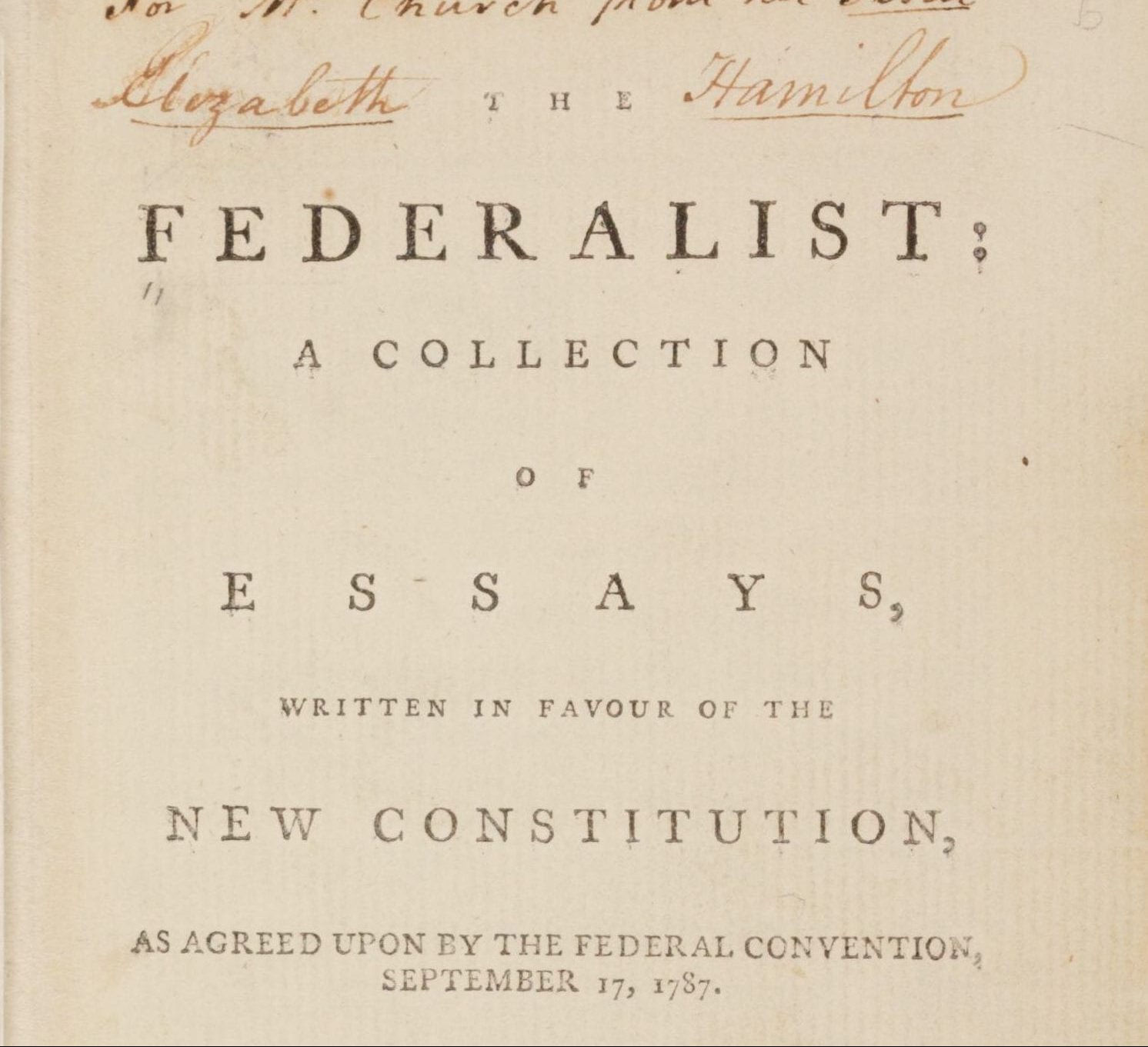
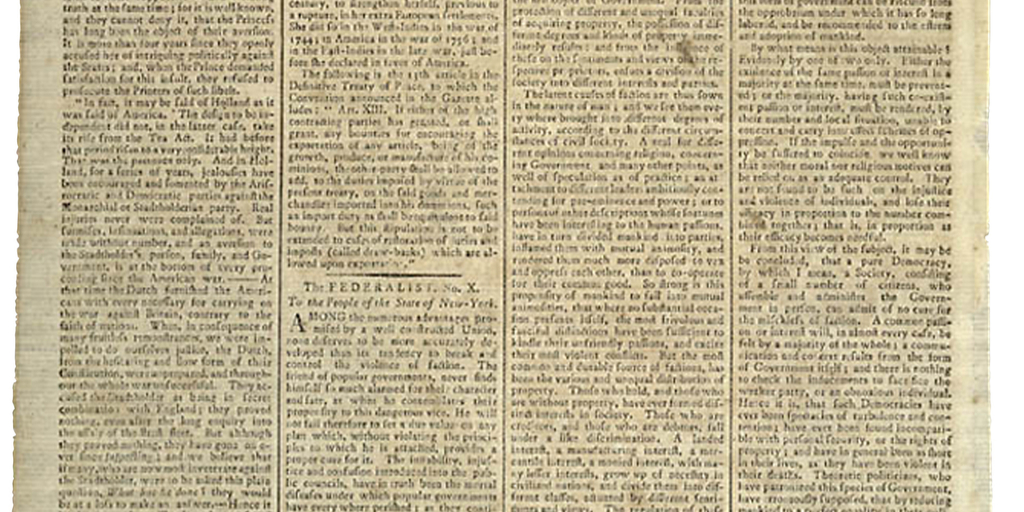
At first glance, the Federalist Papers might appear to be nothing more than a collection of 18th-century political essays intended to persuade New York citizens to ratify the United States Constitution. However, Federalist No. 10, penned by James Madison, is far more than a historical artifact. It serves as a foundational text for understanding the intersection of economic interests, property rights, and financial stability. For the modern investor, business leader, or financial strategist, Federalist 10 provides a masterclass in how institutional structures are designed to manage “factions”—what we would today call special interest groups, lobbying blocs, or economic monopolies.

Madison’s primary concern in Federalist 10 is the “mischiefs of faction.” To understand what this document is about from a financial and business perspective, one must look at how Madison identifies the “unequal distribution of property” as the most common and durable source of conflict in society. His insights into how a large republic can protect the integrity of a financial system from the volatility of popular passion remain essential reading for anyone navigating the complexities of the modern global economy.
The Anatomy of Faction: Why Economic Interests Drive Conflict
The core of Federalist 10 is Madison’s definition and analysis of “factions.” He defines a faction as a number of citizens, whether amounting to a majority or a minority of the whole, who are united and actuated by some common impulse of passion, or of interest, adverse to the rights of other citizens or to the permanent and aggregate interests of the community. In the realm of business and finance, factions represent any group that seeks to use the machinery of the state to gain an unfair competitive advantage or to redistribute wealth in their favor.
The Source of Inequality
Madison explicitly states that the most frequent source of factions has been the various and unequal distribution of property. He notes that “those who hold and those who are without property have ever formed distinct interests in society.” This is not a Marxist critique of capital, but rather a pragmatic observation by a proponent of a stable commercial republic. Madison identifies several specific economic factions that are still recognizable today:
- Creditors and Debtors: A classic financial divide where one group benefits from high interest rates and currency stability, while the other benefits from inflation and debt forgiveness.
- Landed Interests: Owners of real estate and natural resources who seek protections and subsidies.
- Manufacturing and Mercantile Interests: Business owners and traders who require specific regulatory environments to thrive.
The Problem of Special Interest Regulation
What makes Federalist 10 so relevant to modern business finance is Madison’s acknowledgment that the “regulation of these various and interfering interests forms the principal task of modern legislation.” He warns that when one faction gains enough power to control the legislative process, they become the “judges in their own cause.” For a financial market to remain efficient and fair, it requires a structure that prevents any single economic interest—whether it be Big Tech, the banking lobby, or labor unions—from capturing the regulatory apparatus for its own narrow gain.
Property Rights: The Philosophical Bedrock of Financial Security
Federalist 10 is fundamentally about the protection of property. Madison argues that the “first object of government” is the protection of the “different and unequal faculties of acquiring property.” This is a crucial distinction for anyone interested in wealth management or entrepreneurship. Madison does not advocate for equality of outcome; instead, he advocates for the protection of the process of wealth creation.
The Faculty of Acquisition
In Madison’s view, people possess different levels of talent, ambition, and skill—what he calls “faculties.” Because these faculties are unequal, the resulting distribution of property will naturally be unequal. A stable financial system must recognize and protect this reality. If a government attempts to equalize property by force or by law, it destroys the very incentive structure that drives innovation and economic growth. For the modern investor, Federalist 10 represents a commitment to a legal framework where contracts are honored, and assets are protected from arbitrary seizure by a temporary majority.
Protecting Against Financial Instability
Madison was particularly concerned with the potential for “a rage for paper money, for an abolition of debts, for an equal division of property, or for any other improper or wicked project.” He viewed these as “factions” of the most dangerous kind because they threaten the underlying stability of the currency and the predictability of the market. By advocating for a structure that makes it difficult for such radical economic shifts to occur quickly, Madison laid the groundwork for a stable investment environment where long-term capital can be deployed with confidence.
The Large Republic: A Strategy for Market Stability and Diversification
The most famous argument in Federalist 10 is Madison’s solution to the problem of faction: “extending the sphere.” He argues that a large republic is superior to a small democracy because it encompasses a greater variety of parties and interests. This concept is remarkably similar to the financial principle of diversification.
Diversification of Interests
In a small society, it is easy for a single interest group to form a majority and oppress others. However, in a large, diverse economy, there are so many different interests that it becomes difficult for a single faction to gain control. Just as a diversified portfolio reduces the risk of any single asset failure tanking an entire investment strategy, Madison’s large republic reduces the risk of any single economic faction tanking the nation’s stability.
- Geographic Diversity: Different regions have different economic drivers (e.g., tech in California, finance in New York, energy in Texas).
- Sector Diversity: Competition between different industries prevents any one sector from dominating the national agenda.
The Role of Representation
Madison also argues for a representative government rather than a direct democracy. He believes that representatives can “refine and enlarge the public views,” acting as a filter that tempers the immediate, often irrational, demands of the public. In modern terms, this is the logic behind independent central banks like the Federal Reserve or regulatory bodies like the SEC. These institutions are designed to be somewhat insulated from the immediate political whims of the day, allowing for a more measured and long-term approach to economic policy.
Modern Business Implications: Corporate Governance and the Mitigation of Minority Oppression
The principles outlined in Federalist 10 are not limited to national politics; they are deeply embedded in the structure of modern corporate governance. Any large corporation is essentially a “republic” of shareholders, each with their own factions and interests.
Minority Shareholder Protections
One of the major risks in business finance is the oppression of minority shareholders by a majority bloc. Madison’s fear of “majority faction” is echoed in corporate laws that require fiduciary duties, independent board members, and supermajority votes for major transactions. These mechanisms are designed to ensure that the majority cannot simply “vote themselves the property” of the minority, maintaining the integrity of the investment vehicle.
Conflict of Interest and Fiduciary Duty
Madison’s observation that “no man is allowed to be a judge in his own cause” is the foundational principle of fiduciary duty. In business finance, this means that directors and officers must put the interests of the corporation and its shareholders above their own personal gain. Federalist 10 provides the philosophical justification for the strict ethical and legal boundaries that govern modern business transactions, ensuring that “factions” within a company—such as management vs. shareholders—do not destroy the firm’s value through self-dealing.
The Enduring Value of Madison’s Financial Logic
In conclusion, Federalist 10 is a blueprint for an economic environment that prizes stability, protects property, and manages the inherent conflicts of a capitalist society. Madison understood that you cannot remove the causes of faction—namely, human nature and the freedom to acquire property—without destroying liberty itself. Therefore, the only solution is to control the effects of faction through institutional design.
For today’s financial professionals, Federalist 10 is a reminder that the health of a market is inextricably linked to the robustness of its governing institutions. A market that is susceptible to the “mischiefs of faction” is a market that is prone to volatility, corruption, and long-term decline. By embracing Madison’s vision of a large, diverse, and representative system, we can better understand the mechanisms that allow modern economies to thrive despite the inevitable clashes of interest. Federalist 10 is not just a lesson in history; it is an enduring guide to the economic logic that sustains the modern world.
aViewFromTheCave is a participant in the Amazon Services LLC Associates Program, an affiliate advertising program designed to provide a means for sites to earn advertising fees by advertising and linking to Amazon.com. Amazon, the Amazon logo, AmazonSupply, and the AmazonSupply logo are trademarks of Amazon.com, Inc. or its affiliates. As an Amazon Associate we earn affiliate commissions from qualifying purchases.