
In the competitive landscape of modern social and spiritual institutions, the Church of Christ presents a compelling case study in brand consistency, organizational decentralization, and radical market differentiation. To understand the “Church of Christ” from a brand strategy perspective is to analyze an entity that has successfully navigated over two centuries of cultural shifts by adhering to a rigid identity architecture. While often categorized as a religious group, the Church of Christ operates as a masterclass in “restoration branding”—a strategy centered on returning to original specifications to distinguish oneself from a saturated market of competitors.
This analysis explores the Church of Christ as a brand, examining its unique value proposition, its decentralized corporate structure, and the communication strategies that have allowed it to maintain a distinct identity in a globalized world.
Defining the Core Brand Identity: The Restoration Movement and Radical Minimalism
The brand identity of the Church of Christ is rooted in the Stone-Campbell Movement of the early 19th century. In branding terms, this was a “disruptor” movement designed to challenge the established “legacy brands” of the time—specifically the highly structured denominations of Europe and North America. The founders sought to strip away centuries of “brand creep” and return to the “original prototype” found in the New Testament.
The USP of Scriptural Adherence and A Cappella Worship
The most visible element of the Church of Christ brand—its Unique Selling Proposition (USP)—is the absence of instrumental music in worship. From a brand perspective, this is a powerful “sensory identifier.” Just as a specific color palette or logo distinguishes a tech giant, the specific sound of a cappella singing immediately identifies the Church of Christ brand to an outsider. This is not merely a stylistic choice; it is a core brand pillar based on the principle of “silence,” where the organization refuses to implement any feature not explicitly authorized in their foundational document (the New Testament).
This radical minimalism serves a dual purpose. First, it ensures brand purity, making it difficult for local “branches” to deviate from the core identity without losing their membership in the collective consciousness. Second, it creates a high barrier to entry that fosters deep brand loyalty among existing stakeholders.
Visual and Structural Minimalism
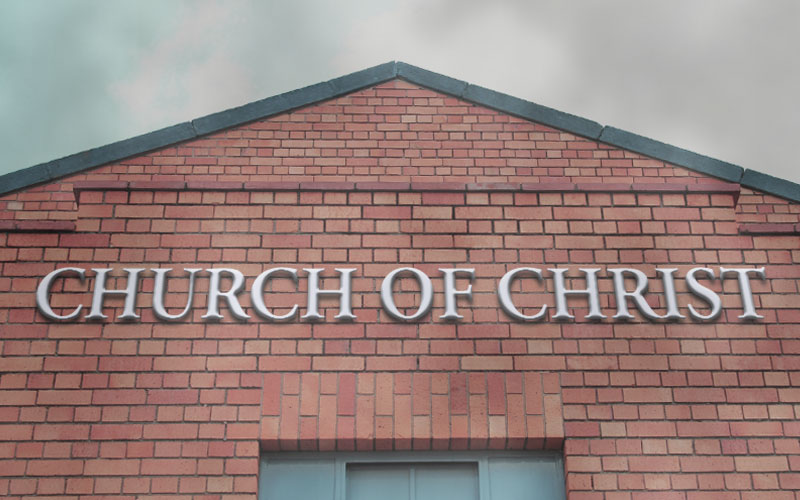
The visual branding of the Church of Christ often mirrors its theological stance: simplicity. Unlike the ornate branding of high-liturgical institutions, Church of Christ facilities typically feature functional, unadorned architecture. This “no-frills” brand aesthetic signals a focus on the product (the message) rather than the packaging. It reinforces the brand promise of being an unadulterated, “restored” version of the original entity.
Market Differentiation: Distinction from Mainline Protestantism
In a crowded marketplace of ideas, differentiation is the key to survival. The Church of Christ has achieved this by positioning itself not as a “new brand,” but as the “original brand.” This is a classic “legacy restoration” strategy often seen in heritage industries where a company claims to have rediscovered its founding principles.
The Power of Naming: Strategic Identity Architecture
The choice of the name “Church of Christ” is a strategic move in identity architecture. By using a generic, descriptive title rather than a proprietary or founder-based name (like Lutheran or Wesleyan), the organization claims universal legitimacy. The branding message is clear: “We are not a version; we are the thing itself.”
This positioning allows the organization to bypass the “denominational” category altogether in its own marketing materials. Members often describe themselves as “Christians only, but not the only Christians,” a nuanced branding statement that attempts to balance exclusivity with a broader appeal.
Decentralized Governance as a Scalable Organizational Model
One of the most fascinating aspects of the Church of Christ brand is its total lack of a central corporate headquarters. There is no CEO, no board of directors, and no global marketing department. Each local congregation is an autonomous franchise that owns its own assets and governs its own affairs.
From an organizational behavior standpoint, this decentralization is a resilient model. It allows the brand to adapt to local cultures and demographics without the bureaucratic drag of a central office. However, it also presents a significant challenge for brand consistency. Without a central authority, how does the brand remain recognizable from Nashville to Nairobi? The answer lies in the “Standard Operating Procedure” (the Bible), which serves as a rigid brand manual that all autonomous units agree to follow.
Crisis Management and Internal Brand Cohesion

Every brand faces crises—internal schisms, shifting market demands, or leadership failures. For the Church of Christ, the lack of a central governing body means that crisis management is distributed. While this prevents a single scandal from toppling the entire brand, it can lead to “brand fragmentation.”
Maintaining Doctrine Across Global Franchises
To maintain cohesion, the Church of Christ relies on secondary “brand hubs”—universities, publications, and large influential congregations that act as thought leaders. These entities provide the intellectual capital that keeps the decentralized units aligned. When a new cultural trend emerges, these hubs debate the response, and through a process of organic consensus, a “brand position” is formed.
This peer-to-peer brand policing is highly effective. If a local unit deviates too far from the core pillars (for example, by introducing instruments or changing the role of leadership), it is “disfellowshipped”—essentially a revocation of the right to use the brand identity in fellowship with other units.
Adapting to Digital Branding in the Modern Era
In the digital age, the Church of Christ has had to translate its “originalist” brand into an online presence. This has led to a surge in digital content creation, from podcasts to online debates. Interestingly, the brand’s emphasis on logic, debate, and scriptural “proof-texting” translates well to the informational nature of the internet. The Church of Christ brand has carved out a niche in the digital space as a rigorous, intellectually-driven option for those seeking clarity in a pluralistic world.
Case Study: The Growth of the Church of Christ Through Strategic Outreach
The growth of the Church of Christ in the mid-20th century, particularly in the United States, can be attributed to a highly effective “grassroots marketing” strategy. This involved “Gospel Meetings”—multi-day events that served as high-intensity brand awareness campaigns.
Personal Branding within the Ministry
Because there is no formal hierarchy, “stars” within the movement emerge based on their ability to communicate the brand promise. These speakers become “brand ambassadors” who travel between autonomous units, reinforcing the core identity and ensuring that local members feel connected to a larger global movement. This relies heavily on personal branding; a minister’s reputation for “soundness” (brand compliance) is their most valuable asset.
Target Audience and Community-Based Engagement
The Church of Christ brand has historically targeted the “seekers” of the middle and working classes—people looking for a clear, logical, and unpretentious path. By focusing on “plain-speak” communication and community-centered service, the brand builds high levels of trust. Each local “unit” acts as a community center, providing a social safety net that reinforces brand loyalty through tangible value.
Future-Proofing the Brand: Tradition vs. Modernity
As we move further into the 21st century, the Church of Christ brand faces the classic “innovator’s dilemma.” How do you update a brand that is predicated on never changing?
The tension between “traditionalists” (those who want to maintain strict brand specs) and “progressives” (those who want to modernize the delivery of the product) is the defining challenge for the organization today. Some units have begun to experiment with “Contemporary” branding, including instrumental music or more diverse leadership roles. However, doing so often risks a total break with the heritage brand, leading to the creation of “offshoot” brands or independent community entities.
To survive the next century, the Church of Christ will likely need to double down on its core differentiation. In a world of high-production “mega-church” brands that often feel like entertainment products, the Church of Christ’s “unplugged,” community-driven, and intellectually rigorous brand identity remains a unique and viable alternative.
Conclusion: The Endurance of a Consistent Message
The Church of Christ is more than just a religious group; it is a testament to the power of a clearly defined brand identity. By sticking to a specific set of “original” specifications, maintaining a decentralized but cohesive organizational structure, and leveraging a unique sensory identity (a cappella worship), it has survived and thrived where other institutions have faded.
Whether analyzed as a social movement or a corporate entity, the “What is it?” of the Church of Christ is found in its commitment to a restorationist brand promise. It proves that in a world of constant change, there is significant market value in a brand that refuses to move, offering a “timeless” product to a demographic that values consistency over novelty. For brand strategists and organizational leaders, the Church of Christ offers profound insights into how identity, when handled with absolute consistency, can become an indestructible foundation for global expansion.
aViewFromTheCave is a participant in the Amazon Services LLC Associates Program, an affiliate advertising program designed to provide a means for sites to earn advertising fees by advertising and linking to Amazon.com. Amazon, the Amazon logo, AmazonSupply, and the AmazonSupply logo are trademarks of Amazon.com, Inc. or its affiliates. As an Amazon Associate we earn affiliate commissions from qualifying purchases.