
In the landscape of speculative fiction and technological forecasting, few properties carry as much weight as Neon Genesis Evangelion. While casual viewers recognize it as a landmark in animation, tech enthusiasts and systems architects often view the series through a different lens: a masterclass in the visualization of advanced computing, neural interfaces, and catastrophic risk management. Central to the series’ lore is the “First Impact,” an event that, within the narrative, represents a primordial collision between Earth and an extraterrestrial object. However, when analyzed through the filter of modern technology, the First Impact serves as a metaphor for the ultimate “Black Swan” event—a technological or environmental disruption that fundamentally rewrites the rules of a civilization.
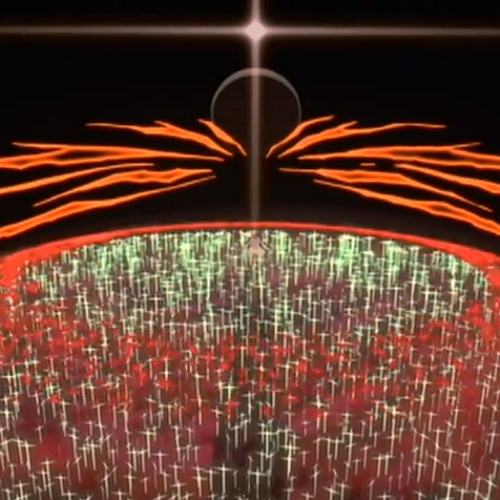
To understand what the First Impact represents in a tech-centric context, we must look beyond the fictional disaster and examine how the series utilized this event to catalyze a world defined by bio-mechanical engineering, distributed artificial intelligence, and revolutionary user interface design.
The Anatomy of the First Impact: From Narrative Catalyst to Technological Blueprint
In the chronology of the series, the First Impact was the giant collision 4 billion years ago that resulted in the creation of the Moon. From a technological standpoint, the “impact” serves as the foundational data point for everything that follows. In the world of Evangelion, the recovery of information from this event led to the development of the “Human Instrumentality Project,” a precursor to what modern futurists might call “Digital Singularity” or “Mind Uploading.”
Defining the Event: The Biological and Geological Disruption
The First Impact represents the intersection of geology and biology. In tech terms, this is the ultimate hardware failure and software reboot. The narrative uses this event to explain the existence of “Seeds of Life,” which can be viewed as complex, self-replicating biological code. Modern synthetic biology and CRISPR technology are currently grappling with the same questions posed by the First Impact: how do we decode the fundamental instructions of life, and what happens when we attempt to rewrite them? The series suggests that the “Impact” was not just a collision, but an injection of alien data into the terrestrial ecosystem.
The Transition from Analog to Neural Interfaces
Following the subsequent “Second Impact” (the catalyst for the main story), the tech world of the series shifts from traditional mechanical solutions to neural-linked systems. This transition mirrors our current real-world pivot from keyboard-and-mouse interactions to BCI (Brain-Computer Interfaces) like Neuralink. The “Impacts” in the series serve as milestones that force humanity to abandon obsolete technology in favor of systems that integrate directly with the human nervous system.
The MAGI System: Anticipating Modern Cloud Computing and AI Governance
One of the most prescient technological concepts introduced in the wake of the series’ scientific advancements is the MAGI Supercomputer. Long before the current discourse on Large Language Models (LLMs) and AI safety, the MAGI presented a sophisticated model for AI governance and multi-agent decision-making.
Melchior, Balthasar, and Casper: The Logic of Triple Redundancy
The MAGI system is not a monolithic AI; it is a trio of biological supercomputers designed by Dr. Naoko Akagi. Each of the three computers—Melchior, Balthasar, and Casper—represents a different aspect of the designer’s personality: her role as a scientist, her role as a mother, and her role as a woman.
In modern software engineering, this is a prime example of “Consensus Algorithms.” Distributed systems, such as blockchain or high-availability cloud clusters, use similar logic to ensure data integrity. By requiring a majority vote among the three units to make critical decisions, the MAGI system prevents a single point of failure—or a single biased algorithm—from making catastrophic errors. This is a framework that modern AI ethicists are increasingly studying as a way to “align” AI with multifaceted human values rather than a singular, potentially dangerous objective.
Democratic AI: How Evangelion Predicted Multi-Agent Systems
We are currently entering the era of “Agentic AI,” where specialized models collaborate to solve complex problems. The MAGI system anticipated this by nearly three decades. It showcases a decentralized approach to problem-solving within a centralized command structure (NERV). For tech leads, the MAGI represents an ideal in system architecture: a platform that can process massive amounts of real-time sensory data while maintaining a human-like deliberative process through its tripartite logic.
Interface Innovation: How NERV’s HUDs Shaped Modern UI/UX

The visual language of Evangelion is perhaps its most enduring contribution to the tech industry. The “look” of NERV—the organization tasked with defending Earth—defined a specific aesthetic of data density that continues to influence modern UI/UX design in everything from military applications to high-end automotive dashboards.
Skeuomorphism vs. Flat Design in High-Stress Environments
The Heads-Up Displays (HUDs) seen in the cockpits of the Evangelion units and on the command screens at NERV headquarters utilized a color palette of deep reds, oranges, and blacks. This wasn’t just an artistic choice; it was a functional one. High-contrast, monochromatic schemes are easier for the human eye to process under high-stress conditions.
Modern “Dark Mode” and high-density dashboards in SaaS products owe a debt to this aesthetic. The series demonstrated how to visualize complex telemetry—such as synchronization rates, power reserves, and structural integrity—without overwhelming the operator. This “Information Architecture” is now a standard study for designers working on Augmented Reality (AR) interfaces, where the goal is to provide maximum utility with minimal cognitive load.
The Influence on Military and Medical Visualizations
Beyond entertainment, the way the series visualized biological data (like DNA sequences and brain waves) influenced real-world medical imaging software. The “Active Map” and the hexagonal grid patterns seen during combat sequences have become shorthand for high-tech surveillance and tactical analysis. When we look at modern defense tech interfaces, such as those used in advanced fighter jets or cybersecurity command centers, we see the DNA of NERV’s visual language: a preference for geometric clarity and real-time data streaming.
Bio-Mechanical Engineering: The Evolution of the EVA Units
The Evangelion units themselves are not “robots” in the traditional sense; they are biological entities encased in mechanical armor that acts as a system of constraints. This concept represents the cutting edge of contemporary robotics: soft robotics and cybernetic integration.
Cybernetic Integration and the Human-Machine Interface (HMI)
The “Entry Plug” system, where a pilot is submerged in LCL (a breathable liquid) to facilitate a neural link with the machine, is a sophisticated look at HMI. In current tech circles, we talk about “latency”—the delay between an input and a response. The EVA units achieve zero-latency through a direct neural bridge.
While we aren’t submerging pilots in liquid yet, the move toward haptic feedback and wearable tech is aiming for the same goal: the blurring of the line between the user and the tool. The First Impact set the stage for this by introducing the biological material necessary to create these hybrids, suggesting that the future of tech is not purely silicon, but a “wetware” hybrid of biology and machines.
Synthetic Biology and the Future of Prosthetics
The “Impact” lore centers on the manipulation of the “Lilin” (human) and “Adam” (angel) genetic structures. In the real world, this mirrors the rapid advancements in synthetic biology and bio-printing. We are now at a stage where we can print tissues and design prosthetic limbs that respond to neural impulses. The “First Impact” serves as a fictional “Big Bang” for bio-engineering, reminding us that our most powerful technological leaps often involve the modification of our own biological hardware.

The Digital Legacy: Why Evangelion Still Matters to Modern Developers
The “First Impact” in Evangelion is more than a plot point; it is a symbol of the disruptive power of technology. It represents the moment when the natural world is forcibly integrated with an advanced, alien system, necessitating a total overhaul of human knowledge and capability.
For developers, engineers, and tech visionaries, the series remains a vital piece of media because it asks the “What If?” questions that define the industry. What if we could achieve a perfect neural link? What if we could build a computer capable of making moral judgments? What if our interfaces were so intuitive they felt like an extension of our bodies?
The technological impact of Evangelion is felt every time a designer chooses a high-contrast HUD, every time an engineer builds a redundant AI system, and every time a scientist explores the possibilities of the human-machine interface. The “First Impact” was the beginning of a story about survival through innovation—a story that the modern tech world continues to write every day. As we move closer to our own versions of the MAGI and neural synchronization, the lessons of NERV and the architectural brilliance of the series serve as both a roadmap and a cautionary tale for the next generation of technological evolution.
aViewFromTheCave is a participant in the Amazon Services LLC Associates Program, an affiliate advertising program designed to provide a means for sites to earn advertising fees by advertising and linking to Amazon.com. Amazon, the Amazon logo, AmazonSupply, and the AmazonSupply logo are trademarks of Amazon.com, Inc. or its affiliates. As an Amazon Associate we earn affiliate commissions from qualifying purchases.