
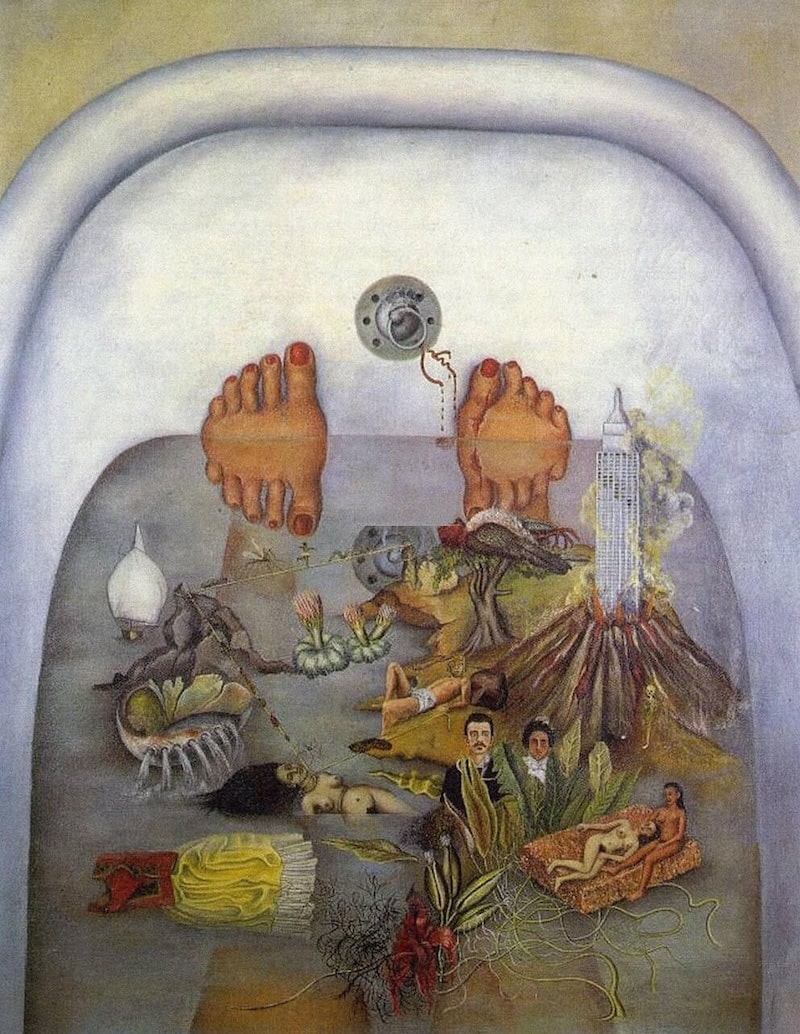
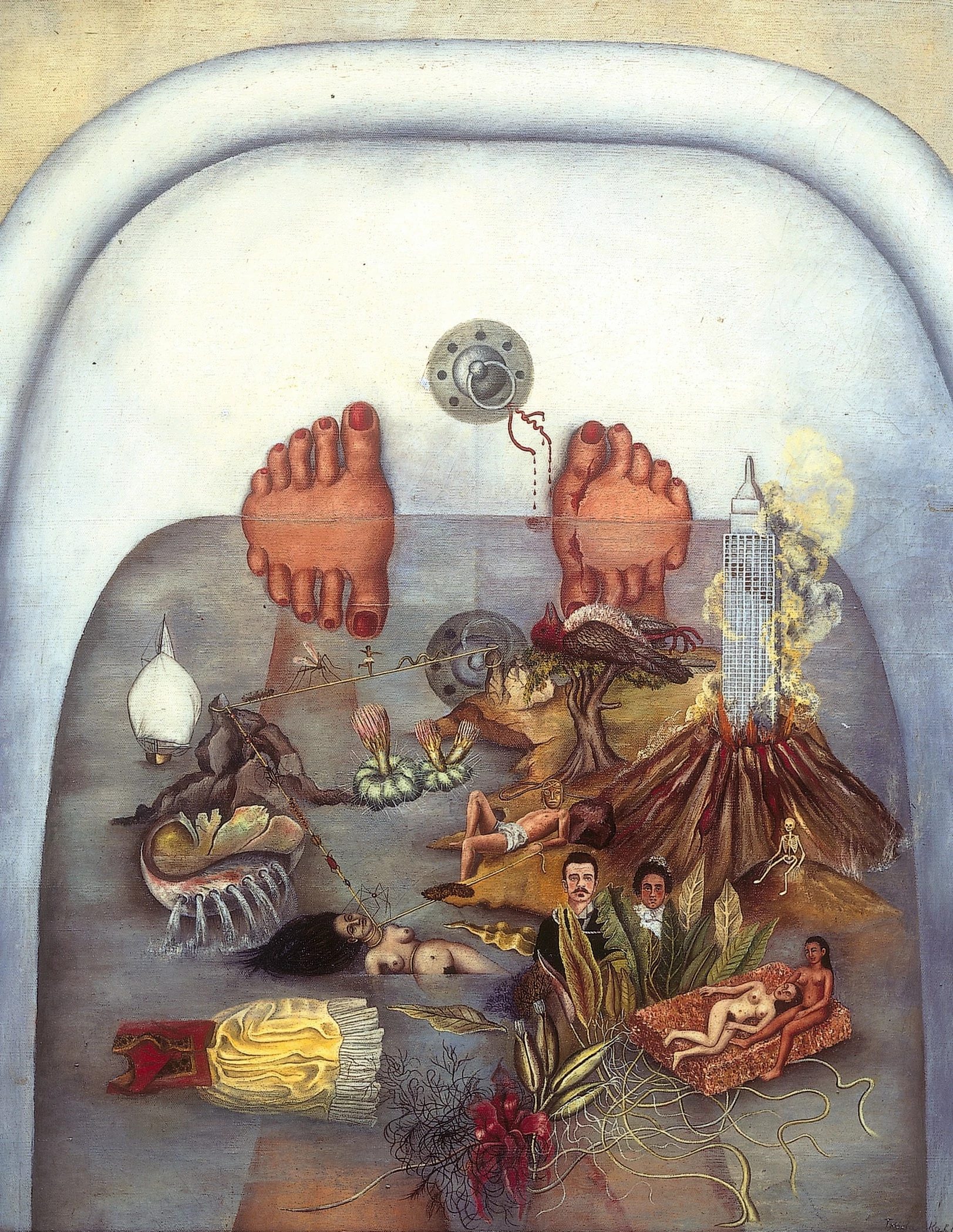
In the world of brand strategy, few figures command as much posthumous influence as Frida Kahlo. While she is celebrated as a titan of surrealism and Mexican folk art, her greatest masterpiece was arguably herself. Her 1938 painting, Lo que el agua me dio (What the Water Gave Me), serves as a profound metaphor for the modern brand builder. In this work, Kahlo does not paint her face; instead, she paints what she sees while soaking in a bathtub—a collage of memories, pain, heritage, and identity floating on the surface of the water.
For brand strategists and corporate leaders, this painting offers a masterclass in “Brand Depth.” It suggests that a truly resonant brand is not merely a polished surface or a clever logo, but a reflection of a complex, lived narrative. To understand why “Fridamania” continues to dominate global fashion, design, and commerce decades after her death, we must look into the water and examine the pillars of her enduring personal brand.
The Visual Autobiography: Beyond Logos and Color Palettes
Most modern brands focus on the “what”—what they sell, what service they provide, or what their color palette looks like. Kahlo’s brand was built entirely on the “who.” She understood instinctively that visual identity is a language, not just an aesthetic. Every element of her appearance, from the Tehuana dresses to the unplucked brow, was a calculated choice that communicated a specific set of values: Mexicanidad, rebellion, and resilience.
Vulnerability as a Brand Asset
In the contemporary marketplace, brands often strive for a veneer of perfection. They present curated, sanitized versions of their corporate identity. Kahlo took the opposite approach, turning her physical and emotional suffering into a unique selling proposition (USP). What the Water Gave Me is a literal reflection of her trauma and her history.
By leaning into her vulnerability, she created a brand that was intensely relatable. For a modern brand, this translates to “radical transparency.” Consumers today do not want a perfect facade; they want a brand that acknowledges its challenges and shares its journey. Kahlo proved that by showing your scars—or the objects floating in your bathtub—you create an emotional hook that a polished corporate image can never achieve.
The Narrative Power of Symbolism
Every brand requires a visual shorthand. For Nike, it is the swoosh; for Apple, the bitten fruit. For Kahlo, her shorthand was her own anatomy and the flora and fauna of Mexico. In What the Water Gave Me, she uses a volcano, a dead bird, and traditional Mexican jewelry to tell a story of life and death.
This use of symbolism is essential for personal branding. It allows a brand to communicate complex ideas quickly. When we see a crown of thorns or a hummingbird in a modern fashion campaign, the “Frida” brand is instantly summoned. Strategic branding requires identifying these “micro-identifiers”—the specific symbols that, when repeated, become synonymous with the brand’s core identity.
Cultivating Radical Authenticity in the Marketplace
Authenticity is often used as a buzzword in brand marketing, but Kahlo’s life and work provide a blueprint for what it actually looks like in practice. Her brand was not something she “put on” for the public; it was an extension of her internal reality. This alignment between the internal and external is what brand strategists call “Brand Integrity.”
Owning the Narrative (Even the Messy Parts)
One of the most difficult tasks in brand management is controlling the narrative during times of crisis. Kahlo’s life was a series of crises—polio, a catastrophic bus accident, and a tumultuous marriage to Diego Rivera. Rather than allowing these events to define her as a victim, she integrated them into her brand.
She took ownership of her messiness. In What the Water Gave Me, the water is not clear; it is filled with a chaotic mix of floating figures and drowning landscapes. By owning the “mess,” she prevented anyone else from using it against her. In branding, this is known as proactive positioning. By being the first to tell your own story—faults and all—you dictate the terms of your engagement with the world.
Consistency Across Touchpoints
A brand is only as strong as its consistency. Whether she was painting in her studio at the Casa Azul or traveling to New York and Paris, Kahlo’s personal brand remained unwavering. She did not change her style to fit the European art scene; she forced the European art scene to adapt to her.
This consistency is what allows a brand to scale. When a consumer interacts with a brand across different platforms—social media, retail, customer service—they should feel the same “energy.” Kahlo’s commitment to her visual and ideological identity across all “touchpoints” of her life ensured that her brand became iconic rather than merely trendy. Trends fade; icons are built through the relentless repetition of a core identity.
Transcending the Individual: The “Fridamania” Case Study
The transition from a person to a brand occurs when the identity can exist independently of the individual. Today, the Frida Kahlo brand is a multi-million dollar entity, managed by the Frida Kahlo Corporation. This phenomenon, often called “Fridamania,” offers critical insights into how brands achieve legacy status and the risks associated with commercialization.
Emotional Connection and Tribe Building
The most successful brands in history—Harley-Davidson, LEGO, Patagonia—have moved beyond being companies to being the centers of “tribes.” Kahlo’s brand does exactly this. She represents a sanctuary for the marginalized: the LGBTQ+ community, feminists, people with disabilities, and those reclaiming their indigenous heritage.
Her brand offers more than just art; it offers a sense of belonging. When someone wears a shirt with her face or mimics her style, they are signaling their membership in a specific cultural tribe. This is the holy grail of brand strategy. If you can make your brand a signifier of your customer’s identity, you have achieved a level of loyalty that transcends price points and product features.
The Commercialization vs. Integrity Paradox
As the Frida Kahlo brand has grown, it has faced significant criticism regarding over-commercialization. Her image has been used on everything from tequila bottles to Barbie dolls. This highlights a primary tension in brand strategy: how do you scale a brand without diluting the very “soul” that made it successful?
The lesson for brand managers is one of “Selective Association.” For a brand to maintain its value, it must be careful about the partnerships it enters. If a brand born from rebellion and anti-capitalist sentiment (as Kahlo’s was) becomes too closely aligned with mass-market consumerism, it risks a “Brand Dilution” crisis. Staying true to the “Water”—the original source of the brand’s power—is essential even as the brand expands into new markets.
Applying the Kahlo Framework to Modern Brand Strategy
How can modern professionals and business leaders apply the lessons of What the Water Gave Me to their own ventures? It begins with a process of introspection and ends with a commitment to visual and narrative boldness.
Conduct Your Own “Water Audit”
To build a brand with the depth of Kahlo’s, you must first identify what is floating in your own “bathtub.” What are the unique experiences, heritage, failures, and triumphs that define you or your company? This is your Brand DNA.
- Identify the Artifacts: What are the three most pivotal moments in your brand’s history?
- Determine the Symbols: What visual cues represent your values? (e.g., a specific material, a style of photography, a recurring motif).
- Assess the Depth: Are you presenting only the “surface” of your brand, or are you allowing the “water” to show the complexity beneath?

Designing for Legacy
Kahlo did not paint for the 1930s; she painted for eternity. Her brand was designed to endure because it was rooted in universal human themes: love, pain, identity, and death. Modern brands often get caught up in “Real-Time Marketing” and chasing the latest viral trend. While agility is important, legacy is built on the “Perennial.”
To design for legacy, a brand must identify its “North Star”—a core purpose that will remain relevant 50 years from now. For Kahlo, it was the exploration of the self. For a tech company, it might be the democratization of information. For a financial brand, it might be the empowerment of the individual. When the core purpose is deep enough, the brand can weather any cultural shift.
In conclusion, What the Water Gave Me is more than a painting; it is a brand manifesto. It teaches us that the most powerful brands are those that are unafraid to look beneath the surface, embrace their contradictions, and present a vision of the world that is unapologetically authentic. Frida Kahlo didn’t just create art; she created an enduring architecture of identity that continues to inspire, provoke, and sell. By looking into the water, we don’t just see Frida—we see the potential for our own brands to become immortal.
aViewFromTheCave is a participant in the Amazon Services LLC Associates Program, an affiliate advertising program designed to provide a means for sites to earn advertising fees by advertising and linking to Amazon.com. Amazon, the Amazon logo, AmazonSupply, and the AmazonSupply logo are trademarks of Amazon.com, Inc. or its affiliates. As an Amazon Associate we earn affiliate commissions from qualifying purchases.