
In the world of service-based entrepreneurship, the difference between a profitable day and a net loss often rests on the smallest technical details. For professionals in landscaping, mobile car detailing, pressure washing, and property management, the garden hose is not just a tool; it is a critical piece of infrastructure. The question “what size is a standard garden hose fitting?” might seem basic to a casual homeowner, but for the business owner, it represents the foundational knowledge required for operational efficiency, equipment compatibility, and capital expenditure planning.
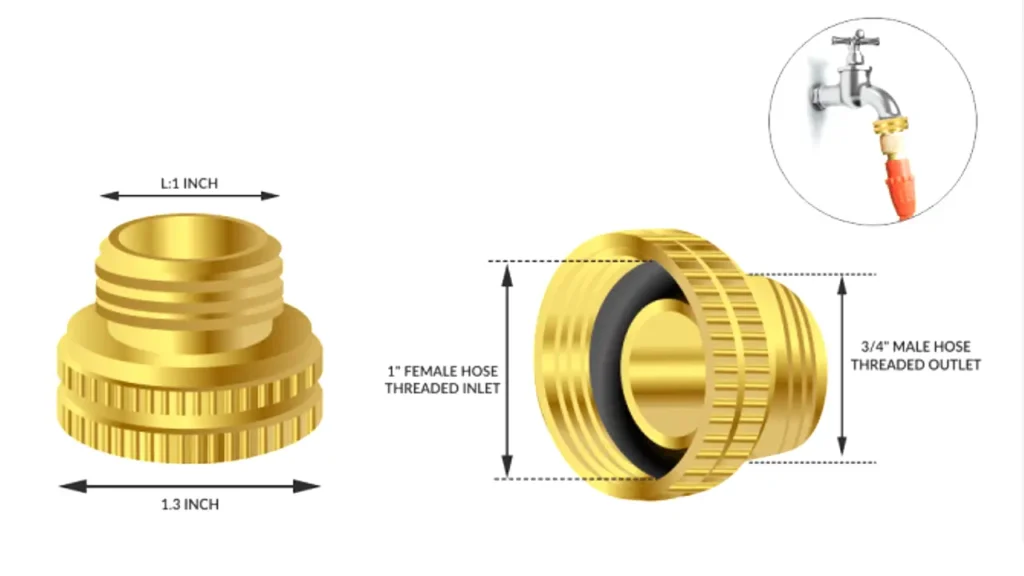
The standard garden hose fitting in the United States and Canada is defined by a specific thread standard known as GHT (Garden Hose Thread). This standard ensures that regardless of the brand or the retail outlet, a hose will connect to a spigot, and a nozzle will connect to a hose. In the vast majority of residential and commercial applications, the standard size for these fittings is 3/4-inch. However, understanding the nuances of this measurement—and how it differs from other plumbing standards—is essential for any entrepreneur looking to scale a side hustle into a sustainable business.
Understanding the GHT Standard: A Key to Operational Efficiency
Operational efficiency in a service business is driven by standardization. When your equipment is interchangeable, you reduce the time spent on troubleshooting and increase the time spent on billable tasks. The 3/4-inch GHT standard is the universal language of outdoor water management.
The 3/4-inch GHT Standard Explained
The “3/4-inch” designation in a garden hose fitting does not actually refer to the diameter of the threads themselves, but rather the internal diameter of the hose it is intended to service. The actual outer diameter of the male GHT fitting is approximately 1.0625 inches (27 mm), with a thread pitch of 11.5 threads per inch (TPI).
This is a critical distinction for business owners to understand when purchasing replacement parts or building custom rigs. If you are sourcing components from a specialized industrial supplier, you must specify GHT. Confusing GHT with NPT (National Pipe Thread), which is commonly used in internal plumbing and air compressors, can lead to costly mistakes. While they may look similar to the naked eye, the thread pitches are different. Attempting to force an NPT fitting onto a GHT spigot will strip the threads, leading to equipment damage and project delays—direct hits to your profit margin.
Avoiding Costly Compatibility Errors
For a side hustle like a mobile car detailing service, a leaking fitting is more than a nuisance; it is a drain on resources. Water costs, while often covered by the client, are a point of professional reputation. A technician who arrives with ill-fitting equipment that sprays water at the connection point appears amateurish, potentially jeopardizing recurring contracts.
Furthermore, the “cost of incompatibility” includes the lost opportunity cost. If a pressure washing professional arrives at a commercial job site and finds a non-standard spigot or a damaged fitting, and they lack the 3/4-inch GHT adapters to remedy the situation, the billable hours for that day drop to zero. Understanding the standard size allows an entrepreneur to build a “standardized kit” of adapters and connectors that ensure they can hook up to any water source, protecting their daily revenue.
Scaling Your Side Hustle: The ROI of Equipment Knowledge
As a side hustle grows into a legitimate business, the financial focus shifts from “getting the job done” to “maximizing the Return on Investment (ROI).” Every piece of hardware purchased is a capital investment. Knowing that the standard fitting is 3/4-inch GHT allows you to make smarter purchasing decisions regarding professional-grade equipment versus consumer-grade alternatives.
Pressure Washing and Professional Landscaping
In high-intensity industries like pressure washing, the water supply is the lifeblood of the operation. While the fitting is standard, the hose diameter can vary—typically between 1/2-inch, 5/8-inch, and 3/4-inch internal diameters.
From a business finance perspective, the 3/4-inch internal diameter hose (equipped with the standard 3/4-inch GHT fitting) is often the superior choice for professional applications. Although it is heavier and more expensive than a 5/8-inch hose, it delivers a significantly higher volume of water (Gallons Per Minute or GPM). Most professional-grade pressure washers require high GPM to operate efficiently and prevent pump cavitation. By investing in the correct hose size and ensuring a high-flow 3/4-inch GHT connection, a business owner extends the lifespan of their expensive machinery, thereby reducing long-term maintenance costs and increasing the ROI of the equipment.
The Hidden Costs of Non-Standard Fittings
Occasionally, entrepreneurs may encounter “quick-connect” systems or proprietary fittings marketed by specific brands. While these can offer a few seconds of convenience, they often represent a financial trap. Proprietary systems lock a business into a specific ecosystem, often at a 200% to 300% markup over standard GHT brass fittings.

A savvy business owner prioritizes universal compatibility. By sticking to the 3/4-inch GHT standard, you retain the ability to source parts from any hardware wholesaler, leverage bulk discounts, and perform field repairs without waiting for a manufacturer-specific part to arrive in the mail. In the world of small business, agility and cost-control are the primary drivers of growth.
Business Finance: Repair vs. Replacement Strategies
A fundamental aspect of business finance is managing the lifecycle of your assets. In a water-intensive business, fittings are “consumable” assets—they will eventually wear out due to friction, mineral buildup, or physical damage.
Calculating the Lifecycle Cost of Brass vs. Plastic
When sourcing 3/4-inch GHT fittings, you will face a choice: inexpensive plastic or durable brass. A “Money” focused analysis reveals that plastic fittings are almost always a poor financial decision for a professional.
Plastic fittings are prone to cross-threading and UV degradation. If a plastic fitting fails during a job, the cost of the downtime and the fuel to drive to a store for a $2 replacement far exceeds the initial $5 savings. Brass fittings, particularly those made from “heavy-duty” or “full-flow” machined brass, offer a much longer service life. From a balance sheet perspective, the higher upfront cost of brass is depreciated over a much longer period, resulting in a lower “cost per use” than plastic.
Bulk Purchasing and Inventory Management
Once you have identified 3/4-inch GHT as your operational standard, you can move toward sophisticated inventory management. Buying individual fittings at retail prices is an unnecessary drain on margins.
By purchasing high-quality brass washers, male-to-male couplers, and female-to-female adapters in bulk from industrial suppliers, a side hustle owner can reduce their “per-unit” cost by as much as 60%. Keeping a small inventory of these standard parts in a service vehicle prevents the “emergency retail run,” which is one of the most common “hidden” expenses in field service industries. Effective cash flow management involves anticipating these small needs before they become emergencies.
Leveraging Technical Specifications for Competitive Advantage
In a crowded market, professionalism is a competitive advantage. This professionalism is often demonstrated through the technical mastery of your tools. Knowing that your system relies on 3/4-inch GHT allows you to customize your setup for maximum performance, which in turn allows you to complete jobs faster and take on more clients.
Efficiency as a Profit Driver
In industries like professional gardening or irrigation maintenance, the time spent moving hoses and connecting to different zones is “non-billable” time. By utilizing high-flow 3/4-inch GHT manifolds and quick-connects that adhere to the GHT standard, a technician can shave ten minutes off every hour of work.
Over the course of a 40-hour work week, that represents nearly seven hours of recovered time. If your billable rate is $50 per hour, that technical knowledge of fitting standards and flow optimization has just added $350 per week—or over $18,000 per year—to your top-line revenue without requiring you to raise your prices or find a single new customer.
Future-Proofing Your Service Business
As technology advances, even the humble garden hose is seeing innovation through smart controllers and IoT (Internet of Things) integration. Smart irrigation timers and flow meters are becoming standard in high-end property management. Almost all of these tech tools are designed around the 3/4-inch GHT standard.
By ensuring your current equipment and side hustle infrastructure are firmly rooted in this standard, you future-proof your business. You will be able to integrate new technology, such as remote-monitored water sensors or automated fertilization injectors, without needing to overhaul your entire system. This adaptability is key to long-term business survival and financial success.
The question of hose fitting size is not merely a matter of hardware; it is a matter of business strategy. For the entrepreneur, the 3/4-inch GHT fitting is a symbol of the standardization, reliability, and efficiency required to turn a simple side hustle into a profitable, scalable enterprise. Understanding these “small” details is what separates the hobbyist from the professional and ensures that your business remains “flow-positive” in every sense of the word.
aViewFromTheCave is a participant in the Amazon Services LLC Associates Program, an affiliate advertising program designed to provide a means for sites to earn advertising fees by advertising and linking to Amazon.com. Amazon, the Amazon logo, AmazonSupply, and the AmazonSupply logo are trademarks of Amazon.com, Inc. or its affiliates. As an Amazon Associate we earn affiliate commissions from qualifying purchases.