
The journey toward a medical degree is often framed as a purely academic and humanitarian pursuit. However, for the strategic student, the undergraduate years represent the first major investment in a high-stakes financial portfolio. Choosing a “pre-med” major is not merely about fulfilling science prerequisites; it is a complex decision involving return on investment (ROI), risk mitigation, and long-term wealth management. When we ask which pre-med major is the best, we must look beyond the lab bench and evaluate the path through the lens of fiscal responsibility and career flexibility.
In an era where the average medical school graduate carries a debt load exceeding $200,000, the “best” major is the one that maximizes your chances of admission while providing a robust financial safety net and the quantitative skills necessary to manage a future high-income career.
The Financial ROI of Your Undergraduate Choice
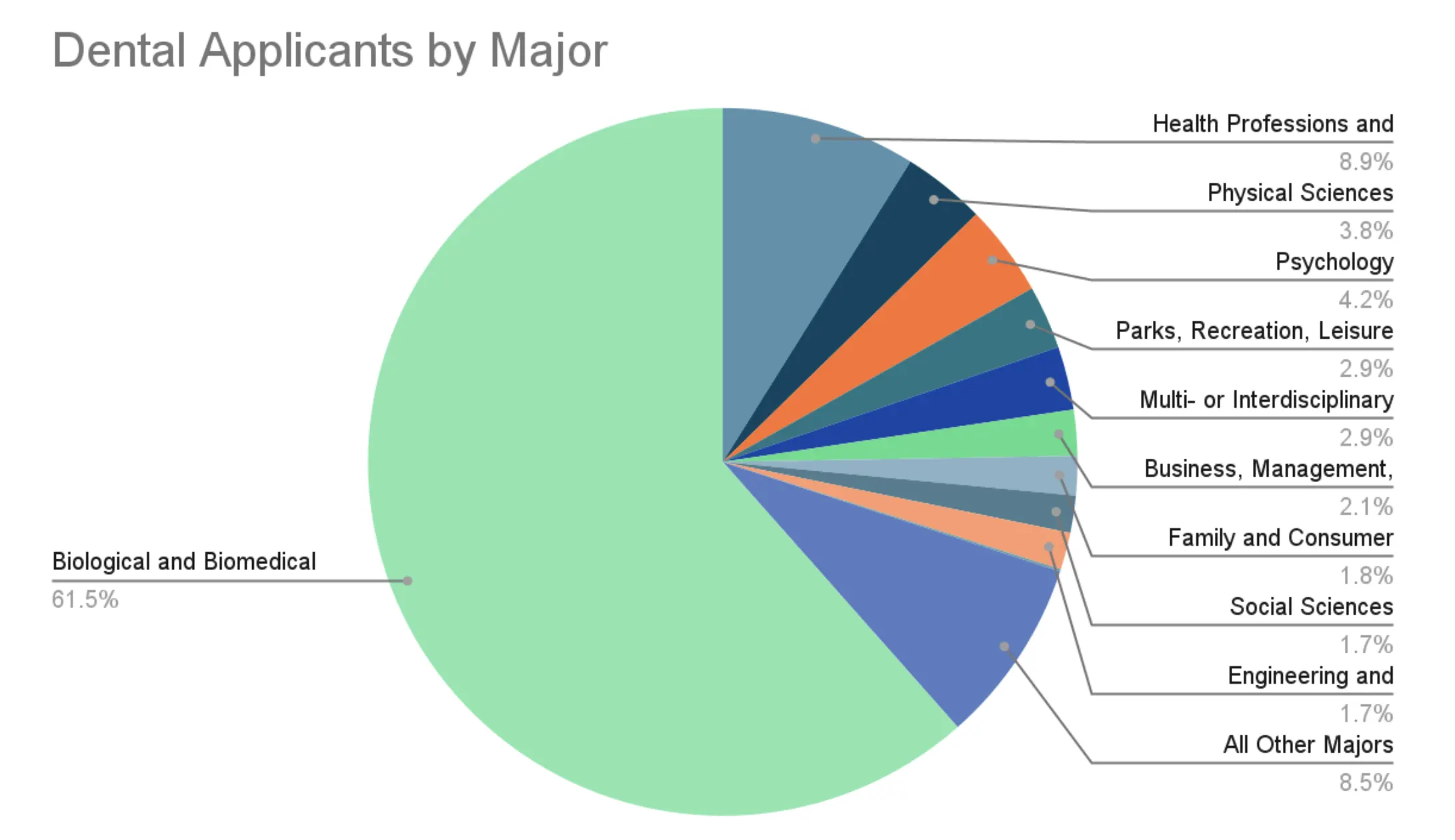
The traditional path to medical school involves majoring in Biological Sciences. While this path is well-trodden, it is not always the most financially sound. To determine the best major from a “Money” perspective, one must consider the “Career Hedge.” If you are among the significant percentage of students who shift away from medicine before or after graduation, your major becomes your primary asset in the labor market.
The Opportunity Cost of the Biological Sciences
Biology and Chemistry are the most common majors for medical school applicants. Because these fields are saturated, the starting salaries for those who do not go on to professional or graduate school are often lower than in other sectors. From a financial planning standpoint, a Biology degree without a subsequent medical degree offers a lower ROI compared to more quantitative or technical fields.
If you choose a traditional science major, you must be aware of the “Sunk Cost Fallacy.” Many students persist in the pre-med track simply because their degree has limited utility elsewhere. The best major is one that provides intrinsic value in the marketplace, regardless of whether you ever don a white coat.
High-Floor Majors: Engineering and Economics
Engineering and Economics stand out as “High-Floor” majors. These degrees command high starting salaries (often $70,000–$90,000+) immediately upon graduation. For a pre-med student, this provides an incredible financial buffer. If you choose to take a gap year—a practice that is increasingly common—having an Economics or Engineering degree allows you to build a “Med School Fund,” significantly reducing the amount of high-interest unsubsidized loans you will need to take out later.
The GPA-to-Scholarship Pipeline: Strategic Academic Arbitrage
In the business of medical school admissions, your Grade Point Average (GPA) is a primary metric of your “academic capital.” There is a strategic advantage to choosing a major that allows for a high GPA with a manageable workload, a concept we can call “Academic Arbitrage.”
Maximizing Merit-Based Aid
Medical school is expensive, but undergraduate debt is the first hurdle. Many students lose out on merit-based scholarships during their undergraduate years because they choose notoriously difficult majors (like Organic Chemistry or Physics) where the “grading curve” is punitive.
A student who majors in the Humanities or Social Sciences—fields where they may naturally excel—often maintains a higher GPA. This high GPA doesn’t just help with medical school admissions; it secures undergraduate institutional scholarships, minimizing the debt carried into medical school. From a personal finance perspective, graduating debt-free from undergrad is the single best way to ensure long-term wealth as a physician.
The MCAT as an Equalizer
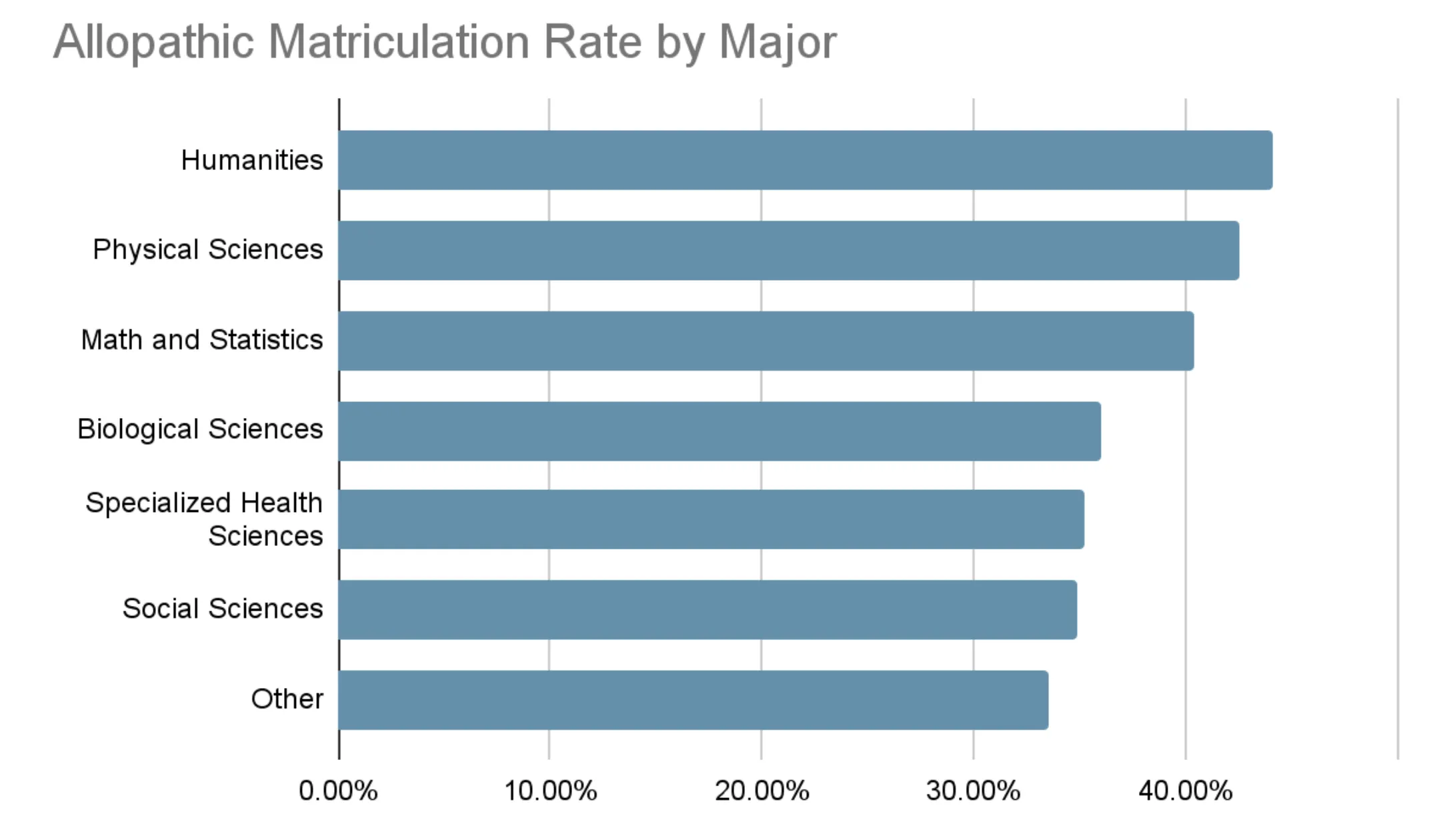
The Medical College Admission Test (MCAT) is the great equalizer. Data from the Association of American Medical Colleges (AAMC) consistently shows that students who major in the Humanities and Physical Sciences (like Math or Physics) often score higher on the MCAT than Biology majors.
By choosing a major that emphasizes critical thinking, reading comprehension, and quantitative reasoning, you are essentially investing in a higher MCAT score. A higher score leads to admissions at higher-tier institutions, which often have larger endowments for financial aid and better “brand equity” for future residency placements.
The Business of Medicine: Why Finance and Management Win Long-Term
Modern medicine is as much a business as it is a science. As the healthcare landscape shifts toward value-based care and private equity acquisitions of medical practices, a physician’s financial literacy becomes their most important non-clinical skill.
Understanding the Revenue Cycle
Choosing a major in Business, Finance, or Healthcare Management provides a unique competitive advantage. Physicians who understand the revenue cycle, insurance billing, and overhead management are far more likely to succeed in private practice or rise to executive roles in hospital systems (CMO or CEO positions).
A Finance major learns about compounding interest, tax-advantaged investing, and capital allocation. When these individuals become doctors, they are better equipped to handle the “lifestyle creep” that often plagues high earners and can manage their six-figure salaries with the precision of a fund manager.
Entrepreneurship and Side Hustles
The best pre-med major might be one that fosters an entrepreneurial mindset. With the rise of digital health, telemedicine, and medical consulting, physicians with a background in Business or Tech can diversify their income streams.
Relying solely on clinical “active income” is a risk. Burnout is a financial threat. A doctor with a background in Business can pivot into medical startups, venture capital, or healthcare consulting. This diversification of income is a hallmark of sound personal finance, ensuring that your earning potential is not tied exclusively to the number of patients you can see in a day.
The Quantitative Advantage: Math and Data Science
We are entering the age of Big Data in healthcare. The “best” major for the future of medicine may well be Data Science or Statistics. From a money perspective, these skills are currently the most liquid in the global economy.
High-Yield Skill Acquisition
A pre-med student who is proficient in R, Python, or advanced statistical modeling possesses “high-yield” skills. During medical school and residency, these students are invaluable to research teams. They can perform their own data analysis, leading to more publications and faster career advancement.
In the financial world, “time is money.” The ability to expedite your research and residency matching process through technical proficiency translates directly into earlier career entry and more years of high-bracket earning.
Leveraging Tech in a Medical Career
Beyond clinical practice, a background in Data Science allows a physician to consult for pharmaceutical companies or medical device manufacturers. These “industry” roles often pay significantly more than clinical roles and come with stock options and performance bonuses. By choosing a quantitative pre-med major, you are positioning yourself to bridge the gap between clinical expertise and technical implementation—a niche that is extremely lucrative.
Risk Management and the “Gap Year” Economy
The path to medicine is rarely a straight line. Many applicants now spend one to three years between undergraduate studies and medical school. This “gap” can be a financial black hole or a wealth-building opportunity.
The High-Income Gap Year
If your major is in a field like Nursing, Medical Technology, or even Finance, your gap year can be spent earning a professional salary. This allows you to:
- Maximize 401(k) or Roth IRA contributions early in life (the power of compounding).
- Pay down any existing undergraduate high-interest debt.
- Build a cash reserve for the “hidden costs” of medical school applications (interviews, travel, and deposits).
A Biology major often finds themselves working as a lab technician or a scribe during their gap year, earning near minimum wage. An Economics or Nursing major, however, can earn a middle-class income, putting them years ahead financially before they even start their first day of anatomy lab.
Choosing for Resilience
The “best” pre-med major is ultimately the one that builds personal and financial resilience. It is the major that makes you a fascinating candidate to admissions committees—who are tired of seeing identical science transcripts—while simultaneously ensuring that you are never “trapped” by your debt.
When you view your education as a series of strategic financial moves, the choice of major becomes clear. It isn’t about which major is “easiest” or “most expected.” It is about which major offers the best “Risk-Adjusted Return.” For most, this means moving away from the traditional sciences and toward degrees in Business, Engineering, or the Humanities. These paths offer the highest probability of a high GPA, the best preparation for the MCAT’s critical thinking requirements, and the most robust “Plan B” if the journey to MD or DO takes a detour.
By focusing on ROI, career hedging, and financial literacy, you can choose a pre-med major that doesn’t just get you into medical school, but sets the foundation for a lifetime of financial independence and professional autonomy.
aViewFromTheCave is a participant in the Amazon Services LLC Associates Program, an affiliate advertising program designed to provide a means for sites to earn advertising fees by advertising and linking to Amazon.com. Amazon, the Amazon logo, AmazonSupply, and the AmazonSupply logo are trademarks of Amazon.com, Inc. or its affiliates. As an Amazon Associate we earn affiliate commissions from qualifying purchases.