
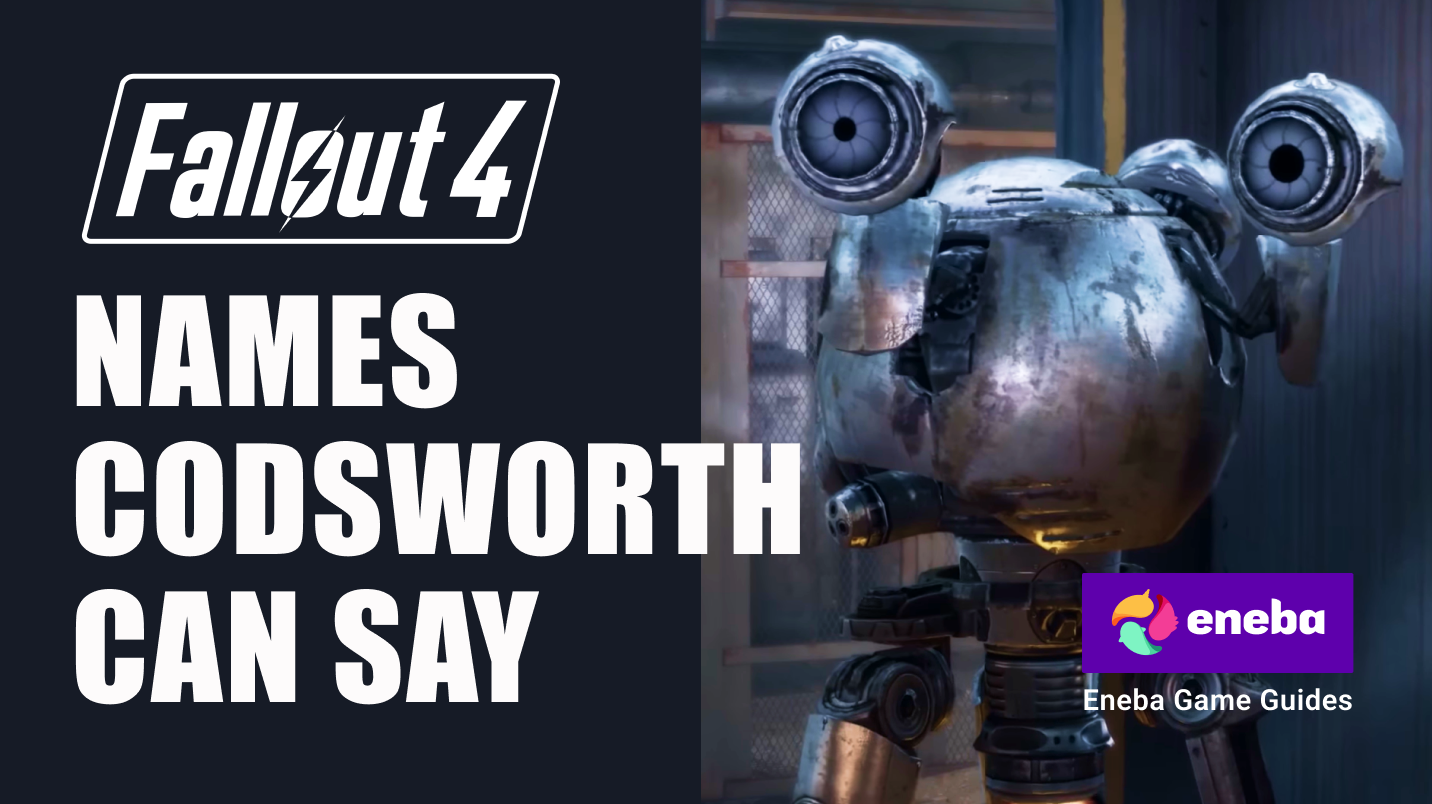
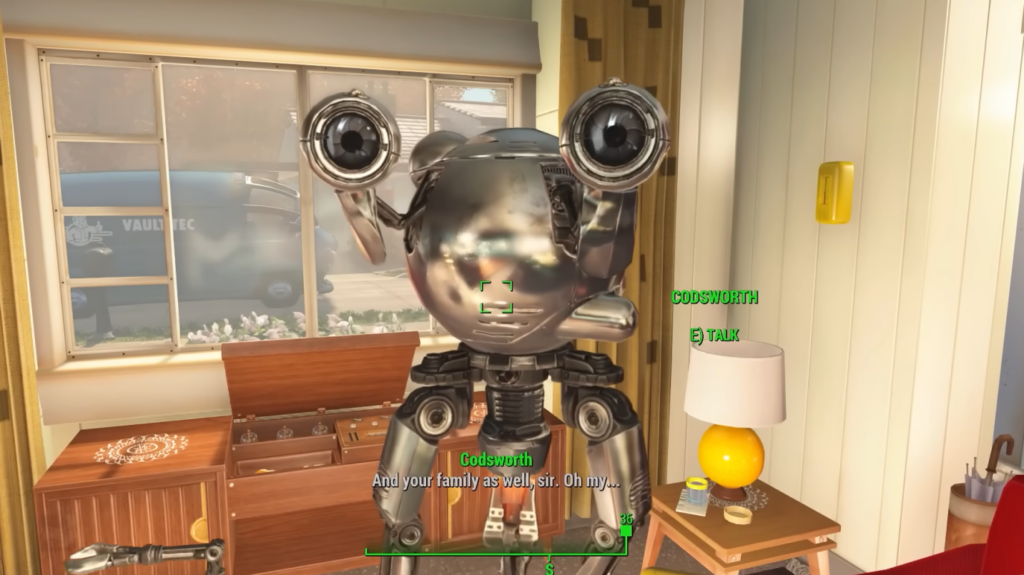
When Bethesda Game Studios released Fallout 4 in 2015, one specific technical feature captured the collective imagination of the tech and gaming communities: the ability of the robotic butler, Codsworth, to speak the player’s chosen name. While seemingly a minor aesthetic touch, the implementation of this feature represented a sophisticated intersection of database management, digital signal processing, and procedural content generation. In the realm of software engineering and user experience (UX) design, the “Codsworth name list” serves as a landmark case study in how pre-recorded data can be leveraged to create the illusion of true dynamic artificial intelligence.

Understanding which names Codsworth can say requires more than a simple list; it requires an analysis of the architectural decisions made by developers to bridge the gap between static assets and personalized user experiences.
The Engineering Behind the Voice: Recording vs. Synthesis
To appreciate the scope of the Codsworth naming system, one must first distinguish between the two primary methods of computer-generated speech: Concatenative Synthesis and Generative AI Synthesis. At the time of development, the technology for real-time, high-fidelity generative voice synthesis (such as the neural TTS models we see today) was not yet viable for local execution on gaming consoles without significant latency.
Concatenative Synthesis and Phonetic Accuracy
Bethesda opted for a high-fidelity approach using recorded assets. The voice actor for Codsworth, Stephen Russell, recorded approximately 1,000 of the most common and culturally significant names. This process is known as concatenative synthesis, where discrete segments of recorded speech are stored in a database and triggered by specific string inputs from the player.
The technical challenge here was not merely the recording but the integration. The software had to be programmed to recognize specific string variants. For example, the system needed to recognize that “Jon,” “John,” and “Jonathan” might all point to a single audio file, or conversely, require distinct files depending on the phonetic weight of the name. By mapping a massive array of strings to a finite set of high-quality audio files, the developers created a seamless “lookup table” that felt like an active response system.
The Role of Digital Signal Processing (DSP)
One reason the personalization felt so natural was the application of Digital Signal Processing (DSP). Because Codsworth is a “Mister Handy” robot, his voice is modulated with a metallic, resonant filter. From a technical standpoint, this was a strategic advantage. By applying a consistent robotic filter over the recorded name assets, the developers could mask the subtle “stitching” that often occurs when a recorded name is inserted into a pre-existing sentence structure.
This DSP layer ensured that the cadence, tone, and frequency of the name matched the surrounding dialogue perfectly, solving one of the oldest problems in computer-aided speech: the “uncanny valley” of auditory transitions.
Analyzing the Codsworth Database: A Study in User Data and Cultural Trends
The list of names Codsworth can say is a fascinating snapshot of mid-2010s data analytics. To determine which names to include, developers likely consulted global census data, social security records, and popular culture trends to maximize the probability of a “hit” for the average user.
The Algorithmic Selection of Name Lists
The primary database includes several hundred “standard” names—the Michaels, Davids, and Marys of the world. However, the tech team went further, incorporating a diverse array of international names to reflect a global user base. This required a robust string-matching algorithm that could handle various spellings and phonetic approximations.
From a software perspective, the “lookup” function operates on a simple logic:
- Input: User enters a name string in the character creator.
- Normalization: The system converts the string to lowercase and removes special characters.
- Matching: The system compares the normalized string against the indexed ID list in the game’s master file (the .esm file).
- Execution: If a match is found, the global variable for “PlayerNameRecognized” is set to true, and the specific audio ID is assigned to Codsworth’s dialogue script.
Pop Culture and the “Easter Egg” Logic
Beyond standard naming conventions, the database includes a significant number of Easter eggs. This is where the personalization tech crosses into brand engagement. By including names like “Skywalker,” “Furiosa,” “Mulder,” and even more irreverent choices, the developers leveraged the software to create viral moments.
Technically, this is an exercise in “edge case” programming. While 90% of the names are designed for the 90% of the population, the inclusion of niche names serves as a psychological reward for users testing the boundaries of the system. It demonstrates a sophisticated understanding of user behavior: users don’t just want a system that works; they want a system they can “surprise.”
Beyond Fallout: The Future of Generative AI and Dynamic NPCs
The “Codsworth model” was a precursor to the current revolution in Large Language Models (LLMs) and generative voice technology. While Fallout 4 relied on a static list of 1,000 names, modern tech is moving toward a future where NPCs (Non-Player Characters) can synthesize any name—or any sentence—in real-time.
From Pre-recorded Assets to Large Language Models
We are currently seeing a transition from the “Concatenative” era to the “Generative” era. Companies like Inworld AI and Convai are developing middleware that allows NPCs to process natural language inputs and respond using synthesized voices that maintain consistent emotional inflection.
In this new paradigm, the “List of Names” becomes obsolete. Instead of a developer having to manually record “Borg” or “Arwen,” a neural network trained on a specific voice profile can procedurally generate the correct phonemes for any string. This represents a massive shift in how games are built, moving away from “Hard-coded Personalization” toward “Dynamic Intelligence.”
Overcoming the Latency Barrier
The primary tech hurdle for modern dynamic personalization is latency. For a robot like Codsworth to feel responsive, the “Time to First Token” (the speed at which the AI starts talking after a trigger) must be under 200–300 milliseconds. Current cloud-based AI solutions often struggle with this, leading to awkward pauses.
However, the industry is seeing a push toward “on-device” AI. With the advent of NPUs (Neural Processing Units) in modern PC hardware and consoles, the next iteration of the Codsworth system will likely involve local inference. This would allow a game to not only say your name but also reference your specific actions, the weather in your actual location, or the time of day, all without a pre-recorded database.
The Impact of Personalization Technology on User Experience (UX)
The success of the Codsworth naming feature highlights a critical principle in modern software design: the power of the “Personalization Paradox.” Users are aware that they are interacting with code, yet when that code acknowledges their specific identity (their name), the level of immersion increases exponentially.
Emotional Resonance Through Tech
From a UX standpoint, the technology of naming addresses the human need for recognition. In professional software applications, we see this in personalized dashboards and AI assistants that adapt to user preferences. In gaming, it transforms a generic “Player” into a specific “Character.”
The technical implementation of the Codsworth list was a masterclass in resource management. By selecting a limited but highly impactful data set (1,000 names), Bethesda achieved a high “perceived intelligence” for the character without the overhead of a fully generative system. This is a vital lesson for developers: you do not always need the most complex AI to create a deeply personal user experience; you simply need a well-indexed database and a seamless delivery mechanism.
Conclusion: The Legacy of a Name
“What names will Codsworth say?” is a question that leads us into the heart of modern interactive technology. It is a story of how developers used recorded data, digital filters, and clever string-matching to make a robot butler feel like a companion.
As we move into an era dominated by AI-driven NPCs and real-time voice synthesis, the Codsworth name list remains a pivotal moment in tech history. It proved that personalization is not just a gimmick—it is a fundamental component of the digital experience. Whether through a pre-recorded list or a generative neural network, the goal remains the same: to use technology to bridge the gap between the user and the digital world, one name at a time.
aViewFromTheCave is a participant in the Amazon Services LLC Associates Program, an affiliate advertising program designed to provide a means for sites to earn advertising fees by advertising and linking to Amazon.com. Amazon, the Amazon logo, AmazonSupply, and the AmazonSupply logo are trademarks of Amazon.com, Inc. or its affiliates. As an Amazon Associate we earn affiliate commissions from qualifying purchases.