
Navigating the landscape of modern employment and financial planning requires a deep understanding of how you are compensated for your time, skill, and labor. When an employer or a potential client asks, “What is your desired salary annually or hourly?” they are not just asking for a number; they are asking you to define your market value. For the professional, this question represents a critical juncture where personal finance meets professional strategy. Understanding the nuances between annual salaries and hourly rates—and knowing how to calculate, justify, and negotiate them—is essential for long-term wealth building and career satisfaction.
Decoding the Math: The Fundamental Differences Between Annual and Hourly Pay
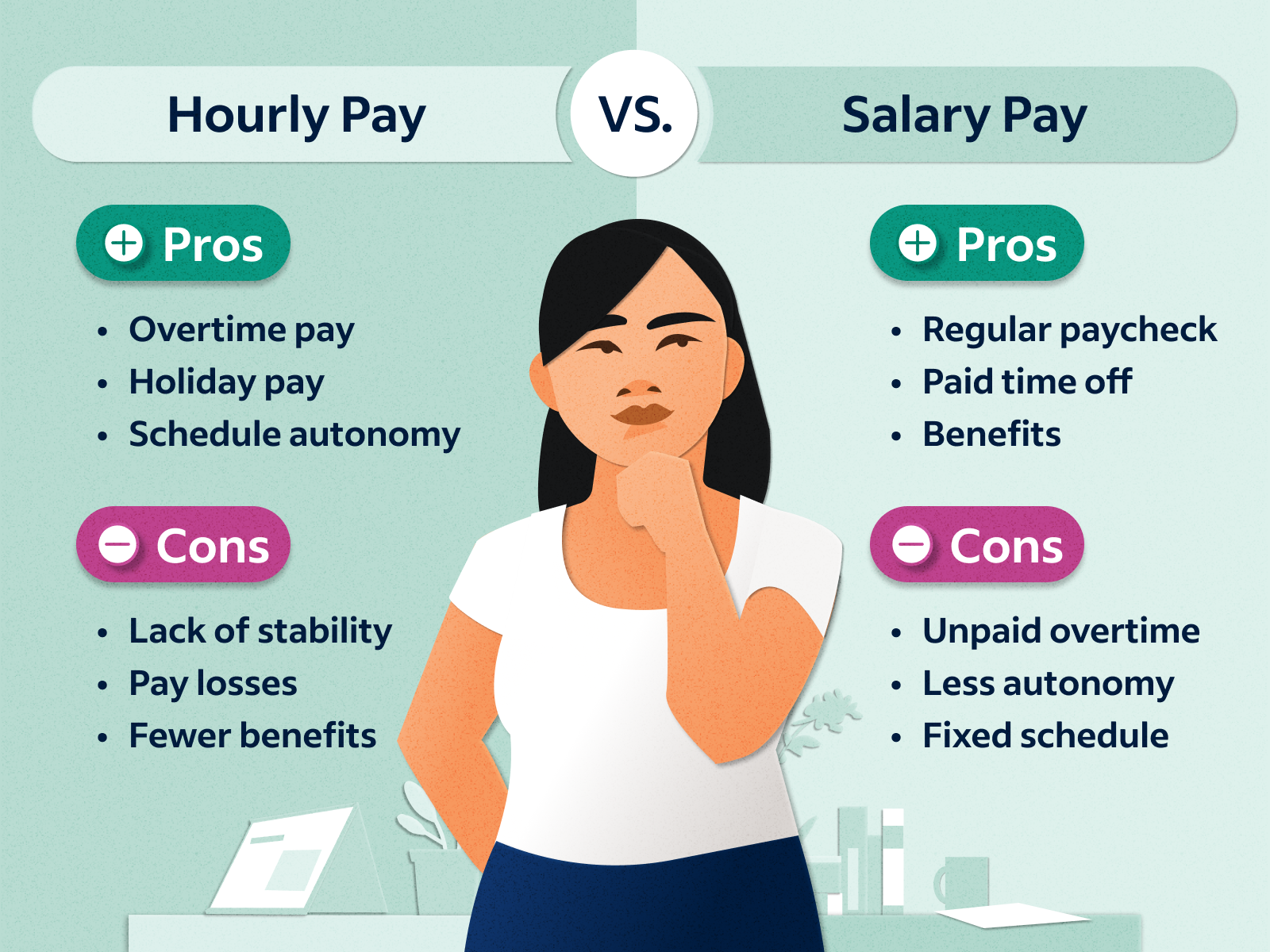
At first glance, the difference between an annual salary and an hourly wage seems like a matter of simple arithmetic. However, from a financial management perspective, these two structures represent different lifestyles and risk profiles.
The 2,080-Hour Standard
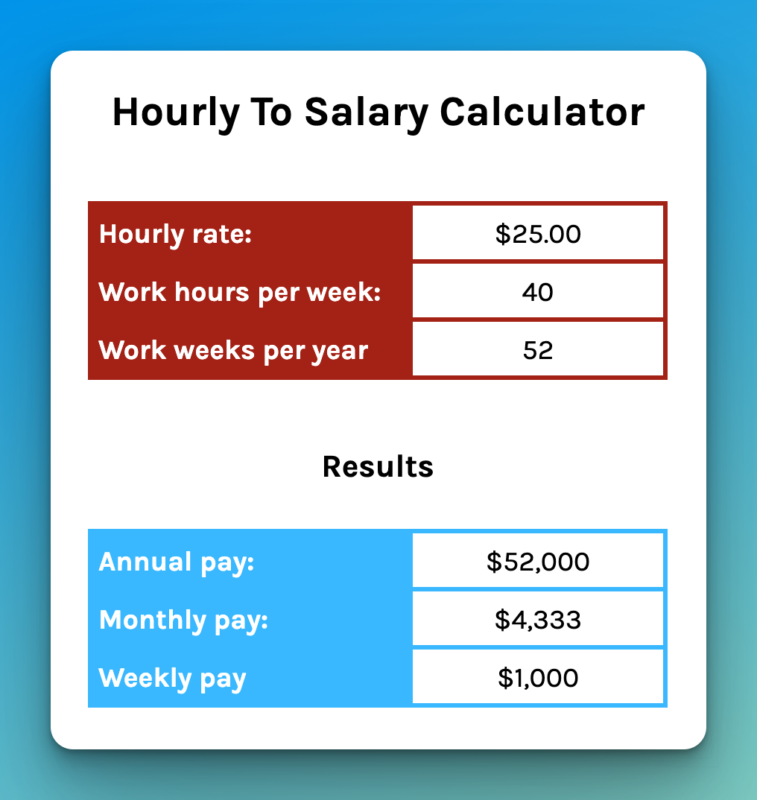
To transition between an annual figure and an hourly rate, the standard benchmark used by HR departments and financial planners is the 2,080-hour work year. This is calculated by multiplying 40 hours per week by 52 weeks. If you are aiming for a $100,000 annual salary, your equivalent hourly rate is approximately $48.08. Conversely, if you are offered $30 per hour, your gross annual income would be $62,400, assuming a full-time schedule.
Stability vs. Flexibility
An annual salary often implies a “white-collar” professional expectation where you are paid for outcomes rather than specific minutes at a desk. The primary financial benefit of a salary is predictability. You know exactly what your mortgage-paying capacity is every month. However, the hidden cost is often “unpaid overtime.” If a salaried position requires 50 or 60 hours a week, your effective hourly rate drops significantly.
Hourly pay, on the other hand, offers a direct correlation between time invested and money earned. In many jurisdictions, hourly workers are eligible for overtime pay (1.5x the base rate), which can make a lower hourly base more lucrative than a stagnant salary during peak seasons. For those in the “gig economy” or high-end consulting, hourly rates must also account for non-billable hours, such as administrative work, marketing, and professional development.
Tax Implications and Withholdings
Whether you are paid annually or hourly, your take-home pay is dictated by the “net” rather than the “gross.” Salaried employees often have more streamlined tax withholdings and employer-sponsored benefits. Hourly workers, particularly those working as independent contractors (1099), must be vigilant about self-employment taxes, which can consume upwards of 15.3% of income before standard income taxes even apply. When setting a desired hourly rate as a freelancer, one must “pad” the number by at least 25-30% to account for these obligations.
Market Research: Determining Your True Financial Value
You cannot provide an informed answer to the salary question without comprehensive market data. In the realm of personal finance, “guessing” is a recipe for leaving thousands of dollars on the table.
Utilizing Compensation Databases
The first step in establishing your desired compensation is to consult industry-standard databases such as Glassdoor, Payscale, and the Bureau of Labor Statistics (BLS). These tools allow you to filter by job title, years of experience, and specific skill sets. However, the most critical filter is often overlooked: geography. A $120,000 salary in San Francisco may have less purchasing power than an $80,000 salary in Indianapolis once cost-of-living adjustments for housing and taxes are applied.
The Role of Niche Specialization
Generalists often face “commodity pricing,” where their salary is capped by a broad market average. Specialists, however, can command premiums. If you possess a “rare and valuable” skill—such as proficiency in a legacy banking software or a high-level certification in cybersecurity—your desired salary should reflect the scarcity of your talent. When researching, look for the “90th percentile” data points to see what the top earners in your field are making and identify the gap between your current skills and theirs.
Factoring in Inflation and Opportunity Cost
In an inflationary environment, a salary that felt comfortable two years ago may no longer support the same standard of living. When stating your desired salary, it is vital to account for the current Consumer Price Index (CPI) trends. Furthermore, consider the “opportunity cost” of the role. Does this position offer rapid upward mobility and raises, or is it a “terminal” role with stagnant pay? A lower starting salary in a high-growth firm may be financially superior to a high starting salary in a declining industry over a five-year horizon.
The Strategy of the Range: Negotiating for Maximum Gain
Once you have determined your value, the delivery of your desired number requires tactical precision. Financial experts often recommend the “Range Strategy” to remain competitive while protecting your bottom line.
Defining Your Floor and Your Ceiling
Never give a single number. Instead, provide a range where your “floor” (the lowest you are willing to accept) is actually the mid-point of the range you provide. For example, if you need $90,000 to meet your financial goals, your stated range should be $95,000 to $110,000. This gives the employer room to “negotiate you down” to a number that still exceeds your minimum requirement.
The Psychology of Anchoring
In negotiation theory, the first number mentioned sets the “anchor” for the entire conversation. If you mention a low number early, it is psychologically difficult to move the employer significantly higher. Conversely, if you wait for the employer to provide a budget, you run the risk of them anchoring low. The best financial move is often to defer the question until you have fully demonstrated your value during the interview process, then provide a high-anchor range backed by market data.
Hourly Rate Padding for Freelancers
For those providing an hourly rate, remember the “Rule of Thirds.” One-third of your rate goes to taxes, one-third to business expenses (software, insurance, equipment), and only the final third is your actual take-home pay. If you want to “earn” $50 an hour in your pocket, you should be quoting at least $125 to $150 per hour to maintain a sustainable business model.
Total Compensation: Evaluating the “Hidden” Income
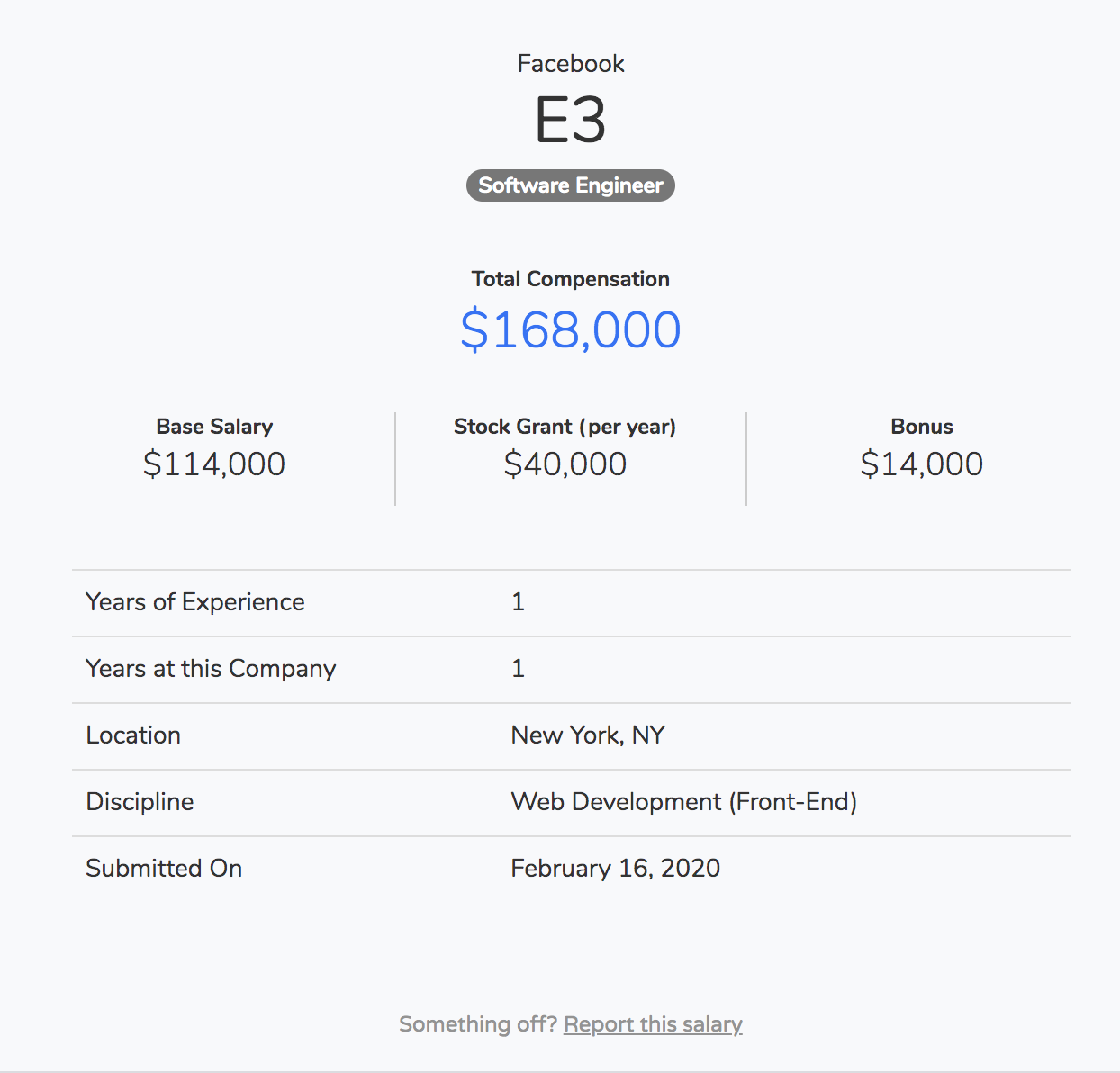
A common mistake in personal finance is focusing exclusively on the base salary or hourly rate. Total Compensation (TC) is the true measure of your financial gain.
Benefits as Monetary Equivalents
Health insurance premiums, dental, and vision plans have a direct cash value. An employer-paid premium can be worth $5,000 to $15,000 annually. When comparing an hourly role with no benefits to a salaried role with full coverage, you must add the cost of private insurance to your desired hourly rate to make an apples-to-apples comparison.
Retirement Contributions and Equity
401(k) matching is essentially a guaranteed return on investment. If a company matches 6% of an $80,000 salary, that is an additional $4,800 in “free money” annually. Furthermore, in the tech and corporate sectors, Restricted Stock Units (RSUs) or stock options can represent a significant portion of total wealth. While these carry risk, their potential for appreciation can dwarf a standard salary increase over time.
Paid Time Off (PTO) and Work-Life Balance
Time is the ultimate currency. A job offering five weeks of PTO is financially superior to a job offering two weeks, even if the base pay is slightly lower. To calculate this, divide your annual salary by 52 to find your weekly value. Three extra weeks of vacation on a $100,000 salary is effectively a $5,769 bonus in time-value.
Future-Proofing Your Income: Annual Increases and Scalability
Providing your desired salary is not a one-time event; it is the beginning of a multi-year financial trajectory. To ensure your income grows, you must build “escalation clauses” into your professional life.
The Performance-Based Raise
When discussing your desired salary, ask about the criteria for performance reviews. Is there a standard cost-of-living adjustment (COLA) annually? In a high-inflation economy, a 3% raise is actually a pay cut in real terms. Knowing the company’s historical raise structure helps you decide if your starting “desired salary” needs to be higher to compensate for slow future growth.
Leveraging Side Hustles and Multiple Streams
For hourly workers, the limitation is always the number of hours in a day. To scale income, one must move from “trading time for money” to “trading value for money.” This can involve raising hourly rates as expertise grows or shifting toward project-based pricing, where your efficiency becomes your profit margin. If you can complete a $1,000 project in four hours instead of ten, your effective hourly rate jumps from $100 to $250.
Conclusion: The Confidence of the Informed Professional
Ultimately, your desired salary or hourly rate should be a reflection of your financial needs, your market value, and your future goals. By doing the math, researching the market, and looking at the total compensation package, you position yourself as a high-value asset rather than a cost center. Whether you prefer the stability of an annual paycheck or the directness of an hourly rate, the key to financial success lies in the ability to articulate your worth with confidence and back it up with data.
aViewFromTheCave is a participant in the Amazon Services LLC Associates Program, an affiliate advertising program designed to provide a means for sites to earn advertising fees by advertising and linking to Amazon.com. Amazon, the Amazon logo, AmazonSupply, and the AmazonSupply logo are trademarks of Amazon.com, Inc. or its affiliates. As an Amazon Associate we earn affiliate commissions from qualifying purchases.