
In the sophisticated ecosystem of modern Action Role-Playing Games (ARPGs), Diablo 4 stands as a pinnacle of complex software engineering and mathematical balancing. At the heart of its combat engine lies a series of intricate calculations designed to translate player inputs and gear statistics into numerical output. One of the most frequently misunderstood components of this system is “Ultimate Damage.” To understand Ultimate Damage is to understand the underlying data architecture of Diablo 4’s combat logic, moving beyond simple button-mashing into the realm of high-level software optimization and algorithmic theory-crafting.

Ultimate Damage refers specifically to a statistical modifier that enhances the potency of a character’s “Ultimate” skill category. In the hierarchy of Diablo 4’s skill tree, every class—Barbarian, Druid, Necromancer, Rogue, and Sorcerer—has access to a high-cooldown, high-impact ability designated as an Ultimate. The Ultimate Damage affix, found on gear, paragon nodes, and legendary aspects, serves as a scalar for these specific software triggers.
The Architecture of Damage Buckets
To grasp how Ultimate Damage functions, one must first analyze the “Damage Bucket” system. In software design, particularly within RPGs, developers must decide how different statistical bonuses interact. Diablo 4 utilizes a hybrid additive and multiplicative system to prevent exponential power creep while still rewarding specialized builds.
Additive vs. Multiplicative Logic
In the game’s code, most generic damage modifiers are grouped into a single “Additive Bucket.” This means that if a player has +20% Damage to Close Enemies and +20% Ultimate Damage, the engine does not multiply the base damage by 1.2 and then by 1.2 again. Instead, it adds the percentages together (40%) and applies them to the base skill damage.
Ultimate Damage, for the most part, falls into this additive category. This has significant implications for technical build optimization. As a player accumulates more sources of additive damage, the marginal utility of each additional percentage point decreases. If you already have 500% increased damage from various sources, adding another 50% Ultimate Damage provides a smaller relative increase to your total output than if you were starting from zero.
The Role of Vulnerable and Critical Strike Damage
Distinct from the additive bucket are the multiplicative layers, primarily Vulnerable Damage and Critical Strike Damage (though these were rebalanced in later patches to include additive components). The technical challenge for a player is ensuring that their Ultimate Damage investment is supported by these multiplicative multipliers. An Ultimate skill with a massive additive damage bonus will still underperform if it fails to trigger critical strikes or interact with the “Vulnerable” state on a target.
Engineering the Ultimate: Class-Specific Implementations
Each class in Diablo 4 processes Ultimate Damage through different mechanical filters. The way the software calculates the “Grizzly Rage” of a Druid differs significantly from the “Shadow Clone” of a Rogue, despite both utilizing the Ultimate Damage stat.
The Sorcerer: Elemental Scaling and Computation
For the Sorcerer, Ultimate Damage often interacts with elemental status effects. When a Sorcerer activates “Deep Freeze,” the game isn’t just calculating a flat damage number; it is running a sub-routine that checks for “Chilled” and “Frozen” statuses, which may trigger further damage multipliers from the Paragon board. The Ultimate Damage stat acts as the base scalar for these ticks of cold damage. In this context, the technical priority is maximizing the “uptime” of the skill through Cooldown Reduction (CDR) algorithms, effectively increasing the frequency at which the Ultimate Damage stat can be applied.
The Barbarian: Resource-Based Multipliers
Barbarians often utilize Ultimates like “Wrath of the Berserker.” Here, the Ultimate Damage stat doesn’t just increase the initial hit; it scales the bonuses provided during the transformation. From a technical standpoint, the game engine creates a “buff state” where the player’s base attributes are modified for a set duration. The Ultimate Damage affix can sometimes influence the potency of these buffs, depending on specific Legendary Aspects that bridge the gap between “Stat Bonus” and “Direct Damage.”
The Necromancer: Minion and Shadow Logic
The Necromancer presents a unique technical hurdle: Does Ultimate Damage apply to summons? When using “Army of the Dead,” the software must calculate the damage of dozens of individual entities. The Ultimate Damage stat is fed into the pet scaling algorithm, ensuring that the Necromancer’s “Army” reflects the player’s gear progression. This requires a robust synchronization between the player’s stat sheet and the AI entities’ combat logs.
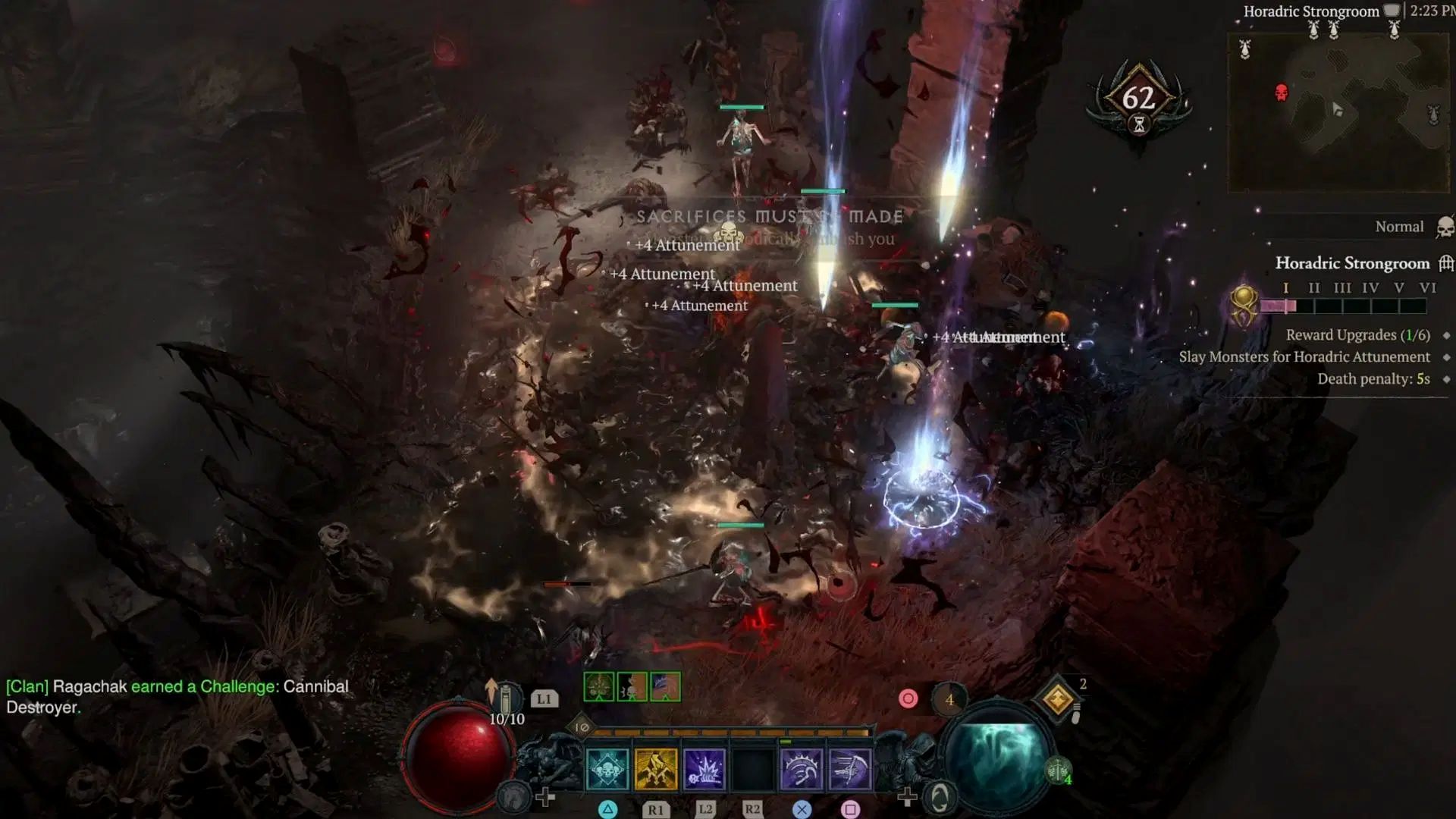
Technical Optimization: Gear, Affixes, and Paragon Boards
Optimizing Ultimate Damage is a task of data management. Players must decide which “affix slots” on their gear are best suited for this stat. In Diablo 4, gear items (Helms, Chest Armor, Weapons) have a limited number of slots for modifiers.
Affix Prioritization and RNG
The game’s loot generation system uses a weighted Random Number Generator (RNG) to determine which stats appear on an item. Ultimate Damage is a “Conditional Modifier.” In technical theory-crafting, conditional modifiers are generally ranked lower than “Universal Modifiers” (like +% Total Damage) because they only function when a specific skill is active. However, for “burst-window” builds—software configurations designed to kill a boss in a 5-second window—Ultimate Damage becomes a high-priority data point.
The Paragon Board: The Micro-Management of Stats
Beyond gear lies the Paragon Board, a grid-based system that allows for granular stat increases. Within this system, “Legendary Nodes” and “Glyphs” act as the primary engines for scaling Ultimate Damage. For instance, certain Glyphs provide a massive boost to all nodes within their radius. A technical player will map out the shortest path to these nodes to maximize the “Stat-to-Point” ratio, ensuring that every point of “Intelligence” or “Dexterity” spent on the board contributes to the scaling of the Ultimate skill.
The Diminishing Returns Curve
From a systems design perspective, Diablo 4 implements diminishing returns to maintain game stability. If a player focuses exclusively on Ultimate Damage, they hit a “soft cap” where the numerical increase in performance is negligible compared to the investment. Software analysts within the community often use spreadsheets to find the “Sweet Spot”—the exact percentage of Ultimate Damage required before it is more mathematically efficient to pivot into “Attack Speed” or “Primary Stat” (like Strength or Willpower).
The Interaction Between Cooldowns and Damage Output
A critical aspect of the technical definition of Ultimate Damage is its relationship with time. Because Ultimate skills have long cooldowns, the “Damage Per Second” (DPS) of an Ultimate is lower than a “Core Skill” if measured over a long duration.
Cooldown Reduction (CDR) Algorithms
To make Ultimate Damage viable in high-tier content (such as Nightmare Dungeons or the Pit), the software’s cooldown logic must be manipulated. This is achieved through “Cooldown Reduction” stats. Technically, CDR is calculated multiplicatively to prevent a player from reaching 100% reduction (which would crash the game’s combat balance). If you have two sources of 10% CDR, the math is: 100% * 0.9 * 0.9 = 81% (a 19% reduction), not 20%.
The synergy between Ultimate Damage and CDR is the cornerstone of “Speed-Farm” builds. By reducing the “wait time” between Ultimate activations, the player increases the “Effective DPS” of their Ultimate Damage stat. In technical terms, this is shifting the skill from a “Long-Term Cooldown” to a “Frequent Trigger,” which re-contextualizes how the damage is weighted in the combat engine.
Procedural Triggers and Lucky Hits
Diablo 4 introduces the “Lucky Hit” mechanic—a procedural trigger system that allows skills to have a percentage chance to cause an effect. Many Ultimates have high “Lucky Hit” coefficients. This means that while the Ultimate Damage stat increases the raw number, the technical utility of the skill often comes from its ability to trigger other software events, such as mana regeneration, vulnerability application, or instant cooldown resets.
Conclusion: The Computational Value of Ultimate Damage
Ultimate Damage in Diablo 4 is more than just a number on a screen; it is a specific variable within a complex mathematical framework. For the casual user, it is a boost to their most powerful move. For the technical analyst, it is a tool used to solve the “optimization puzzle” presented by the game’s software architecture.
Understanding where this stat sits within the additive damage bucket, how it interacts with class-specific triggers, and how it scales alongside cooldown reduction is essential for mastering the game’s higher difficulty tiers. As Blizzard continues to patch and iterate on the game’s balance, the technical nuances of these calculations will evolve, but the core logic remains: success in Diablo 4 is as much about understanding the underlying software mechanics as it is about the action on the screen. By treating build-crafting as a data optimization problem, players can harness the full potential of Ultimate Damage to dismantle the most challenging digital threats the game has to offer.
aViewFromTheCave is a participant in the Amazon Services LLC Associates Program, an affiliate advertising program designed to provide a means for sites to earn advertising fees by advertising and linking to Amazon.com. Amazon, the Amazon logo, AmazonSupply, and the AmazonSupply logo are trademarks of Amazon.com, Inc. or its affiliates. As an Amazon Associate we earn affiliate commissions from qualifying purchases.