
In an era of rapid digital transformation and fluctuating market cycles, the question of where to store capital has moved from a mundane administrative task to a strategic financial decision. Following high-profile bank failures and global economic shifts, depositors—ranging from individual savers to corporate treasurers—are looking beyond interest rates and mobile app interfaces. They are asking a fundamental question: What is the safest bank?
Safety in banking is not a singular metric but a combination of regulatory compliance, capital reserves, historical resilience, and the nature of the institution’s underlying assets. To identify the safest place for your money, one must look into the mechanics of institutional solvency and the legal frameworks that protect depositors when systems fail.
The Pillars of Banking Safety: Insurance and Regulation
The most immediate layer of safety for any depositor is the government-backed insurance infrastructure. In the United States, this is represented by the Federal Deposit Insurance Corporation (FDIC) for banks and the National Credit Union Administration (NCUA) for credit unions.
FDIC and NCUA: The Government Backstop
The FDIC is an independent agency of the United States government that protects depositors against the loss of their insured deposits if an FDIC-insured bank or savings association fails. Since its inception in 1933, no depositor has lost a penny of FDIC-insured funds. The current standard insurance amount is $250,000 per depositor, per insured bank, for each account ownership category.
While the “safest” bank is often debated, the safest account is any account that stays within these limits. For individuals with larger sums, the strategy shifts toward “laddering” deposits across multiple institutions or utilizing services like the IntraFi Network (formerly CDARS), which automatically distributes large deposits across a network of banks to ensure every dollar is covered by FDIC insurance.
The Role of the Federal Reserve and Stress Testing
Beyond individual deposit insurance, the safety of a bank is maintained through rigorous oversight by the Federal Reserve. Following the 2008 financial crisis, the Dodd-Frank Wall Street Reform and Consumer Protection Act introduced mandatory “stress tests” for the nation’s largest financial institutions.
These tests, known as the Comprehensive Capital Analysis and Review (CCAR), simulate extreme economic downturns—such as high unemployment, a crash in the housing market, or a severe recession—to see if the bank has enough capital to continue operations and lend to households and businesses. The “safest” banks are those that consistently clear these hurdles with significant “buffers” above the minimum requirements.
Quantifying Safety: Key Financial Ratios and Metrics
For the sophisticated investor or business owner, safety can be quantified through a bank’s balance sheet. Transparency is a hallmark of a safe institution, and several key ratios provide a window into a bank’s true health.
Tier 1 Capital Ratio: The Ultimate Buffer
The Tier 1 Capital Ratio is the core measure of a bank’s financial strength from a regulator’s point of view. It consists primarily of common stock and disclosed reserves (retained earnings). Essentially, it represents the bank’s “shock absorber.”
When a bank faces losses on loans or investments, Tier 1 capital is the first line of defense used to soak up those losses without the bank becoming insolvent. A higher Tier 1 ratio indicates a safer bank that is less likely to collapse during a period of financial distress. Globally, the Basel III accords set the standards for these ratios, and the safest banks often maintain capital levels well in excess of these international requirements.
Liquidity Coverage Ratio (LCR)
While solvency (having more assets than liabilities) is important, liquidity (having cash on hand to meet immediate demands) is what prevents a “bank run.” The Liquidity Coverage Ratio requires banks to hold enough high-quality liquid assets (HQLA)—such as cash and government bonds—to survive a 30-day stress scenario.
A bank might be solvent on paper because it owns billions in long-term real estate loans, but if depositors want their money back tomorrow, those loans cannot be instantly converted to cash. The safest banks prioritize liquidity, ensuring that even in a panic, they can satisfy withdrawal requests without needing an emergency bailout.
Systemically Important Financial Institutions (SIFIs)
When discussing safety, the phrase “Too Big to Fail” often arises. In the financial world, these are officially known as Systemically Important Financial Institutions (SIFIs) or Global Systemically Important Banks (G-SIBs).
The “Too Big to Fail” Paradigm
There is a prevailing school of thought that the safest banks are the largest ones, such as JPMorgan Chase, Bank of America, and Citigroup. These institutions are so deeply integrated into the global economy that their failure would trigger a systemic collapse. Consequently, they are subject to much stricter regulatory oversight than regional or community banks.
These “megabanks” are required to hold higher capital buffers and create “living wills”—detailed plans explaining how they could be liquidated in an orderly fashion without a government bailout. For a depositor, the safety here lies in the implicit guarantee that the government and the central bank will move mountains to prevent these institutions from disappearing.
Global Systemically Important Banks (G-SIBs)
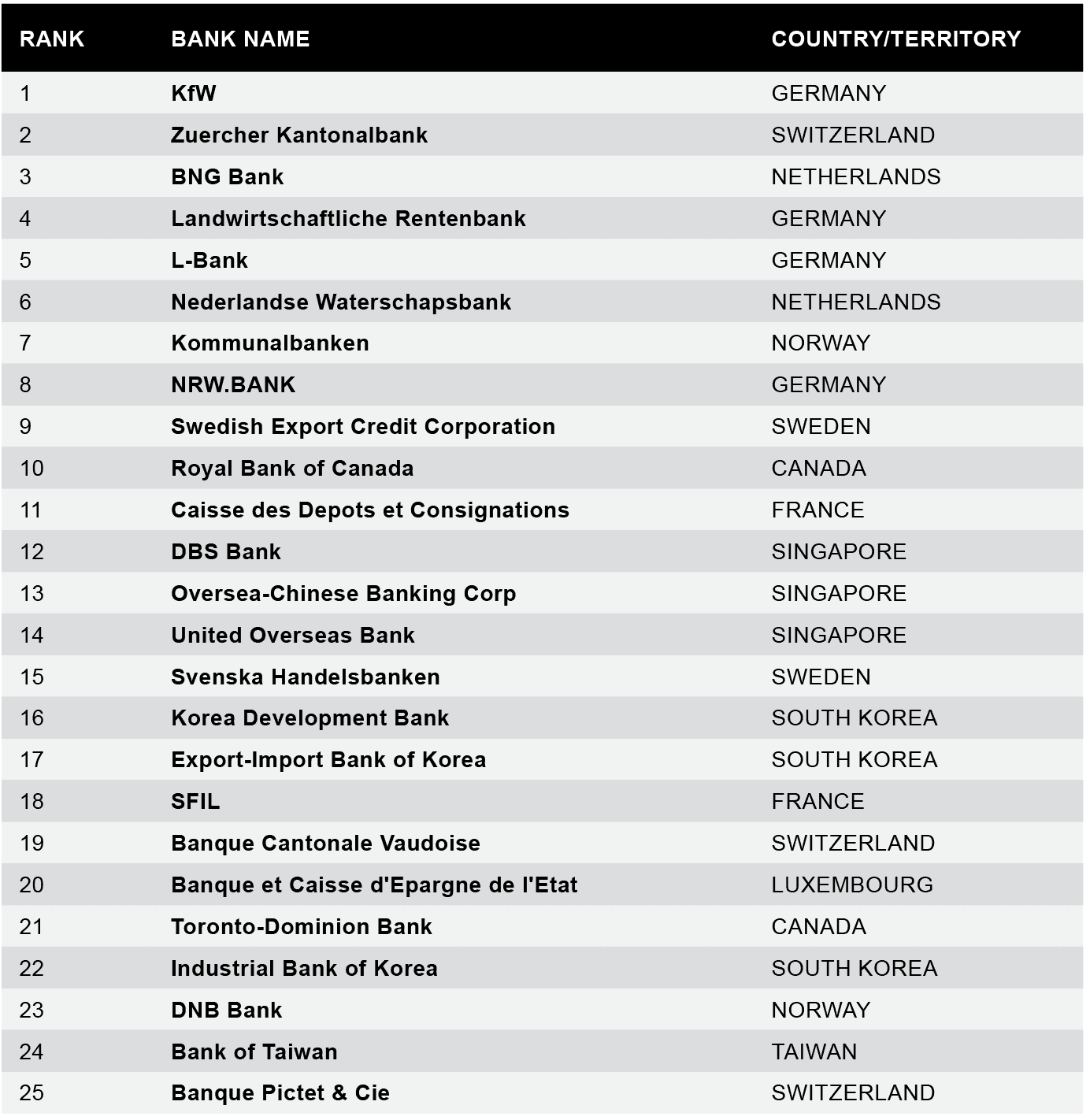
On a global scale, safety is often associated with names like HSBC, BNP Paribas, and Mitsubishi UFJ. These banks operate across dozens of jurisdictions and are monitored by the Financial Stability Board (FSB). The safety of a G-SIB comes from geographical diversification. If the economy in one country falters, the bank’s operations in other regions can provide stability. However, the complexity of these institutions also introduces “counterparty risk,” where problems in obscure derivative markets can theoretically impact the entire institution.
Diversification and Risk Management: Where to Put Your Money
Identifying the safest bank also requires understanding the different types of banking models and how they manage risk. Not all banks treat your money the same way.
Commercial Banks vs. Credit Unions
Commercial banks are profit-driven institutions owned by shareholders. Their safety is tied to their ability to generate profit while managing risk. Credit unions, conversely, are member-owned cooperatives. Because they do not have to answer to external shareholders seeking aggressive growth, credit unions often take fewer risks with their loan portfolios. Many savers find credit unions to be the “safest” in terms of conservative management and community-focused stability.
The Rise of Fintech and Neobanks: Are They Safe?
The modern financial landscape is crowded with neobanks and fintech platforms like Chime, Revolut, or Wise. While these apps offer superior technology, it is vital to distinguish between a fintech platform and a chartered bank.
Most fintechs are not banks themselves; they partner with traditional, FDIC-insured banks to hold their customers’ funds. The safety of a fintech depends entirely on the strength of its partner bank and the clarity of the legal agreement regarding whose name the deposits are held in. For maximum safety, users must verify that their funds are held in “pass-through” FDIC-insured accounts.
Strategic Steps for Maximizing Your Personal Capital Protection
Ultimately, the “safest” bank for you depends on the volume of capital you are protecting and your specific financial needs. True financial safety is rarely found in a single institution, but rather in a strategy of calculated distribution.
Maximizing Deposit Insurance
If you hold more than $250,000, the safest approach is not to find one “super bank,” but to spread your assets. Using a combination of a large G-SIB for operational liquidity and several smaller, highly-rated community banks or credit unions for long-term savings can provide a multi-layered safety net. This ensures that even if one institution faces a temporary “freeze” or a technical failure, your total net worth remains accessible.
Due Diligence Checklist
Before committing significant capital to an institution, perform a quick “health check”:
- Verify FDIC/NCUA status: Ensure the institution is a direct member or provides clear documentation of pass-through insurance.
- Check the Texas Ratio: A simple calculation (non-performing assets divided by the bank’s tangible equity capital plus its loan loss reserve). A ratio over 100% is a major red flag.
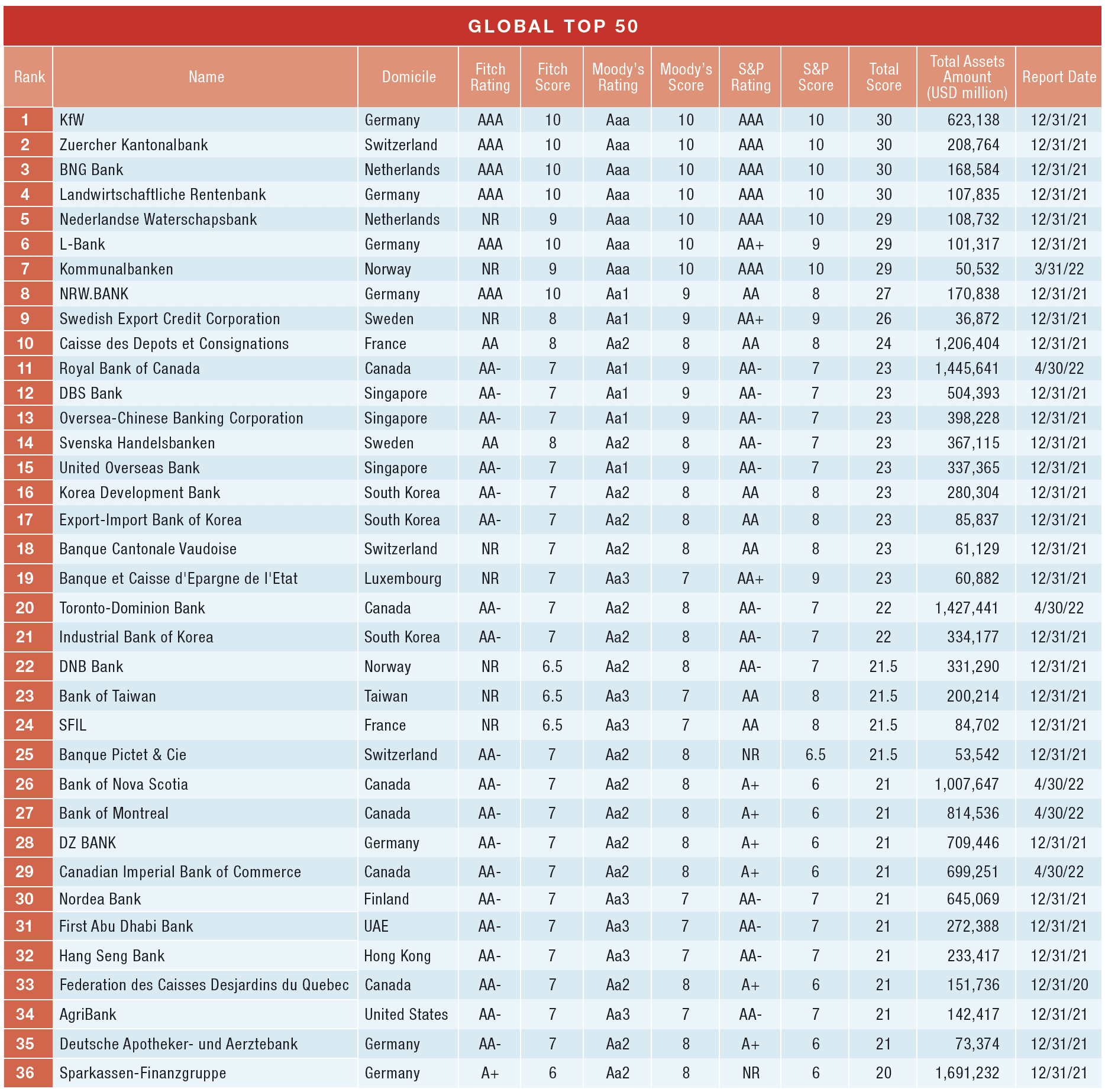
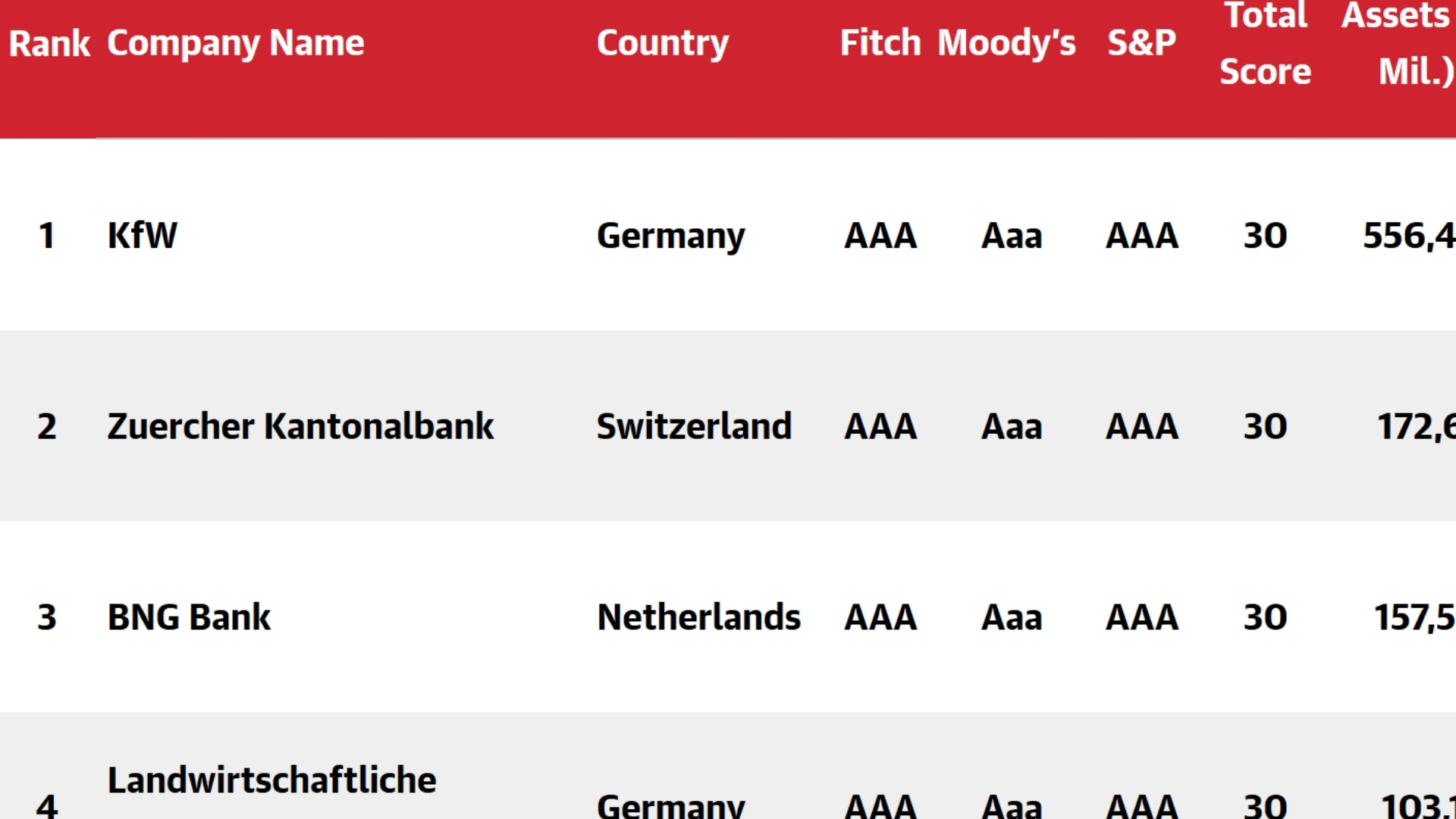
- Review Credit Ratings: Look at ratings from agencies like Moody’s, Fitch, or Standard & Poor’s. They provide independent assessments of a bank’s ability to meet its financial obligations.
- Monitor News for “Consent Orders”: Regulatory bodies issue consent orders when a bank has deficiencies in its risk management or anti-money laundering protocols.
In conclusion, the safest bank is one that balances high capital ratios and deep liquidity with the protection of government-backed insurance. Whether you choose a global powerhouse with “too big to fail” protection or a conservative local credit union, the key to financial security is understanding the regulatory environment and never exceeding the limits of your insurance coverage. In the world of finance, safety is not a destination but a continuous practice of vigilance and diversification.
aViewFromTheCave is a participant in the Amazon Services LLC Associates Program, an affiliate advertising program designed to provide a means for sites to earn advertising fees by advertising and linking to Amazon.com. Amazon, the Amazon logo, AmazonSupply, and the AmazonSupply logo are trademarks of Amazon.com, Inc. or its affiliates. As an Amazon Associate we earn affiliate commissions from qualifying purchases.