
In the landscape of alternative investments, the quest for the ultimate store of value often leads past the doors of traditional banking and into the literal earth. While gold, silver, and high-grade diamonds have long dominated the conversation regarding wealth preservation, a new frontier of ultra-rare mineralogy is capturing the attention of sophisticated investors. When asking “what is the rarest crystal in the world,” the answer is not found in a jewelry store or a commodity exchange, but in the realm of Kyawthuite—a mineral so scarce that its total global supply is effectively limited to a single specimen.

For the modern investor, understanding the intersection of mineralogical rarity and financial valuation is essential. These crystals represent more than geological curiosities; they are the ultimate “distressed” or “niche” assets, characterized by extreme supply inelasticity and a market driven by prestige, scientific significance, and absolute scarcity.
The Economics of Absolute Scarcity: Kyawthuite and Painite
To understand the value of the world’s rarest crystals, one must apply the principles of supply-side economics to their logical extreme. In traditional markets, if the price of an asset rises, production usually increases to meet demand. However, in the world of ultra-rare minerals, supply is finite and geographically isolated, creating a price floor that is insulated from typical market fluctuations.
Kyawthuite: The Single-Specimen Asset
Currently, the title for the rarest crystal in the world belongs to Kyawthuite. Found in the Mogok region of Myanmar, only one natural specimen of this deep orange mineral is known to exist. From an investment perspective, Kyawthuite represents a “unicorn” asset. Unlike gold, which can be mined at a higher cost, or even blue diamonds, which appear sporadically in high-end auctions, Kyawthuite has a total supply of one.
The valuation of such an asset transcends traditional metrics. It is priced similarly to a singular masterpiece by a Renaissance artist. The value is derived from its status as a geological impossibility—a chemical fluke of bismuth, antimony, and oxygen that occurred under specific pressure and temperature conditions that may never have been replicated elsewhere on the planet.
Painite: The Former Champion of Rarity
Until the early 2000s, Painite was considered the rarest mineral on Earth. For decades, only two crystals were known to exist. While more specimens have since been discovered, the market for “investment-grade” Painite remains exceptionally tight. For those looking to diversify into minerals, Painite offers a case study in how “rarity shocks” affect value. When new deposits were found, the price for low-quality specimens dipped, but the valuation for large, transparent, facet-grade crystals remained stratospheric. This highlights a key rule in mineral investing: chemical rarity is the floor, but aesthetic quality is the ceiling.
Diversifying Portfolios with Rare Earth Minerals and Gemstones
In an era of high inflation and volatile equity markets, the move toward “hard assets” has accelerated. High-net-worth individuals are increasingly looking toward minerals that offer high density of value. A crystal weighing only a few grams can represent millions of dollars in wealth, offering a level of portability and discretion that real estate or heavy bullion cannot match.
The Shift Toward Alternative Tangible Assets
The primary appeal of rare crystals like Red Beryl, Musgravite, or Grandidierite is their lack of correlation with the S&P 500 or the bond market. While a corporate stock depends on management performance and macro-economic factors, the value of a Musgravite crystal—found primarily in the Musgrave Ranges of South Australia—is tied to its sheer physical absence from the market.
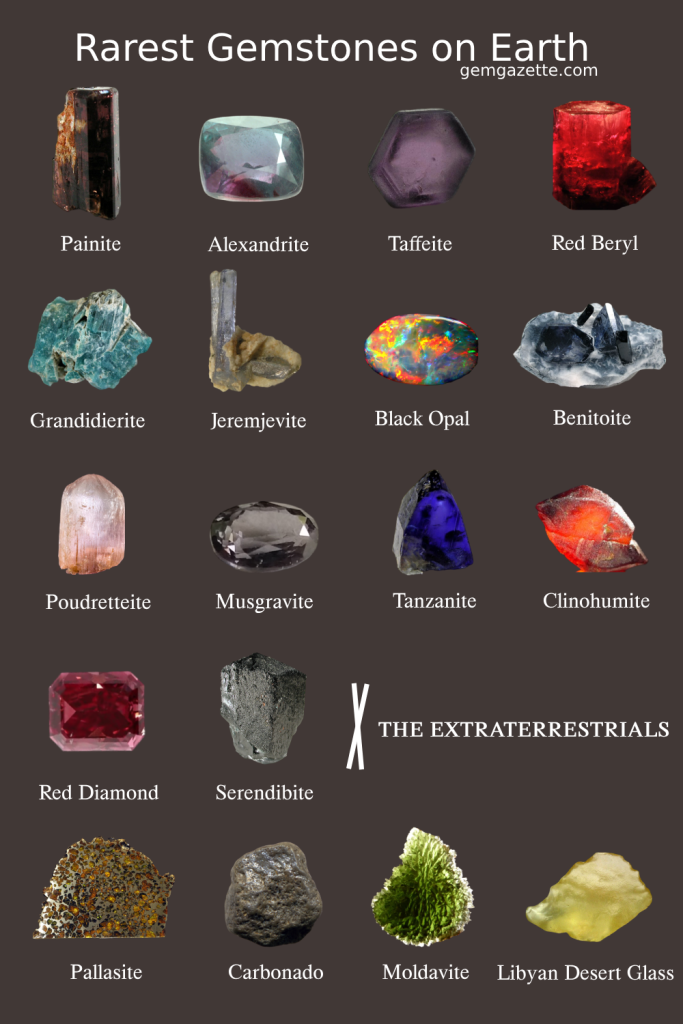
As a portfolio diversifier, rare minerals act as a hedge. They are not productive assets—they do not pay dividends—but they serve as a concentrated store of value. For an investor with a 10-to-20-year horizon, these assets offer protection against currency devaluation. Because these minerals are priced globally in USD but sourced in limited quantities from specific sovereign territories, they also offer a complex play on geopolitical stability and mining regulations.
Grading Rarity: Beyond the Four Cs
In the diamond trade, investors rely on the “Four Cs”: Carat, Cut, Color, and Clarity. However, for the world’s rarest crystals, a fifth “C”—Chemical Composition—takes precedence.
- Mineralogical Identity: An investor must verify that a stone is truly what it is claimed to be. In the case of Kyawthuite or Painite, Raman spectroscopy and X-ray diffraction are the only ways to verify the asset’s identity.
- Provenance: Much like high-end art, the “story” of the crystal matters. A specimen that has passed through the hands of a renowned mineralogist or was featured in a museum collection commands a significant premium.
- Market Liquidity: Potential investors must understand that the rarer the crystal, the lower the liquidity. Selling a common diamond is instantaneous; selling the world’s rarest crystal may take years of negotiation through private dealers or elite auction houses.
The High-Stakes World of Mineral Speculation and Auction Dynamics
The acquisition of the world’s rarest crystals does not happen on a public exchange. Instead, it occurs within a tight-knit ecosystem of specialized dealers, gemological laboratories, and global auction houses like Christie’s and Sotheby’s.
The Private Dealer Network
Most transactions involving minerals like Jeremejevite or Taaffeite occur behind closed doors. These “off-market” deals are preferred by ultra-high-net-worth individuals who prioritize privacy. For the investor, navigating this network requires a high degree of due diligence. Because there is no “spot price” for Kyawthuite, price discovery is an art rather than a science. It involves analyzing historical auction data for comparable minerals and factoring in the “prestige tax” associated with owning a world-record specimen.
Risk Management in Mineral Investing
Investing in the rarest crystals is not without significant risk. The primary risks include:
- Synthetic Competition: Technology is becoming increasingly proficient at creating lab-grown minerals. While a synthetic crystal will never have the same value as a natural one, it can saturate the “collector” market, leaving only the “investment-grade” natural specimens with high value.
- New Discoveries: The discovery of a large new deposit can crash the price of a rare mineral overnight. This is why investors often favor minerals like Kyawthuite, where the geological conditions for formation are so specific that a massive find is statistically improbable.
- Authentication and Fraud: The more valuable the asset, the higher the incentive for forgery. Investors must insist on certification from the Gemological Institute of America (GIA) or similar reputable bodies.
Future Outlook: The Intersection of Tech and Mineral Value
As we look toward the next decade, the valuation of the world’s rarest crystals is likely to be influenced by two diverging trends: the advancement of deep-earth exploration and the rise of digital asset fractionalization.
The Role of Artificial Intelligence in Discovery
New AI-driven geological surveys are making it easier to predict where rare mineral deposits might hide. For the investor, this is a double-edged sword. It could lead to the discovery of more Kyawthuite, which would increase supply and potentially lower the price per gram. Conversely, it could confirm that the current specimens are indeed the only ones in existence, cementing their status as the ultimate “finite” assets.
Fractional Ownership and the Tokenization of Rarity
We are beginning to see the “democratization” of high-value assets through blockchain technology. It is entirely possible that in the near future, a single, multi-million dollar crystal could be tokenized, allowing a group of investors to own “shares” of the world’s rarest mineral. This would solve the liquidity problem, allowing investors to trade their stakes without the need to physically move or sell the entire specimen.

Conclusion: The Ultimate Portfolio Capstone
While the “rarest crystal in the world” may technically be a single orange stone from Myanmar, its significance to the financial world is much larger. It represents the pinnacle of tangible asset investing—a category where rarity, science, and wealth converge. For the investor who has already maximized their holdings in traditional equities, real estate, and precious metals, these geological wonders offer the final frontier of diversification. They are the ultimate “quiet” assets: small, portable, incredibly valuable, and, above all, unique in the literal sense of the word. In a world of digital replication and mass production, the rarest crystal remains one of the few things money can buy that cannot be manufactured, duplicated, or ignored.
aViewFromTheCave is a participant in the Amazon Services LLC Associates Program, an affiliate advertising program designed to provide a means for sites to earn advertising fees by advertising and linking to Amazon.com. Amazon, the Amazon logo, AmazonSupply, and the AmazonSupply logo are trademarks of Amazon.com, Inc. or its affiliates. As an Amazon Associate we earn affiliate commissions from qualifying purchases.