
The question “what is the number of moons in Mercury” yields a definitive scientific answer: zero. While this fact is a fundamental tenet of planetary science, the technological journey required to confirm this absence is a masterclass in modern engineering, digital imaging, and high-level data processing. In the realm of technology, the search for celestial bodies—or the confirmation of their absence—is no longer just a matter of looking through a glass lens. It is a complex synthesis of AI-driven data analysis, sophisticated spacecraft hardware, and the development of software capable of filtering out the overwhelming noise of the solar environment.

To understand why Mercury has no moons, and how we know this with such certainty, we must examine the intersection of orbital mechanics and the cutting-edge tech that allows us to peer into the brightest, most hostile corners of our solar system.
The Technological Search for Celestial Satellites
Determining that a planet lacks a natural satellite requires more than a cursory glance. For Mercury, the closest planet to the Sun, the technological challenges are immense. The glare of the Sun makes optical observation from Earth-based telescopes nearly impossible for detecting small, dark objects that might be orbiting the planet.
High-Resolution Imaging Systems and the MESSENGER Mission
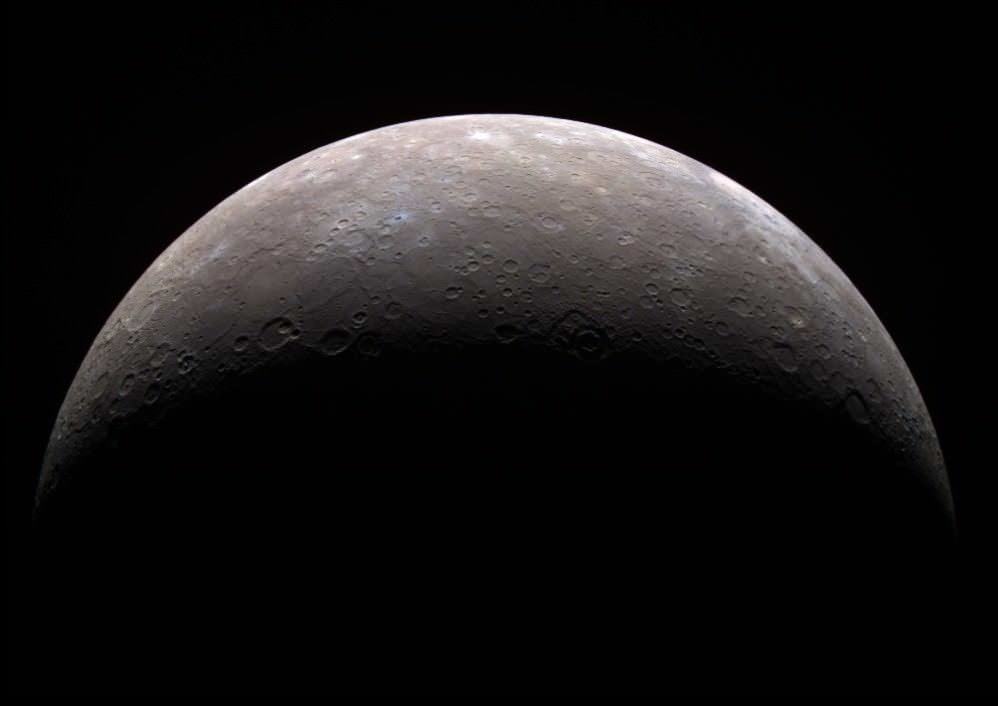
The most significant technological leap in our understanding of Mercury came from the MESSENGER (MErcury Surface, Space ENvironment, GEochemistry, and Ranging) spacecraft. Launched in 2004, this mission utilized a suite of high-tech instruments to map the planet’s surface and search for any potential moonlets.
The primary tool for this search was the Mercury Dual Imaging System (MDIS). This system consisted of a wide-angle camera and a narrow-angle camera, both equipped with CCD (Charge-Coupled Device) sensors capable of capturing high-fidelity data across a broad range of light spectra. By utilizing long-exposure photography while the spacecraft was in the shadow of Mercury, engineers were able to search for any tiny, reflected points of light that would indicate a moon. The technology allowed for the detection of objects as small as 100 meters in diameter. The result? No such objects were found, confirming through high-resolution digital data that Mercury remains solitary.
Radar Technology and Deep Space Networks
Beyond optical cameras, the confirmation of Mercury’s moonless state relies on radar astronomy. Large-scale Earth-based arrays, such as the Goldstone Deep Space Communications Complex, transmit high-power radio waves toward Mercury. These waves bounce off the planet’s surface and are captured by massive receiver dishes.
The technology used to process these return signals is incredibly sophisticated. By analyzing the “echo” of these radio waves, scientists can create 3-level topographical maps. If a moon were present, it would create a distinct secondary echo. The signal-to-noise ratio in modern digital signal processing is now so refined that even a small asteroid-sized moon would be clearly visible in the data streams.
AI and Machine Learning in Modern Astronomy
As we move further into the digital age, the role of human observation is being augmented—and in many cases replaced—by Artificial Intelligence (AI) and Machine Learning (ML). In the search for moons around Mercury and other planets, AI tools are the new frontier of discovery.
Algorithmic Detection of Anomalies
Space missions generate petabytes of data, far more than any human team could analyze in a lifetime. Technology companies and space agencies now use computer vision algorithms to scan through thousands of images of Mercury’s orbital plane. These AI tools are trained on datasets containing known celestial bodies, allowing them to instantly identify “anomalies”—pixels that move relative to the background stars.
In the case of Mercury, AI models have been used to re-analyze legacy data from the Mariner 10 and MESSENGER missions. By applying modern noise-reduction algorithms and motion-detection software, researchers have verified that no previously overlooked objects were hiding in the “glare” or the digital grain of older images. This digital audit ensures that our conclusion regarding Mercury’s zero moons is backed by the most rigorous computational logic available.
Filtering Solar Interference with Software
One of the greatest “bugs” in observing Mercury is the Sun’s proximity. The solar wind and intense radiation create significant digital noise in sensors. Advanced software suites have been developed to simulate and then subtract this solar interference from the raw data. This process, known as “synthetic tracking,” allows computers to shift and stack multiple images in a way that makes faint moving objects stand out while neutralizing the static brightness of the Sun. The software-driven capability to “see through” light is a cornerstone of modern astronomical tech.
The Challenges of Observing Mercury: A Technological Perspective

Confirming the moon count of Mercury is not just a software problem; it is a hardware engineering marvel. The environment near Mercury is one of the most technologically “expensive” places to operate, requiring specialized gadgets and materials.
Thermal Shielding and Sensor Integrity
The temperature on Mercury can reach a staggering 800 degrees Fahrenheit (430 degrees Celsius). For a camera or a sensor to function, it must be protected by advanced thermal shielding technology. The MESSENGER spacecraft, for instance, utilized a ceramic-cloth sunshade that kept the delicate digital instruments at room temperature while the exterior faced a literal furnace.
Without this breakthrough in material science, the sensors would have melted or produced “hot pixels”—saturated sensors that would mimic the appearance of a moon. The integrity of our data regarding Mercury’s moons is entirely dependent on the reliability of these cooling systems.
Precision Navigation and Orbital Software
To prove a planet has no moons, you must be able to navigate a spacecraft into a stable orbit to look for them. Mercury’s proximity to the Sun’s gravity well makes this an “optimization” nightmare for software engineers. The technology required to calculate the precise Delta-V (change in velocity) for Mercury orbit insertion is incredibly complex.
Modern missions use automated navigation software that makes real-time adjustments based on light-speed telemetry. This precision allows spacecraft to maintain a stable vantage point, ensuring that every square kilometer of the surrounding space is digitally accounted for. If a moon existed, these high-precision orbital patterns would have been disrupted by the moon’s own gravitational pull—a discrepancy that would be instantly flagged by orbital tracking software.
Future Tech: The BepiColombo Mission and Beyond
The current “gold standard” in the technology used to study Mercury is the BepiColombo mission, a joint endeavor by the ESA and JAXA. This mission represents the cutting edge of space gadgets and AI integration.
Next-Generation Spectroscopy
BepiColombo carries the Mercury Imaging X-ray Spectrometer (MIXS). This gadget is designed to analyze the elemental composition of the planet’s surface, but it also serves as a high-precision sensor for any objects in the vicinity. By using X-ray technology rather than just visible light, the mission can “see” the chemical signatures of objects. If there were a moon—even a very dark or “stealthy” one—the spectrometer would detect its distinct chemical footprint against the vacuum of space.
Ion Propulsion Technology
One of the most significant tech trends in space exploration is the use of ion propulsion. BepiColombo uses high-efficiency electric thrusters that accelerate ions to move the craft. This “slow and steady” tech allows for much more controlled movements than traditional chemical rockets. This control is vital for the mission’s goal of mapping Mercury’s environment in 3D. The tech ensures that the craft can stay in the optimal “detection zone” for longer periods, providing the most comprehensive digital map of Mercury’s orbital space to date.
Digital Security and Data Integrity in Research
In an era of deepfakes and data manipulation, the integrity of astronomical data is a high priority for digital security experts. The confirmation of Mercury’s moonless state relies on “clean” data.
Blockchain and Data Verification
Some researchers are now looking into using blockchain-like distributed ledgers to store raw astronomical data. This ensures that the images coming back from a probe like BepiColombo cannot be altered or corrupted during the long transmission back to Earth. When we state that the number of moons is zero, that statement is protected by layers of encryption and verification protocols that ensure the “zero” is a reflection of reality and not a glitch in the data stream.
Collaborative Cloud Platforms
The analysis of space data is now a global, cloud-based effort. Platforms that allow scientists to share AI models and raw datasets across borders have accelerated our understanding of planetary systems. These digital tools allow for peer review on a massive scale, where a discovery (or the lack thereof) can be verified by thousands of independent algorithms simultaneously.
Conclusion
When we ask, “what is the number of moons in Mercury,” the answer is a simple digit, but the technology behind that answer is a sprawling ecosystem of AI, specialized hardware, and innovative software. From the ceramic heat shields of MESSENGER to the AI-driven image processing of today’s researchers, confirming the solitude of Mercury is a testament to human technological ingenuity. We don’t just know Mercury has no moons because we looked; we know because we have built a digital and mechanical net so fine that nothing—not even a 100-meter rock—could slip through it. As technology continues to evolve, our “digital eyes” will only become sharper, turning the mysteries of our solar system into verified, secure data points.
aViewFromTheCave is a participant in the Amazon Services LLC Associates Program, an affiliate advertising program designed to provide a means for sites to earn advertising fees by advertising and linking to Amazon.com. Amazon, the Amazon logo, AmazonSupply, and the AmazonSupply logo are trademarks of Amazon.com, Inc. or its affiliates. As an Amazon Associate we earn affiliate commissions from qualifying purchases.